
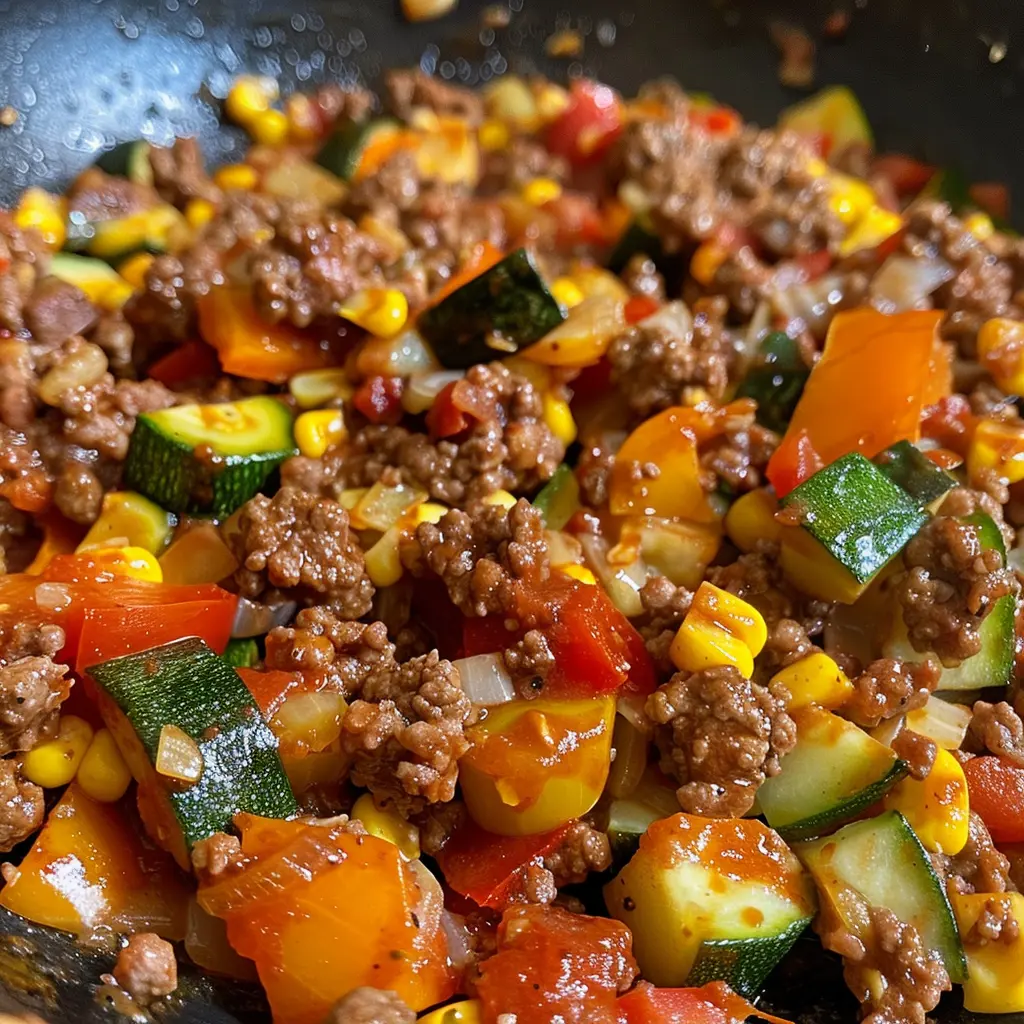
Ground beef and vegetable skillet is the answer to the perennial weeknight question of how to get a nutritious, flavorful meal on the table without much effort or cleanup. Seasoned ground beef, sweet corn, zucchini, bell pepper, green beans, carrots, and tomatoes all simmer together in a single pan with paprika and thyme, producing a dish that’s hearty enough to eat on its own and versatile enough to serve a dozen different ways.
| Detail | Info |
|---|---|
| Prep Time | 15 minutes |
| Cook Time | 25 minutes |
| Total Time | 40 minutes |
| Servings | 4 to 6 |
| Difficulty | Easy |
| Cuisine | American / International |
Why This Recipe Works
The layered cooking order in this recipe is what produces a finished dish where every component tastes properly cooked rather than uniformly mushy. The beef goes in first because it needs the most time and the highest heat to brown properly. The aromatics go in next because garlic and onion need a few minutes to soften and release their flavor. The harder vegetables — carrots — go in before the softer ones — zucchini, bell pepper — because they need more time to soften. Getting this sequence right means every vegetable in the finished skillet is cooked to the right texture at the same moment.
Browning the beef properly before any vegetables are added is the step that most weeknight cooks rush or skip, and it makes the largest difference in final flavor. Properly browned beef — cooked in a hot pan without stirring for long enough to develop a crust on each piece — generates the Maillard reaction, which produces hundreds of new flavor compounds. Beef that’s stirred constantly and steams rather than browns tastes flat and gray. Two to three minutes of undisturbed cooking on each side before breaking it up produces a noticeably richer, more complex base flavor for the whole dish.
Tomato paste is a key ingredient here and it’s used correctly — stirred into the skillet with the seasonings where it cooks in the fat and caramelizes slightly before the liquid goes in. Tomato paste that goes in with the liquid doesn’t have this opportunity and tastes rawer and more acidic in the finished dish. A minute or two of cooking in the fat transforms it from sharp and one-dimensional to sweet, concentrated, and deeply savory.
The covered simmer in the final phase does two things: it finishes cooking the harder vegetables through to tenderness and it allows the flavors from the tomato, beef, and spices to fully merge into a cohesive sauce that coats everything in the pan. Uncovered cooking at this stage dries the dish out too quickly before the flavors have had time to meld.
The optional addition of water or beef broth if the mixture seems dry is worth taking seriously. The amount of liquid released by the tomatoes and vegetables varies significantly based on their water content and ripeness. Watching the skillet during the simmer and adding liquid as needed keeps the dish from scorching on the bottom and ensures a finished consistency that has some sauce rather than just dry, separated ingredients.
Ingredients
| Ingredient | Quantity | Notes |
|---|---|---|
| Ground beef | 1 pound (450g) | Lean or regular; if using lean, add 1 tablespoon olive oil |
| Olive oil | 1 tablespoon | Only needed if using lean beef to compensate for lower fat content |
| Medium onion, diced | 1 | Yellow or white; diced to about half-inch pieces |
| Garlic cloves, minced | 2 | Fresh garlic; minced finely so it disperses through the dish |
| Carrots, peeled and diced | 2 medium | Small dice so they soften in the cooking time |
| Zucchini, diced | 1 | Medium dice; adds moisture and mild sweetness |
| Red bell pepper, chopped | 1 | Red for sweetness; green for a more savory note |
| Green beans, chopped | 1 cup | Fresh or frozen; cut into 1-inch pieces |
| Corn kernels | 1 cup | Fresh, canned (drained), or frozen all work |
| Canned diced tomatoes (with juice) | 1 cup | Provides liquid and acidity to the sauce base |
| Tomato paste | 1 tablespoon | Cook in the fat before adding liquid for best flavor |
| Paprika | 1 teaspoon | Sweet or smoked; smoked adds depth |
| Dried thyme | 1/2 teaspoon | Pairs naturally with beef and root vegetables |
| Salt and black pepper | To taste | Season at multiple points during cooking |
| Water or beef broth | 1/4 cup (optional) | Add if the skillet looks dry during simmering |
| Fresh parsley, chopped | For garnish | Adds brightness and color to the finished dish |
Step-by-Step Instructions
Phase 1: Brown the Beef and Build the Aromatics
- Heat a large skillet over medium-high heat. If using lean ground beef, add the olive oil and heat until shimmering. If using regular ground beef, the fat in the meat is sufficient — no oil needed.
- Add the ground beef in an even layer across the pan. Leave it undisturbed for 2 to 3 minutes to allow the bottom to brown properly. Break it apart and stir, then leave undisturbed again for another minute. Continue this process until the beef is fully cooked through and browned rather than gray, about 6 to 8 minutes total.
- If the beef released significant fat and the pan looks very greasy, drain off the excess, leaving about a tablespoon in the pan. Return the pan to medium heat.
- Add the diced onion and minced garlic to the beef. Saute for 2 to 3 minutes, stirring occasionally, until the onion turns translucent and the garlic is fragrant. Don’t let the garlic brown — reduce the heat slightly if it’s cooking too fast.
Phase 2: Add Vegetables and Seasonings
- Add the diced carrots to the skillet first since they need the most cooking time of the remaining vegetables. Stir to combine with the beef and onion and cook for 2 minutes.
- Add the zucchini, bell pepper, green beans, and corn. Stir well to combine everything. Cook for 5 to 7 minutes, stirring occasionally, until the vegetables begin to soften slightly. They should still have some resistance at this point — they’ll finish cooking in the simmer.
- Clear a small space in the center of the pan and add the tomato paste directly to the pan surface. Let it cook for about 60 seconds, stirring just in that spot, until it darkens slightly and smells more concentrated and less sharp. Then stir it into the rest of the ingredients.
- Add the diced tomatoes with their juice, paprika, thyme, salt, and pepper. Stir everything together thoroughly to distribute the seasonings evenly. If the pan looks very dry, add the optional water or beef broth.
Phase 3: Simmer and Finish
- Reduce the heat to low and cover the skillet. Simmer for 10 to 12 minutes, stirring once or twice, until all the vegetables are fully tender and the flavors have melded into a cohesive dish. Taste the carrots and green beans — when they’re tender, everything is done.
- Remove the lid and cook for another 2 minutes uncovered to evaporate any excess liquid and concentrate the sauce slightly.
- Taste once more and adjust the seasoning with salt and pepper. The flavors should be well-rounded — savory from the beef, sweet from the corn and bell pepper, bright from the tomato, and warm from the paprika and thyme.
- Scatter freshly chopped parsley over the top and serve immediately.
Chef Tips for Perfect Results
Cut all vegetables to a similar size. Uniformity in dice size means every vegetable finishes cooking at roughly the same time. If the carrots are large chunks and the zucchini is tiny dice, the zucchini turns to mush before the carrots are tender. Aim for a consistent half-inch to three-quarter-inch dice across all the vegetables.
Don’t skip browning the beef. Gray, steamed beef gives the dish a flat, pallid base. Browned beef with a developed crust adds richness and depth that permeates the entire skillet as the vegetables cook and the sauce develops. It takes an extra 3 minutes and makes a noticeable difference.
Toast the tomato paste in the fat. Cooking the tomato paste in the pan fat before adding the liquid transforms it from sharp and acidic to sweet, concentrated, and deeply savory. This takes 60 seconds and is the easiest high-impact technique in this recipe.
Add fresh herbs at the end. Dried thyme goes in during cooking because it needs heat to bloom and release its flavor. Fresh parsley goes on at the very end because its volatile aromatic compounds evaporate quickly with heat. Using them in the right order gives you depth from the dried herb and brightness from the fresh one.
Rest for 5 minutes before serving. A brief rest off the heat allows the sauce to tighten slightly and the flavors to settle. Served straight from the heat, the dish can taste slightly sharp from the tomato. A 5-minute rest rounds everything out.
Common Mistakes to Avoid
Adding all the vegetables at once. Different vegetables have different cook times. Carrots take significantly longer than zucchini, and zucchini takes longer than corn. Adding them all at the same time produces a dish where some vegetables are overdone and mushy while others are still firm. Follow the layered sequence in the instructions.
Not draining excess fat. Regular ground beef releases a lot of fat during browning. Leaving all of it in the pan makes the finished dish greasy and pools of fat separate from the sauce. Drain down to about a tablespoon after browning — enough to saute the aromatics and cook the tomato paste, but not so much that it overwhelms the dish.
Keeping the heat too high during the simmer. High heat during the covered simmer burns the tomato and bottom vegetables before they have time to soften. Reduce to low once the lid goes on and let the trapped steam do the work.
Using watery canned tomatoes. Some canned diced tomatoes are very liquid. If you’re using a brand that’s more juice than tomato, drain off some of the excess liquid before adding, or skip the optional water/broth addition. Too much liquid turns the dish into a thin soup rather than a hearty skillet.
Under-seasoning. This dish has a lot of components all competing for your palate’s attention. Season at multiple stages — a pinch of salt when the beef goes in, another with the vegetables, a final adjustment at the end after tasting. Seasoning only at the end produces a dish where the flavors feel superficial rather than built-in.
Variations and Substitutions
Ground turkey or pork: Both work as substitutes for ground beef. Turkey is leaner and milder — add an extra teaspoon of Worcestershire sauce and a pinch more paprika to compensate. Pork has a slightly sweeter, richer flavor that works especially well with the thyme and tomato.
Italian seasoning version: Replace the paprika and thyme with a tablespoon of Italian seasoning and add a cup of cooked pasta (penne or rotini) to the finished skillet. A handful of grated Parmesan stirred in at the end takes it in a pasta e fagioli direction.
Tex-Mex version: Replace the paprika and thyme with a tablespoon of taco seasoning. Swap the corn for black beans (drained canned), add a can of green chiles, and finish with shredded cheddar and a dollop of sour cream. Serve with warm tortillas or over rice.
Add spinach or kale: Stir two large handfuls of baby spinach or chopped kale into the finished skillet off the heat. The residual warmth wilts the greens in 60 seconds. They add nutrition, color, and a mild bitter note that balances the sweetness of the corn and bell pepper.
Serving Suggestions
Serve directly from the skillet over steamed white or brown rice for the most complete and satisfying meal. The sauce from the skillet soaks into the rice and ties the whole plate together. Over buttered egg noodles is another excellent option that makes the dish feel more substantial.
Tucked into warm flour tortillas with a drizzle of hot sauce and a squeeze of lime, the skillet filling makes quick, informal tacos that work well for casual family dinners. With crusty bread alongside for sauce-soaking, it becomes a one-bowl meal that needs nothing else. Stuffed into baked potatoes makes a hearty, potato-focused version that’s particularly good in the colder months.
Storage and Reheating
Refrigerator: Store cooled leftovers in an airtight container for up to 3 days. The dish tastes even better the next day as the flavors continue to develop in the refrigerator.
Freezer: Freeze in a freezer-safe container for up to 2 months. Thaw overnight in the refrigerator. Note that zucchini and corn change texture slightly after freezing and thawing — they become softer. The flavor is unaffected.
Reheating: Warm in a skillet over medium heat with a splash of broth or water to loosen the sauce, stirring frequently, until heated through. The microwave works for individual portions — cover and heat in 60-second intervals, stirring between each, until uniformly hot.
Nutritional Information
| Nutrient | Per Serving (approx.) |
|---|---|
| Calories | 320 |
| Protein | 26g |
| Carbohydrates | 22g |
| Fat | 14g |
| Saturated Fat | 5g |
| Fiber | 5g |
| Sodium | 380mg |
Nutritional values are estimates based on standard ingredients. Values will vary based on the fat content of the beef used and specific brands of canned vegetables.
FAQ
Can I use different vegetables than what’s listed?
Absolutely. This recipe is a framework, not a fixed formula. Mushrooms, sweet potatoes, broccoli, peas, asparagus, and celery all work well. The key is to think about cooking time — add harder, denser vegetables earlier and softer vegetables later. Mushrooms go in with the onion. Sweet potatoes need an extra 5 minutes with the carrots. Peas and asparagus go in during the last 3 minutes. Adjust based on what you have available and what needs to be used up.
Can I make this ahead of time?
Yes, and it’s one of those dishes that actually improves overnight as the flavors merge and deepen. Make it up to 2 days ahead and store in the refrigerator. Reheat gently in a skillet with a splash of broth. Add the fresh parsley garnish after reheating rather than before storing, since it wilts and loses its color in the refrigerator.
How do I make this dish saucier?
Add a half cup more of diced tomatoes or an additional quarter cup of beef broth during the simmer stage. You can also stir in a tablespoon of tomato paste extra to add body to the sauce. For a thicker, more cohesive sauce, mix a teaspoon of cornstarch with a tablespoon of cold water and stir it into the simmering skillet in the last few minutes of cooking.
Can I double this recipe?
Yes, but use your largest skillet or a wide Dutch oven. A crowded pan with double the ingredients won’t brown the beef properly and won’t allow moisture to evaporate during the uncovered cooking stages. If your pan can’t comfortably hold double the volume, brown the beef in two batches and combine everything for the vegetable and simmer stages.
What’s the best way to serve this to kids who don’t like vegetables?
Dice the vegetables very small — smaller than the recipe calls for — so they blend into the beef mixture and are less identifiable as distinct pieces. The smaller the dice, the more they soften into the sauce and lose their vegetable-specific texture. Corn is universally appealing to most kids and can be increased while other vegetables are reduced to make the dish more palatable to picky eaters. Serving over rice or pasta also helps since kids tend to accept vegetables more readily when they’re mixed with a starch they already enjoy.
Conclusion
Ground beef and vegetable skillet earns a place in the permanent weeknight rotation because it solves three problems at once: it’s fast, it uses up whatever vegetables are in the refrigerator, and it produces a genuinely satisfying meal that the whole table accepts without negotiation. One pan, 40 minutes, and a complete dinner with vegetables already built in. That’s the definition of a recipe worth keeping.