
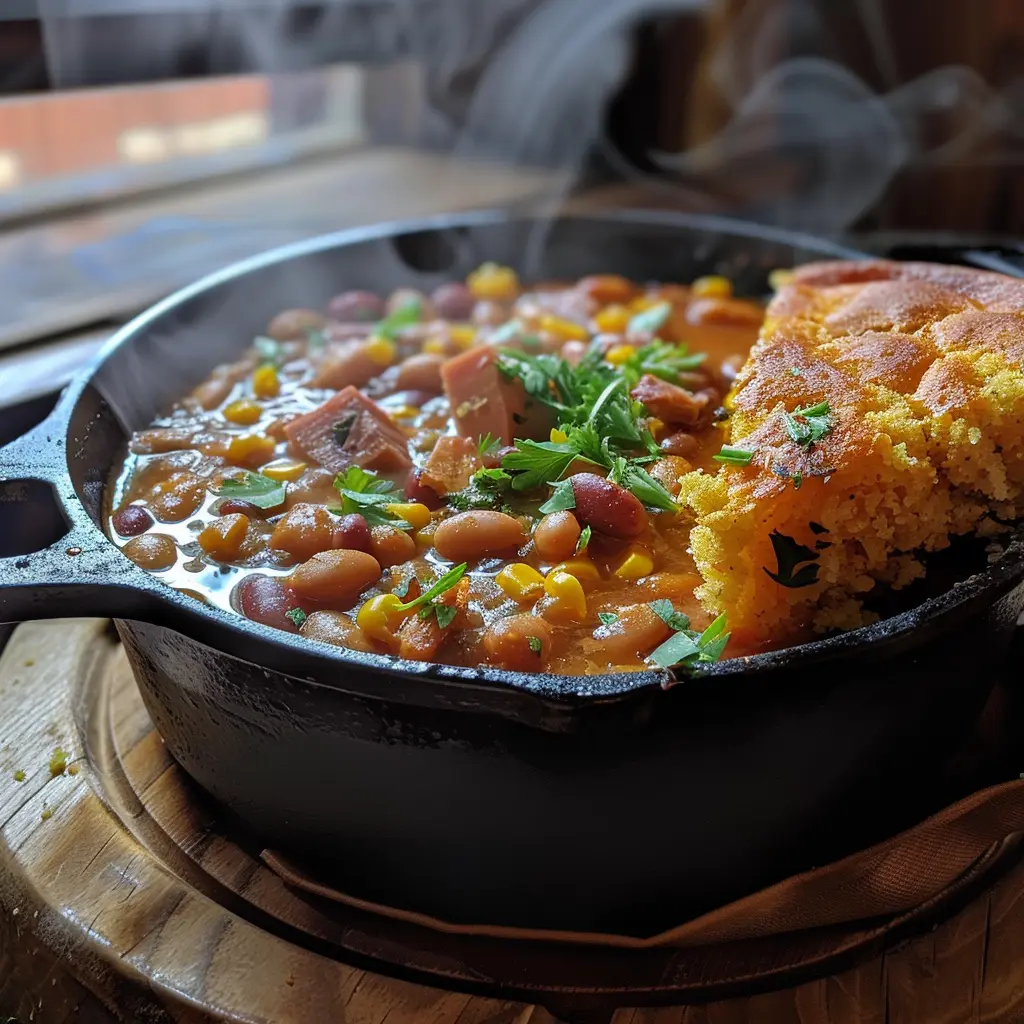
There is perhaps no meal more emblematic of Southern hospitality and home cooking than a steaming pot of slow-simmered pinto beans served with a wedge of golden, crusty cornbread. This dish isn’t just about sustenance; it’s about patience. By simmering the dried beans with smoky, cured pork until the liquid thickens into a rich, savory broth—often called “pot likker”—you create a depth of flavor that can’t be rushed. Paired with a hot, buttery skillet of cornbread, it is the ultimate expression of simple, soulful, and deeply satisfying food.
| Detail | Info |
|---|---|
| Prep Time | 15 minutes |
| Cook Time | 2 hours |
| Total Time | 2 hours 15 minutes |
| Servings | 6 |
| Difficulty | Easy |
| Cuisine | Southern American |
Why This Recipe Works
The beauty of this recipe lies in the transformation of humble ingredients. Dried pinto beans, when cooked slowly, release their starches, which thicken the cooking water into a creamy, flavorful gravy. The addition of salt pork or smoked ham is non-negotiable; as the meat simmers, it renders out fat and deep, smoky flavors that permeate the beans, creating a complex foundation that simple seasonings alone cannot provide.
Serving this with freshly baked cornbread completes the experience. The cornbread acts as a sponge, perfectly designed to soak up that seasoned bean broth. Because we use a high oven temperature for the cornbread, we achieve a crisp, golden crust that contrasts beautifully with the tender, creamy beans. This is a meal that relies on the “low and slow” technique to build character, making it the perfect Sunday dinner or a reliable make-ahead staple for busy weeks.
Ingredients
| Ingredient | Quantity | Notes |
|---|---|---|
| Dried pinto beans | 1 lb | Rinsed well and soaked overnight |
| Water | 6 cups | Enough to cover the beans by an inch or two |
| Salt pork or smoked ham | 8 oz | Diced; the primary source of smoky, salty flavor |
| Small onion | 1 | Finely chopped |
| Garlic | 2 cloves | Minced; adds aromatic depth |
| Salt | 1 tsp | Adjust to taste based on the saltiness of your pork |
| Black pepper | 1/2 tsp | Freshly cracked is best |
| Smoked paprika | 1/2 tsp | Optional; boosts the smoky notes |
| Cornmeal | 1 cup | Yellow cornmeal provides the classic texture |
| All-purpose flour | 1 cup | Ensures the cornbread holds together |
| Granulated sugar | 1/4 cup | Optional; omit for a more savory, traditional style |
| Baking powder | 1 tbsp | The lift for a light crumb |
| Milk | 1 cup | Whole milk provides the best moisture |
| Egg | 1 large | Binds the batter |
| Vegetable oil or butter | 1/4 cup | Melted; adds richness to the crumb |
Step-by-Step Instructions
Phase 1: The Pot of Beans
- The night before, place the dried pinto beans in a large bowl and cover with several inches of water. Let them soak overnight. Drain and rinse thoroughly before cooking.
- In a large Dutch oven or heavy-bottomed pot, combine the drained beans, 6 cups of fresh water, diced salt pork (or ham), onion, and garlic.
- Bring the pot to a boil over medium-high heat. Once boiling, reduce the heat to low, cover partially, and maintain a gentle simmer.
- Cook for approximately 2 hours, stirring occasionally to prevent sticking. The beans should be tender and creamy.
- In the last 30 minutes of cooking, stir in the salt, black pepper, and smoked paprika. Adjust the consistency—if you prefer a thicker gravy, smash a few beans against the side of the pot and stir them back in.
Phase 2: The Skillet Cornbread
- Preheat your oven to 400°F (200°C). Grease an 8-inch cast-iron skillet or baking pan generously with butter or oil.
- In a large bowl, whisk together the cornmeal, flour, sugar (if using), baking powder, and salt.
- Add the milk, egg, and melted oil/butter to the dry ingredients. Stir just until the batter is smooth—don’t overmix, or the cornbread will be tough.
- Pour the batter into your prepared pan. Bake for 20–25 minutes, or until the top is golden brown and a toothpick inserted into the center comes out clean.
- Serve warm, sliced in wedges, alongside the pinto beans.
Chef Tips for Perfect Results
Don’t salt too early. Adding salt at the very beginning of the bean cooking process can sometimes lead to tougher skins. Wait until the beans are mostly tender—around the last 30 minutes—to season with salt.
The Cast Iron Advantage. Using a cast-iron skillet for the cornbread is a game changer. If you preheat the empty skillet in the oven with a little bacon grease inside before pouring the batter in, you will get a crust that is shatteringly crisp.
The “Pot Likker” is Gold. That seasoned bean broth is the best part of the meal. Ensure you have enough liquid left when the beans are finished so that it can be scooped up with the cornbread.
Common Mistakes to Avoid
Using old beans. Beans that have been sitting in your pantry for years will never soften, no matter how long you simmer them. Use beans from a fresh batch for the best creamy texture.
Over-baking the cornbread. Cornbread dries out quickly once the moisture evaporates. Check it at the 20-minute mark; it’s done as soon as the edges pull away slightly from the pan and the center is set.
Variations and Substitutions
Make it Spicy. Add a diced jalapeño or a teaspoon of red pepper flakes to the beans for a kick that cuts through the richness of the pork.
The Meats. While salt pork is traditional, smoked ham hocks or thick-cut bacon are fantastic alternatives. If you want a vegetarian version, use a high-quality smoked paprika and a drop of liquid smoke to mimic the meat’s flavor profile.
Storage and Reheating
Refrigerator: Both the beans and the cornbread can be stored in airtight containers for up to 4 days. In fact, the beans are often better the next day as the spices meld.
Reheating: Warm the beans on the stovetop over low heat with a splash of water to loosen the gravy. Reheat the cornbread in a toaster oven or microwave for 15-20 seconds to bring back the softness.
Conclusion
Southern pinto beans and cornbread remind us that the most memorable meals are often the simplest. By taking the time to cook these pantry staples properly, you transform basic ingredients into a meal that comforts the soul. Whether you’re serving this to family on a weeknight or feeding a crowd, the combination of tender, creamy beans and hot, crumbly bread never goes out of style.