
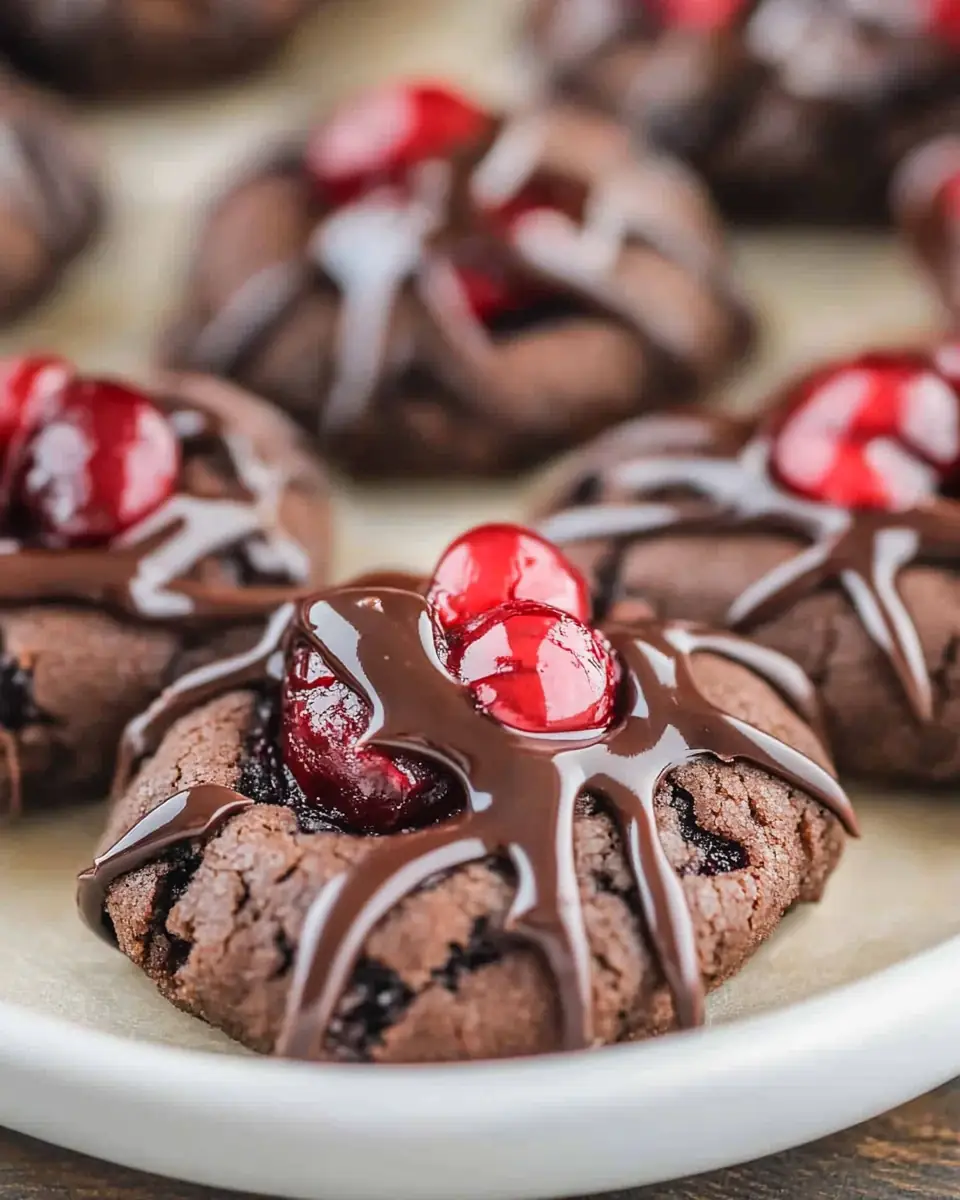
The Origins of Thumbprint Cookies
Thumbprint cookies, often delightfully referred to as Hallongrotta, which translates from Swedish as “raspberry cave,” have a rich history steeped in Scandinavian baking traditions. These cookies were originally crafted with a simple shortbread base. The name and tradition stem from the method of creating a small indentation in the dough using one’s thumb, which would later cradle a dollop of fruit jam. Over the centuries, variations of these cookies have emerged across the globe, each culture infusing its unique flavors and fillings, thereby catering to a myriad of palates. The Chocolate Cherry Thumbprint Cookies represent one such inventive adaptation, blending the timeless thumbprint concept with the luxurious combination of chocolate and cherries.
A Sweet Tradition
The tradition of baking thumbprint cookies is a cherished activity passed down through generations, often marking the inception of the holiday season in many households. Families gather in warm kitchen spaces, their laughter mingling with the sweet aroma of baking cookies. This act of baking together not only fortifies familial bonds but also kindles a sense of nostalgia and continuity. For newcomers to this tradition, Chocolate Cherry Thumbprint Cookies provide a modern twist on the beloved classic, serving as an ideal introduction to thumbprint baking. They embody the spirit of innovation within tradition, inviting bakers to explore new flavors while honoring age-old practices.
The Cultural Evolution of Thumbprint Cookies
The journey of the thumbprint cookie is emblematic of cultural exchange and adaptation. As these cookies traveled from Scandinavia to other parts of Europe and eventually to the United States, they absorbed local flavors and ingredients. In Germany, for instance, the cookies might be filled with a dollop of marzipan or drizzled with a light glaze. In Italy, a hint of almond extract might be added to the dough, enhancing the nutty flavors.
In America, the thumbprint cookie has evolved into various forms, with bakers experimenting with different dough bases, from sugar cookies to gingerbread. The introduction of chocolate into the thumbprint cookie repertoire is a testament to the American penchant for rich, decadent flavors. Chocolate and cherries, a classic combination, add a layer of indulgence to the humble thumbprint cookie, transforming it into a sophisticated dessert suitable for both casual and formal gatherings.
Tips for Perfect Thumbprint Cookies
Achieving the Perfect Consistency
The secret to crafting the perfect thumbprint cookie lies in mastering the dough’s consistency. It should exhibit a delicate balance: firm enough to maintain its shape yet pliable enough to form a thumbprint without cracking. Achieving this equilibrium requires attention to detail:
- Room Temperature Ingredients: Begin by ensuring that your butter is at room temperature. This facilitates effective creaming, which is essential for the desired texture of the cookie. Cold butter won’t incorporate well, leading to uneven dough consistency.
- Measuring Flour: Precise measurement of flour is critical. Excess flour can result in a dry, crumbly dough, causing the cookies to crack during baking.
- Chill the Dough: If your kitchen environment is warm or if the dough feels overly soft, consider chilling it for about 20 minutes before forming the dough balls. This step helps the cookies retain their shape during the baking process.
Forming the Thumbprint
Creating the thumbprint is a pivotal step in the cookie-making process. Here are some tips to perfect this technique:
- Uniform Size: Utilize a cookie scoop or a tablespoon to ensure uniformity in dough ball size. This promotes even baking and consistent texture across all cookies.
- Gentle Pressure: Use your thumb or the back of a teaspoon to gently press an indentation into the center of each dough ball. Excessive force can cause the dough to crack, so aim for a gentle, even pressure.
- Reinforce if Necessary: During baking, the thumbprint may puff up slightly. If needed, gently reinforce the indentation immediately after removing the cookies from the oven to maintain the space for the filling.
Exploring Flavor Variations
While the marriage of chocolate and cherry is undeniably timeless, there is ample room for experimentation to suit personal tastes or specific occasions:
- Nutty Twist: Consider rolling the dough balls in finely chopped nuts, such as pistachios or almonds, before baking. These nuts complement the chocolate flavor beautifully, adding texture and a nutty richness.
- Citrus Zest: Incorporate a teaspoon of orange or lemon zest into the dough for a refreshing, zesty twist that pairs well with the cherry filling, introducing a bright, citrusy aroma and flavor.
- Different Fillings: Experiment with different fillings by swapping the cherry pie filling for raspberry or apricot preserves, offering a varied fruity flavor profile that can surprise and delight.
The Role of Ingredients in Baking Chemistry
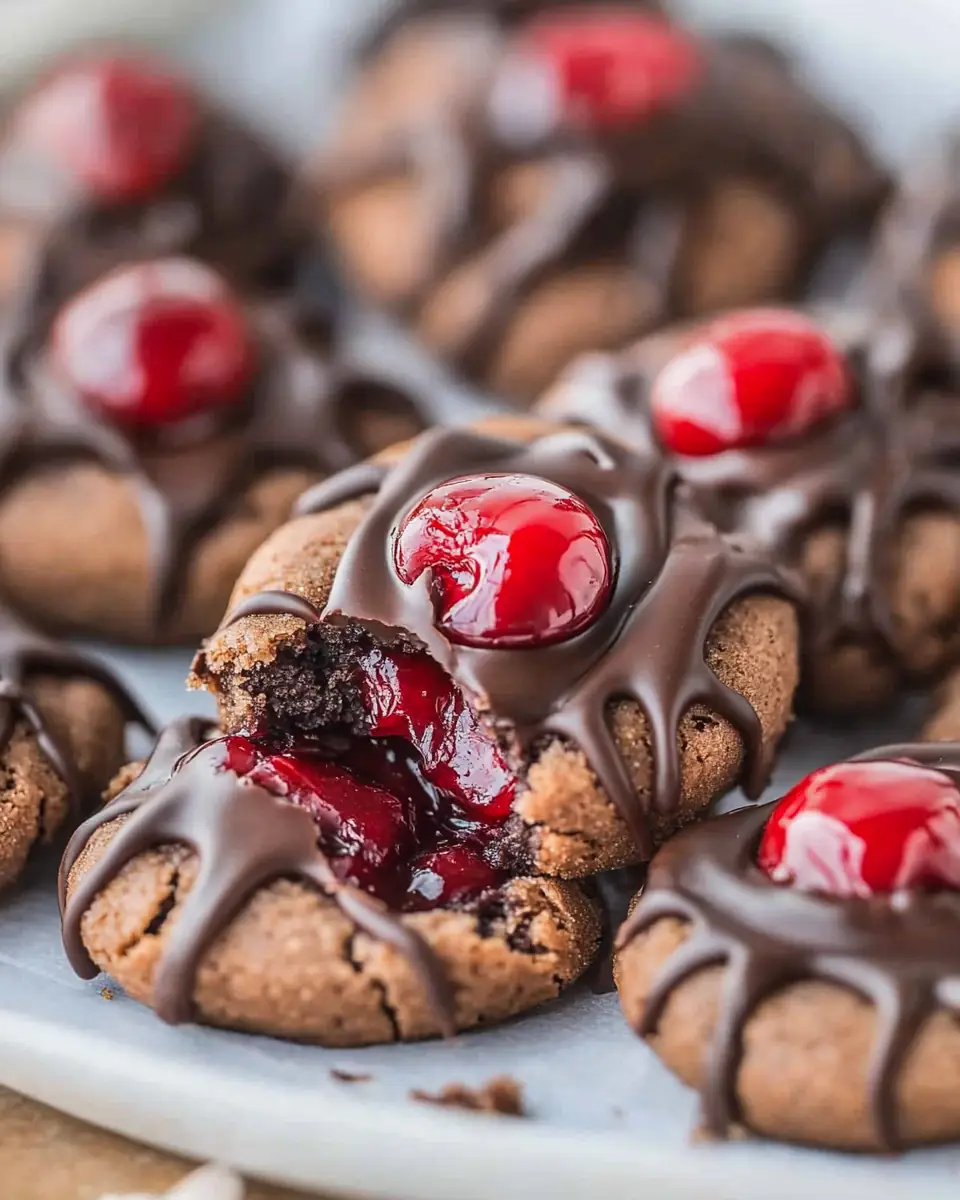
Butter: The Foundation of Flavor
Butter plays a pivotal role in baking, not just as a flavor enhancer but also as a critical textural component. It acts as a tenderizer, creating a delicate crumb structure that melts in your mouth. The fat content in butter also aids in browning, lending a rich, golden hue to your cookies. The quality and temperature of butter can significantly influence the outcome of your baking endeavors, making it essential to choose wisely and handle with care.
Sugar: More Than Just Sweetness
Sugar is integral to achieving the right texture and flavor in cookies. It contributes to a crispy exterior while preserving a soft, chewy interior. Sugar also interacts with butter during the creaming process, incorporating air into the dough, which is essential for leavening. This interaction not only impacts the texture but also the overall appearance and flavor profile of the final product.
Cocoa Powder: A Chocolate Lover’s Delight
Cocoa powder is the cornerstone of the chocolate flavor in these cookies. It provides a deep, rich taste that balances the sweetness of the sugar and the tartness of the cherry filling. The quality of cocoa powder can significantly impact the final flavor, so opting for a high-quality product is imperative for achieving the best results. Cocoa powder also contributes to the visual appeal, lending a rich, dark color to the cookies.
Eggs: The Glue in Baking
Eggs perform multiple functions in cookie recipes. They act as a binding agent, holding the ingredients together. Additionally, eggs provide moisture and structure, helping the cookies to rise and maintain their shape during baking. The proteins in eggs coagulate during baking, setting the structure of the cookies and ensuring a consistent texture.
Pairing Suggestions for the Ultimate Dessert Experience
Beverages to Complement
These cookies pair beautifully with a variety of beverages, enhancing the overall dessert experience:
- Coffee: The rich, robust flavor of coffee enhances the chocolatey undertones of the cookies, creating a harmonious balance that is both invigorating and satisfying.
- Tea: A light, floral tea like chamomile or jasmine offers a refreshing contrast to the richness of the cookies, providing a soothing, aromatic complement.
- Milk: A classic choice, milk complements the sweetness and provides a creamy counterbalance, evoking a sense of nostalgia and comfort.
Desserts and Sides
To create a more elaborate dessert spread, consider pairing these cookies with:
- Ice Cream: A scoop of vanilla or cherry ice cream can elevate your cookie experience, adding a cool, creamy element that contrasts beautifully with the warm, rich flavors of the cookies.
- Fruit Platter: Fresh berries or sliced stone fruits provide a refreshing, tangy contrast that complements the cookies’ richness, offering a burst of natural sweetness and color.
Baking with Kids: A Family Affair
Involving children in baking is a wonderful way to teach them about cooking and create lasting memories. The thumbprint step in this recipe is particularly appealing to kids, allowing them to get hands-on and creative. Encourage them to experiment with different fillings or toppings, making each cookie unique. This playful approach not only fosters creativity and confidence in the kitchen but also imparts valuable life skills.
Troubleshooting Common Issues
While baking is a joyous activity, it can sometimes present challenges. Here are solutions to common issues you might encounter:
- Cracking: If your cookies crack when you press the thumbprint, the dough might be too dry. Ensure you’re measuring flour correctly and consider adding a splash of milk to moisten the dough.
- Flat Cookies: If your cookies spread too much, the butter might have been too soft. Chilling the dough before baking can help them hold their shape, resulting in a more aesthetically pleasing cookie.
- Burnt Bottoms: Using parchment paper or silicone baking mats can prevent cookies from getting too dark on the bottom, ensuring even baking and optimal texture.
The Joy of Sharing
Baking these Chocolate Cherry Thumbprint Cookies is not just about creating a delicious treat; it’s about sharing love and joy with those around you. Whether you’re gifting a batch to a neighbor, serving them at a family gathering, or enjoying them with friends over coffee, these cookies are a testament to the warmth and connection that baking brings. Each bite is a reminder of the shared moments and memories created in the process, enriching the experience of both the baker and those who partake in the delightful results.

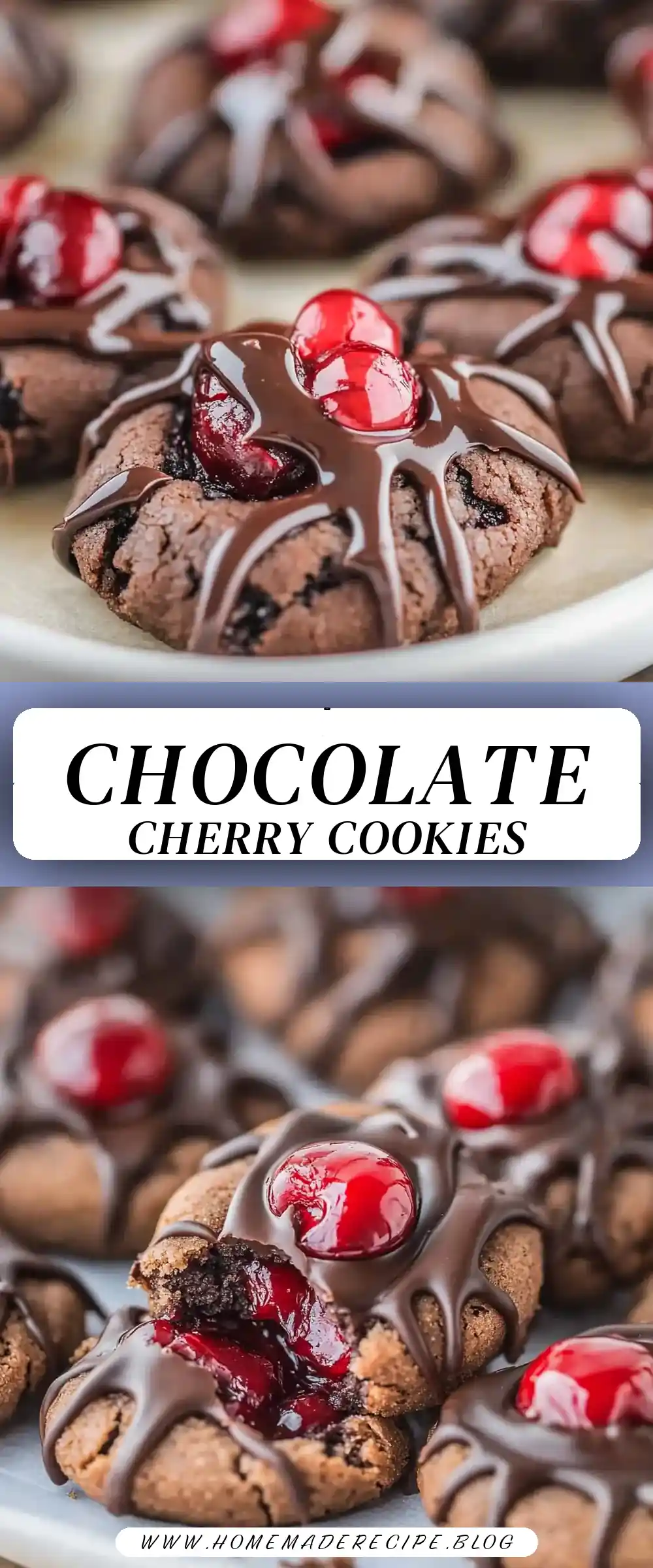
Chocolate Cherry Thumbprint Cookies
Ingredients
Equipment
Method
- In a large mixing bowl, cream butter and sugar together until light and fluffy.
- Mix in eggs, one at a time. Add vanilla and mix until combined.
- Add cocoa, salt, baking soda, baking powder, and flour. Mix until combined.
- Roll dough into 1 ½ inch balls. Place on a greased baking sheet or baking sheet lined with parchment paper.
- Press thumb into center of cookie to make a well. Place two cherries in each cookie.
- Bake at 350 degrees Fahrenheit for 10-12 minutes. Cool on baking sheet for 2 minutes.
- Remove to wire rack to finish cooling.
- Melt chocolate almond bark according to package directions. Drizzle over cookies.
- Let the chocolate set and serve immediately or store in an airtight container.