
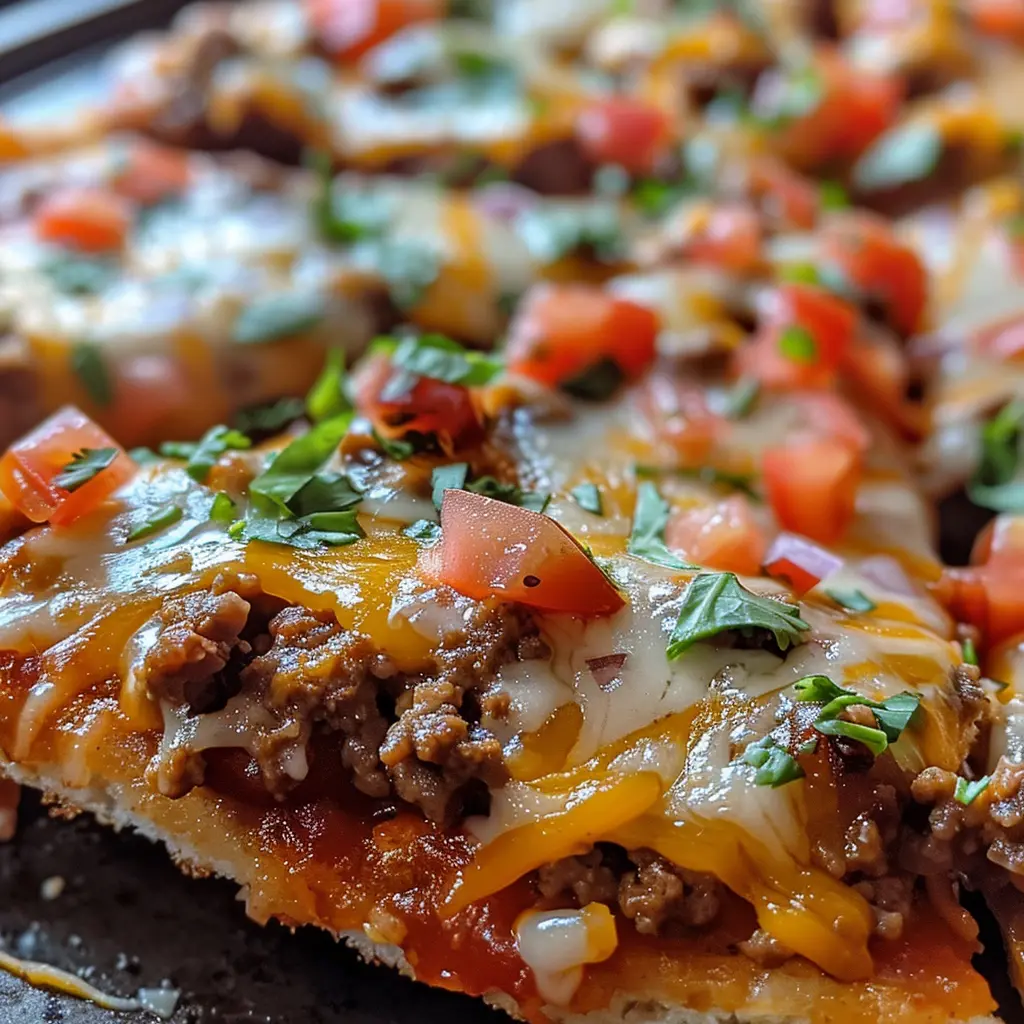
Copycat Taco Bell Mexican Pizza stacks two golden fried tortillas around a layer of seasoned taco beef and creamy refried beans, then finishes with zesty pizza sauce, a generous blanket of melted Mexican cheese, and fresh tomatoes and green onions on top. The result is everything the fast-food original promised but consistently underdelivered — and made fresh at home, it’s genuinely one of the most satisfying Tex-Mex meals you can put on a weeknight table in 35 minutes.
| Detail | Info |
|---|---|
| Prep Time | 20 minutes |
| Cook Time | 15 minutes |
| Total Time | 35 minutes |
| Servings | 4 |
| Difficulty | Easy to Medium |
| Cuisine | Tex-Mex / American |
Why This Recipe Works
The original Taco Bell Mexican Pizza is built around a single brilliant idea: two crispy fried tortillas sandwiching a savory beef-and-bean filling, topped like a pizza. What makes the homemade version better is control over every element. The tortillas can be fried to the exact level of crispness you prefer. The beef can be seasoned more generously. The cheese can be real Mexican blend rather than whatever processed product comes out of a fast-food kitchen at scale. The tomatoes can be fresh-diced that day rather than sitting under a heat lamp.
Frying the tortillas in half an inch of oil rather than baking or air-frying them is the technique that produces the authentic texture the original is known for. Baked tortillas get crispy but they also get dry and brittle in a way that fried tortillas don’t. Fried tortillas develop a golden, slightly puffy surface that has a satisfying crunch without shattering completely when you pick up a slice. The oil seals the exterior almost instantly, trapping moisture inside the tortilla and producing a texture that’s crispy on the surface and still slightly pliable within.
Warming the refried beans to a spreadable consistency before assembling is a step that significantly affects the final texture of the pizza. Cold refried beans spread unevenly and pull the tortilla with them — you end up with a thick pile in the center and bare edges at the corners. Warm beans spread smoothly and evenly in one motion, creating consistent coverage across the entire tortilla surface and ensuring every slice gets the same ratio of bean to meat.
The oven finish after assembly is what makes this a pizza rather than a layered tostada. Eight to ten minutes at 400 degrees F does two things: it melts the cheese into a cohesive, bubbly layer that bonds the top tortilla to the fillings below it, and it heats the entire stack through so every component is hot when it hits the table. The bake time also slightly crisps the bottom tortilla again if it has softened during assembly.
Adding the fresh toppings after the oven — not before — keeps them vibrant. Diced tomatoes and sliced green onions baked for 10 minutes turn limp, wet, and pale. Added after the oven, they stay crisp, colorful, and fresh-tasting, providing a textural and temperature contrast against the hot, melted cheese that makes each bite more interesting.
Ingredients
| Ingredient | Quantity | Notes |
|---|---|---|
| Ground beef | 1 pound | 80/20 blend for best flavor; drain thoroughly after browning |
| Taco seasoning | 1 packet | Store-bought packet works well; homemade gives more control over heat level |
| Water | 2/3 cup | Added with taco seasoning to simmer the meat sauce to the right consistency |
| Refried beans | 1 can (16 oz) | Traditional or black bean; warm until spreadable before using |
| Small flour tortillas | 8 | 6-inch tortillas for a size close to the original; fry until golden and crisp |
| Vegetable oil, for frying | About 1/2 inch depth | Canola or avocado oil both work; needs a high smoke point |
| Pizza sauce or enchilada sauce | 1/2 cup | Pizza sauce for the classic flavor; enchilada sauce for a more Tex-Mex profile |
| Mexican blend cheese, shredded | 2 cups | Freshly shredded melts better; divide evenly among the four pizzas |
| Roma tomato, diced | 1 | Added after baking; Roma holds its shape better than other varieties |
| Green onions, sliced | 2 | Added after baking for fresh flavor and color |
| Sliced black olives (optional) | 1/4 cup | Adds a briny, savory note; skip if not to your taste |
Step-by-Step Instructions
Phase 1: Prepare the Fillings
- Heat a large skillet over medium heat. Add the ground beef and cook, breaking it apart with a wooden spoon, until fully browned with no pink remaining, about 6 to 8 minutes. Drain the excess grease thoroughly — greasy taco meat makes the tortillas soggy faster and creates an unpleasant greasy layer between the tortillas and beans.
- Add the taco seasoning and water to the drained beef. Stir to combine and bring to a simmer. Cook for 4 to 5 minutes, stirring occasionally, until the water has mostly absorbed and the meat is coated in a thick, slightly saucy seasoning. The consistency should be moist but not wet — if it pools liquid, simmer another minute. Set aside.
- Warm the refried beans in a small saucepan over low heat, stirring frequently, until smooth and spreadable. Add a tablespoon of water if they’re too thick to spread easily. Alternatively, microwave in a covered bowl in 30-second intervals, stirring between each, until warm and smooth. Keep warm until needed.
Phase 2: Fry the Tortillas
- Pour vegetable oil into a clean skillet to a depth of about half an inch. Heat over medium-high heat until a small piece of tortilla dropped into the oil sizzles immediately — this indicates the oil is at the right frying temperature of around 350 degrees F.
- Working one at a time, carefully slide a tortilla into the hot oil. Fry for 1 to 2 minutes until the bottom is golden and crispy, then flip with tongs and fry the other side for another 1 to 2 minutes. The tortilla should be evenly golden with some slightly darker spots — pale means underdone and the texture won’t be crispy enough; very dark means the oil is too hot.
- Transfer each fried tortilla to a paper towel-lined plate or baking sheet and blot gently to remove excess oil. Repeat with all eight tortillas. Work quickly through this step and keep the tortillas in a single layer — stacking them while hot causes them to steam each other and lose their crispness.
Phase 3: Assemble and Bake
- Preheat the oven to 400 degrees F. Line a large baking sheet with parchment paper or foil.
- Place four fried tortillas on the prepared baking sheet. Spread a generous layer of warm refried beans over each one, going all the way to the edges. About a quarter of the can per tortilla is the right amount — enough to create a visible, even layer without the beans spilling over the sides.
- Spoon the seasoned taco meat evenly over the bean layer on each tortilla, dividing it equally among the four bases. Spread it into an even layer with the back of the spoon.
- Place a second fried tortilla on top of each meat-covered base, pressing gently to create a flat, even stack.
- Spoon the pizza sauce or enchilada sauce evenly over the top tortilla of each stack, spreading it to the edges. Use about two tablespoons per pizza.
- Sprinkle a generous handful of shredded Mexican cheese over each pizza, covering the sauce completely. About half a cup per pizza gives you the thick, bubbly cheese layer the original is known for.
- Bake for 8 to 10 minutes, until the cheese is fully melted, bubbly, and beginning to brown at the edges. The bottom tortilla should be sizzling slightly from the heat.
Phase 4: Top and Serve
- Remove the pizzas from the oven. Immediately top each one with diced fresh tomato, sliced green onions, and black olives if using. These toppings go on hot from the oven so the cheese is still tacky and they adhere to the surface rather than sliding off.
- Slice each pizza into quarters using a sharp knife or pizza cutter. Serve immediately while the cheese is still molten and the tortillas are at their crispest.
Chef Tips for Perfect Results
Use enchilada sauce instead of pizza sauce for a more authentic Taco Bell flavor. The original Mexican Pizza used a sauce closer to enchilada sauce than pizza sauce — slightly thinner, more chile-forward, and less sweet than standard pizza sauce. Red enchilada sauce from a can replicates this perfectly. Pizza sauce is the more accessible option and tastes great; enchilada sauce is the more authentic choice.
Season the beef beyond the taco packet. A standard taco seasoning packet produces a good result, but a pinch of smoked paprika and a half teaspoon of garlic powder stirred into the beef along with the packet adds depth that makes the meat taste more like restaurant-quality filling. A teaspoon of Worcestershire sauce in the beef while it browns also adds savory complexity that the taco packet alone doesn’t provide.
Let the fried tortillas cool completely before assembling. Hot fried tortillas placed directly under the refried beans soften quickly from the steam. Letting them cool for 5 minutes after frying keeps them at maximum crispness through the assembly and oven finish. They will re-crisp in the oven, but starting with a cool, firm tortilla gives you better structure throughout.
Add a layer of sour cream between the beans and the meat. A thin spread of sour cream applied over the bean layer before the taco meat goes on adds a cool, tangy creaminess that provides a flavor contrast inside the pizza. It partially cools during the bake and stays creamy rather than melting away, acting as a subtle counterpoint to the spiced meat and cheese above it.
Press the stacked tortillas together firmly before adding the top sauce. After placing the second tortilla on top of the meat, press down gently but firmly across the entire surface to compact the stack slightly. This keeps the pizza from sliding apart when sliced and ensures a cleaner cross-section when cut into quarters.
Common Mistakes to Avoid
Not draining the beef thoroughly. Excess grease left in the taco meat migrates into the refried beans and the tortilla during assembly, making the bottom tortilla soggy and the filling greasy rather than rich. Drain the beef completely after browning and blot with a paper towel if needed before adding the taco seasoning.
Using cold refried beans straight from the can. Cold, stiff refried beans drag the tortilla surface as you try to spread them and result in uneven coverage. Warm beans spread effortlessly and adhere to the tortilla surface without tearing or pulling. The 2 minutes it takes to warm them in the microwave is time well spent.
Stacking the tortillas while still hot from the oil. Hot tortillas stacked directly on top of each other steam each other and go soft within minutes. Lay them flat in a single layer on a paper towel-lined surface to cool and drain. If counter space is limited, a wire rack over a baking sheet works well and allows air circulation on both sides.
Skimping on the cheese. The melted cheese layer is the structural element that holds the pizza together when sliced and served. Too little cheese means the top tortilla slides freely when cut and the pizza falls apart into layers. Half a cup of shredded cheese per pizza is the minimum — go slightly over if you want the thick, bubbly coverage the original is known for.
Adding the fresh toppings before baking. Tomatoes and green onions that go into the oven with the pizza emerge limp, wet, and colorless after 10 minutes at 400 degrees F. They lose all their textural appeal and their fresh flavor cooks off completely. Always add fresh toppings after the pizzas come out of the oven.
Variations and Substitutions
Ground turkey version: Swap the ground beef for lean ground turkey seasoned with the same taco packet plus an extra pinch of cumin and smoked paprika. Turkey is leaner than beef and needs those extra seasonings to compensate for the milder flavor. The finished pizza is lighter and still genuinely delicious.
Vegetarian version: Skip the ground beef entirely and double the refried beans. Add a layer of seasoned black beans — a drained can mixed with a teaspoon of cumin and a pinch of chili powder — on top of the refried bean layer for a vegetarian pizza that has substantial protein and a satisfying texture without meat.
Air fryer tortillas: Brush both sides of each tortilla lightly with vegetable oil and air-fry at 375 degrees F for 3 to 4 minutes, flipping halfway, until golden and crispy. The air fryer produces a slightly drier crispness than pan-frying but requires significantly less oil. A good option if you want to reduce the oil content of the recipe.
Spicy version: Add diced pickled jalapeños to the taco meat layer and use pepper jack cheese in place of half the Mexican blend. Drizzle the finished pizza with sriracha or your favorite hot sauce before serving. Sliced fresh jalapeños added with the tomatoes and green onions provide additional heat with a fresh crunch.
Breakfast Mexican pizza: Replace the taco beef with scrambled eggs mixed with crumbled cooked bacon or chorizo, swap the pizza sauce for salsa, and use pepper jack cheese. Serve with sour cream and hot sauce on the side. This variation makes an impressive and filling weekend brunch that uses the same technique to completely different but equally satisfying effect.
Serving Suggestions
Serve each quarter-cut pizza on its own plate with small bowls of sour cream, guacamole, and salsa alongside for dipping or spooning. The crispy tortilla edges are ideal for scooping guacamole, and a dollop of sour cream on top of each slice adds a cool richness that plays well against the hot, spiced meat and cheese.
For a complete Taco Tuesday spread, serve alongside Mexican rice, a simple corn and black bean salad, and extra chips and salsa. The Mexican pizza holds its own as the centerpiece of the meal and requires only light sides to feel like a complete dinner. For individual servings at a casual gathering, cut each pizza into smaller pieces and serve on a large platter as a shareable appetizer.
Storage and Reheating
Refrigerator: Store assembled, baked Mexican pizzas in an airtight container in the refrigerator for up to 3 days. The tortillas soften considerably as they sit — this is the main tradeoff with storing them assembled. If you anticipate leftovers, store the components separately and assemble fresh portions as needed.
Reheating: The oven or air fryer are the best reheating methods for restoring the crispy tortilla texture. Place on a baking sheet and reheat at 375 degrees F for 8 to 10 minutes. The air fryer at 350 degrees F for 4 to 5 minutes works equally well and requires less preheat time. The microwave reheats the pizza quickly but produces a soft, chewy tortilla rather than a crispy one — acceptable for convenience but not the same experience.
Make-ahead strategy: Fry the tortillas up to 2 hours ahead and keep them at room temperature in a single layer. Cook the beef and warm the beans ahead of time and keep them warm. Assemble and bake immediately before serving for maximum crispness. This approach reduces the active cooking time at serving to about 15 minutes.
Nutritional Information
| Nutrient | Per Serving (1 pizza) |
|---|---|
| Calories | 680 |
| Protein | 38g |
| Carbohydrates | 52g |
| Fat | 34g |
| Saturated Fat | 14g |
| Fiber | 6g |
| Sodium | 1,240mg |
Nutritional values are estimates based on standard ingredients. Values will vary significantly based on the amount of oil absorbed during frying and specific brands used.
FAQ
Can I bake the tortillas instead of frying them?
Yes. Brush both sides of each tortilla lightly with vegetable oil and bake on a wire rack set over a baking sheet at 400 degrees F for 8 to 10 minutes, flipping halfway through, until golden and crispy. Baked tortillas are slightly drier and less uniformly golden than fried ones but are a viable lower-oil alternative. The texture is closer to a crispy baked chip than a fried tortilla — still good, just different. An air fryer at 375 degrees F for 3 to 4 minutes per side produces a result that sits between baked and fried in texture and is the best non-frying option.
What size tortillas work best?
Six-inch flour tortillas produce a pizza closest in size to the original Taco Bell version. Eight-inch tortillas make a larger, more generous pizza that needs more filling to maintain the right ratio of tortilla to meat and cheese — increase the beef and beans slightly if using larger tortillas. Corn tortillas can be used but are smaller and more fragile and require gentler handling during frying to avoid cracking.
Can I make the components ahead of time?
The taco beef can be made up to 3 days ahead and stored in the refrigerator — it actually improves as the flavors develop overnight. The refried beans can be warmed from the can right before assembly. The tortillas are best fried on the day of serving since they lose their crispness quickly once cooled. Assemble and bake immediately before eating for the best result.
How do I keep the pizzas from getting soggy?
Three practices maintain crispness: drain the taco beef thoroughly so no excess grease soaks into the tortilla, warm the beans so they spread easily without tearing the tortilla or pooling moisture, and serve immediately after baking. The longer a Mexican pizza sits after assembly, the more moisture from the fillings migrates into the tortillas. These are a made-to-order item — assemble, bake, and eat without delay for the crispest result.
Can I use corn tortillas instead of flour?
Corn tortillas can be used and produce a more authentic Mexican flavor, but they behave differently when fried. They’re smaller than flour tortillas, more fragile, and can crack if not handled carefully when hot. Fry them at a slightly lower temperature — around 325 degrees F — and handle gently with tongs. The finished pizza will be smaller and have a more corn-forward flavor that pairs particularly well with the enchilada sauce variation.
Conclusion
Copycat Taco Bell Mexican Pizza is a recipe that delivers on every dimension of the original while fixing all its limitations. The tortillas are crispier because they’re freshly fried. The beef is more flavorful because you can season it properly. The cheese is real and melted fresh. The toppings are added at the right moment. Thirty-five minutes from start to table, and the result is something that makes the drive-thru version feel like a pale imitation of what this dish was always supposed to be.