
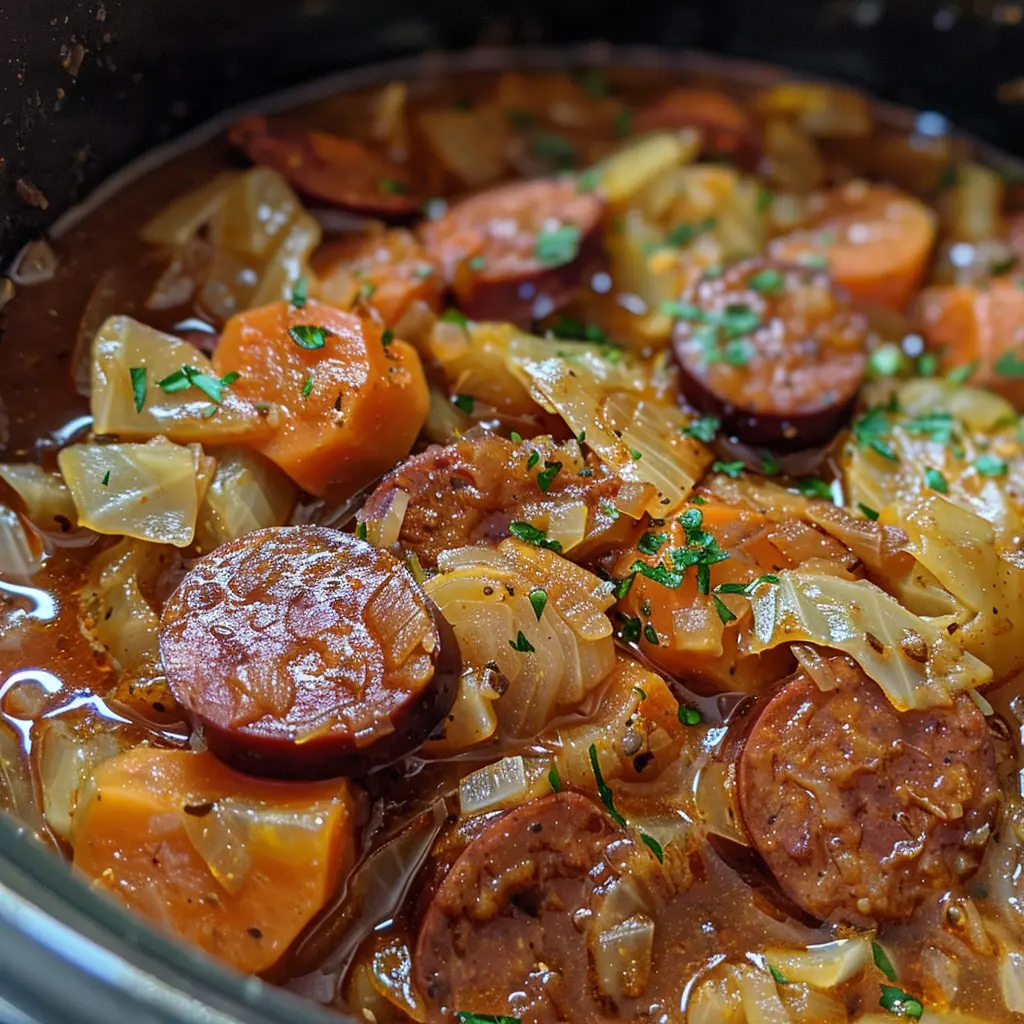
Slow cooker cabbage and sausage is the kind of meal that earns its place in the permanent weeknight rotation through sheer reliability. Smoky sliced sausage, tender cabbage, sweet carrots, and aromatics all simmer together in seasoned chicken broth for hours until the whole pot turns deeply savory and satisfying. Ten minutes of prep, one slow cooker, and dinner is waiting for you when you walk through the door.
| Detail | Info |
|---|---|
| Prep Time | 10 minutes |
| Cook Time | 6 to 7 hours (Low) / 3 to 4 hours (High) |
| Total Time | 6 to 7 hours 10 minutes |
| Servings | 6 |
| Difficulty | Easy |
| Cuisine | American Comfort Food |
Why This Recipe Works
The combination of smoked sausage and cabbage is one of the oldest and most reliable flavor pairings in home cooking, and the slow cooker is the ideal environment for it. Over the course of 6 to 7 hours on Low, the sausage releases its smoky, seasoned fat into the broth, the cabbage softens and sweetens as it cooks down, and the carrots and onion meld into the liquid and create a broth that tastes like it came from a long-simmered stew rather than a weeknight quick-cook. The slow cooker does in hours what takes a stovetop pot all afternoon to achieve.
Smoked sausage is the right protein for this recipe precisely because of its cooking stability. Unlike raw sausage that needs to be cooked through before it’s safe to eat, smoked sausage is already fully cooked and only needs time in the slow cooker to transfer its flavor into the broth and absorb the surrounding flavors in return. The long cook time does not make it mushy or overcooked — it becomes more flavorful and tender as it goes, and the fat rendered from the sausage enriches every vegetable in the pot.
Cabbage is one of the few vegetables that genuinely improves with long, slow cooking. Raw cabbage has a slightly sulfurous, sharp edge to its flavor that most people find less appealing than the sweet, silky, almost buttery quality it develops after hours of gentle heat. The high water content that makes raw cabbage crisp becomes an asset in the slow cooker — it releases its moisture gradually into the broth, adding body and a subtle sweetness that balances the savory sausage and paprika.
Paprika and thyme are a deliberate pairing here. Paprika adds color, a slight sweetness, and a mild warmth to the broth that complements the smokiness of the sausage. Thyme adds an herbal earthiness that grounds all the other flavors and gives the finished dish a coherent, well-seasoned quality. Neither is assertive enough to dominate — they work in the background to make everything taste more like itself.
The tablespoon of olive oil drizzled over the top before cooking might seem like a small detail, but it serves a real function. As the slow cooker heats, the oil disperses through the broth and helps carry the fat-soluble flavor compounds from the paprika and thyme throughout the entire pot. It also adds a slight richness to the broth that water-based cooking alone doesn’t produce.
Ingredients
| Ingredient | Quantity | Notes |
|---|---|---|
| Cabbage, chopped | 1 head | Green cabbage; chop into roughly 2-inch pieces so it holds some texture |
| Smoked sausage, sliced | 1 pound | Kielbasa or andouille both work; slice into half-inch rounds |
| Carrots, sliced | 2 | Slice into half-inch rounds for even cooking |
| Onion, chopped | 1 | Yellow or white onion; roughly chopped |
| Garlic cloves, minced | 4 | Fresh garlic; adds aromatic depth to the broth |
| Chicken broth | 2 cups | Low-sodium allows seasoning control; beef broth works too for a richer flavor |
| Paprika | 1 teaspoon | Sweet or smoked; smoked paprika amplifies the sausage flavor |
| Dried thyme | 1 teaspoon | Adds herbal earthiness; pairs naturally with cabbage and sausage |
| Black pepper | 1/2 teaspoon | Freshly cracked for best flavor |
| Salt | 1/2 teaspoon | Taste and adjust at the end since sausage adds significant sodium |
| Olive oil | 1 tablespoon | Drizzled over the top before cooking; carries fat-soluble flavors through the broth |
Step-by-Step Instructions
Phase 1: Load the Slow Cooker
- Chop the cabbage into roughly 2-inch pieces. Remove the tough outer leaves and the hard core before chopping. Don’t worry about making the pieces perfectly uniform — some variation in size is fine and actually creates a more interesting texture in the finished dish, with some pieces almost melting into the broth and others retaining a slight chew.
- Place the chopped cabbage in the bottom of the slow cooker insert. Cabbage goes on the bottom because it takes the longest to cook down and benefits most from being closest to the heat source. It also provides a slightly elevated bed that keeps the sausage from sitting directly on the bottom of the insert.
- Add the sliced sausage, carrots, chopped onion, and minced garlic on top of the cabbage. Distribute them as evenly as possible across the surface of the cabbage rather than piling them in the center — even distribution promotes more uniform cooking.
- Pour the chicken broth evenly over all the ingredients. The broth will look like it’s not enough liquid at this stage — that’s correct. The cabbage and vegetables will release significant moisture as they cook, and the broth level will rise considerably during the first two hours of cooking.
- Sprinkle the paprika, thyme, salt, and black pepper evenly over the surface of the ingredients. Drizzle the olive oil over the top.
- Stir gently once to distribute the seasonings through the top layers. Don’t stir vigorously — you’re just nudging the spices off the surface and into the ingredients rather than fully mixing everything, which will happen naturally during the long cook.
Phase 2: Cook and Finish
- Place the lid on the slow cooker. Cook on Low for 6 to 7 hours or on High for 3 to 4 hours. Resist the urge to lift the lid during cooking — each time the lid is opened, the slow cooker loses 20 to 30 minutes of accumulated heat and steam. The only time to check is in the last 30 minutes of the estimated cook time.
- The dish is done when the cabbage is fully tender and has taken on a slightly silky texture, the carrots are soft all the way through when pierced with a fork, and the broth has turned a deep, golden-amber color from the sausage and paprika.
- Stir the contents well before serving to redistribute the sausage, vegetables, and broth. Taste and adjust the seasoning with additional salt, pepper, or a pinch more paprika as needed. The sausage contributes significant sodium during cooking, so the dish may need less additional salt than you’d expect.
- Ladle into deep bowls, making sure each serving gets a good mix of sausage slices, vegetables, and broth. Serve immediately.
Chef Tips for Perfect Results
Use smoked paprika instead of sweet paprika. Smoked paprika amplifies the smoky quality of the sausage and gives the broth a deeper, more complex flavor. It’s a one-for-one swap that produces a noticeably richer finished dish. If you only have sweet paprika, add a half teaspoon of smoked paprika or a pinch of chipotle powder alongside it to get some of that smokiness back.
Brown the sausage before adding it to the slow cooker. Two minutes per side in a hot skillet before it goes into the slow cooker creates a caramelized crust on each sausage slice that adds flavor and visual appeal to the finished dish. Browned sausage also holds its shape better during the long cook rather than becoming pale and soft. The extra 8 minutes is worth it if you have the time.
Add potatoes for a more substantial one-pot meal. Two medium russet or Yukon Gold potatoes, peeled and cubed, added with the carrots at the start of cooking become fork-tender by the time the cabbage is done. They absorb the seasoned broth and sausage flavor and make the dish filling enough that no side dishes are needed. Cut them into 1-inch cubes so they cook evenly during the 6 to 7 hours.
Finish with a splash of apple cider vinegar. A teaspoon of apple cider vinegar stirred in right before serving brightens all the flavors and cuts through the richness of the sausage fat in the broth. It’s the kind of finishing touch you notice immediately when you taste it and miss when it’s not there. Start with half a teaspoon, taste, and add more if the dish seems to need more lift.
Choose kielbasa for a milder dish, andouille for more heat. The type of smoked sausage you use significantly shapes the flavor profile of the finished dish. Polish kielbasa has a mild, garlicky smokiness that’s universally appealing and works well for families with varying spice tolerances. Andouille has a more assertive, spicy character from cayenne and other seasonings that makes the dish more complex and heat-forward. Either is excellent — the choice depends on who you’re feeding.
Common Mistakes to Avoid
Chopping the cabbage too small. Very finely chopped cabbage breaks down completely during the long cook and disappears into the broth rather than contributing any texture to the finished dish. Two-inch pieces are the right size — they soften to a tender, slightly silky texture while still being identifiable as cabbage when the dish is done.
Opening the lid repeatedly during cooking. Every time the slow cooker lid is lifted, 20 to 30 minutes of accumulated heat escapes and the cook time extends. Trust the process and keep the lid on. Check once in the last 30 minutes of the estimated time to assess doneness — that’s the only time the lid needs to come off before serving.
Adding too much liquid. Two cups of chicken broth is the right amount for this recipe. The cabbage and vegetables release substantial moisture during cooking — often as much as a cup or more — and the finished dish will have considerably more liquid than you started with. Adding more broth at the start produces a thin, watery result that lacks the concentrated flavor of a properly balanced broth-to-vegetable ratio.
Not tasting before serving. The smoked sausage contributes a variable amount of sodium during the long cook depending on the brand. Always taste the dish before adding any final salt. Some brands are saltier than others, and what tastes perfectly seasoned with one brand of kielbasa may be oversalted with a different brand. Taste first, then adjust.
Serving without stirring. After hours in the slow cooker, the sausage tends to float toward the top and the vegetables settle toward the bottom. A thorough stir before serving redistributes everything evenly and ensures each bowl gets a proper mix of sausage, vegetables, and seasoned broth rather than a bowl that’s all cabbage or all sausage.
Variations and Substitutions
Add diced potatoes: Peel and cube two medium potatoes and add them with the carrots at the start of cooking. Yukon Gold potatoes hold their shape best during the long cook; russets soften more and partially dissolve into the broth, naturally thickening it. Both are delicious options.
Red cabbage version: Swap the green cabbage for red cabbage for a dish with a striking purple color and a slightly more assertive, peppery flavor. Red cabbage takes slightly longer to soften than green — add an extra 30 to 60 minutes to the cook time. A tablespoon of apple cider vinegar added with the broth helps preserve the vibrant color.
Italian sausage variation: Replace the smoked sausage with sliced Italian sausage (sweet or hot) and add a can of diced tomatoes with the broth. Replace the thyme with Italian seasoning. The result has a more Mediterranean character with the fennel and herb notes of Italian sausage playing against the mild cabbage and tomato broth.
Spicy version: Add a half teaspoon of red pepper flakes with the seasonings and use andouille sausage instead of kielbasa. A diced jalapeño added with the onion amplifies the heat further. Finish with a few dashes of hot sauce before serving for a version that has a consistent, building warmth throughout every bite.
Add white beans: Drain and rinse a can of white cannellini beans and stir them in during the last 30 minutes of cooking. The beans add protein, fiber, and a creamy texture that makes the broth feel thicker and more substantial. White beans and smoked sausage is a classic combination that works particularly well in this dish.
Serving Suggestions
This dish produces a generous amount of flavorful broth alongside the meat and vegetables, so deep bowls are the right vessel. Crusty bread on the side is almost essential — the broth is too good to leave in the bowl and bread is the most satisfying way to get the last of it. Cornbread alongside leans the dish in a Southern direction and pairs particularly well with the kielbasa and cabbage combination.
For a heartier plate, serve over mashed potatoes or buttered egg noodles with the sausage and vegetables spooned over the top and the broth ladled over everything. This approach soaks the starch in the seasoned liquid and produces a complete, deeply satisfying dinner plate that needs nothing else alongside it.
Storage and Reheating
Refrigerator: Store cooled leftovers in an airtight container for up to 4 days. The flavors deepen overnight and the dish tastes even better the next day as the broth continues to meld. The cabbage will soften further in the refrigerator — this is expected and doesn’t affect the flavor.
Freezer: Freeze in airtight freezer-safe containers for up to 3 months. Thaw overnight in the refrigerator before reheating. Note that the cabbage texture changes somewhat after freezing and thawing — it becomes softer and less distinct. The flavor is unaffected.
Reheating: Warm in a pot over medium-low heat, stirring occasionally, until heated through. Add a splash of chicken broth if the liquid has been absorbed and the dish seems dry. Individual portions reheat well in the microwave in 60-second intervals, stirring between each, until uniformly hot.
Nutritional Information
| Nutrient | Per Serving (approx.) |
|---|---|
| Calories | 340 |
| Protein | 18g |
| Carbohydrates | 16g |
| Fat | 22g |
| Saturated Fat | 7g |
| Fiber | 4g |
| Sodium | 880mg |
Nutritional values are estimates based on standard kielbasa and will vary significantly based on the specific sausage brand used.
FAQ
Can I use raw sausage instead of smoked sausage?
Raw sausage links or bulk sausage can be used but require a different approach. Brown them thoroughly in a skillet over medium-high heat until fully cooked through before adding to the slow cooker. Raw sausage added directly to a slow cooker cooks to a safe temperature eventually, but it doesn’t brown and the texture tends to be soft and pale rather than the firm, slightly caramelized texture of pre-browned sausage. The flavor is also less developed without the browning step. If using raw sausage, browning first is strongly recommended.
Will the cabbage really fit in the slow cooker?
A full head of cabbage chopped into 2-inch pieces looks like an enormous volume before cooking but compresses rapidly once the heat is applied. Fill the slow cooker to the top with the chopped cabbage — it will cook down to about a third of its raw volume within the first hour. If the slow cooker lid won’t close over the raw cabbage, add as much as you can fit with the lid on and check after an hour; you’ll likely be able to stir in the remaining cabbage at that point as the first batch has wilted significantly.
Can I add more vegetables?
Yes. Celery, parsnips, turnips, and bell peppers all work well in this dish. Add them at the same time as the carrots. Denser vegetables like turnips and parsnips need the full cook time to soften. Softer additions like bell pepper and zucchini will be very soft after 6 hours — if you want them to retain more texture, add them in the last hour of cooking. Baby potatoes added whole at the start become perfectly tender and make the dish a complete one-pot meal.
What’s the difference between cooking on Low vs. High?
Both settings ultimately bring the slow cooker contents to the same final temperature, but they get there at different rates. Low heat over 6 to 7 hours allows the collagen in the sausage to render slowly and the flavors to develop more gradually, producing a richer, more cohesive broth. High heat over 3 to 4 hours produces a fully cooked dish with good flavor but slightly less depth. For this recipe, Low is preferred when you have the time — the difference in the broth quality is noticeable.
Can I make this on the stovetop instead?
Yes. Brown the sausage slices in a large Dutch oven or stockpot over medium-high heat for 2 minutes per side, then remove and set aside. Add the onion and garlic to the same pot and cook for 3 minutes. Add the cabbage, carrots, broth, and seasonings. Bring to a boil, reduce to a low simmer, cover, and cook for 30 to 40 minutes until the cabbage and carrots are tender. Return the sausage to the pot for the last 5 minutes of cooking. The stovetop version is faster and produces a slightly different — slightly firmer — vegetable texture than the slow cooker version.
Conclusion
Slow cooker cabbage and sausage is the kind of recipe that seems almost too simple to be as good as it is. Ten minutes of prep and a slow cooker do all the work, and what comes out after 6 hours is a deeply flavorful, satisfying meal that tastes like it required significantly more effort than it did. Make it on a Monday morning and it’s ready for dinner without any further thought. Make it on a Sunday and the leftovers carry you through the week. Either way, it earns its place as a staple recipe in any busy household.