
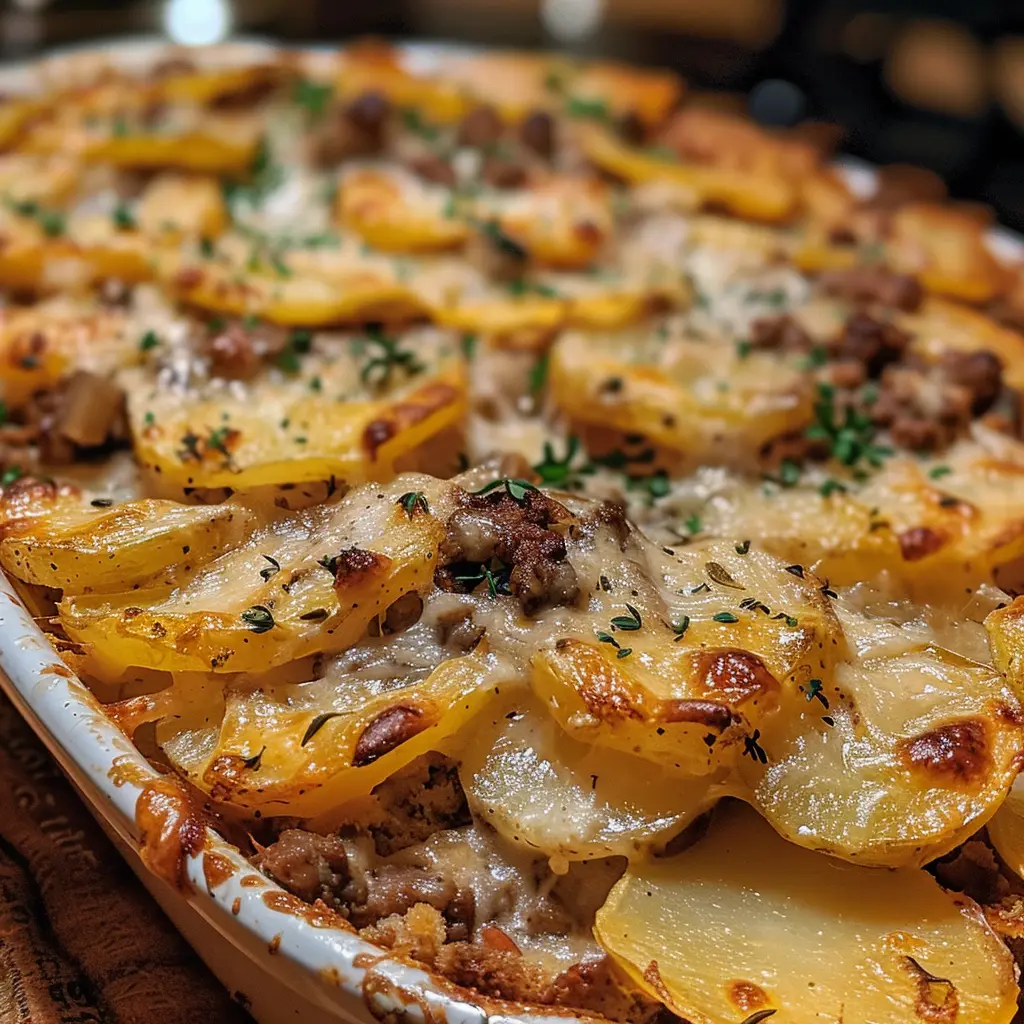
Poor man’s casserole layers thinly sliced potatoes, seasoned ground beef, and sweet onion beneath a creamy mushroom sauce and bakes low and slow into a bubbling, golden-topped dish that feeds a family generously from pantry staples most households already keep on hand. Born from the resourcefulness of Depression-era cooking, this is a recipe that asks very little and delivers a genuinely comforting dinner every single time.
| Detail | Info |
|---|---|
| Prep Time | 15 minutes |
| Cook Time | 1 hour |
| Rest Time | 5 minutes |
| Total Time | 1 hour 20 minutes |
| Servings | 4 to 6 |
| Difficulty | Easy |
| Cuisine | American / Depression-Era |
Why This Recipe Works
The layering method is the structural logic that makes this casserole work. Potatoes on the bottom sit closest to the oven heat and have the longest cook time — they need the full hour to soften completely. Beef in the middle acts as a flavor-rich separator between the starchy potato layers and the creamy sauce above. Onion distributed through the layers softens and sweetens as the casserole bakes, releasing moisture that distributes through the dish and contributes to the sauce. Every layer is in exactly the right position for the heat and timing to work properly.
Whisking the cream of mushroom soup with milk before pouring it over the casserole is not just about convenience. Undiluted condensed soup spread directly over the ingredients stays in a concentrated layer at the top rather than flowing down through the potato and beef layers below. Thinned with milk to a pourable consistency, it seeps down between the layers during baking and infuses every component with its savory, mushroom-flavored sauce from the moment the dish goes into the oven. The finished casserole has sauce throughout rather than only at the top.
Covering the casserole with foil for the first 45 to 50 minutes is what allows the potatoes to cook through properly. Covered, the trapped steam creates an environment similar to braising — the potatoes cook in moist heat that penetrates them fully without the surface drying out. Uncovering for the last 10 to 15 minutes allows the moisture to evaporate from the top layer and the surface to develop the lightly golden, slightly caramelized finish that makes a baked casserole look appealing and adds a slight textural contrast to the creamy interior.
Browning the beef before it goes into the casserole is the step that elevates this from a simple layered dish to something with genuine flavor depth. Raw ground beef added to a casserole cooks through safely during the hour of baking, but it never develops the complex, savory flavor that comes from browning. The Maillard reaction that occurs when beef browns in a hot skillet creates hundreds of new flavor compounds that infuse the mushroom sauce and the potato layers during the long oven cook. Browned beef makes the entire casserole taste richer and more complete.
The rest period after the casserole comes out of the oven is important for the same reason it matters with any braised or sauced dish — the sauce has been bubbling throughout the bake and needs a few minutes to settle and thicken slightly before the casserole is cut. Serving immediately results in a watery plate; five minutes of rest produces a casserole that holds together when scooped and has a sauce of the right consistency.
Ingredients
| Ingredient | Quantity | Notes |
|---|---|---|
| Ground beef | 1 pound | 80/20 blend for best flavor; drain excess fat after browning |
| Medium potatoes, thinly sliced | 4 | Russet or Yukon Gold; slice about 1/8 inch thick for full tenderness in 1 hour |
| Cream of mushroom soup, condensed | 1 can (10.5 oz) | Do not dilute before mixing with milk |
| Whole milk | 1 cup | Whole milk for the richest sauce; 2% works but produces a thinner result |
| Onion, sliced | 1 | Yellow or white onion; sliced into thin rings or half-moons |
| Salt and black pepper | To taste | Season each layer as you build the casserole |
Step-by-Step Instructions
Phase 1: Prep and Brown the Beef
- Preheat the oven to 350 degrees F. Grease a 9×13-inch baking dish or a 2.5-quart casserole dish with butter or cooking spray.
- Peel and slice the potatoes as thinly as possible — about an eighth of an inch. A mandoline slicer produces perfectly even slices in seconds; a sharp knife works well too. Even thickness is important: thicker slices won’t soften fully in the hour of baking, and you’ll end up with a casserole where some potato pieces are perfectly tender and others are still firm. Set the sliced potatoes aside.
- Heat a large skillet over medium heat. Add the ground beef and cook, breaking it apart with a wooden spoon, until fully browned with no pink remaining, about 6 to 8 minutes. Drain any excess grease and set the beef aside.
- In a medium bowl, whisk together the condensed cream of mushroom soup and milk until fully smooth and combined. The mixture should be pourable but still slightly thick. Set aside.
Phase 2: Layer the Casserole
- Arrange half the sliced potatoes in an even, overlapping layer across the bottom of the prepared baking dish. Season this layer generously with salt and black pepper.
- Distribute the browned ground beef evenly over the potato layer.
- Scatter the sliced onion evenly over the beef layer. Season again with salt and pepper.
- Arrange the remaining potato slices in an overlapping layer over the onion and beef. Season once more with salt and pepper.
- Pour the soup and milk mixture slowly and evenly over the entire top of the casserole. Tilt the dish slightly to encourage the sauce to flow down through the layers if it pools in one area.
Phase 3: Bake and Rest
- Cover the baking dish tightly with aluminum foil. Bake for 45 to 50 minutes, until the potatoes are nearly tender when pierced through the foil with a knife.
- Remove the foil and bake uncovered for an additional 10 to 15 minutes, until the top is lightly golden and the sauce is bubbling around the edges. If the top is browning too quickly before the potatoes are fully tender, replace the foil and give it another 10 minutes covered.
- Remove from the oven and allow the casserole to rest for 5 minutes before serving. Scoop portions with a large spoon, making sure each serving gets potato layers, beef, and sauce.
Chef Tips for Perfect Results
Slice the potatoes as thin as possible. This is the single most important prep step in the recipe. Potatoes sliced thicker than a quarter inch may not fully soften in the one-hour bake time, leaving you with a casserole that’s perfect in every way except for firm, undercooked potato pieces. An eighth of an inch is the target. If you don’t have a mandoline, work slowly with a sharp knife and aim for consistency over perfection.
Add a teaspoon of Worcestershire sauce to the beef. Stir it in during the last minute of browning, before the beef goes into the casserole. Worcestershire adds a savory, slightly tangy depth that makes the ground beef taste more complex without adding any identifiable flavor. It’s the difference between beef that tastes like seasoned ground meat and beef that tastes like it belongs in a dish that was thought about.
Layer with cheese. A cup of shredded sharp cheddar sprinkled over the beef layer before the second layer of potatoes goes on adds a melty, savory element that turns this casserole into something even more indulgent. The cheese melts down through the potato layer during baking and becomes part of the sauce. Add an additional half cup on top during the uncovered bake for a browned, cheesy surface.
Use a mandoline for the potato slices. A mandoline slicer set to an eighth of an inch produces perfectly even potato slices in under two minutes. Even thickness is critical for even cooking. If some slices are twice as thick as others, the thin ones will be overcooked before the thick ones soften. A mandoline eliminates that variable entirely and is one of the most useful tools for casseroles and gratins.
Season every layer. The seasoning in this casserole is applied in stages — each potato layer, the beef, and the onion all get their own pinch of salt and pepper as the dish is built. Seasoning only at the end or only in the sauce leaves the interior layers bland. Seasoning as you layer ensures every component is properly seasoned and the finished casserole tastes balanced from the first bite to the last.
Common Mistakes to Avoid
Slicing the potatoes too thick. Potato slices thicker than a quarter inch simply don’t cook through in one hour at 350 degrees F under a layer of sauce and foil. If you’re uncertain about the thickness of your slices, check the potatoes at the 45-minute mark by inserting a sharp knife through the foil — it should slide through the layers without resistance. If there’s resistance, recover and continue baking.
Skipping the foil cover. Baking this casserole uncovered for the full hour dries the top potato layer and reduces the sauce to a concentrated, sticky layer rather than a creamy one that flows through the dish. The covered bake for the first 45 to 50 minutes is what creates the braised, creamy interior. The uncovered finish is what creates the golden top. Both steps are necessary for the right result.
Not browning the beef. Adding raw ground beef directly to the casserole without browning first produces a casserole with gray, soft beef that has a flat, undeveloped flavor throughout. Browning takes 8 minutes and makes the beef taste like it belongs in a finished dish rather than like a raw ingredient that happened to get cooked inside the casserole.
Using skim or low-fat milk. The sauce in this casserole relies on the fat in whole milk to produce a creamy, cohesive result. Skim milk produces a thinner, more watery sauce that doesn’t cling to the potatoes the same way and can separate slightly during the long bake. Whole milk is worth using here for both texture and flavor.
Not resting before serving. The sauce is essentially boiling when the casserole comes out of the oven. Scooping immediately results in a watery, loose plate. Five minutes of rest allows the sauce to settle and thicken slightly so each portion scoops cleanly and the sauce stays with the food rather than pooling on the plate.
Variations and Substitutions
Add cheddar cheese: Sprinkle a cup of shredded sharp cheddar over the beef and onion layer before the top potato layer goes on. Add another half cup on top during the uncovered portion of the bake. The cheese melts into the sauce and creates a richer, more indulgent version of the original that most people prefer once they’ve tried it.
Cream of chicken or cream of celery soup: Either can replace the cream of mushroom soup for a slightly different flavor profile. Cream of chicken produces a milder, more neutral sauce. Cream of celery adds a subtle herbal note that works particularly well with the potato and onion layers. All three condensed soups perform identically in the recipe — the choice is purely one of flavor preference.
Add garlic: Two cloves of minced garlic stirred into the browned beef before it goes into the casserole add an aromatic depth that the original recipe lacks. Alternatively, half a teaspoon of garlic powder mixed into the soup and milk sauce distributes garlic flavor evenly throughout every layer.
Ground turkey version: Ground turkey works as a lighter substitute for the beef. It has a milder flavor, so season it more assertively during browning — garlic powder, onion powder, and a pinch of smoked paprika compensate for the leaner, milder meat. The finished casserole is lighter in color but equally satisfying in texture.
Add frozen peas or corn: A cup of frozen peas or corn scattered over the beef layer adds color, sweetness, and nutrition without affecting the cook time. They thaw and cook through during the hour of baking and add a pleasant pop of texture throughout the casserole.
Serving Suggestions
Serve directly from the baking dish with a large spoon, scooping through all the layers to give each portion potatoes, beef, and sauce. A simple green salad alongside provides a fresh, slightly acidic contrast to the rich, creamy casserole. Crusty bread or dinner rolls are ideal for the sauce. Steamed green beans or broccoli adds color and a vegetable component that the casserole itself doesn’t provide.
This is a dish that improves with a second serving — the sauce continues to thicken slightly as the casserole sits on the table, and the second scoop from the dish often has a richer, more concentrated sauce than the first. Let people go back for more.
Storage and Reheating
Refrigerator: Store cooled leftovers in an airtight container or covered baking dish for up to 4 days. The potatoes continue to absorb the sauce during storage and the casserole thickens considerably — add a splash of milk when reheating to loosen the sauce back to the right consistency.
Freezer: The assembled casserole can be frozen before or after baking for up to 3 months. If freezing before baking, assemble, cover tightly, and freeze. Thaw overnight in the refrigerator and bake as directed, adding 15 to 20 minutes to the covered bake time since the dish starts cold. If freezing after baking, cool completely before freezing in airtight portions. Thaw overnight before reheating.
Reheating: Cover with foil and reheat in a 325 degree F oven for 20 to 25 minutes until heated through. Add a splash of milk over the top before covering to restore the sauce consistency. Individual portions reheat well in the microwave in 60-second intervals, stirring the sauce around the potatoes between each, until uniformly hot.
Nutritional Information
| Nutrient | Per Serving (approx.) |
|---|---|
| Calories | 420 |
| Protein | 26g |
| Carbohydrates | 38g |
| Fat | 17g |
| Saturated Fat | 7g |
| Fiber | 3g |
| Sodium | 640mg |
Nutritional values are estimates based on 80/20 ground beef and whole milk. Values will vary based on specific ingredients and portion sizes.
FAQ
How do I know when the potatoes are fully cooked?
The most reliable test is to insert a sharp paring knife through the casserole — it should slide through the potato layers without any resistance. If you feel any firmness when the knife hits a potato slice, the casserole needs more time. Replace the foil and continue baking in 10-minute increments, checking between each. Properly cooked potatoes offer absolutely no resistance to a sharp knife — the blade should feel like it’s passing through butter.
Can I assemble this casserole the night before and bake it the next day?
Yes. Assemble completely, cover tightly with foil, and refrigerate overnight. When ready to bake, add 15 to 20 minutes to the covered bake time since the casserole starts cold. Check potato doneness at the 60-minute mark rather than the 45-minute mark. This is actually a useful make-ahead approach for busy weeknight dinners — 15 minutes of morning assembly produces a dinner that requires only 75 minutes in the oven when you get home.
Can I use sweet potatoes instead of regular potatoes?
Sweet potatoes work and produce a sweeter, more complex flavor profile that contrasts interestingly with the savory beef and mushroom sauce. They cook at roughly the same rate as regular potatoes at the same thickness, so the bake time stays the same. The finished casserole has a more orange-tinted appearance and a slightly different texture — sweet potatoes become slightly softer than russet potatoes at the same degree of doneness.
Why is my sauce watery instead of creamy?
A watery sauce usually means either the foil was removed too early before enough moisture had cooked off, the casserole wasn’t rested long enough before serving, or the potatoes released more liquid than usual during baking. If the sauce seems thin after the recommended bake time, return the casserole to the oven uncovered for an extra 5 to 10 minutes to allow more moisture to evaporate. A 5-minute rest after pulling it from the oven also allows the sauce to tighten considerably — patience here makes a real difference.
What’s the historical background of this casserole?
Depression-era cooking was defined by the need to feed families well using the least expensive ingredients available. Ground beef, potatoes, onions, and canned condensed soup — which became widely available and affordable in the 1930s through companies like Campbell’s — were among the most accessible foods during the Great Depression. Casseroles like this one stretched small amounts of protein across large volumes of starch to create filling, satisfying meals that cost very little. The resourcefulness and ingenuity of Depression-era home cooks produced a category of recipes that remain some of the most practically useful in American home cooking.
Conclusion
Poor man’s casserole is a recipe that earns its place in the modern kitchen the same way it earned its place in Depression-era homes — it feeds people well, it costs very little, and it asks almost nothing of the cook. Six ingredients, one baking dish, and an hour in the oven produce a dinner that’s warm, filling, and deeply satisfying in the way only simple, honest food can be. It’s a reminder that the best meals don’t require expensive ingredients or complicated techniques. They require good layering, proper seasoning, and enough time for everything to come together.