
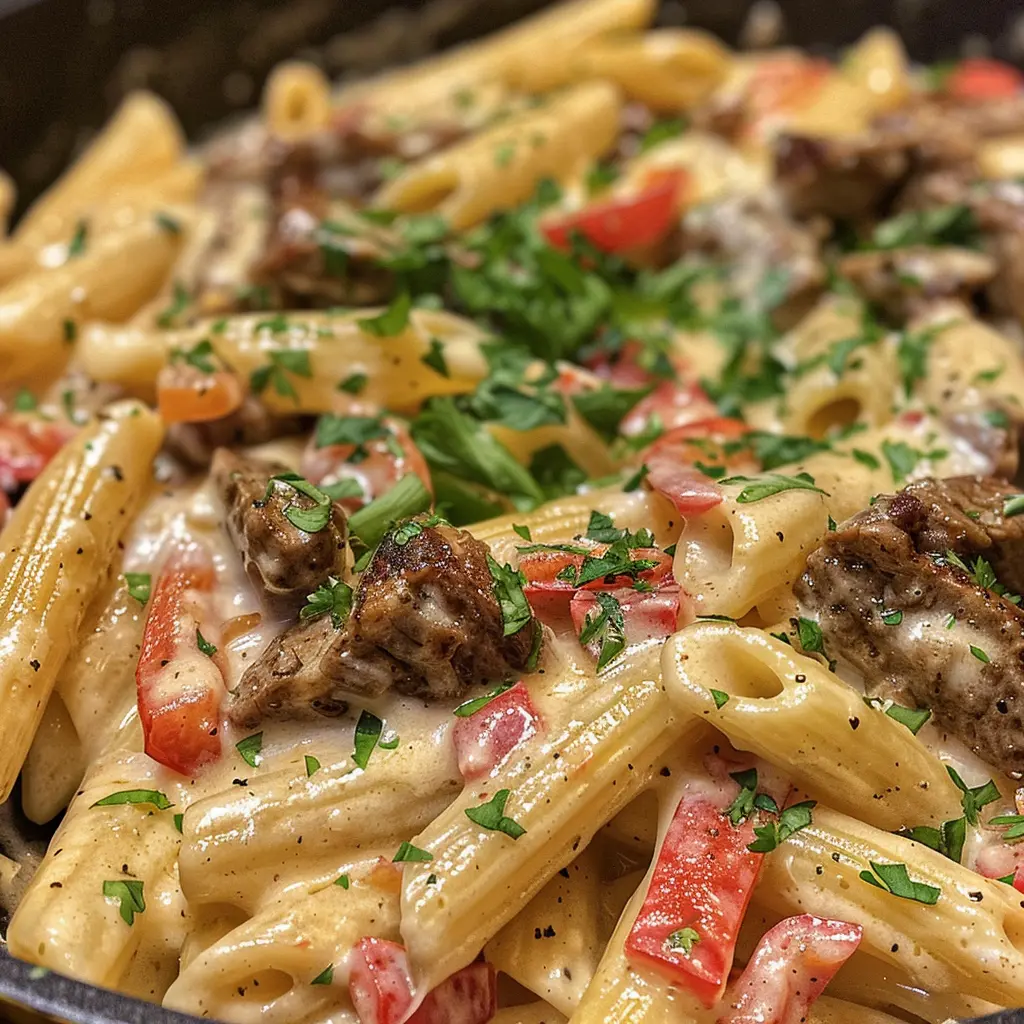
Creamy steak penne pasta loads al dente penne with juicy seared steak strips, caramelized bell peppers, and a triple-cheese cream sauce made from mozzarella, cheddar, and Parmesan that coats every inch of pasta in something velvety and deeply savory. This is the kind of pasta that makes you forget every other pasta recipe you know.
| Detail | Info |
|---|---|
| Prep Time | 15 minutes |
| Cook Time | 25 minutes |
| Total Time | 40 minutes |
| Servings | 4 |
| Difficulty | Medium |
| Cuisine | American / Italian-Inspired |
Why This Recipe Works
Searing the steak before anything else — in a very hot pan with butter and olive oil — is the move that elevates this pasta from a cream sauce with meat to something genuinely craveable. The Maillard reaction at high heat creates a caramelized, deeply savory crust on each steak slice that adds a flavor dimension no amount of seasoning in the sauce can replicate. Those browned bits left in the pan after the steak comes out aren’t waste — they’re flavor that gets picked up by the butter and garlic in the next step and carried into the cream sauce.
The butter and olive oil combination for searing is deliberate. Olive oil has a higher smoke point and handles the initial high heat without burning. Butter adds richness and promotes browning through its milk solids, which caramelize more readily than pure fat. Together they produce a cooking fat that’s both stable at searing temperatures and deeply flavorful. Using only butter risks burning; using only olive oil loses some of the richness that makes this dish feel indulgent.
The triple-cheese sauce — mozzarella for stretch and melt, cheddar for sharpness and color, Parmesan for salty umami depth — uses each cheese for its specific contribution. Mozzarella alone produces a bland, pale sauce. Cheddar alone can be too sharp and break the cream sauce at high heat. Parmesan alone produces a dry, grainy sauce. Together they create a sauce that’s visually golden, complex in flavor, stretchy in texture, and stable enough to coat the pasta without separating.
Adding milk alongside the heavy cream lightens the sauce slightly without sacrificing the creaminess that defines this dish. Pure heavy cream produces a very rich, very thick sauce that can overwhelm the steak and vegetable flavors. The addition of milk brings the fat content down slightly and produces a sauce that’s still unmistakably creamy but lets the other flavors come through more clearly. The ratio — more cream than milk — keeps the sauce on the rich side of the spectrum where this dish belongs.
Cooking the bell peppers after the steak until they’re soft and slightly caramelized adds a sweet, slightly charred note that plays beautifully against the rich cheese sauce and savory beef. Raw or barely softened bell peppers in a cream pasta have a grassy, vegetal sharpness that doesn’t integrate into the sauce. Properly cooked, caramelized peppers become sweet and silky and add a complementary flavor rather than a competing one.
Ingredients
| Ingredient | Quantity | Notes |
|---|---|---|
| Penne pasta | 12 oz | Cook al dente; the pasta finishes cooking in the sauce |
| Beef steak, sliced thin | 12 oz | Sirloin, ribeye, or flank steak; slice against the grain into strips |
| Butter | 2 tablespoons | Combined with olive oil for searing; adds richness and browning |
| Olive oil | 2 tablespoons | Higher smoke point than butter; prevents burning during searing |
| Garlic, minced | 4 cloves | Fresh garlic; added after the steak for aromatic depth |
| Onion, chopped | 1 medium | Yellow or white onion; sauteed until soft and slightly golden |
| Bell peppers (red, green, yellow) | 1 of each | Sliced into strips; cooked until soft and slightly caramelized |
| Heavy cream | 1 cup | Full-fat for the richest, most stable cream sauce |
| Whole milk | 1/2 cup | Lightens the sauce slightly without sacrificing creaminess |
| Tomato paste (optional) | 1 tablespoon | Adds slight tang and depth; stir in with the cream |
| Mozzarella cheese, shredded | 3/4 cup | Low-moisture; provides stretch and mild creaminess |
| Cheddar cheese, shredded | 1/2 cup | Sharp cheddar for the most flavor impact |
| Parmesan cheese, grated | 1/2 cup | Freshly grated dissolves most smoothly into the sauce |
| Salt | To taste | Season at multiple stages; pasta water, steak, and sauce |
| Black pepper | 1 teaspoon | Freshly cracked; use generously for this style of dish |
| Paprika | 1 teaspoon | Sweet or smoked; adds warmth and color to the sauce |
| Chili flakes | 1/2 teaspoon | Adjust to your heat preference; adds background warmth |
| Italian herbs (oregano, basil) | 1 teaspoon total | Dried; added with the cream for herbal depth |
| Fresh parsley, chopped | For garnish | Added just before serving for color and freshness |
Step-by-Step Instructions
Phase 1: Cook the Pasta
- Bring a large pot of generously salted water to a boil. Add the penne and cook for 1 to 2 minutes less than the package directions indicate — it should be slightly underdone since it will finish cooking in the sauce. Reserve 1 cup of pasta cooking water before draining — this starchy water is useful for adjusting sauce consistency later. Drain the pasta and set aside.
Phase 2: Sear the Steak
- Slice the steak against the grain into thin strips, about a quarter inch thick. Pat them completely dry with paper towels — moisture on the surface of the meat creates steam and prevents proper searing. Season generously with salt, black pepper, and paprika on all sides.
- Heat 1 tablespoon each of butter and olive oil in a large, wide skillet over high heat until the butter is melted and the pan is very hot — a drop of water should sizzle and evaporate immediately. Add the steak strips in a single layer without crowding. If your pan isn’t large enough to fit all the steak without overlapping, sear in two batches. Cook without moving for 1 to 2 minutes until deeply browned on the bottom, then flip and cook for another minute. The steak should be seared on the outside but still slightly pink in the center — it will finish cooking when returned to the sauce. Transfer to a plate and set aside.
Phase 3: Build the Sauce Base
- Reduce the heat to medium. Add the remaining butter and olive oil to the same pan. Add the chopped onion and cook, stirring occasionally, for 3 to 4 minutes until softened and beginning to turn golden at the edges.
- Add the sliced bell peppers and cook for 5 to 6 minutes, stirring occasionally, until softened and slightly caramelized. The peppers should be limp and have some golden-brown color — pale, barely softened peppers don’t have the sweetness that makes this dish work.
- Add the minced garlic and cook for 30 seconds to 1 minute, stirring constantly, until fragrant. Reduce the heat to medium-low if the garlic starts to color too quickly — burnt garlic will make the entire sauce bitter.
- If using tomato paste, stir it into the pan with the vegetables and cook for 60 seconds, stirring constantly, until it darkens slightly and smells more concentrated. This brief cook caramelizes the tomato paste and removes the raw, metallic edge from it.
Phase 4: Make the Cream Sauce
- Pour in the heavy cream and milk, stirring to combine with the vegetables and any browned bits on the pan bottom. Add the chili flakes, Italian herbs, salt, and pepper. Bring to a gentle simmer over medium heat — not a full boil, which can cause the cream to reduce too quickly or break.
- Add the mozzarella, cheddar, and Parmesan in stages, stirring between each addition and waiting until each is fully melted before adding the next. Adding all the cheese at once can cause it to clump rather than melt smoothly into the cream. Stir in a figure-eight motion from the bottom of the pan to encourage even melting. The sauce should be smooth, thick, and glossy — if it seems too thick, add a splash of the reserved pasta water to loosen it to a pourable consistency.
Phase 5: Combine and Finish
- Add the drained penne to the cheese sauce and toss to coat every piece of pasta thoroughly. If the sauce is too thick to coat the pasta evenly, add reserved pasta water a tablespoon at a time, tossing between additions, until the sauce is loose enough to flow around all the pasta.
- Return the seared steak strips and any accumulated juices from the plate to the pan. Toss gently to incorporate the steak into the pasta and sauce without breaking the strips apart. Cook for 1 to 2 minutes over medium-low heat until the steak is heated through and the sauce has tightened back around the pasta.
- Taste and adjust seasoning with additional salt, pepper, or chili flakes. The sauce should be boldly seasoned — creamy dishes need more assertive seasoning than you might expect since the fat mutes salt and spice.
- Scatter freshly chopped parsley over the top and serve immediately in warmed bowls.
Chef Tips for Perfect Results
Choose the right steak cut. Sirloin is the best all-around choice for this dish — it has good flavor, a firm texture that holds up to slicing and reheating in the sauce, and is more affordable than ribeye. Ribeye has more marbling and more flavor but can feel fatty in a cream sauce. Flank steak works well if sliced very thin against the grain. Avoid stew beef or chuck — they’re too tough for a quick sear and don’t slice neatly.
Get the pan extremely hot before the steak goes in. The difference between a properly seared steak strip and a gray, steamed piece of beef is pan temperature. The pan needs to be genuinely hot — not warm, not medium-hot, but hot enough that the steak makes an aggressive sizzle the moment it touches the surface. This happens in 2 to 3 minutes over high heat. Test with a drop of water — it should skitter and evaporate immediately.
Reserve pasta water before draining. The starchy pasta cooking water is the best tool for adjusting cream sauce consistency. It thins the sauce without diluting its flavor the way plain water does, and the starch it carries helps the sauce cling to the pasta more effectively. Always reserve a cup before draining — you may not need all of it, but you can’t get it back once the pasta is drained.
Add cheese off the heat or over very low heat. High heat causes cheese proteins to seize and fat to separate, producing a grainy, broken sauce. Once the cream is simmering and you’re ready to add the cheese, reduce the heat to the lowest setting or remove the pan from the heat entirely. Add the cheese in stages, stirring patiently between each addition. Gentle heat produces a smooth, cohesive sauce every time.
Warm the bowls before serving. Cream pasta cools and tightens quickly. Warmed serving bowls — rinsed with hot water and dried — keep the pasta at the right temperature and sauce consistency through the entire meal rather than arriving hot and becoming a clumped, sticky mass within 3 minutes.
Common Mistakes to Avoid
Overcooking the steak. Steak strips that are cooked all the way through during the sear will be overcooked and dry by the time they’ve also spent 2 minutes finishing in the hot cream sauce. Sear to medium-rare or medium and let the residual heat in the sauce do the final cooking. Slightly pink steak strips returned to a hot sauce finish to a perfect medium in under 2 minutes.
Crowding the pan when searing the steak. Overlapping steak strips in the pan trap steam between them and prevent browning. Each strip needs direct contact with the hot pan surface to develop a proper crust. Sear in batches if needed — the extra 5 minutes is worth the dramatically better result.
Adding all the cheese at once. A large dump of shredded cheese into hot cream produces clumps and strings rather than a smooth sauce. Add in three or four small additions, stirring until each batch is fully melted before the next goes in. Patience here produces a visibly smoother, more professional-looking sauce.
Boiling the cream sauce. A full boil causes cream to reduce too rapidly, can break the emulsion, and makes the sauce thick and sticky rather than velvety. Maintain a gentle simmer — small, lazy bubbles at the edge of the pan — throughout the sauce-making process.
Under-seasoning. Cream, cheese, and pasta are all vehicles that dilute seasoning. What seems well-seasoned in the sauce pan tastes significantly blander once mixed with the pasta and steak. Season assertively at every stage — the steak, the sauce, and a final adjustment after the pasta is tossed in.
Variations and Substitutions
Chicken instead of steak: Thinly sliced chicken breast or thigh works in place of steak for a lighter, more neutral-flavored version. Sear in the same way — very hot pan, don’t crowd, cook until golden. Chicken needs to be cooked through during the sear (5 to 6 minutes total) since it doesn’t continue cooking the same way steak does in a brief cream sauce finish.
Shrimp version: Large shrimp seasoned with paprika and chili flakes, seared for 1 to 2 minutes per side in the butter-olive oil combination, then removed and returned to the sauce at the very end. Shrimp overcook extremely quickly in hot cream — add them in the last 60 seconds and serve immediately.
Add mushrooms: Slice 8 ounces of cremini mushrooms and saute them in the same pan after the steak and before the onion, cooking until golden and their moisture has evaporated. Mushrooms and cream sauce is a classic combination that adds earthy depth and makes the dish more substantial.
Make it spicier: Double the chili flakes and add half a teaspoon of cayenne pepper to the cream sauce. A tablespoon of sriracha stirred into the finished sauce adds heat alongside a slight garlic and vinegar note that works well with the beef and cheese.
Serving Suggestions
Serve in warmed, wide pasta bowls with the steak strips arranged visibly on top and the parsley scattered generously over everything. A light green salad with lemon vinaigrette alongside cuts through the richness of the cream sauce and provides a fresh, acidic contrast that makes the meal feel balanced. Garlic bread alongside is useful for the inevitable sauce-scooping at the end of the bowl.
For a dinner party presentation, finish each bowl with an extra grating of fresh Parmesan, a crack of black pepper, and a drizzle of good quality olive oil that pools in the grooves of the penne. The presentation takes 30 seconds and elevates the look from home-cooked to genuinely restaurant-quality.
Storage and Reheating
Refrigerator: Store in an airtight container for up to 3 days. The cream sauce will thicken considerably in the refrigerator as it cools and the pasta continues to absorb the sauce. Add a splash of cream or milk when reheating to restore the original consistency.
Reheating: Add the pasta to a skillet with 2 to 3 tablespoons of cream or milk over medium-low heat. Stir frequently until the sauce loosens and everything is heated through — about 5 minutes. The microwave works for individual portions with a splash of cream added; cover and heat in 60-second intervals, stirring between each.
Freezer: Cream-based pasta sauces don’t freeze well — the dairy separates on thawing and produces a grainy, watery result. This dish is best made fresh and eaten within 3 days.
Nutritional Information
| Nutrient | Per Serving (approx.) |
|---|---|
| Calories | 720 |
| Protein | 46g |
| Carbohydrates | 52g |
| Fat | 36g |
| Saturated Fat | 19g |
| Fiber | 4g |
| Sodium | 680mg |
Nutritional values are estimates based on sirloin steak and standard ingredient brands. Values will vary based on steak cut and specific cheese brands used.
FAQ
What is the best steak cut for pasta?
Sirloin is the most practical choice — good flavor, holds its texture after slicing and returning to a hot sauce, and affordable enough to use generously. Ribeye produces a richer result due to its marbling but can feel fatty in a cream sauce and is more expensive. Flank steak works well when sliced very thin against the grain and is budget-friendly. Avoid tough cuts like chuck or round that need long braising to become tender — they won’t have the right texture after a quick sear.
Why did my cheese sauce turn grainy?
Grainy cheese sauce is almost always caused by one of two things: the heat was too high when the cheese was added, or pre-shredded bagged cheese was used. Bag cheese contains anti-caking agents like cellulose powder that interfere with smooth melting. Freshly grated cheese from a block melts into cream sauce cleanly and smoothly. Always reduce the heat to low before adding cheese and add it in stages, stirring patiently between each addition.
Can I use a different pasta shape?
Yes. Rigatoni has a similar tube shape to penne and works identically — the ridges and hollow tubes trap the cheese sauce particularly well. Fusilli’s spiral shape catches sauce in every crevice. Fettuccine or tagliatelle work well for a more traditional cream pasta feel. Avoid very thin pasta shapes like angel hair that can become clumped and sticky in a thick cream sauce.
How do I keep the pasta from absorbing all the sauce?
Two strategies: cook the pasta slightly underdone (al dente minus 1 to 2 minutes) so it finishes absorbing liquid in the sauce rather than arriving fully cooked and still hungry for moisture. Second, add the pasta to the sauce immediately before serving rather than letting it sit — every minute the pasta sits in warm sauce it absorbs more liquid. If you need to hold the dish, keep the sauce and pasta separate and combine just before serving.
Can I make the sauce ahead?
Yes. The cream sauce can be made up to 2 days ahead and stored in the refrigerator. Reheat gently in a saucepan over low heat with a splash of cream to loosen it, stirring frequently. Sear the steak and cook the pasta fresh at serving time and combine with the reheated sauce. This make-ahead approach reduces active cooking time at dinner to under 15 minutes.
Conclusion
Creamy steak penne pasta is the dish you make when you want to eat well without going to a restaurant. The seared steak, the caramelized pepper and onion base, the triple-cheese cream sauce, and the perfectly coated penne combine into something that justifies every minute of the 40-minute cook time. Make it once and it becomes the pasta recipe you return to whenever you want to genuinely impress — or just eat something that makes Tuesday feel like a special occasion.