
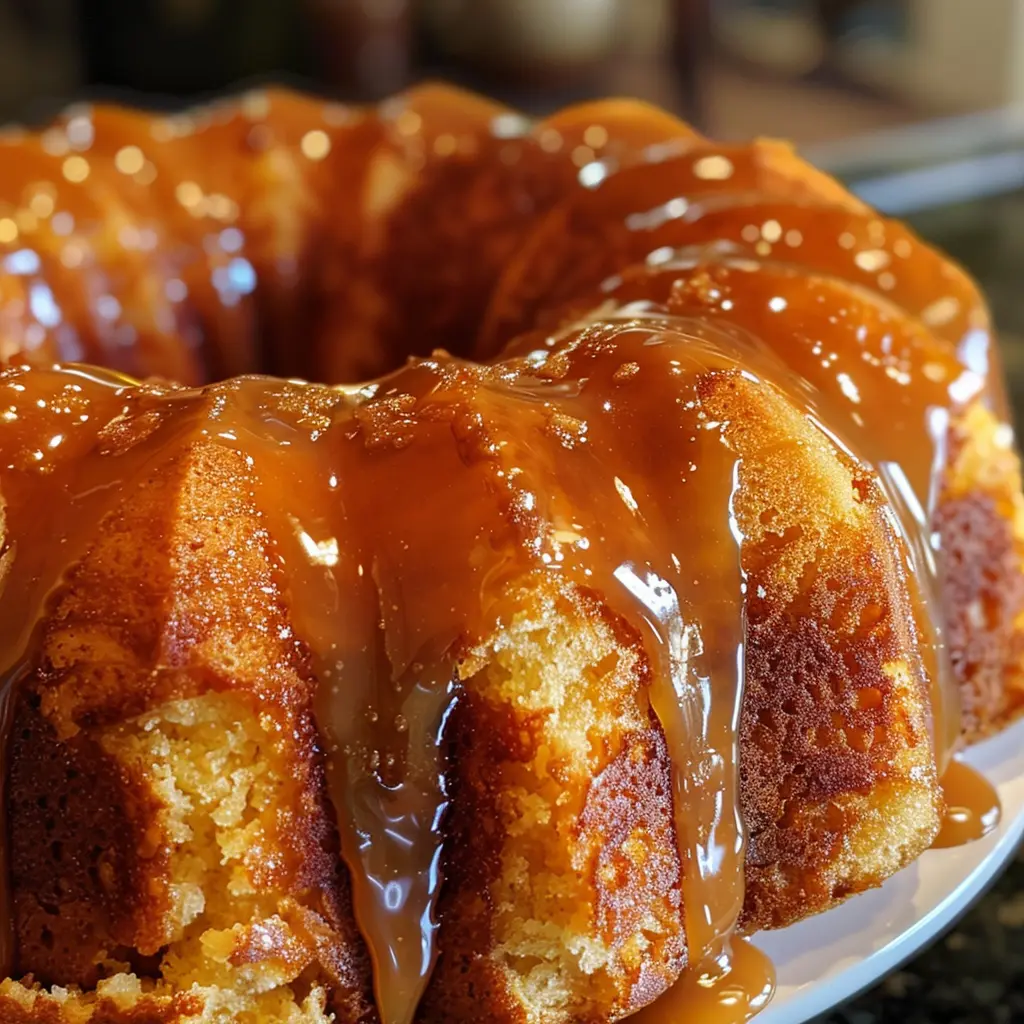
Caramel pound cake starts with a dense, rich butter and shortening base that bakes into a tight, velvety crumb, then finishes with a warm caramel glaze that pools into every groove of the Bundt pan and sets into a glossy, toffee-scented shell. This is the kind of cake that sits on a counter and makes people walk into the kitchen to investigate the smell before it’s even been cut.
| Detail | Info |
|---|---|
| Prep Time | 20 minutes |
| Cook Time | 1 hour 15 minutes |
| Total Time | 1 hour 35 minutes |
| Servings | 12 |
| Difficulty | Medium |
| Cuisine | American / Southern |
Why This Recipe Works
The combination of butter and vegetable shortening in equal proportion is the defining technical choice of this pound cake and the reason its crumb has a character that all-butter or all-shortening cakes don’t replicate. Butter provides flavor — the rich, dairy-forward taste that defines a great pound cake — and contributes to the tender crumb through its water content, which creates steam during baking. Shortening has a higher fat content and no water, which means it produces a more stable, finer-grained crumb that holds the structure of a heavy cake without becoming dense or gummy. Together they produce a cake that has both the flavor of a butter cake and the tight, even crumb structure of a shortening cake — the best qualities of each.
Three cups of sugar for a single Bundt cake sounds like an extraordinary amount, but in a pound cake of this size it produces the right sweetness level for the dense, rich crumb and provides structural support during the long bake. Sugar is hygroscopic — it attracts and holds moisture — which is one of the reasons a properly made pound cake stays moist for days after baking. The three-cup quantity also ensures enough sugar for the creaming step to incorporate adequate air into the fat, which is what gives pound cake its dense but not heavy texture.
Adding five eggs one at a time and beating well after each is the step that builds the emulsion that holds this cake together. Each egg contains lecithin, which acts as an emulsifier between the fat and liquid components of the batter. Adding all five eggs at once overwhelms the emulsion and causes the batter to break — you get a greasy, curdled-looking batter that never fully comes back together and produces a dense, greasy crumb. One at a time, beaten in fully, gives the lecithin time to do its emulsifying work and produces the smooth, cohesive batter that bakes into a properly structured pound cake.
Alternating the flour and milk additions — flour first, then milk, flour, milk, flour — is the standard method for butter cakes and it matters here for the same reason it always does. Adding all the flour at once develops too much gluten and makes the cake tough. Adding all the milk at once can break the emulsion. Alternating keeps the batter smooth and the gluten development controlled, producing the tender crumb that defines a well-made pound cake.
The caramel glaze is built from a true quick caramel sauce — butter, brown sugar, and cream cooked together — rather than a simple sugar glaze colored with caramel extract. Cooking the brown sugar with butter and cream for 2 to 3 minutes at a gentle boil begins actual caramelization of the sugars and develops the deep, complex toffee flavor that makes this glaze taste genuinely caramel rather than simply sweet. The optional powdered sugar addition thickens the glaze from a pourable sauce into something more adhesive that sets firmer on the cake and produces the glossy, lacquered finish the recipe aims for.
Ingredients
| Ingredient | Quantity | Notes |
|---|---|---|
| Cake | ||
| All-purpose flour | 3 cups | Spoon into the measuring cup and level off; do not scoop directly |
| Baking powder | 1 teaspoon | Check expiration date; old baking powder won’t give adequate lift |
| Salt | 1/2 teaspoon | Balances sweetness and enhances all other flavors |
| Unsalted butter, softened | 1 cup | Must be fully room temperature for proper creaming |
| Vegetable shortening | 1/2 cup | Produces a finer, more stable crumb than butter alone |
| Granulated sugar | 3 cups | The full amount is needed for structure, moisture retention, and sweetness |
| Large eggs, room temperature | 5 | Room temperature eggs emulsify more smoothly than cold eggs |
| Whole milk | 1 cup | Room temperature; whole milk adds richness |
| Vanilla extract | 2 teaspoons | Pure vanilla extract for the cleanest, most complex flavor |
| Caramel Glaze | ||
| Unsalted butter | 1/2 cup | Full stick; forms the base of the caramel |
| Light brown sugar, packed | 1 cup | Packed firmly for accurate measurement |
| Heavy cream | 1/4 cup | Full-fat for the richest, most stable caramel glaze |
| Vanilla extract | 1 teaspoon | Added off the heat to preserve its aromatic quality |
| Salt | Pinch | Balances the sweetness of the caramel |
| Powdered sugar, sifted (optional) | 1 cup | Thickens the glaze to a more adhesive consistency that sets firmly |
Step-by-Step Instructions
Phase 1: Prepare and Bake the Cake
- Preheat the oven to 325 degrees F. The lower temperature than most cakes is intentional — a heavy pound cake baked at higher temperatures browns on the outside before the dense interior has time to cook through. 325 degrees F allows the heat to penetrate the thick batter gradually and produce an evenly baked cake without a dark, over-browned crust.
- Prepare a 10-inch Bundt or tube pan by greasing it thoroughly with softened butter or shortening, making sure to coat every ridge and crevice. Dust with flour and tap out the excess. Alternatively, use a baking spray that contains flour. A poorly prepared Bundt pan is the primary cause of pound cakes that stick — every surface needs complete coverage.
- In a medium bowl, whisk together the flour, baking powder, and salt until combined. Set aside.
- In the bowl of a stand mixer fitted with the paddle attachment, beat the softened butter, shortening, and granulated sugar together on medium-high speed for 4 to 5 full minutes. The mixture should turn very pale — almost white — and increase noticeably in volume. This extended creaming time is critical: it incorporates air into the fat that gives pound cake its lift. Under-creamed fat and sugar produces a dense, heavy cake with a tight, gummy crumb.
- Add the eggs one at a time, beating on medium speed for 30 to 45 seconds after each addition. Scrape down the sides and bottom of the bowl after every second egg. The batter should look smooth and cohesive after each egg. If it begins to look curdled or broken, continue beating — it usually comes back together as the next egg is added.
- Add the vanilla extract and beat briefly to incorporate.
- With the mixer on low, add one third of the flour mixture and mix until just combined. Add half the milk and mix until just incorporated. Add another third of flour, then the remaining milk, then the final flour. Mix only until each addition disappears — the moment you stop seeing dry flour streaks, stop the mixer. Overmixing after the flour is in develops gluten and toughens the cake.
- Pour the batter into the prepared pan. It will be thick — use a spatula to spread it evenly and push it into the ridges of the pan. Smooth the top and tap the pan gently on the counter once or twice to release air bubbles.
- Bake for 70 to 80 minutes, until a toothpick or cake tester inserted into the thickest part of the cake comes out clean with no wet batter attached. The top will be deep golden brown and the cake will have pulled slightly away from the sides of the pan. Start checking at 65 minutes — oven temperatures vary and a pound cake can go from perfectly done to over-baked in 10 minutes.
- Cool in the pan on a wire rack for exactly 15 minutes. Too short and the cake is too fragile to invert safely. Too long and condensation forms between the cake and pan, creating steam that makes the cake stick. At 15 minutes, run a thin knife around the outer edge and the center tube, then invert confidently onto the wire rack. Let cool completely before glazing — at least 1 hour.
Phase 2: Make and Apply the Caramel Glaze
- Melt the butter in a medium saucepan over medium heat. Add the brown sugar, heavy cream, and salt. Stir to combine as the mixture heats.
- Bring to a gentle boil, then reduce the heat slightly to maintain a steady simmer rather than a rolling boil. Cook for 2 to 3 minutes, stirring constantly. The mixture will darken slightly and thicken as it cooks. Don’t walk away during this stage — the sugar can scorch quickly if the heat is too high or the stirring stops.
- Remove the saucepan from the heat entirely. Stir in the vanilla extract. For a thinner, pourable glaze that soaks slightly into the cake surface, use it as is after cooling for 5 minutes. For a thicker, more adhesive glaze that sets into a firmer shell on the cake, whisk in the sifted powdered sugar until smooth. Whisk vigorously to eliminate lumps.
- Let the glaze cool for 5 to 10 minutes until it thickens slightly but is still pourable. It should flow in a slow, steady ribbon from a spoon. Too hot and it runs right off the cake; too cool and it sets before it can drape into the ridges properly.
- Place the completely cooled pound cake on its serving plate with a piece of parchment paper or wax paper underneath to catch drips. Pour the warm glaze slowly and evenly over the top of the cake, letting it flow naturally down the sides and into the ridges. Work in a slow, deliberate pour rather than dumping it all at once, which can cause the glaze to pool only at the top rather than distributing across the surface.
- Let the glaze set for 15 to 20 minutes before slicing. Once set, it will be firm enough to cut through cleanly without smearing.
Chef Tips for Perfect Results
Bring all ingredients to room temperature before starting. Cold butter won’t cream properly and stays lumpy regardless of how long the mixer runs. Cold eggs can cause the emulsion to break. Cold milk can shock the batter and cause it to curdle slightly. Pull the butter, eggs, and milk from the refrigerator at least an hour before baking. Press the butter with your finger — it should give completely without resistance before the mixer touches it.
Do not open the oven door before 65 minutes. A pound cake batter is heavy and dense, and the gluten structure is still setting during the first hour of baking. Opening the oven before the structure is set allows the temperature to drop and can cause the center to collapse. Set a timer for 65 minutes and resist any temptation to check before it goes off.
Measure flour correctly. Scooping the measuring cup directly into the flour bag compacts the flour and can add 20 percent or more extra flour to the recipe. Extra flour makes pound cake dry and dense in the wrong way — tight and crumbly rather than the moist, fine-crumbed texture it should have. Spoon flour into the measuring cup and level off the top with a straight edge for accurate measurement every time.
Make extra caramel glaze for drizzling at the table. The glaze recipe produces enough for a generous pour over the cake, but caramel pound cake with additional warm caramel sauce drizzled over each slice at serving is a significantly more indulgent experience. Double the glaze recipe, pour half over the cake, and keep the other half warm in a small pitcher on the table for guests who want more.
Add a teaspoon of butter flavoring to the cake batter. A teaspoon of butter extract alongside the vanilla extract adds a concentrated, almost butterscotch-adjacent flavor that amplifies the caramel glaze and makes the cake itself taste more assertively buttery and rich. It’s a Southern baking trick that sounds unnecessary until you taste the difference it makes.
Common Mistakes to Avoid
Under-creaming the butter, shortening, and sugar. Four to five minutes of creaming feels like a long time, but it’s the step that determines the texture of the finished cake. Under-creamed fat produces insufficient air incorporation and the result is a cake that’s too dense — not the pleasant, compact density of a proper pound cake, but a heavy, gummy texture that doesn’t have enough structure. Watch for the mixture to turn very pale and significantly increase in volume before moving on.
Not greasing the pan thoroughly. Bundt pans have multiple ridges and crevices where batter can stick. A pound cake that sticks in the pan doesn’t just look bad — it can break apart entirely when you try to unmold it. Use softened butter applied with a pastry brush to coat every surface, then flour it completely. The extra two minutes of pan preparation is insurance against a ruined cake.
Inverting the cake too early or too late. Too early (under 10 minutes) and the cake is too fragile and may break. Too late (over 20 minutes) and condensation creates a steam seal between the cake and pan that prevents clean release. Fifteen minutes is the reliable window for most pound cakes — set a timer and don’t guess.
Glazing a warm cake. The caramel glaze poured over a warm cake runs right off the surface before it has time to adhere and set. A completely cooled cake — at room temperature throughout, not just cool on the surface — provides the right surface temperature for the glaze to flow slowly, fill the ridges, and begin setting on contact. Patience here produces a dramatically better-looking finished cake.
Boiling the caramel glaze too aggressively. A rolling, high-boil for 2 to 3 minutes can overcook the sugar and produce a glaze that seizes and turns grainy rather than smooth when the powdered sugar is added. A gentle boil — small, steady bubbles rather than a vigorous roiling — is the right level. Reduce the heat after the boil begins and stir constantly.
Variations and Substitutions
Brown butter caramel glaze: Before making the glaze, brown the butter in the saucepan first — cook it over medium heat, swirling frequently, until the milk solids turn golden and it smells nutty, about 4 to 5 minutes. Then proceed with adding the brown sugar and cream. The browned butter glaze has a significantly deeper, more complex nutty-caramel flavor that makes the finished cake taste noticeably more sophisticated.
Salted caramel version: Increase the salt in the glaze from a pinch to half a teaspoon and use salted butter in the glaze. The sweet-salty contrast in a salted caramel glaze over a buttery pound cake is one of the most compelling flavor combinations in dessert. Sprinkle a few flakes of flaky sea salt over the set glaze just before serving for additional visual appeal and a burst of salt in each bite.
Cream cheese swirl: Beat 8 ounces of softened cream cheese with half a cup of sugar and one egg until smooth. After pouring half the pound cake batter into the prepared pan, spoon the cream cheese mixture over it and pour the remaining batter on top. The cream cheese creates a distinct, tangy swirl through the finished cake that contrasts beautifully with the sweet caramel glaze.
Spiced version: Add a teaspoon of cinnamon and a quarter teaspoon of nutmeg to the flour mixture for a warm spice profile that works naturally alongside the caramel glaze. This variation tastes like the best possible version of a caramel apple in cake form and is particularly appropriate for autumn and holiday baking.
Serving Suggestions
Slice with a sharp, thin-bladed knife and serve at room temperature where the crumb is at its best texture and the caramel glaze has set into a slightly firm shell. A dollop of softly whipped cream alongside cuts the richness of the cake and provides a cool, creamy contrast. A scoop of vanilla ice cream served alongside a warm slice — warmed briefly in the microwave for 15 seconds — is a more indulgent but entirely justified approach.
For a coffee table presentation, place the whole glazed cake on a cake stand and serve with a small pitcher of extra warm caramel sauce alongside so guests can add more at their discretion. Strong black coffee or espresso is the ideal beverage companion — the bitterness of the coffee is the perfect foil for the sweet, buttery cake and caramel glaze.
Storage
Room temperature: Store covered with a cake dome or tightly wrapped in plastic wrap at room temperature for up to 5 days. The pound cake actually improves over the first 24 to 48 hours as the moisture redistributes through the crumb and the caramel glaze fully sets and melds with the cake surface. Day two is often the best day to eat it.
Refrigerator: Refrigerate for up to 7 days, tightly wrapped. Bring individual slices to room temperature for 20 to 30 minutes before eating — cold pound cake has a firmer, slightly waxy texture that doesn’t do justice to the crumb. Room temperature is always better.
Freezer: Freeze individual slices or the whole unglazed cake for up to 3 months. Wrap tightly in plastic wrap and then foil. Thaw overnight in the refrigerator, bring to room temperature, and apply the caramel glaze fresh after thawing. The pound cake itself freezes beautifully — the caramel glaze is best made fresh for the most attractive presentation.
Nutritional Information
| Nutrient | Per Slice (based on 12 slices) |
|---|---|
| Calories | 620 |
| Protein | 7g |
| Carbohydrates | 86g |
| Fat | 28g |
| Saturated Fat | 16g |
| Fiber | 1g |
| Sugar | 62g |
| Sodium | 180mg |
Nutritional values are estimates including the caramel glaze with powdered sugar. Values will vary based on specific brands and whether the thicker glaze version is used.
FAQ
Why did my pound cake sink in the middle?
A sunken center in pound cake almost always comes from one of four causes: the oven door was opened before the structure set, the batter was undermixed (not enough air incorporated during creaming), the baking powder was expired and didn’t provide enough lift, or the cake was underbaked. The most common culprit is the oven door opened too early — the temperature drop causes the partially set structure to collapse. Always bake pound cake undisturbed for the full first hour before checking doneness.
Can I use all butter instead of a butter and shortening combination?
Yes, but the texture changes. An all-butter pound cake is slightly more tender and has a less fine, more open crumb than the butter-shortening combination. The flavor is arguably richer since butter has more flavor than shortening. Replace the half cup of shortening with an equal amount of additional butter (another half stick). The bake time and everything else stays the same. Many bakers prefer the all-butter version for its flavor even if the crumb is slightly less refined.
How do I get the glaze to drip evenly over the sides?
Temperature and consistency control are the keys. Let the glaze cool for 5 to 10 minutes after making it so it’s warm but not hot — hot glaze runs too fast and pools at the bottom before coating the sides. Pour in a slow, controlled stream starting at the center of the top of the cake and moving in a circle toward the outer edge. Let gravity pull it over the sides naturally rather than trying to spread it with a spatula. A parchment paper circle under the cake catches the drips and can be removed cleanly after the glaze sets.
Can I make the cake ahead of time?
Yes — this is actually a great make-ahead cake. Bake the cake up to 2 days ahead and store tightly wrapped at room temperature without the glaze. Make the caramel glaze and apply it on the day of serving. The cake itself stays perfectly moist for several days after baking. Alternatively, freeze the unglazed cake for up to 3 months and glaze it fresh after thawing.
Why is my caramel glaze grainy?
Grainy caramel glaze results from sugar crystals that form during cooking. This can happen if the mixture was stirred too vigorously while boiling (which disturbs crystallization), if any undissolved sugar crystals were on the sides of the pan and fell into the mixture, or if the glaze was cooled and then reheated. Prevention: stir gently and steadily rather than vigorously, brush the sides of the pan with a wet pastry brush during cooking to prevent sugar crystals from forming there, and use the glaze while warm without reheating. If your glaze is already grainy, add another tablespoon of heavy cream and return to gentle heat, stirring until it smooths out.
Conclusion
Caramel pound cake is one of those recipes that produces something genuinely beautiful from techniques and ingredients that are fundamentally straightforward once you understand why each step matters. The creaming, the careful egg addition, the alternating flour and milk, the patient bake at low temperature, and the warm caramel glaze applied at exactly the right moment — each step builds toward a finished cake that’s dense but not heavy, deeply buttery, and finished with a glaze that smells and tastes like something someone planned very carefully. Make it once and it becomes the cake you bring to every occasion that calls for something homemade and special.