
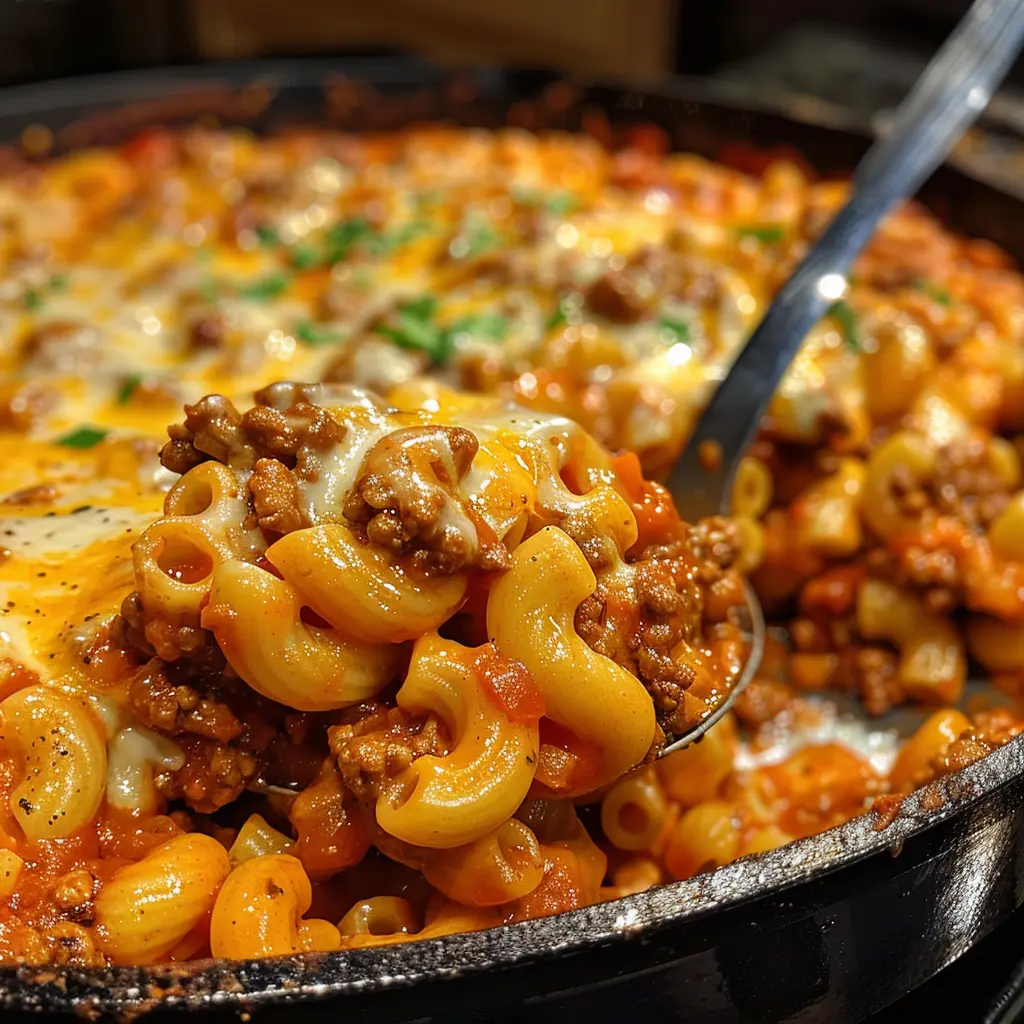
Macaroni beef chili skillet brings together seasoned ground beef, a thick and spiced tomato sauce, and tender macaroni in a single pan, finished with melted cheddar and mozzarella for a glossy, cheesy result. It has the warmth and depth of a good chili and the comforting familiarity of cheesy pasta, and the entire thing comes together with minimal cleanup since everything cooks in one skillet from start to finish.
| Detail | Info |
|---|---|
| Prep Time | 10 minutes |
| Cook Time | 30 minutes |
| Total Time | 40 minutes |
| Servings | 4 to 6 |
| Difficulty | Easy |
| Cuisine | American |
Why This Recipe Works
Cooking the spices and tomato paste together for a minute or two before adding the crushed tomatoes is a technique that makes a meaningful difference in the depth of the final sauce. Spices like cumin, coriander, and paprika contain fat-soluble aromatic compounds that release more fully when heated directly in oil or fat rather than simply stirred into a watery sauce. Tomato paste behaves similarly — a brief cook in the hot pan with the beef and aromatics caramelizes its natural sugars slightly and removes the raw, tinny edge that tomato paste can have straight from the can. This short step, easy to skip, is responsible for a noticeably richer and more complex finished sauce.
The combination of cumin and coriander alongside the more typical Italian herbs of oregano and basil gives this dish its distinctive character, leaning the flavor profile toward chili rather than a standard meat sauce. Cumin brings a warm, earthy quality, while coriander adds a subtle citrusy brightness that balances it. Together with the chili flakes and paprika, these spices create the chili-inspired backbone that distinguishes this dish from a basic baked macaroni or goulash, while the Italian herbs keep it grounded in familiar pasta sauce territory.
Simmering the sauce until it thickens before adding the macaroni back in is what gives this dish its rich, clingy texture rather than a thin, soupy one. As the crushed tomatoes and stock reduce over the heat, the liquid concentrates and the flavors intensify. Adding the pasta to an under-reduced sauce results in a watery dish that never achieves the right consistency. Patience during this simmering stage is what separates a good version of this recipe from a merely adequate one.
Stirring the cheese in directly off the higher heat and letting it melt gently into the thickened sauce produces the glossy, cohesive finish that makes this dish feel indulgent. Cheddar contributes sharpness and a deep golden color, while mozzarella contributes that classic stretchy, creamy quality. Used together, they balance flavor and texture in a way that either cheese alone wouldn’t fully achieve — cheddar alone can taste sharp without enough creaminess, while mozzarella alone can be a little flat and one-dimensional.
Slightly undercooking the macaroni before it goes into the sauce ensures it doesn’t turn mushy by the time everything has finished simmering together. The pasta continues to absorb some of the sauce and soften further once combined, so starting it just shy of fully tender accounts for that additional cooking time and keeps the final texture appropriately firm rather than overdone.
Ingredients
| Ingredient | Quantity | Notes |
|---|---|---|
| Macaroni pasta | 12 oz | Cook just shy of tender; it finishes cooking in the sauce |
| Ground beef | 1 pound | 80/20 blend provides the best flavor and richness |
| Onion, chopped | 1 | Yellow or white onion, diced |
| Garlic, minced | 3 cloves | Fresh garlic for the most aromatic flavor |
| Tomato paste | 2 tablespoons | Cooked briefly with the spices to deepen flavor |
| Crushed tomatoes or marinara sauce | 1 (28 oz) can | Crushed tomatoes give a chunkier, more rustic sauce |
| Olive oil | 1 tablespoon | For sauteing the aromatics |
| Butter | 1 tablespoon | Adds richness alongside the olive oil |
| Salt | To taste | Adjust based on the saltiness of the stock and cheese used |
| Black pepper | 1/2 teaspoon | Freshly cracked preferred |
| Paprika | 1 teaspoon | Sweet or smoked; smoked adds extra depth |
| Chili flakes | 1/2 teaspoon | Adjust to taste for desired heat level |
| Cumin powder | 1 teaspoon | Gives the dish its warm, chili-inspired backbone |
| Coriander powder | 1/2 teaspoon | Adds a subtle citrusy brightness |
| Italian herbs (oregano, basil) | 1 teaspoon total | Dried; rounds out the sauce with familiar pasta flavors |
| Cheddar cheese, shredded | 1 cup | Sharp cheddar adds bold flavor and color |
| Mozzarella cheese, shredded | 1 cup | Adds creaminess and stretch |
| Beef stock or water | 1/2 to 1 cup | Adjust based on desired sauce consistency |
| Fresh parsley, chopped | For garnish | Adds color and a fresh finish |
Step-by-Step Instructions
Phase 1: Cook the Macaroni
- Bring a large pot of salted water to a boil. Cook the macaroni until just shy of tender, about 1 to 2 minutes less than the package instructions suggest. Drain and set aside — it will finish cooking once combined with the sauce.
Phase 2: Brown the Beef and Build the Sauce Base
- In a large skillet or pan, heat the olive oil and butter together over medium heat. Add the chopped onion and minced garlic, and saute for 2 to 3 minutes until softened and fragrant.
- Add the ground beef to the pan, breaking it apart with a spoon as it cooks. Cook until fully browned with no pink remaining, about 6 to 8 minutes. Drain any excess fat if needed.
- Stir in the tomato paste, salt, black pepper, paprika, chili flakes, cumin, coriander, and Italian herbs. Let everything cook together for 1 to 2 minutes, stirring frequently, until the spices become fragrant and the tomato paste darkens slightly.
Phase 3: Simmer the Sauce
- Add the crushed tomatoes (or marinara sauce) along with a splash of beef stock or water. Stir to combine and bring to a gentle simmer.
- Let the sauce simmer uncovered for 10 to 15 minutes, stirring occasionally, until it thickens and the flavors deepen. Add more stock or water if it becomes too thick before reaching the desired richness, or let it reduce further if it’s still thin.
Phase 4: Combine and Finish
- Add the cooked macaroni to the sauce and stir until every piece is well coated.
- Sprinkle the shredded cheddar and mozzarella over the pasta. Stir gently until the cheese melts fully into the sauce, creating a creamy, glossy finish.
- Let everything simmer together for another minute or two to bring the dish together. Taste and adjust seasoning as needed.
- Garnish with freshly chopped parsley and serve hot directly from the skillet.
Chef Tips for Perfect Results
Don’t rush the spice and tomato paste step. The minute or two spent cooking the tomato paste and spices together before adding the crushed tomatoes is what gives this dish its depth. Skipping this step or rushing through it leaves the sauce tasting flatter and less developed.
Use freshly shredded cheese. Pre-shredded bagged cheese contains anti-caking agents that can prevent smooth melting, sometimes leaving the sauce slightly grainy. Shredding a block of cheddar and mozzarella yourself produces a noticeably creamier, more cohesive result.
Adjust the stock gradually. Start with a half cup of beef stock and add more only if needed. It’s easier to loosen a sauce that’s too thick than to thicken one that’s too thin, so building up gradually gives you better control over the final consistency.
Taste before adding extra salt. Beef stock, cheese, and tomato paste all carry their own sodium, so the dish may need very little additional salt. Taste at the end before reaching for the salt shaker.
Let it rest briefly before serving. A minute or two off the heat allows the sauce to settle slightly and cling more effectively to the pasta, producing a better texture on the plate than serving it the instant it comes off the stove.
Common Mistakes to Avoid
Overcooking the macaroni initially. Pasta cooked fully tender before going into the sauce will turn mushy by the time everything is combined and simmered together. Pull it just shy of done.
Not browning the beef thoroughly. Beef that’s only just cooked through without developing real color lacks the savory depth that anchors the whole dish. Take the time to let it brown properly.
Adding cheese over very high heat. High heat can cause the cheese to separate or turn oily rather than melting smoothly into the sauce. Reduce the heat before stirring in the cheddar and mozzarella.
Under-simmering the sauce. A sauce that hasn’t had enough time to reduce and thicken will result in a thin, watery dish once the pasta is added. Give it the full 10 to 15 minutes to develop properly.
Skipping the spice bloom. Adding dried spices directly to the liquid sauce without first cooking them briefly in the fat with the tomato paste produces a less aromatic, less developed final flavor.
Variations and Substitutions
Spicier version: Increase the chili flakes, add a diced jalapeño with the onion, or stir in a dash of hot sauce at the end for a dish with more direct heat.
Add beans: A drained can of kidney or black beans stirred in with the crushed tomatoes leans the dish further into chili territory and adds extra heartiness and fiber.
Ground turkey version: Ground turkey works as a leaner substitute for the beef; season slightly more generously to compensate for its milder flavor.
Different cheese blend: Pepper jack in place of some of the cheddar adds a built-in kick, while Monterey Jack offers a milder, creamier alternative to mozzarella.
Serving Suggestions
Serve hot directly from the skillet with extra shredded cheese and a sprinkle of fresh parsley over each portion. A simple green salad on the side helps balance the richness of the dish, and crusty bread or garlic bread is perfect for scooping up any extra sauce.
Storage and Reheating
Refrigerator: Store in an airtight container for up to 4 days. The sauce thickens further as it sits, so add a splash of stock or water when reheating.
Reheating: Warm in a skillet over medium-low heat with a splash of liquid to loosen the sauce, stirring frequently. The microwave works well for individual portions in short intervals.
Freezer: Freeze in an airtight container for up to 2 months. Thaw overnight in the refrigerator before reheating gently on the stovetop.
Nutritional Information
| Nutrient | Per Serving (approx.) |
|---|---|
| Calories | 560 |
| Protein | 32g |
| Carbohydrates | 48g |
| Fat | 27g |
| Saturated Fat | 13g |
| Fiber | 4g |
| Sodium | 740mg |
Nutritional values are estimates based on standard ingredients and will vary depending on specific brands used.
FAQ
Can I use a different pasta shape?
Yes. Penne, rotini, or shells all work well in place of macaroni and hold the sauce similarly. Cook whichever shape you choose just shy of fully tender for the same reason.
Can I make this less spicy?
Reduce or omit the chili flakes entirely and use sweet paprika instead of smoked for a milder, more straightforward cheesy pasta with just a hint of warmth from the cumin and coriander.
Why is my sauce too thin?
This usually means it didn’t simmer long enough to reduce properly, or too much stock was added at once. Let it cook uncovered for a few additional minutes to thicken before adding the pasta.
Can I make this ahead of time?
The sauce can be made a day ahead and reheated, with the macaroni and cheese added fresh just before serving for the best texture. Storing the components separately helps prevent the pasta from becoming overly soft.
What can I substitute for beef stock?
Chicken stock or vegetable stock both work as substitutes, though beef stock provides the most complementary flavor alongside the ground beef. Water works in a pinch but produces a slightly less developed sauce.
Conclusion
Macaroni beef chili skillet is the kind of dinner that satisfies on every level — bold, warmly spiced, deeply cheesy, and made entirely in one pan. It takes the comfort of a classic cheesy pasta bake and gives it a chili-inspired edge that makes it feel distinct from anything else in the weeknight rotation, all in about forty minutes from start to finish.