
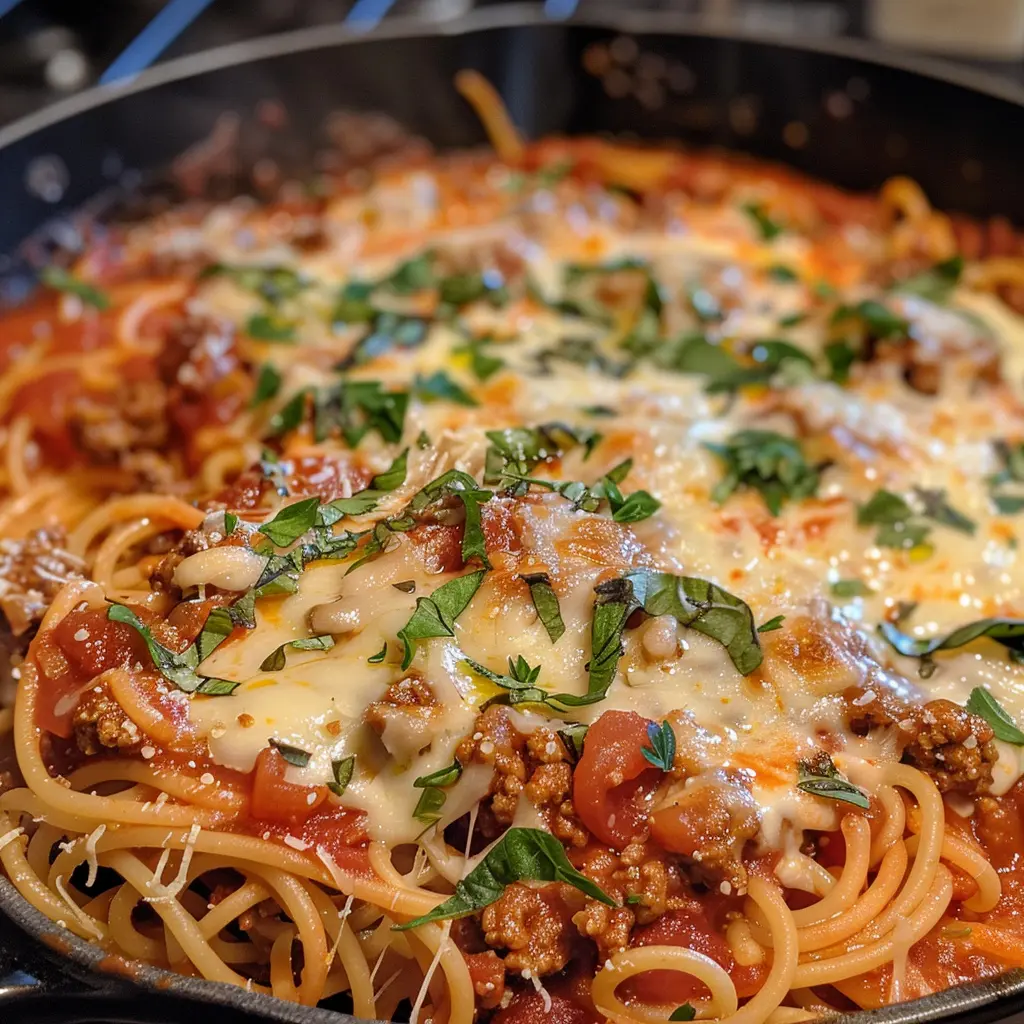
One pot spaghetti cooks broken spaghetti directly in a seasoned beef and marinara sauce made in the same pot used to brown the ground beef and soften the onion, then finishes with melted mozzarella and Parmesan stirred through everything at the end. The pasta absorbs the beef broth and tomato sauce as it cooks, arriving at the table already coated and flavored from the inside, with a single pot to clean when dinner is over.
| Detail | Info |
|---|---|
| Prep Time | 10 minutes |
| Cook Time | 25 minutes |
| Total Time | 35 minutes |
| Servings | 6 |
| Difficulty | Easy |
| Cuisine | Italian-American |
Why This Recipe Works
Cooking the spaghetti in the beef broth and marinara sauce rather than in a separate pot of boiling salted water is the central technique that makes this dish more flavorful than traditional spaghetti bolognese. As the pasta absorbs the cooking liquid, it takes on the flavor of the beef broth, the marinara, the Italian seasoning, and the paprika throughout its structure rather than being a neutral starch that sauce is applied to on top. The starch released by the pasta as it cooks simultaneously thickens the sauce from within, producing a rich, clingy result without any separate reduction or thickening step. This is pasta that tastes like it belongs in the sauce it’s served in.
Tomato paste cooked briefly into the beef before the marinara and broth are added is a technique that deepens the tomato flavor significantly. Raw tomato paste has a tinny, sharp, concentrated quality from canning. When cooked for a minute or two in the fat with the beef, its sugars caramelize slightly and the raw edge cooks off, transforming it from something acidic and sharp to something deeper and more rounded. This brief cook — often called blooming the tomato paste — produces a measurably more complex tomato base than tomato paste stirred directly into the liquid.
The combination of a jarred marinara sauce and beef broth as the cooking liquid produces a sauce with more depth than either liquid alone could achieve. Marinara alone would be too thick and acidic for pasta to cook in evenly — it would scorch on the bottom before the pasta is done. Broth alone would be too thin and produce a watery, under-flavored result. Together, the marinara contributes the concentrated tomato, herb, and garlic flavors of a properly seasoned sauce, while the broth provides the liquid volume and savory depth the pasta needs to hydrate and cook properly without the sauce scorching.
Breaking the spaghetti in half before adding it to the pot is a practical technique choice that serves two purposes. Half-length spaghetti fits more easily in the pot without needing to be submerged in batches or bent awkwardly against the sides. It also makes the finished dish easier to serve and eat — full-length strands in a thick sauce are unwieldy and difficult to portion. The break doesn’t affect the flavor or texture in any meaningful way, and the slightly shorter strands distribute more evenly through the beef and sauce during the simmer.
Stirring the mozzarella and Parmesan into the finished pasta at the very end rather than serving the cheese alongside creates a dish that’s fundamentally different from spaghetti with cheese on top. The melted mozzarella wraps the pasta and sauce in a stretchy, creamy layer that binds the components together and adds a rich, mild dairy note throughout. The Parmesan adds sharpness and salt. Together they produce a sauce that’s cheesier, thicker, and more cohesive than the pre-cheese version — the addition transforms the dish from a tomato-based pasta into something that feels more like a baked pasta in texture and richness, without the baking.
Ingredients
| Ingredient | Quantity | Notes |
|---|---|---|
| Ground beef | 1 pound | 80/20 blend for the best flavor; drain excess fat after browning |
| Olive oil | 1 tablespoon | For softening the onion and garlic |
| Small onion, diced | 1 | Yellow or white; cooked until softened before the beef is added |
| Garlic cloves, minced | 3 | Fresh garlic; added after the onion |
| Spaghetti, broken in half | 8 oz | Breaking in half helps it fit and cook evenly in the pot |
| Tomato paste | 2 tablespoons | Stirred into the beef and cooked briefly to bloom before the liquids go in |
| Marinara sauce | 1 jar (24 oz) | Use a quality jar with a flavor profile you enjoy — it defines the sauce |
| Beef broth | 3 cups | Provides the cooking liquid for the pasta; low-sodium preferred |
| Italian seasoning | 1 teaspoon | Adds herbal depth to the sauce |
| Paprika | 1/2 teaspoon | Adds warmth and color alongside the Italian seasoning |
| Salt | 1/2 teaspoon | Adjust after tasting; the broth and Parmesan also carry salt |
| Black pepper | 1/4 teaspoon | Freshly cracked preferred |
| Mozzarella cheese, shredded | 1 cup | Low-moisture; stirred in at the end for a creamy, stretchy finish |
| Parmesan cheese, grated | 1/4 cup | Freshly grated for the smoothest melt and sharpest flavor |
| Fresh parsley, chopped (optional) | For garnish | Adds color and a clean, herbal finish |
Step-by-Step Instructions
Phase 1: Build the Beef Base
- Heat the olive oil in a large, deep pot over medium heat. Add the diced onion and cook for 3 to 4 minutes, stirring occasionally, until softened. Add the minced garlic and cook for 30 seconds, stirring constantly, until fragrant.
- Add the ground beef and cook, breaking it apart into crumbles, for 6 to 8 minutes until fully browned with no pink remaining. Drain the excess fat if needed, leaving a thin coating in the pot.
- Stir in the tomato paste and cook for 1 to 2 minutes, stirring frequently, until the paste darkens slightly and smells more concentrated. This brief bloom removes the raw edge from the tomato paste and deepens the flavor of the entire sauce.
Phase 2: Add Liquids and Cook the Pasta
- Pour in the marinara sauce, beef broth, Italian seasoning, paprika, salt, and black pepper. Stir to combine thoroughly, scraping up any browned bits from the pot bottom.
- Add the broken spaghetti, pressing it gently into the liquid so all the pasta is submerged or in contact with the sauce. If some pieces float above the surface initially, they will soften and sink within the first few minutes of cooking.
- Bring to a boil over medium-high heat, then reduce to a gentle simmer. Cover and cook for 12 to 15 minutes, stirring every 3 to 4 minutes to prevent the pasta from sticking to the bottom of the pot and to ensure even cooking. The pasta should be tender and most of the liquid absorbed by the end of the simmer — if it seems too thick before the pasta is done, add a splash of broth or water.
Phase 3: Add Cheese and Serve
- Remove the pot from the heat or reduce to the lowest setting. Add the shredded mozzarella and grated Parmesan, stirring until both cheeses are fully melted and the sauce is smooth and creamy. The pasta should be loose enough to stir but not watery — a thick, saucy consistency that coats every strand.
- Taste and adjust seasoning with salt and pepper if needed.
- Garnish with fresh parsley if desired and serve hot directly from the pot.
Chef Tips for Perfect Results
Stir regularly during the pasta cook. Spaghetti in a thick sauce over heat sticks to the pot bottom more readily than pasta in a large pot of boiling water. Stirring every 3 to 4 minutes prevents sticking, breaks up any strands that are clumping together, and ensures every part of the pasta cooks evenly.
Use a quality jarred marinara. This sauce defines the flavor of the finished dish. A marinara with tomatoes, olive oil, garlic, and herbs as the primary ingredients produces a more authentic, complex result than one with sugar and modified starch high on the list. Rao’s, Victoria, or any brand with a clean, simple ingredient list are worth the slightly higher cost here.
Don’t skip the tomato paste bloom. The one to two minutes of cooking the tomato paste in the beef fat before the liquids go in is a small investment that pays off significantly in flavor. Raw tomato paste stirred directly into the sauce contributes a harsher, more metallic tomato note. Bloomed tomato paste contributes concentrated, slightly caramelized tomato depth.
Add the cheese off the heat. High heat can cause the mozzarella to become stringy and the Parmesan to seize. Removing from the heat or reducing to the lowest setting before stirring in the cheese produces a smooth, evenly melted result.
Use low-sodium broth. The marinara sauce, beef, and Parmesan all carry significant salt. Low-sodium broth gives you control over the final seasoning rather than arriving at an oversalted dish. Always taste before adding any extra salt.
Common Mistakes to Avoid
Not stirring during the pasta simmer. Spaghetti left undisturbed in a thick sauce sticks to the pot bottom and to itself, producing a clumped, unevenly cooked result. Set a reminder to stir every few minutes.
Using too little liquid. The pasta needs sufficient liquid to cook through properly. If the sauce looks thick before the pasta is tender, add broth or water a quarter cup at a time rather than letting the pasta cook in a sauce that’s already too dry.
Adding the cheese at a full boil. Cheese stirred into boiling liquid breaks rather than melting smoothly, producing a grainy, stringy result. Always reduce the heat before the cheese goes in.
Not blooming the tomato paste. Tomato paste added raw to the liquid doesn’t develop the same depth as paste cooked briefly in the fat first. The 90 seconds of stirring it into the hot beef pays off in the finished dish’s flavor.
Serving without resting briefly. One-pot pasta served immediately from the active simmer is slightly thinner and looser than the same dish after 2 to 3 minutes of rest. A brief rest allows the sauce to thicken to its ideal clingy consistency.
Variations and Substitutions
Ground turkey: A leaner substitute for the beef; season more generously since turkey is milder, and add a teaspoon of Worcestershire sauce for the savory depth that beef provides naturally.
Add vegetables: Diced zucchini, mushrooms, or bell pepper added with the onion at the start soften during the cook time and add texture and nutrition without any additional work.
Spicy arrabiata version: Add half a teaspoon of red pepper flakes with the other seasonings for a pasta with persistent, building heat. Double the quantity for a genuinely spicy result.
Add spinach: Stir two cups of fresh baby spinach into the pot immediately after adding the cheese. The residual heat wilts it in under a minute and adds color and a mild earthiness.
Serving Suggestions
Serve directly from the pot into wide, shallow bowls with extra Parmesan grated over the top and a crack of fresh black pepper. Garlic bread alongside is practically mandatory for the sauce at the bottom of the bowl. A simple green salad dressed with lemon vinaigrette provides a bright, acidic contrast to the rich, cheesy pasta.
Storage and Reheating
Refrigerator: Store in an airtight container for up to 4 days. The pasta continues to absorb the sauce as it sits and the dish will be thicker when cold.
Reheating: Add a generous splash of broth or water when reheating — the pasta absorbs a significant amount of liquid overnight. Warm in a pot over medium-low heat, stirring frequently, or in the microwave in 60-second intervals.
Freezer: Freezes reasonably well for up to 2 months, though the pasta texture softens after thawing. Add extra broth when reheating to restore a saucy consistency.
Nutritional Information
| Nutrient | Per Serving (approx.) |
|---|---|
| Calories | 480 |
| Protein | 30g |
| Carbohydrates | 42g |
| Fat | 20g |
| Saturated Fat | 9g |
| Fiber | 3g |
| Sodium | 820mg |
Nutritional values are estimates based on standard ingredients. Sodium varies significantly based on the marinara sauce and broth brands used.
FAQ
Can I use a different pasta shape?
Yes. Penne, rotini, and rigatoni all work well and may actually be more practical than spaghetti in the one-pot format since they don’t clump as readily. If using a shorter pasta shape, adjust the cook time according to the package directions — shorter pasta shapes may cook in 10 to 12 minutes while spaghetti takes 12 to 15.
Why is my pasta unevenly cooked?
This is almost always a stirring issue. Spaghetti that sits undisturbed in a thick sauce cooks faster where it’s submerged in liquid and slower where it’s sitting above the sauce line or clumped with other strands. Stir every 3 to 4 minutes and press any pasta that’s floating above the liquid level down into the sauce.
Can I make this vegetarian?
Yes. Omit the ground beef and use vegetable broth instead of beef broth. Add a can of drained lentils or white beans for protein and to maintain the heartiness of the original. Increase the Italian seasoning to compensate for the flavor the beef would have contributed.
Why does my sauce taste too acidic?
Acidity in the finished sauce usually comes from the marinara. A quarter teaspoon of baking soda stirred into the sauce before the pasta is added neutralizes excess acidity without changing the flavor noticeably. Alternatively, a teaspoon of sugar achieves the same balance through a different mechanism — it doesn’t neutralize the acid but makes the sauce taste less acidic by increasing the perceived sweetness.
Can I use fresh pasta instead of dried?
Fresh pasta is not recommended for this recipe. Fresh pasta cooks in 2 to 3 minutes and would be overcooked and mushy long before the sauce has reduced to the right consistency. Dried pasta’s longer cook time is specifically what allows the sauce to reduce and concentrate during the simmer. Use dried pasta only for reliable results.
Conclusion
One pot spaghetti is the weeknight dinner that earns its place in the regular rotation by delivering everything a satisfying pasta meal requires — seasoned ground beef, rich tomato sauce, perfectly cooked pasta, and melted cheese — from a single pot in 35 minutes, with cleanup that takes less time than the meal did to cook. Make it once and it becomes the default answer to the question of what’s for dinner on any night that doesn’t have time for anything more complicated.