
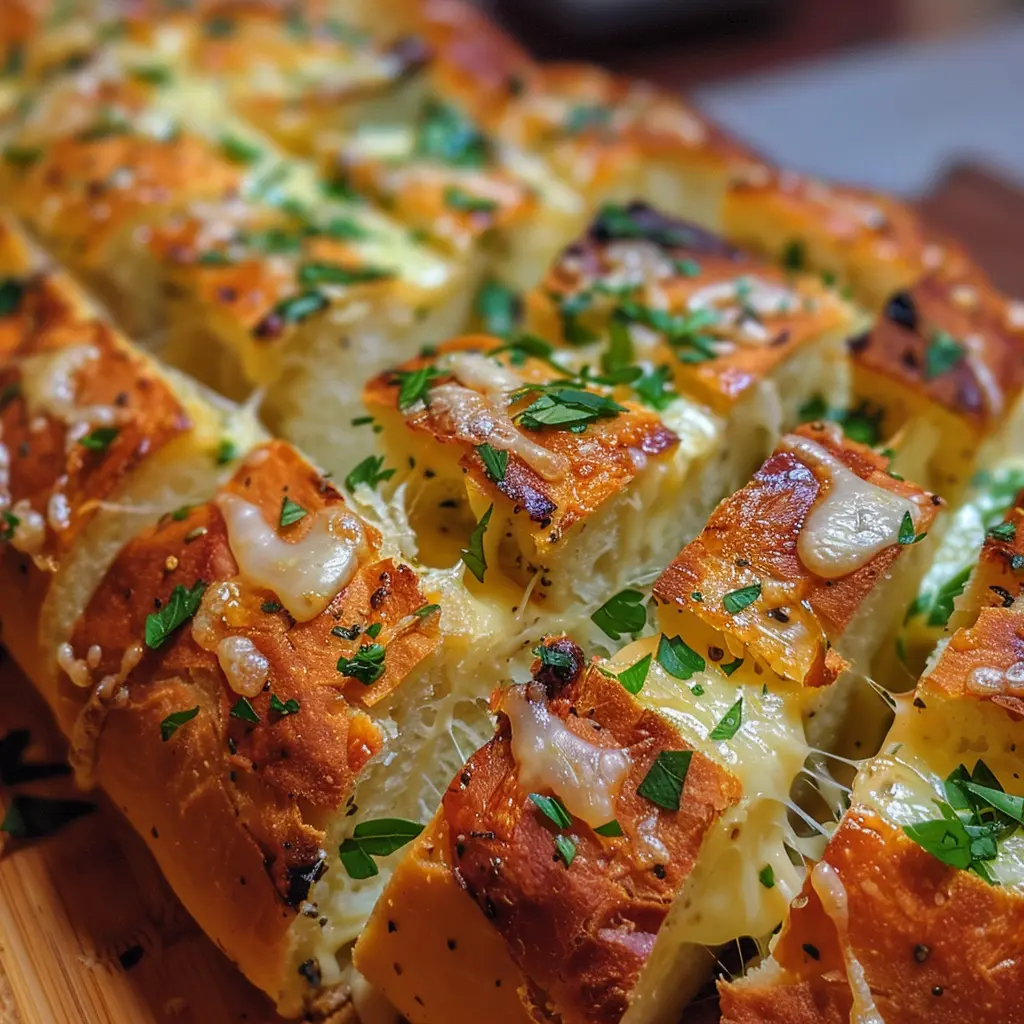
Cheesy garlic pull-apart bread builds an enriched milk dough, rolls it into a rectangle, spreads it with garlic-herb butter and layers of mozzarella and Parmesan, then cuts it into strips and stacks those strips into a loaf pan so every pull comes away with buttery, garlicky, cheese-loaded layers of soft bread that stretch and tear in the most satisfying way possible. This is the bread that arrives at the table and immediately becomes the only thing anyone is thinking about.
| Detail | Info |
|---|---|
| Prep Time | 25 minutes |
| Rise Time | 2 hours total |
| Bake Time | 35 to 40 minutes |
| Total Time | About 3 hours |
| Servings | 8 to 10 |
| Difficulty | Medium |
| Cuisine | American |
Why This Recipe Works
The dough is an enriched milk bread — bread flour with butter, milk, sugar, and salt alongside the yeast — and every enrichment ingredient is there for a specific reason. Bread flour has a higher protein content than all-purpose, producing more gluten and a chewier, more structured crumb that holds up to the pull-apart format without tearing too easily. Milk rather than water adds fat and lactose that tenderize the crumb and promote browning. Butter enriches the dough with fat that keeps it soft for days longer than a lean dough would stay fresh. Sugar feeds the yeast and adds a slight sweetness that balances the savory garlic and cheese filling. Together these enrichments produce a dough that’s soft enough to tear pleasantly without being so tender it loses its structure when handled.
Adding the butter to the dough after the initial mixing — gradually incorporating it into the developed dough — is the technique used in enriched bread making for a specific reason. Butter added at the start coats the flour particles and inhibits gluten development, producing a weaker, less elastic dough. Butter added after the gluten has had a chance to form from the flour and liquid is incorporated into an already-developed network, enriching and tenderizing it without weakening its structure. The dough should feel tacky but smooth and elastic when the butter is fully incorporated — if it’s too sticky, a small additional sprinkle of flour helps without affecting the final texture significantly.
The stacking method — rolling the dough into a rectangle, adding the filling, cutting into strips, stacking those strips, then cutting the stack into squares and arranging them vertically in the loaf pan — creates multiple distinct layers of dough and filling within the final loaf. Each vertical square in the pan is actually a small stack of four to five layers of bread and filling, so when someone pulls a piece from the finished loaf, they get all those layers simultaneously: bread, garlic butter, mozzarella, Parmesan, garlic butter, bread. The architectural logic of this assembly is what transforms garlic bread from a flat surface treatment into a three-dimensional, multi-layered experience.
Fresh minced garlic in the filling is the ingredient choice that produces genuine garlic bread flavor rather than the background garlic note of garlic powder alone. Fresh garlic cooked within the bread during baking caramelizes and mellows into a sweet, deeply aromatic paste that permeates every layer of the bread. Garlic powder in both the dough and the filling provides a consistent baseline garlic flavor throughout, while the fresh garlic delivers the bold, roasted quality that makes this pull-apart bread taste like something made with genuine care.
Brushing the hot bread with the garlic butter mixture immediately after it comes out of the oven is the finishing step that makes the surface glossy, fragrant, and deeply buttery. The bread fresh from the oven is still slightly porous and its surface is at its most receptive to absorbing the melted butter, garlic powder, and parsley. Butter applied to a hot surface penetrates slightly rather than sitting entirely on top, infusing the crust with flavor rather than just coating it. Applied to a cool or cooled-down loaf, the butter pools rather than absorbing and produces a greasier, less integrated result.
Ingredients
Dough
| Ingredient | Quantity | Notes |
|---|---|---|
| Bread flour | 3.75 cups (450g) | Higher protein than all-purpose; produces a chewier, more structured crumb |
| Warm milk | 1 cup + 1 tablespoon | 105 to 110 degrees F — warm to the touch but not hot enough to kill the yeast |
| Unsalted butter, softened | 1/4 cup (58g) | Added gradually after the initial dough is formed |
| Sugar | 1 tablespoon | Feeds the yeast and adds a slight sweetness to balance the savory filling |
| Active dry yeast | 2.25 teaspoons (1 packet) | Proofed in the warm milk and sugar before adding the flour |
| Salt | 1 teaspoon | Added with the flour; don’t add directly to the yeast |
| Garlic powder | 1 teaspoon | Added to the dough for a baseline garlic flavor throughout the bread |
Filling
| Ingredient | Quantity | Notes |
|---|---|---|
| Unsalted butter, softened | 1/2 cup | Spread generously over the rolled dough before the cheese and garlic |
| Mozzarella cheese, shredded | 8 oz | Low-moisture; melts evenly and produces the stretchy pull-apart quality |
| Parmesan cheese, grated | 1/4 cup | Adds sharp, salty depth to the milder mozzarella |
| Garlic cloves, minced | 6 | Fresh; caramelizes and mellows during baking into sweet, roasted garlic |
| Fresh parsley, chopped | 1 tablespoon | Adds herbal freshness and color to the filling |
| Garlic powder | 1/2 teaspoon | Provides a consistent garlic base alongside the fresh garlic |
| Salt | 1/4 teaspoon | Seasons the filling layer |
Garlic Butter Finish
| Ingredient | Quantity | Notes |
|---|---|---|
| Unsalted butter, melted | 1/4 cup | Brushed over the hot bread immediately after baking |
| Fresh parsley, chopped | 1 tablespoon | Added to the butter for color and herbal freshness |
| Garlic powder | 1/2 teaspoon | Seasons the finish butter |
Step-by-Step Instructions
Phase 1: Make and Rise the Dough
- Combine the warm milk (105 to 110 degrees F), sugar, and yeast in a large bowl. Stir briefly and let stand for 5 to 10 minutes until the mixture is foamy and the yeast is clearly active. If there’s no foam after 10 minutes, the yeast may be dead or the milk was too hot — start over with fresh yeast and properly tempered milk.
- Add the bread flour, salt, and garlic powder to the yeast mixture. Mix until a shaggy dough forms, then knead by hand on a lightly floured surface for 5 minutes, or with a stand mixer fitted with the dough hook on medium speed for 4 minutes, until the dough is cohesive and beginning to smooth out.
- With the mixer running on low (or continuing to knead by hand), gradually add the softened butter in small pieces, waiting until each addition is fully incorporated before adding the next. This process takes 3 to 4 minutes. Once all the butter is incorporated, continue kneading for 3 to 4 more minutes until the dough is smooth, elastic, and slightly tacky but not sticky.
- Place the dough in a lightly oiled bowl, turn to coat, and cover with plastic wrap or a clean kitchen towel. Let rise in a warm spot for 1 to 1.5 hours until doubled in size.
Phase 2: Fill and Assemble
- Grease a 9×5-inch loaf pan thoroughly with butter or cooking spray. On a lightly floured surface, roll the risen dough into a large rectangle approximately 12 by 18 inches.
- Spread the softened butter evenly over the entire surface of the dough, reaching all the way to the edges. Scatter the minced garlic evenly over the butter. Sprinkle the shredded mozzarella, grated Parmesan, chopped parsley, garlic powder, and salt evenly over everything.
- Using a sharp knife or pizza cutter, cut the dough lengthwise into 4 to 5 even strips. Stack the strips carefully on top of each other so the filling layers face up between each strip. You’ll have a tall stack of layered dough strips.
- Cut the stacked strips crosswise into roughly 2-inch squares. Arrange these squares standing vertically (cut side facing up, like a row of books) in the prepared loaf pan, packing them snugly so they fill the pan.
- Cover the pan loosely with plastic wrap and let rise for another 30 to 40 minutes until noticeably puffed.
Phase 3: Bake and Finish
- Preheat the oven to 350 degrees F. Bake for 35 to 40 minutes until the top is deeply golden brown and a toothpick or skewer inserted into the center comes out with baked bread crumbs rather than wet dough. If the top is browning faster than the inside is cooking, tent loosely with aluminum foil for the final 10 to 15 minutes.
- While the bread bakes, mix the melted butter, chopped parsley, and garlic powder for the finish.
- Remove the bread from the oven and immediately brush the hot surface with the garlic butter finish. Let cool in the pan for 5 minutes, then carefully unmold onto a serving plate. Serve warm while the cheese is still gooey and melted.
Chef Tips for Perfect Results
Test the yeast before committing. Active dry yeast that’s past its prime or was exposed to heat or moisture won’t foam properly in the warm milk and sugar. If there’s no foam after 10 minutes, the yeast is dead. Don’t proceed with dead yeast — start over with a fresh packet. The 10-minute proofing step is worth doing every time.
Warm the milk to the right temperature. Between 105 and 110 degrees F is the sweet spot for yeast activity. Below 100 degrees F is too cool and the yeast activates slowly. Above 115 degrees F begins to kill the yeast. Test with an instant-read thermometer or use the wrist test — the milk should feel warm but not hot on your inner wrist.
Add the butter to the dough gradually. Butter added too fast or in large chunks doesn’t incorporate evenly and can leave greasy pockets. Small pieces added one at a time and worked fully into the dough before the next piece is added produces the smooth, evenly enriched dough the recipe needs.
Use low-moisture mozzarella, not fresh. Fresh mozzarella contains a high percentage of water that releases during baking and can make the interior of the pull-apart bread wet and dense. Low-moisture mozzarella melts into a stretchy, golden layer without releasing excess moisture.
Pack the squares into the loaf pan snugly. Pieces placed loosely in the pan won’t support each other during the second rise and bake, and the bread will spread horizontally rather than rising upward into a proper loaf shape. Pack them in firmly enough that they maintain their vertical orientation without falling sideways.
Common Mistakes to Avoid
Milk that’s too hot. Milk above 115 degrees F kills the yeast, producing a dough that won’t rise regardless of how long it sits. When in doubt, let the milk cool a few degrees before adding the yeast — slightly too cool is recoverable, too hot is not.
Not developing enough gluten before adding the butter. Butter added to under-developed dough coats the flour and prevents gluten from forming, producing a weak, greasy dough that doesn’t hold its shape. Knead until the dough is cohesive and smooth before the butter additions begin.
Under-proofing the second rise. The 30 to 40 minute second rise after assembly is when the dough recovers from the handling and the squares expand to fill the pan. Under-proofed pull-apart bread bakes dense and doesn’t have the light, fluffy pull-apart quality the recipe is designed to produce. The assembled loaf should look noticeably puffed before it goes in the oven.
Not brushing with butter immediately after baking. The window for the butter to absorb into the crust is the first 2 to 3 minutes after the bread leaves the oven. Waiting even 5 minutes means the crust has set and the butter sits on top rather than penetrating it.
Cutting strips unevenly. Uneven strips produce squares of different sizes that bake at different rates in the loaf pan. Use a ruler or make consistent visual measurements before cutting to ensure all the strips and squares are approximately the same size.
Variations and Substitutions
Add pepperoni: Scatter thinly sliced pepperoni over the cheese layer before rolling and cutting. The pepperoni crisps slightly between the layers during baking and adds a savory, slightly spicy dimension that makes the bread taste like a pizza pull-apart.
Cheddar version: Replace the mozzarella with sharp cheddar for a more assertive, less stretchy result. Sharp cheddar produces a bolder, more complex cheese flavor but doesn’t achieve the same dramatic pull as mozzarella. A 50/50 blend of the two is the best of both.
Everything bagel seasoning: Replace the garlic powder and parsley in the finish butter with everything bagel seasoning for a different herbal and spice character on the crust. The sesame seeds and dried onion in the seasoning add texture alongside flavor.
Make it with all-purpose flour: All-purpose flour works as a substitute for bread flour and produces a slightly softer, less chewy crumb. The pull-apart texture is somewhat more tender, which some people prefer. Use the same quantity by weight.
Serving Suggestions
Serve warm from the pan or on a board, letting people pull pieces directly from the loaf at the table. A small bowl of marinara or garlic butter for dipping alongside is optional but popular. This bread works as an appetizer, a side dish alongside soup or pasta, or as the centerpiece of a casual sharing meal. It pairs naturally with any Italian-style main course and is particularly well-matched with a simple tomato soup where the pull-apart pieces serve as the dunking bread.
Storage and Reheating
Room temperature: Store wrapped tightly in plastic wrap for up to 2 days. The enriched dough stays soft longer than a lean bread.
Reheating: Wrap in foil and reheat in a 325 degree F oven for 10 to 15 minutes until warm and the cheese is gooey again. The microwave works for individual pieces in 15 to 20 second bursts but softens the crust.
Freezer: Freeze the baked, cooled, unbrushed loaf tightly wrapped for up to 2 months. Thaw overnight at room temperature and reheat in the oven before brushing with fresh garlic butter.
Nutritional Information
| Nutrient | Per Serving (approx., based on 9 servings) |
|---|---|
| Calories | 420 |
| Protein | 14g |
| Carbohydrates | 42g |
| Fat | 23g |
| Saturated Fat | 13g |
| Fiber | 2g |
| Sodium | 380mg |
Nutritional values are estimates based on standard ingredients. Values will vary based on specific brands and how generously the garlic butter finish is applied.
FAQ
Can I use instant yeast instead of active dry yeast?
Yes. Instant yeast doesn’t need to be proofed in liquid first — it can be added directly to the dry ingredients. Use the same quantity (2.25 teaspoons) and skip the 5 to 10 minute proofing step, adding the warm milk directly to the flour mixture with the instant yeast already mixed in. The rise times remain approximately the same.
Can I make this without a stand mixer?
Yes, though it requires more physical effort. Mix the initial dough ingredients by hand until a shaggy dough forms, then knead on a lightly floured surface for 8 to 10 minutes until smooth and elastic. Add the butter pieces one at a time, kneading each in fully before the next. The dough will be slippery and difficult to work with initially — this is normal and it becomes easier as the butter is incorporated. A bench scraper helps manage the dough during the butter incorporation phase.
Can I prepare this ahead and bake in the morning?
Yes. After assembling the squares in the loaf pan, cover tightly with plastic wrap and refrigerate overnight rather than doing the second rise at room temperature. In the morning, remove the pan from the refrigerator and let it sit at room temperature for 45 to 60 minutes before baking — the cold dough needs this time to warm up and finish its rise. Bake as directed.
Why didn’t my bread rise properly?
The most common causes: dead or expired yeast (always proof first to confirm activity), milk that was too hot and killed the yeast, or a proofing environment that was too cold. Yeast rises most actively at 75 to 80 degrees F. In a cool kitchen, place the covered dough in the oven with just the oven light on — the gentle warmth from the light creates an ideal proofing environment.
Can I use pre-shredded bagged mozzarella?
Yes, though freshly shredded from a block melts more cleanly and evenly. Pre-shredded cheese contains anti-caking agents that can slightly affect the melt quality. For a pull-apart bread where melting and stretch are the visual and textural centerpiece of the dish, freshly shredded is worth the extra 2 minutes of work.
Conclusion
Cheesy garlic pull-apart bread is the recipe worth giving an afternoon to. The enriched dough, the stacking technique that creates layers of garlic butter and cheese in every piece, and the hot-butter finish produce a loaf that arrives at the table and is immediately, unanimously the center of attention. Make it once and you’ll understand why pull-apart bread is the kind of thing people plan gatherings around.