
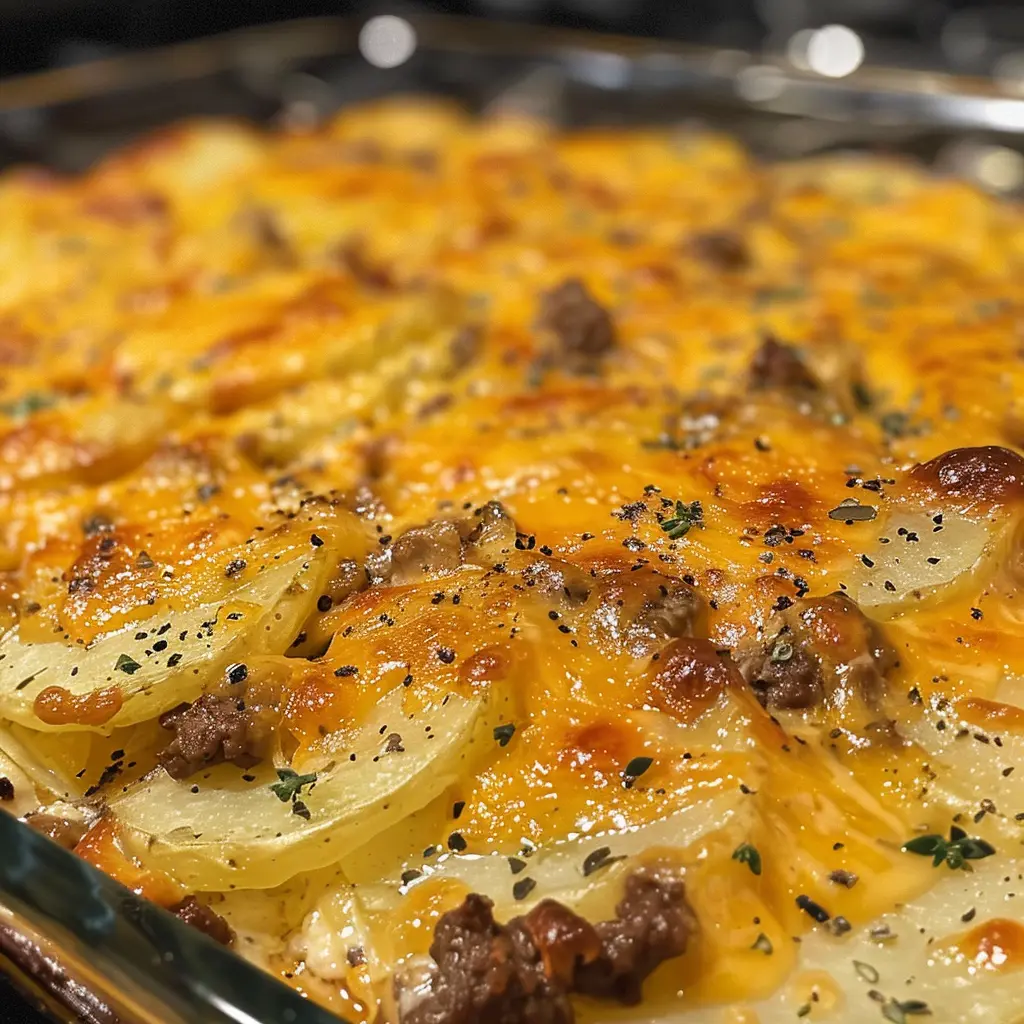
Cheesy beef and potato casserole layers thinly sliced potatoes with seasoned ground beef and diced onion, buries a full cup of shredded cheddar in the middle, pours a cream and beef broth mixture over everything, bakes covered until the potatoes are completely tender, then uncovers and melts another cup of cheddar over the top until golden and bubbly. It’s the kind of casserole that feeds six comfortably, reheats beautifully all week, and tastes like the sort of thing that requires considerably more effort than it actually does.
Prep: 20 min | Bake: 60 min | Rest: 10 min | Total: 1 hour 30 min | Serves: 6 | Difficulty: Easy | Cuisine: American
Why This Recipe Works
Slicing the potatoes to an eighth of an inch thickness rather than thicker is the single most important preparation decision in this recipe. Potato slices thicker than a quarter inch in a covered casserole at 375 degrees F can remain firm and undercooked at the center even after an hour of baking, producing a casserole where the beef and cheese are perfect but the potatoes resist the fork. Slices at an eighth of an inch cook through completely in the 45-minute covered bake, becoming tender and yielding throughout before the cheese layer goes on for the final uncovered bake. A mandoline slicer produces consistent eighth-inch slices in a fraction of the time a knife takes and eliminates the inconsistency that causes some slices to be done and others not.
The two-stage baking process — covered for 45 minutes, then uncovered for 10 to 15 — solves the competing problems of cooking the potatoes and producing a properly browned cheese top simultaneously. Covered baking traps steam from the cream, broth, and vegetables, creating a moist environment where heat penetrates the potato layers evenly and the liquid absorbs into the potatoes as they cook. Uncovering for the final stage exposes the casserole to dry oven heat, which evaporates surface moisture and allows the cheese to melt, bubble, and develop the golden, slightly crispy top that makes a casserole look finished.
Burying a full cup of cheddar in the middle of the casserole between the beef and the top potato layer rather than using all the cheese on top produces a casserole with cheese throughout rather than only on the surface. The interior cheese layer melts into the beef mixture and the surrounding potato slices during the covered bake, creating a rich, cheesy layer in the center that’s distinct from the melted topping above it. Every slice of the finished casserole has cheese embedded in two places — the golden top and the savory middle — rather than just on the surface.
The combination of heavy cream and beef broth rather than either liquid alone produces a braising liquid that’s rich enough to make the finished casserole luscious but savory enough that it doesn’t taste like a potato gratin. Heavy cream alone would produce a very rich, dairy-forward result. Beef broth alone would produce a thinner, less cohesive casserole. Together they create a liquid that absorbs into the potato layers during the covered bake, producing potatoes that are tender, flavorful, and slightly creamy throughout rather than dry or bland.
Cooking the garlic directly in the beef and onion mixture for a full minute before the casserole is assembled ensures the garlic’s raw sharpness is cooked off and its aromatic oils have bloomed into the beef fat. Raw garlic distributed through a casserole and baked for an hour at 375 degrees F does technically cook, but the result is uneven — some pockets of the casserole will have more pronounced raw garlic character than others. Thirty seconds on the stovetop blooms the garlic uniformly through the entire beef mixture.
Ingredients
1 1/2 pounds lean ground beef 4 medium Russet or Yukon Gold potatoes, thinly sliced (about 1/8 inch) 1 medium onion, diced 3 cloves garlic, minced 2 cups shredded cheddar cheese, divided 1/2 cup heavy cream 1/2 cup beef broth 1 teaspoon paprika 1 teaspoon dried oregano Salt and black pepper, to taste
Step-by-Step Instructions
Phase 1: Brown the Beef
Preheat the oven to 375 degrees F. Lightly grease a 9×13-inch baking dish.
Cook the ground beef and diced onion together in a large skillet over medium-high heat, breaking the beef into fine crumbles, until the beef is fully browned and the onion is softened. Drain any excess grease — excess fat in the casserole makes the finished dish greasy rather than rich.
Add the minced garlic, paprika, oregano, salt, and black pepper to the beef mixture. Stir to combine and cook for 1 minute until the garlic is fragrant. Remove from heat.
Phase 2: Layer the Casserole
Arrange half of the sliced potatoes in an even, overlapping layer across the bottom of the prepared baking dish. Season the potato layer lightly with salt and pepper.
Spread the beef mixture evenly over the potato layer. Sprinkle 1 cup of the shredded cheddar cheese evenly over the beef.
Arrange the remaining potato slices in an even layer over the beef and cheese. Season lightly with salt and pepper.
Whisk together the heavy cream and beef broth in a small bowl. Pour the mixture slowly and evenly over the entire surface of the casserole, allowing it to seep down through the layers.
Phase 3: Bake and Finish
Cover the baking dish tightly with aluminum foil. Bake for 45 minutes until the potatoes are completely tender when pierced with a fork or the tip of a knife through the foil.
Remove the foil. Sprinkle the remaining 1 cup of cheddar cheese evenly over the top. Return to the oven uncovered and bake for 10 to 15 minutes until the cheese is fully melted, bubbling, and lightly golden at the edges.
Remove from the oven and rest for 10 minutes before cutting and serving. The rest allows the casserole to set slightly so it holds its layers when sliced.
Chef Tips for Perfect Results
Use a mandoline to slice the potatoes. Consistent eighth-inch slices are difficult to produce with a knife at volume and inconsistent thickness produces uneven cooking. A mandoline takes two minutes and produces uniform slices every time. Use the hand guard.
Shred the cheese from a block rather than using pre-shredded. Pre-shredded cheese contains anti-caking agents (typically potato starch or cellulose) that prevent clumping in the bag but also prevent smooth melting in the oven. Block cheddar shredded just before use melts to a smoother, more cohesive layer with a cleaner flavor.
Yukon Gold potatoes produce a creamier, more buttery result than Russets. Russets produce a fluffier, more absorbent potato layer that soaks up the cream and broth more aggressively. Both work well; Yukon Golds are slightly more forgiving and produce a more elegant finished texture.
Pour the cream and broth mixture slowly and in a thin stream across the entire surface. A single pour in one spot will pool before it can distribute and produces uneven liquid absorption through the casserole layers.
Check the potatoes at 40 minutes of the covered bake. Ovens vary and thinner slices can be done before the timer goes off. A fork or knife should meet no resistance through the foil when the potatoes are ready.
Common Mistakes to Avoid
Slicing the potatoes too thick. Slices thicker than a quarter inch often don’t cook through fully in the covered bake time. Eighth of an inch is the target.
Not draining the beef. Excess fat from the ground beef pools in the casserole during baking and produces a greasy, heavy finished dish. Drain thoroughly after browning.
Skipping the rest period. A casserole cut immediately from the oven falls apart into layers rather than holding its shape. Ten minutes of rest allows the liquid to redistribute and the layers to set.
Adding the top cheese before the potatoes are tender. The foil comes off only when the potatoes are done — adding the cheese and returning to the oven before the potatoes are cooked through produces browned cheese over underdone potatoes.
Using a dish that’s too small. A 9×13 is specified for a reason — a smaller dish produces layers that are too thick to cook through evenly.
Variations and Substitutions
Make It Spicier
Add a half teaspoon of cayenne pepper or a teaspoon of crushed red pepper flakes to the beef mixture with the paprika. A diced jalapeño cooked with the onion adds fresh heat and a pepper note that pairs well with the cheddar.
Add Vegetables
Sliced cremini mushrooms layered with the beef add earthiness and moisture. Frozen peas scattered over the beef before the top potato layer add sweetness and color. Thinly sliced zucchini can replace or supplement some of the potato layers for a lighter version.
Use a Different Cheese
Sharp cheddar produces the most pronounced cheese flavor. Pepper Jack adds heat and a creamy melt. A combination of cheddar and Gruyere adds complexity. Smoked cheddar adds a smoky depth that pairs particularly well with the beef and paprika.
Make It With Ground Turkey
Lean ground turkey substitutes directly for the beef. The flavor is milder — increase the paprika to a teaspoon and a half and add a half teaspoon of smoked paprika to compensate for the less pronounced meat flavor.
Serving Suggestions
Serve directly from the baking dish in generous square portions, spooning any accumulated pan liquid over each serving. A simple green salad with vinaigrette alongside provides the acidic contrast the richness of the casserole benefits from. Steamed broccoli or green beans are the natural vegetable sides. Sour cream or hot sauce on the table are welcome additions.
Storage and Reheating
Refrigerator: store covered for up to 4 days. The casserole firms as it chills and reheats cleanly in slices.
Reheating: individual portions reheat in the microwave in 90-second intervals with a damp paper towel over the top to retain moisture. Reheat a larger portion covered at 325 degrees F for 20 minutes.
Freezer: freeze cooled portions in airtight containers for up to 2 months. Thaw overnight in the refrigerator and reheat covered at 325 degrees F until heated through, about 25 minutes.
Nutritional Information
Calories: 520 | Protein: 34g | Carbohydrates: 32g | Fat: 28g | Saturated Fat: 14g | Fiber: 3g | Sodium: 580mg
Per serving, based on 6 servings. Estimates based on standard ingredient brands. Values will vary based on beef fat content and specific cheese used.
FAQ
Can I assemble this casserole the night before and bake it the next day?
Yes. Assemble through the cream and broth pour, cover tightly with foil, and refrigerate overnight. Bake from cold, adding 10 to 15 minutes to the covered bake time and verifying the potatoes are tender before uncovering for the cheese.
My potatoes were still firm after 45 minutes. What happened?
Three likely causes: the slices were too thick, the foil wasn’t sealed tightly enough to trap steam, or the oven temperature was lower than the dial indicated. Continue baking covered in 10-minute increments until the potatoes yield to a fork, then proceed with the cheese top.
Can I use sweet potatoes instead of Russet or Yukon Gold?
Yes. Sweet potatoes produce a slightly sweeter, earthier casserole that pairs well with the savory beef and cheddar. They cook in approximately the same time as Russet or Yukon Gold at the same thickness. The flavor combination is different but very good.
Do I need to pre-cook the potatoes?
No. The covered 45-minute bake cooks the thinly sliced potatoes through completely without any pre-cooking. Pre-cooking is only necessary if you’re using thicker slices or a shorter bake time.
Can I make this in a slow cooker?
Yes. Layer as directed in a greased slow cooker insert, omitting the top cheese layer. Cook on low for 6 to 7 hours or high for 3 to 4 hours until the potatoes are tender. Add the remaining cheese in the last 20 minutes of cooking with the lid on. The top won’t brown but the casserole is otherwise excellent.
Conclusion
Cheesy beef and potato casserole is the recipe that earns its place in the weeknight rotation by being exactly what it promises — hearty, cheesy, satisfying, and better on day two than it was on day one. Two layers of potato, a beef and cheddar middle, a golden cheese top, and a cream-enriched broth that absorbs into every layer during the bake. Make it Sunday and eat well all week.