
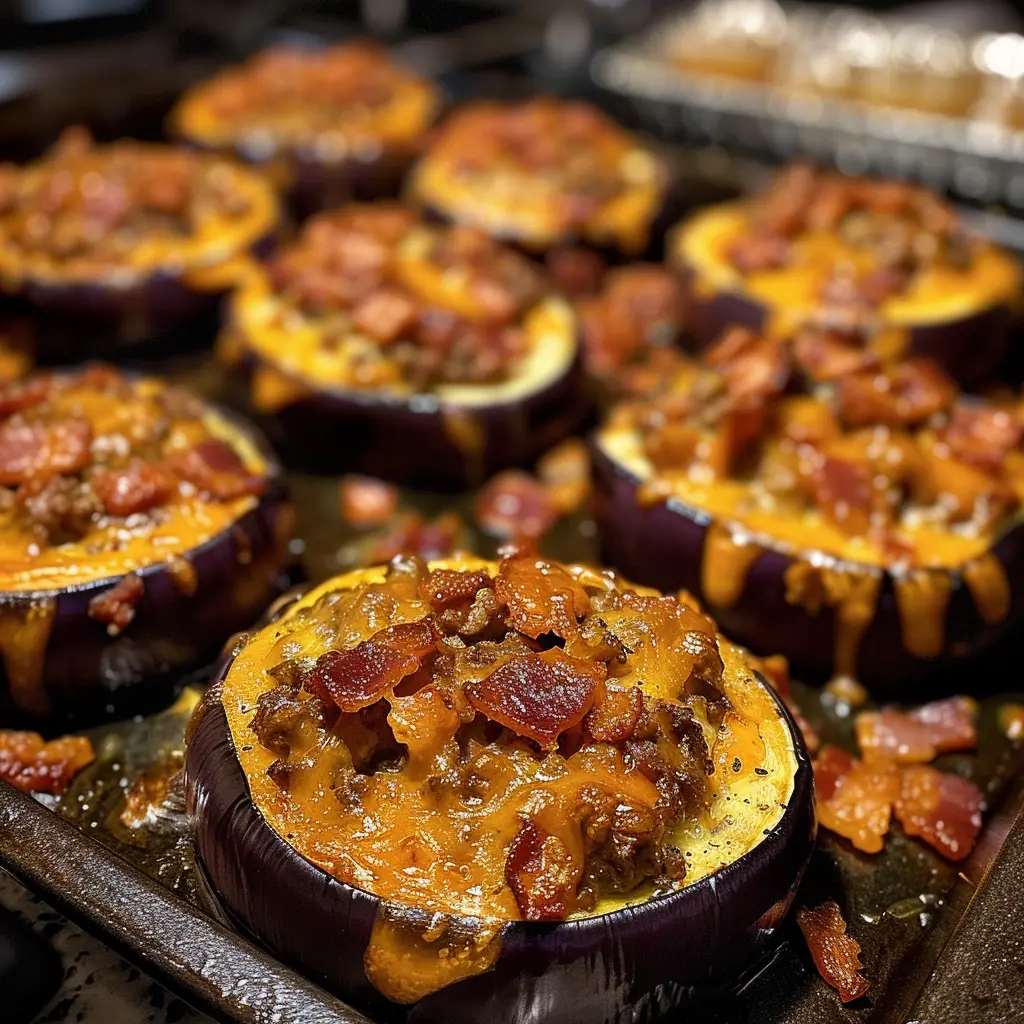
Bacon cheeseburger stuffed eggplant rounds brush thick eggplant slices with olive oil, roast them until just tender, press a shallow well into the center of each round, spoon on seasoned ground beef with Worcestershire and smoked paprika, pile on crumbled bacon and shredded cheddar, and return everything to a hot oven until the cheese is melted and bubbly. The eggplant does what a bun would do — it holds the filling, provides a soft, yielding base, and stays out of the way of the cheeseburger flavors on top — while adding its own mild, slightly meaty character that makes these feel like a real dinner rather than a compromised one.
Prep: 20 min | Cook: 25 min | Total: 45 min | Serves: 4 to 6 | Difficulty: Easy | Cuisine: American
Why This Recipe Works
Pre-roasting the eggplant rounds before adding any topping is the step that determines whether the finished dish has a tender, yielding base or a tough, bitter one. Raw eggplant is dense, slightly spongy, and high in moisture — piled with toppings and baked, it would steam under the filling weight and emerge rubbery rather than tender. Roasted first at 400 degrees F for 15 minutes, the eggplant loses most of its surface moisture, the flesh collapses slightly into a denser, meatier texture, the skin firms enough to hold the round’s shape under the topping weight, and the natural sugars at the cut surface begin to caramelize. The pre-roasted eggplant is a completely different structural and flavor foundation than raw eggplant would be.
Pressing a shallow well into the center of each roasted round with the back of a spoon before adding the beef is the practical step that keeps the filling on the eggplant rather than sliding off the sides. A flat roasted eggplant surface is slightly domed from the flesh expanding during roasting — beef spooned onto a domed surface migrates toward the edges and falls off during the second bake. The pressed well creates a small depression that holds the beef, bacon, and cheese in place as a contained, stable layer throughout the second bake and serving.
Worcestershire sauce in the beef mixture is the ingredient that produces a distinctly cheeseburger flavor in the ground beef rather than a generic taco or meat sauce character. Worcestershire is a concentrated fermented condiment with complex savory, tangy, and slightly sweet notes from tamarind, anchovies, vinegar, and molasses. Its glutamate content amplifies the beef’s natural savoriness — the same function it performs in a classic burger patty — and its acidity and sweetness balance the richness of the beef fat and cheddar in a way that smoked paprika, garlic powder, and onion powder alone can’t replicate. A tablespoon produces a noticeable but not dominant Worcestershire character in the finished beef that reads specifically as burger seasoning to anyone who encounters it.
Smoked paprika rather than regular paprika in the beef seasoning contributes the faint smoke note that evokes a grilled burger without any actual grilling. Regular paprika adds color and mild sweetness. Smoked paprika adds all of that plus a wood-smoke character from the drying process that, when combined with browned beef and cheddar, produces a flavor association with outdoor grilling that the recipe has no other mechanism for achieving. It’s a small addition that carries significant flavor weight in the context of a cheeseburger-themed dish.
The optional pre-salting step — salting the eggplant rounds and resting for 20 minutes before roasting — draws out the moisture and mild bitterness compounds that make some eggplants unpleasant to eat. Eggplant contains solanine and other alkaloid compounds concentrated in the seeds and flesh that produce a bitter taste, particularly in larger, more mature eggplants. Salt draws these compounds out through osmosis, producing a pool of slightly bitter liquid on the surface that’s patted away before roasting. The de-bittered eggplant is milder, less spongy, and absorbs less oil during roasting. It’s an optional step but one that produces a noticeably better result with any eggplant that isn’t perfectly fresh and small.
Ingredients
2 medium eggplants, sliced into 1-inch rounds 1 pound ground beef 6 slices bacon, cooked and crumbled 2 cups shredded cheddar cheese 1 tablespoon olive oil 1 teaspoon garlic powder 1 teaspoon onion powder 1 teaspoon smoked paprika 1 tablespoon Worcestershire sauce Salt and black pepper, to taste Chopped parsley, for garnish
Step-by-Step Instructions
Phase 1: Prep and Pre-Salt the Eggplant (Optional but Recommended)
Slice the eggplants into 1-inch rounds. If pre-salting, arrange the rounds in a single layer on a wire rack or baking sheet and sprinkle both sides generously with salt. Let rest for 20 minutes. The surfaces will bead with moisture. Pat completely dry with paper towels before proceeding.
Preheat the oven to 400 degrees F. Line a baking sheet with parchment paper.
Phase 2: Roast the Eggplant
Brush both sides of each eggplant round with olive oil and season lightly with salt and pepper. If the eggplant was pre-salted, go very light on the additional salt — the rounds already carry some from the pre-salting.
Arrange in a single layer on the prepared baking sheet. Roast for 15 minutes, flipping halfway through at 7 or 8 minutes, until the rounds are slightly tender when pressed and the cut surfaces show light golden color.
Remove from the oven. Using the back of a large spoon, gently press the center of each round to create a shallow well. The well should be about a half inch deep and wide enough to hold a generous spoonful of filling. The rim of the round stays raised to contain the topping.
Phase 3: Season the Beef
While the eggplant roasts, cook the ground beef in a skillet over medium heat, breaking it into fine crumbles, until fully browned. Drain the excess grease.
Add the garlic powder, onion powder, smoked paprika, Worcestershire sauce, salt, and black pepper. Stir to combine and cook for 1 minute until the seasoning has bloomed in the residual beef fat and the mixture is fragrant.
Phase 4: Assemble and Finish
Spoon the seasoned beef evenly into the well of each eggplant round, filling to the rim without overfilling. Scatter the crumbled bacon over the beef on each round. Top generously with the shredded cheddar cheese.
Return the baking sheet to the oven and bake for 10 to 12 minutes until the cheese is fully melted, bubbling, and beginning to color at the edges.
Remove from the oven, garnish with chopped parsley, and serve warm.
Chef Tips for Perfect Results
Pre-salt the eggplant. The 20-minute salt rest produces a noticeably less bitter, less spongy eggplant that absorbs less oil during roasting and holds its shape better under the topping. It adds 20 minutes of mostly hands-off time and the difference in the finished eggplant is significant, particularly with larger or older eggplants.
Cook the bacon first and set it aside. The entire recipe moves faster when the bacon is already cooked and crumbled before the eggplant goes in the oven. Cook it in the same skillet you’ll use for the beef — the rendered bacon fat becomes the cooking medium for the ground beef and adds a smokiness to the beef mixture that the recipe benefits from.
Use block cheddar shredded fresh rather than pre-shredded. Anti-caking agents in pre-shredded cheese prevent the clean, smooth melt that makes the finished rounds look properly finished. Block cheddar shredded just before use melts to a cohesive, bubbly layer rather than a clumpy, slightly grainy one.
Add the cheeseburger garnishes after baking. Diced tomatoes, sliced pickles, a drizzle of mustard or ketchup, or a dot of mayonnaise added to each round after the cheese has melted completes the cheeseburger character in a way the baked toppings alone can’t. The contrast of warm beef and melted cheese against cold, fresh tomato and pickle is what makes these taste specifically like a cheeseburger rather than a meat-and-cheese eggplant dish.
Don’t skip the well-pressing step. Filling that slides off the eggplant during the second bake produces messy, uneven rounds that are harder to serve and less visually impressive. The pressed well takes ten seconds per round and keeps everything contained.
Common Mistakes to Avoid
Cutting the rounds too thin. Rounds thinner than three-quarters of an inch collapse under the filling weight during the second bake and don’t hold the pressed well shape. One inch is the minimum for structural integrity.
Not draining the beef thoroughly. Excess fat from the ground beef pools in the eggplant well during the second bake and can make the rounds greasy. Drain well after browning.
Overcrowding the baking sheet. Eggplant rounds that touch each other steam at the edges rather than roasting, producing soft, pale sides rather than the slightly caramelized surface that adds flavor. Leave space between each round.
Skipping the flip at the halfway mark of the first roast. The bottom side of each round roasts faster than the top due to direct contact with the hot pan. Flipping ensures even roasting on both sides and a more uniformly tender round.
Adding too much filling. An overfilled round spills during the second bake and loses its visual appeal. Fill to just at the rim of the well.
Variations and Substitutions
Classic Cheeseburger Finish
After baking, top each round with a dill pickle slice, a small dot of yellow mustard, a piece of diced tomato, and a drizzle of ketchup. The condiments turn these from a beef-and-cheese eggplant dish into something that genuinely reads as a deconstructed cheeseburger at the table.
Pepper Jack Version
Substitute Pepper Jack for the cheddar for a spicier, creamier melt with a heat level that builds across each bite. Add a thin slice of pickled jalapeño on top of the cheese before the second bake.
Double Bacon Version
Use 8 slices of bacon instead of 6 and mix half into the beef mixture rather than using it all as a topping. The bacon-in-the-beef approach distributes smoky, salty bacon flavor throughout every spoonful of filling rather than concentrating it on the surface.
Ground Turkey Version
Ground turkey substitutes directly for the beef. Increase the smoked paprika to a teaspoon and a half and add a half teaspoon of smoked paprika to compensate for turkey’s milder natural flavor. The finished rounds are leaner with a slightly less rich filling.
Serving Suggestions
Serve warm directly from the baking sheet, two to three rounds per person as a main course or one round per person as an appetizer. A simple green salad alongside or roasted vegetables complete the plate for a full low-carb dinner. For a party or game day spread, arrange on a platter with small bowls of ketchup, mustard, and pickle slices alongside for guests to add their own cheeseburger garnishes.
Storage and Reheating
Refrigerator: store assembled, cooled rounds in an airtight container for up to 3 days. The eggplant softens slightly in storage but the flavors improve.
Reheating: reheat in a 350 degree F oven for 10 minutes until the cheese is warm and beginning to bubble again. The microwave works for individual rounds in 60-second intervals but the eggplant becomes softer and the cheese doesn’t regain its bubbly texture.
Freezer: not recommended. Eggplant’s high water content produces a mushy texture after freezing and thawing.
Nutritional Information
Calories: 480 | Protein: 32g | Carbohydrates: 12g | Fat: 34g | Saturated Fat: 14g | Fiber: 5g | Sodium: 620mg
Per serving, based on 5 servings. Estimates based on standard ingredient brands. Values will vary based on beef fat content and specific cheese and bacon brands used.
FAQ
Do I have to pre-salt the eggplant?
No, but it’s strongly recommended. Skipping it produces rounds that are slightly more bitter, absorb more olive oil during roasting, and have a softer, spongier texture under the filling. Modern eggplant varieties are bred to be less bitter than older ones, so the difference is smaller than it once was — but it’s still noticeable, particularly with larger eggplants. The 20-minute rest is mostly hands-off and the result justifies it.
Can I use Japanese or Chinese eggplant instead of globe eggplant?
Yes, with a format adjustment. Japanese and Chinese eggplants are narrower and longer than globe eggplants. Cut them into rounds as directed but expect smaller individual portions with less surface area for the filling. They’re less bitter than globe eggplants and have fewer seeds, which makes them a good choice if bitterness is a concern. The pre-salting step is generally unnecessary with these varieties.
How do I keep the eggplant rounds from getting soggy?
Three things: pre-salt and pat dry before roasting, roast at high heat (400 degrees F) without crowding, and don’t overload the filling. The pre-salting removes moisture before it can steam during roasting. High heat with space between rounds produces caramelization rather than steaming. And a properly sized filling doesn’t release enough liquid to make the eggplant soggy during the second bake.
Can I make these ahead for a party?
Yes — partially. Roast the eggplant rounds and cook the beef and bacon up to a day ahead. Refrigerate separately. When ready to serve, press the wells, fill, top with cheese, and bake for 12 to 15 minutes from cold until heated through and the cheese is melted. The make-ahead approach means the only party-day step is the quick assembly and final bake.
What’s the best eggplant to use for this recipe?
Medium globe eggplants — about 6 to 8 inches long and roughly uniform in diameter — produce the most consistent rounds. Very large eggplants have more developed seeds and tend to be more bitter. Look for eggplants that feel heavy for their size with taut, glossy skin and a green, fresh-looking stem. Soft spots or wrinkled skin indicate age and more pronounced bitterness.
Conclusion
Bacon cheeseburger stuffed eggplant rounds earn their place in the low-carb recipe lineup by not feeling like a compromise — the roasted eggplant is a genuinely good base, the Worcestershire-seasoned beef tastes specifically like a burger, the bacon and cheddar deliver everything they’re supposed to, and the optional cheeseburger garnishes added after baking complete the picture. Make them for dinner, bring them to a party, or serve them as a game day appetizer. They disappear fast regardless of who’s eating them or why.