
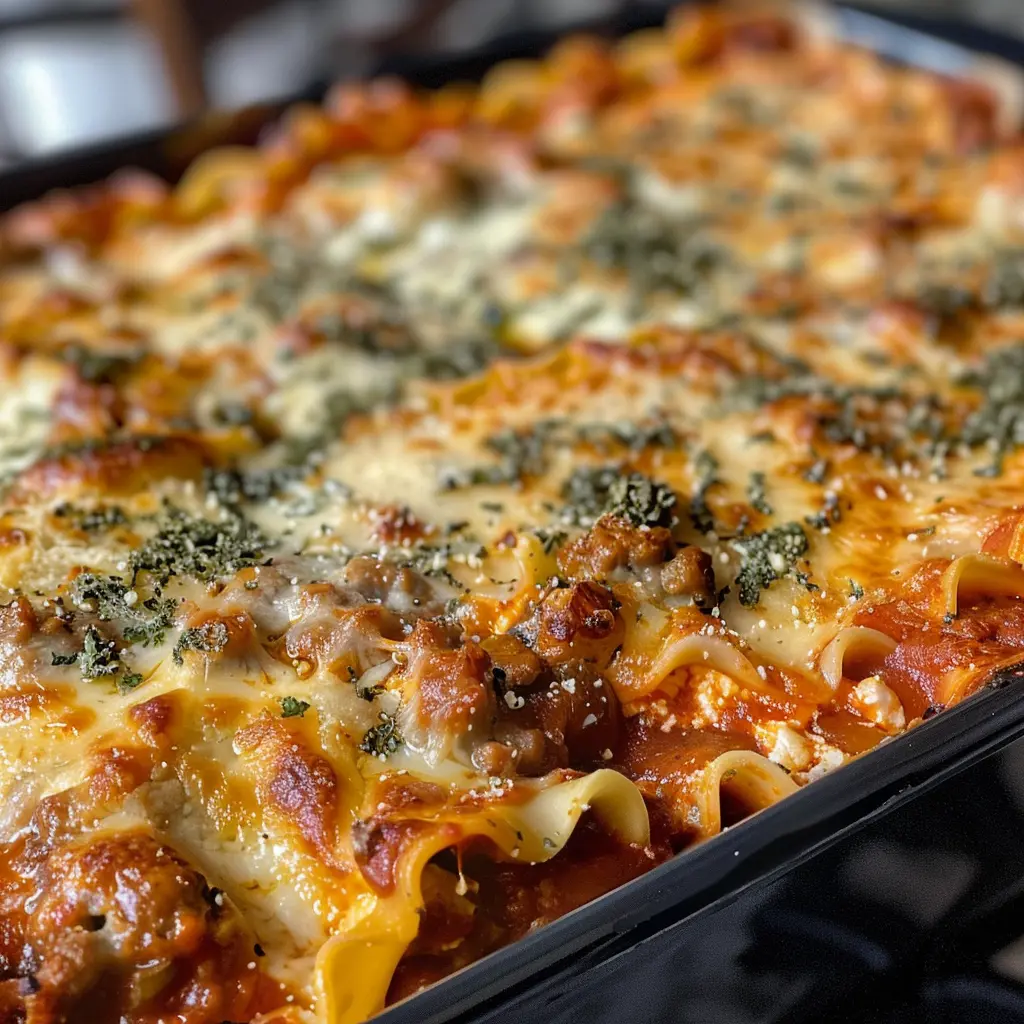
Classic homemade beef lasagna builds a deeply flavored meat sauce from ground beef, Italian sausage, tomato paste, marinara, and a full spice blend simmered for twenty minutes, mixes ricotta, mozzarella, Parmesan, and egg into a creamy cheese filling, layers everything into a 9×13 with cooked noodles, buries more cheese on top, and bakes covered then uncovered until the top is golden, bubbling, and pulling away from the edges of the dish. It rests for fifteen minutes before anyone touches it, and that rest is mandatory.
Prep: 30 min | Cook: 1 hour | Total: 1 hour 30 min | Serves: 8 to 10 | Difficulty: Medium | Cuisine: Italian-American
Why This Recipe Works
Cooking the tomato paste directly in the skillet with the browned beef for a full minute before the sauces go in is the technique that removes the raw, slightly metallic taste that straight-from-the-can tomato paste carries and replaces it with a concentrated, caramelized tomato depth that enriches the entire meat sauce. Tomato paste is a highly concentrated reduction of tomatoes — its sugars and acids need a brief period of high, dry heat in the pan to caramelize and develop the round, savory sweetness that makes it an asset rather than a background note. Paste added directly to liquid without this step tastes identifiably tinny in the finished sauce; paste that’s been cooked for sixty seconds in hot fat tastes like concentrated tomato richness throughout.
The combination of ground beef and Italian sausage rather than beef alone produces a meat sauce with a more complex flavor profile than a single-protein sauce provides. Ground beef contributes iron-rich, savory depth. Italian sausage contributes fennel, garlic, and red pepper from its seasoning, as well as a higher fat content that enriches the sauce’s body and mouthfeel. The two proteins cook together and their fats combine in the sauce, producing a richer, more layered flavor than either alone. The sausage is listed as optional, but it’s the ingredient that takes the sauce from very good to memorable.
The twenty-minute sauce simmer is the step that transforms a mixture of individual jarred and canned tomato products into a unified, deeply flavored meat sauce. During those twenty minutes, the water in the marinara and tomato sauce evaporates and the sauce concentrates. The spices — Italian seasoning, oregano, basil, paprika — bloom further in the hot fat and distribute their flavor through the entire sauce. The beef and sausage continue to release their flavor compounds into the surrounding tomato base. The sauce at five minutes of simmering tastes like meat in jarred marinara; the sauce at twenty minutes tastes like a homemade meat sauce that’s been developing all afternoon.
The egg in the ricotta cheese filling is the binder that holds the cheese layer together during baking rather than allowing it to slide and separate when the lasagna is cut. Ricotta without egg melts into a loose, sliding layer during the bake — when the lasagna is sliced, the cheese filling moves independently of the noodles and sauce layers and the slice falls apart rather than holding its shape. The egg’s proteins set during baking and hold the ricotta mixture in a cohesive layer that stays with the noodles above and below it. The difference is visible immediately when slicing — an egg-bound ricotta layer holds a clean edge; an unbound one doesn’t.
The two-stage bake — forty minutes covered, twenty minutes uncovered — solves the competing problems of cooking the interior layers through and developing a properly browned, bubbly cheese top. Covered baking traps steam, which penetrates the noodle and filling layers and ensures the center of the lasagna is fully heated through. Uncovering for the final twenty minutes exposes the cheese surface to dry oven heat, which drives off surface moisture and allows the mozzarella and Parmesan on top to melt, bubble, and develop the golden-brown color that signals a finished lasagna. A lasagna baked uncovered from the start can produce a browned top over a cold, undercooked center; covered throughout produces a cooked center under a pale, steamed top.
The fifteen-minute rest before slicing is not an optional suggestion — it’s the step that determines whether the lasagna holds its layers when cut or collapses into a pool of sauce and sliding noodles. During baking, the sauce, cheese, and noodle layers are at different temperatures and consistencies — the sauce is liquid, the cheese is molten, the noodles are soft. Fifteen minutes of resting allows all layers to cool slightly and firm toward a unified consistency. The sauce thickens as it cools. The cheese sets from molten to a cohesive layer. The noodles firm slightly. A lasagna sliced at the fifteen-minute mark holds a clean, layered edge that shows every component. A lasagna sliced immediately from the oven flows apart.
Ingredients
For the Meat Sauce
2 tablespoons olive oil 1 pound ground beef 1/2 pound Italian sausage (optional but strongly recommended) 1 medium onion, diced 4 garlic cloves, minced 2 tablespoons tomato paste 24 oz marinara sauce 15 oz tomato sauce 1 teaspoon Italian seasoning 1 teaspoon dried oregano 1/2 teaspoon dried basil 1/2 teaspoon paprika 1 teaspoon sugar (optional) Salt and black pepper, to taste 2 tablespoons fresh parsley, chopped
For the Cheese Filling
15 oz ricotta cheese 2 cups shredded mozzarella 1/2 cup grated Parmesan 1 large egg 2 tablespoons fresh parsley, chopped 1/2 teaspoon garlic powder 1/2 teaspoon salt 1/4 teaspoon black pepper
For Assembly
12 lasagna noodles, cooked according to package directions 2 cups shredded mozzarella 1/2 cup grated Parmesan Fresh parsley, for garnish
Step-by-Step Instructions
Phase 1: Build the Meat Sauce
Heat the olive oil in a large skillet over medium heat. Add the diced onion and cook for 3 to 4 minutes until softened and translucent. Add the garlic and cook for 1 more minute until fragrant.
Add the ground beef and Italian sausage to the skillet, breaking them apart into fine crumbles as they cook. Cook until fully browned. Drain any excess grease from the pan — excess fat in the sauce makes the finished lasagna greasy.
Stir in the tomato paste. Cook for 1 minute, stirring constantly, until the paste darkens slightly and coats the meat evenly.
Add the marinara sauce, tomato sauce, Italian seasoning, oregano, basil, paprika, sugar if using, salt, and pepper. Stir to combine. Bring to a simmer, reduce heat to medium-low, and simmer uncovered for 20 minutes, stirring occasionally. The sauce should thicken noticeably. Stir in the fresh parsley and remove from heat.
Phase 2: Make the Cheese Filling
Combine the ricotta, 2 cups mozzarella, Parmesan, egg, parsley, garlic powder, salt, and pepper in a large bowl. Stir until smooth and fully combined. Set aside.
Phase 3: Cook the Noodles
Cook the lasagna noodles according to package directions until just al dente — slightly underdone is better than fully cooked, as they continue to cook in the oven. Drain and lay flat on an oiled surface or parchment paper to prevent sticking.
Phase 4: Assemble the Lasagna
Preheat the oven to 375 degrees F. Lightly grease a 9×13-inch baking dish.
Spread a thin layer of meat sauce across the bottom of the dish — just enough to prevent the noodles from sticking.
Layer as follows, repeating until all ingredients are used:
Lasagna noodles (3 noodles per layer, slightly overlapping) Cheese filling (spread evenly to the edges) Meat sauce (spread evenly over the cheese)
Finish the top layer with the remaining 2 cups of mozzarella and 1/2 cup of Parmesan scattered evenly over the final sauce layer.
Phase 5: Bake and Rest
Cover the baking dish tightly with aluminum foil. Bake for 40 minutes.
Remove the foil and bake uncovered for an additional 20 minutes until the cheese top is golden brown, bubbling, and the edges of the lasagna are pulling slightly from the sides of the dish.
Remove from the oven and rest uncovered for 15 minutes before slicing. Do not skip this step.
Garnish with fresh parsley before serving.
Chef Tips for Perfect Results
Undercook the noodles slightly. Noodles cooked to full package directions will overcook and become mushy during the hour in the oven. Pull them 1 to 2 minutes before the package says they’re done — they should be pliable and no longer raw-tasting but still have a slight resistance at the center. They’ll finish in the oven.
Use whole-milk ricotta. Part-skim ricotta contains less fat and produces a slightly grainy, drier cheese layer after baking. Whole-milk ricotta stays creamier and more cohesive. The difference is most visible in the texture of the cheese layer when the lasagna is sliced.
Shred the mozzarella from a block. Pre-shredded mozzarella contains anti-caking agents that prevent clean melting. Block mozzarella shredded fresh melts to a smooth, stretchy, cohesive layer with better flavor and appearance.
Taste the sauce before assembling. The sugar is listed as optional, but a pinch can significantly balance the acidity of canned tomato products, particularly if the marinara used is sharp. Taste the finished sauce and add sugar in half-teaspoon increments if it tastes unpleasantly acidic.
Let the sauce cool slightly before assembling. Very hot sauce added to the cheese filling during assembly can begin to melt and slide the cheese layers before the lasagna goes in the oven, making assembly messier and the layers less defined. Five minutes of rest off the heat makes assembly considerably cleaner.
Common Mistakes to Avoid
Skipping the rest period. A lasagna cut immediately from the oven pours rather than slices. Fifteen minutes is non-negotiable for clean, layered portions.
Overcooking the noodles before assembling. Fully cooked noodles in a one-hour bake produce mushy, structureless layers. Undercook by 1 to 2 minutes.
Not draining the beef thoroughly. Grease left in the sauce rises to the surface during baking and pools on top of the cheese, producing an oily finished lasagna rather than a rich one.
Spreading the cheese filling too thin. Each cheese layer should be generous enough to be a distinct, visible layer in the finished slice. Thin cheese layers disappear into the noodles and sauce and produce a one-dimensional result.
Using a dish that’s too small. Twelve noodles and the full quantity of sauce and cheese require a full 9×13. A smaller dish produces a lasagna that overflows during baking and doesn’t layer correctly.
Variations and Substitutions
Meat-Free Version
Omit the beef and sausage and replace with a combination of diced zucchini, cremini mushrooms, and roasted red peppers sauteed in the olive oil with the onion and garlic. The vegetable mixture produces a lighter, brighter lasagna that holds its layers equally well. Add a teaspoon of smoked paprika to compensate for the smokiness the sausage would have contributed.
Sausage-Only Version
Use a full pound of Italian sausage and no ground beef for a richer, more strongly seasoned meat sauce with a more pronounced fennel and herb character. Particularly good with the Parmesan scattered generously over each layer rather than reserved for the top.
White Sauce Addition
Replace the top layer of meat sauce with a simple bechamel — 2 tablespoons butter, 2 tablespoons flour, 1 cup whole milk, salt, pepper, and nutmeg — spread over the final noodle layer before the mozzarella and Parmesan go on. The bechamel top produces a richer, creamier finished surface and is the preparation most associated with Northern Italian lasagna traditions.
Overnight Make-Ahead Version
Assemble the full lasagna up through the cheese top, cover tightly with foil, and refrigerate overnight. Bake directly from the refrigerator, adding 15 minutes to the covered bake time. The overnight rest allows the layers to meld and produces a lasagna with even more cohesive flavor than the same-day version.
Serving Suggestions
Serve in generous square portions with a wide spatula that supports the full depth of the slice. Garlic bread alongside is the classic accompaniment and provides the vehicle for the sauce that ends up on the plate. A simple Caesar or green salad with lemon vinaigrette cuts through the richness. A glass of medium-bodied Italian red — Chianti, Sangiovese, or Montepulciano — is the natural pairing.
Storage and Reheating
Refrigerator: store covered for up to 4 days. Lasagna reheats exceptionally well and the flavors continue to develop in storage — day two is genuinely better than day one.
Reheating: individual portions reheat in the microwave in 90-second intervals with a damp paper towel over the top. Reheat a larger portion covered at 350 degrees F for 20 to 25 minutes until heated through.
Freezer: freeze cooled, sliced portions in airtight containers for up to 3 months. Thaw overnight in the refrigerator and reheat covered at 350 degrees F for 25 to 30 minutes. The texture is excellent after freezing — lasagna is one of the few baked pasta dishes that freezes without significant quality loss.
Nutritional Information
Calories: 580 | Protein: 38g | Carbohydrates: 42g | Fat: 28g | Saturated Fat: 13g | Fiber: 3g | Sodium: 890mg
Per serving, based on 9 servings. Estimates based on standard ingredient brands with Italian sausage included. Values will vary based on specific sauce and cheese brands used.
FAQ
Can I use no-boil lasagna noodles?
Yes. No-boil noodles absorb liquid from the sauce during baking rather than being pre-cooked. Add a half cup of water or additional tomato sauce to the meat sauce before assembling to ensure there’s enough liquid for the noodles to hydrate fully. The finished texture is slightly different from boiled noodles — slightly denser and chewier — but the convenience is significant.
Why is my lasagna watery?
Three common causes: the sauce wasn’t simmered long enough and retained too much liquid, the ricotta was too wet and wasn’t drained, or the lasagna was cut before the rest period allowed the liquid to redistribute. Simmer the sauce until it visibly thickens, press the ricotta through a fine-mesh strainer if it seems very wet, and always rest for the full fifteen minutes before slicing.
Can I make this without Italian sausage?
Yes — use a full pound and a half of ground beef instead. The sauce will be less complex and less rich than the beef-and-sausage version but still very good. Add an extra half teaspoon of Italian seasoning and a pinch of fennel seed to approximate some of the flavor the sausage would have contributed.
How many layers should lasagna have?
This recipe produces three to four layers depending on how the noodles and filling are distributed. Three layers of noodles is the standard for a 9×13 dish with the quantities given. More layers with less filling per layer produces a noodle-forward lasagna; fewer layers with more filling per layer produces a richer, more sauce-and-cheese-forward result. Both are correct — it’s a matter of preference.
Can I add vegetables to the meat sauce?
Yes. Diced zucchini, sliced mushrooms, or diced bell peppers can be sauteed with the onion and garlic and incorporated into the meat sauce without any other adjustments. Vegetables with high water content like zucchini should be sauteed until their moisture releases and evaporates before the tomato products are added, to avoid making the sauce watery.
Conclusion
Classic homemade beef lasagna justifies every minute of the hour and a half it takes to make through the depth of flavor that only a properly simmered meat sauce, a well-seasoned ricotta filling, and a two-stage bake can produce. Make it for a Sunday dinner, make it to feed a crowd, make it the night before and bake it fresh the next day. Rest it properly, slice it cleanly, and accept that there will be requests to make it again before the pan is empty.