
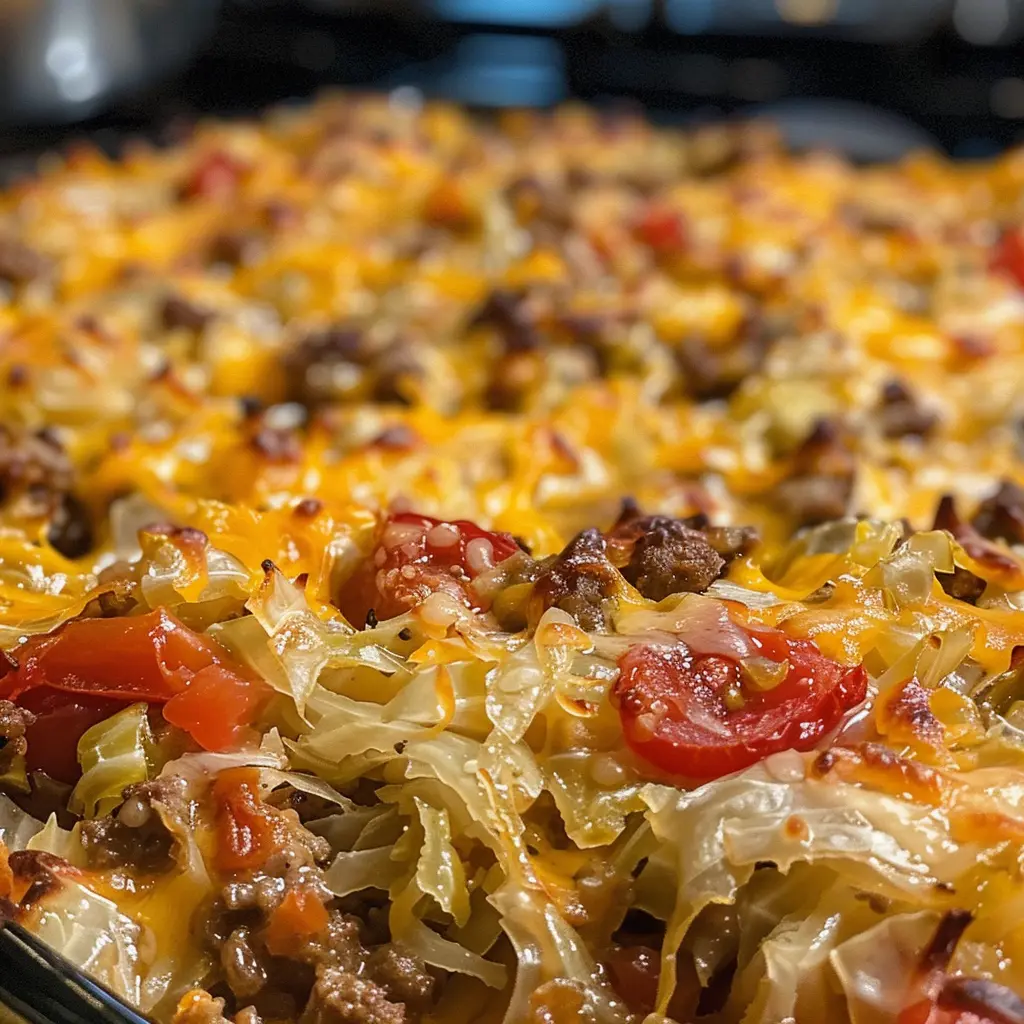
Cheesy cabbage casserole browns ground beef and onion together, blooms garlic in the rendered fat, stirs in chopped cabbage, diced tomatoes, tomato sauce, and Italian seasoning, simmers everything until the cabbage softens into the beef and tomato mixture, transfers the whole thing to a baking dish, blankets it in shredded cheddar, and bakes until the cheese is bubbly and golden. It’s a one-pan-to-one-dish dinner that feeds six on a grocery bill that barely registers, and it tastes like something that should cost more to make than it does.
| Detail | Info |
|---|---|
| Prep Time | 10 minutes |
| Cook Time | 30 minutes |
| Total Time | 40 minutes |
| Servings | 6 |
| Difficulty | Easy |
| Cuisine | American |
Why This Recipe Works
Browning the ground beef and onion together rather than separately produces a more integrated flavor base than either cooked alone. As the beef browns, it renders fat that becomes the cooking medium for the onion — the onion softens directly in beef fat rather than in neutral oil, absorbing the beef’s flavor from the very first minute of cooking. The beef’s browning fond accumulates on the pan surface and dissolves back into the mixture as the onion releases its moisture. By the time the garlic goes in, the pan already contains a flavor base built from two sources simultaneously rather than one.
Simmering the cabbage with the beef, tomatoes, and sauce for 8 to 10 minutes on the stovetop before transferring to the oven is the step that ensures the cabbage is properly tender in the finished casserole rather than retaining an unpleasant crunch. Raw cabbage transferred directly to a baking dish and baked for 15 to 20 minutes under a cheese layer doesn’t receive enough heat penetration to soften fully — the cheese browns before the cabbage beneath it finishes cooking. The stovetop simmer gives the cabbage a head start in a moist, tomato-enriched environment where it softens evenly throughout the entire batch before the oven finish concentrates the flavors and melts the cheese.
Using undrained diced tomatoes rather than drained is the liquid calibration that produces a casserole with the right consistency after the oven bake. The tomato liquid adds to the braising liquid during the stovetop simmer, helping the cabbage soften and allowing the flavors to meld. During the oven bake, that liquid continues to reduce and concentrate, producing a thicker, more cohesive casserole base beneath the cheese rather than a watery one. Drained tomatoes would produce a drier mixture that can become too thick and pasty during baking.
Italian seasoning in a beef and cabbage casserole is the spice choice that elevates the dish above its humble ingredient list. Italian seasoning — a blend of oregano, basil, thyme, rosemary, and marjoram — adds an herbal complexity to the tomato and beef base that makes the finished casserole taste more considered and layered than the four-ingredient simplicity of its structure would suggest. The herbs bloom in the beef fat during the brief cook with the garlic and distribute their flavor through the entire tomato and cabbage mixture during the simmer.
Baking the casserole uncovered rather than covered for the final cheese stage is the technique that produces a properly browned, bubbly cheese top rather than a pale, steamed one. A covered baking dish traps moisture from the hot tomato mixture below and creates a steaming environment that prevents the cheese surface from drying out and browning. Uncovered, the oven’s dry heat evaporates surface moisture from the cheese rapidly, allowing the mozzarella-like properties of cheddar to develop — the cheese melts, bubbles as the fat renders, and develops golden color at the edges and high points where the heat is most concentrated.
Ingredients
| Ingredient | Quantity | Notes |
|---|---|---|
| Lean ground beef | 1 pound | Lean (90/10 or leaner) minimizes excess grease without sacrificing flavor |
| Onion, chopped | 1/2 medium | Yellow or white; cooked with the beef from the start |
| Garlic, minced | 2 cloves | Added after the beef is browned; blooms in the rendered fat |
| Cabbage, chopped | 3 cups | Green cabbage; chopped into roughly 1-inch pieces for even cooking |
| Diced tomatoes, undrained | 1 can (15 oz) | Undrained — the juice is part of the braising liquid |
| Tomato sauce | 1 can (8 oz) | Adds body and concentrated tomato flavor to the base |
| Italian seasoning | 2 teaspoons | The herb blend that lifts the flavor above the sum of its parts |
| Salt | 2 teaspoons | Season throughout; adjust to taste |
| Black pepper | 1/2 teaspoon | |
| Shredded cheddar cheese | 1.5 cups | Sharp cheddar for maximum flavor; shred from a block for best melt |
| Fresh parsley, minced | For garnish | Added just before serving for color and freshness |
Step-by-Step Instructions
Phase 1: Build the Base
- Preheat the oven to 375 degrees F. Lightly grease a 9-inch baking dish.
- Cook the ground beef and chopped onion together in a large skillet over medium heat, breaking the beef into fine crumbles, until the beef is fully browned and the onion is softened. Drain any excess grease — lean beef produces minimal grease but drain what’s there.
- Add the minced garlic to the skillet. Cook for 1 minute, stirring constantly, until fragrant.
Phase 2: Simmer the Cabbage
- Add the chopped cabbage, undrained diced tomatoes, tomato sauce, Italian seasoning, salt, and black pepper to the skillet. Stir to combine everything thoroughly.
- Bring to a simmer over medium heat. Cook for 8 to 10 minutes, stirring occasionally, until the cabbage has softened noticeably and the flavors have begun to meld. The cabbage should be tender but not completely limp — it will finish cooking in the oven.
Phase 3: Bake and Finish
- Transfer the beef and cabbage mixture to the prepared baking dish and spread evenly.
- Sprinkle the shredded cheddar cheese evenly over the top, covering the entire surface.
- Bake uncovered for 15 to 20 minutes until the cheese is fully melted, bubbling, and lightly golden at the edges and high points.
- Garnish with fresh minced parsley and serve hot directly from the baking dish.
Chef Tips for Perfect Results
Use sharp cheddar and shred it from a block. Mild cheddar produces a less interesting cheese layer that blends into the background of the casserole’s flavor. Sharp cheddar has the tangy, pronounced flavor that stands up to the beef and tomato base and contributes something distinct to every bite. Pre-shredded cheese contains anti-caking agents that prevent clean melting — block cheddar shredded fresh produces a smoother, more cohesive melt.
Chop the cabbage into pieces rather than shredding it. Shredded cabbage becomes very fine after the stovetop simmer and oven bake, losing its textural identity and becoming an indistinct part of the tomato base. Roughly chopped 1-inch pieces retain more structure through the cooking process and provide distinct, identifiable pieces of tender cabbage in the finished casserole.
Taste the mixture before transferring to the baking dish. The seasoning in the skillet is the seasoning of the finished casserole — the oven bake doesn’t add or change anything about the flavor. Taste and adjust salt, pepper, and Italian seasoning before baking. A properly seasoned base going into the oven produces a properly seasoned casserole coming out.
Add a pinch of red pepper flakes for subtle heat. A quarter teaspoon of crushed red pepper flakes added with the Italian seasoning adds a gentle background warmth that makes the tomato and beef base more dynamic without making the dish noticeably spicy. It’s the detail that makes people ask what’s in it.
Let it rest for 5 minutes before serving. The tomato mixture beneath the cheese is very hot and loose immediately from the oven. Five minutes of rest allows it to set slightly and produces cleaner servings with better-defined cheese and filling layers.
Common Mistakes to Avoid
Not simmering the cabbage long enough before baking. Cabbage that hasn’t softened sufficiently on the stovetop won’t finish cooking under the cheese layer in 15 to 20 minutes. The cabbage should be noticeably tender — not crunchy — before it goes in the oven.
Draining the diced tomatoes. The tomato juice is the braising liquid that softens the cabbage during the simmer and keeps the casserole from being too dry. Always use the full undrained can.
Using pre-shredded cheese. The anti-caking agents produce a clumpy, slightly grainy melt that doesn’t produce the smooth, bubbly golden top the casserole needs visually and texturally.
Covering the dish for the bake. Covered baking produces a pale, steamed cheese top. Always bake uncovered so the cheese can melt, bubble, and brown.
Skipping the garlic bloom. Garlic added directly to the tomato mixture without cooking briefly in the hot fat produces an uneven, sometimes sharp raw garlic note. One minute in the rendered beef fat blooms its aromatics uniformly through the entire dish.
Variations and Substitutions
Add cooked bacon: Four slices of bacon, cooked until crispy and crumbled, stirred into the beef and cabbage mixture before transferring to the baking dish adds smokiness, crunch, and richness that turns this from a weeknight staple into something genuinely special.
Add sliced mushrooms: A cup of sliced cremini mushrooms added with the cabbage and cooked through the simmer stage adds an earthy, meaty element that gives the casserole more depth and makes it feel more substantial.
Use ground turkey: Ground turkey substitutes directly for the beef with a slightly milder, leaner result. Add an extra half teaspoon of Italian seasoning and a teaspoon of Worcestershire sauce to compensate for turkey’s less pronounced natural flavor.
Add rice for a stuffed-cabbage-roll character: One cup of cooked white rice stirred into the beef and cabbage mixture before baking transforms the casserole into a deconstructed stuffed cabbage roll. Add a quarter cup of additional tomato sauce to compensate for the rice’s liquid absorption.
Serving Suggestions
Serve hot directly from the baking dish in generous scoops. Crusty bread alongside for the tomato sauce is a natural pairing. Mashed potatoes turn this into a truly hearty meal. A simple green salad with vinaigrette provides the bright, acidic contrast the rich beef and cheese casserole benefits from. Sour cream on the table is a welcome addition for those who want it.
Storage and Reheating
Refrigerator: Store in an airtight container for up to 4 days. The flavors continue to meld in storage and the casserole is genuinely better on day two.
Reheating: Individual portions reheat in the microwave in 90-second intervals. Reheat a larger portion covered at 350 degrees F for 15 to 20 minutes until heated through. Add a splash of water or tomato sauce before reheating if the casserole has dried slightly in storage.
Freezer: Freeze cooled portions in airtight containers for up to 3 months. Thaw overnight in the refrigerator and reheat covered at 350 degrees F. The cabbage texture softens slightly after freezing but the overall dish reheats well.
Nutritional Information
| Nutrient | Per Serving (approx., based on 6 servings) |
|---|---|
| Calories | 310 |
| Protein | 26g |
| Carbohydrates | 12g |
| Fat | 18g |
| Saturated Fat | 9g |
| Fiber | 3g |
| Sodium | 820mg |
Nutritional values are estimates based on standard ingredient brands. Values will vary based on beef fat content and specific cheese brand used.
FAQ
Can I make this entirely on the stovetop without baking?
Yes. After the cabbage has simmered until tender, scatter the cheddar over the top of the skillet mixture, cover with a lid, and cook on low heat for 3 to 4 minutes until the cheese melts. The cheese won’t brown or bubble the way it does in the oven but the flavor is essentially the same. This is a useful approach when oven space is limited or time is short.
Can I use red cabbage instead of green?
Yes, with a color note. Red cabbage turns a deep purple-blue when cooked with acidic tomatoes due to the reaction between its anthocyanin pigments and the tomato’s acidity. The flavor is similar to green cabbage — slightly earthier and more assertive — but the finished casserole will have a visually unusual purple-tinted base beneath the cheese. If that’s not a concern, red cabbage works well. Add a teaspoon of sugar to balance red cabbage’s slightly more bitter edge.
Can I use pre-shredded coleslaw mix instead of chopping cabbage?
Yes, as a time saver. Pre-shredded coleslaw mix is finer than hand-chopped cabbage and will soften more quickly during the simmer — reduce the simmer time to 5 to 6 minutes to avoid the cabbage becoming too soft before the oven bake. The finished texture is less distinct than chopped cabbage pieces but the flavor is the same.
The mixture seems very liquid after simmering. Is that normal?
Some liquid in the skillet after the simmer is normal and expected — the undrained tomatoes and the cabbage’s released moisture both contribute. That liquid continues to reduce during the oven bake and the finished casserole should be cohesive rather than watery. If the mixture seems excessively liquid after 10 minutes of simmering, increase the heat slightly and cook for another 3 to 5 minutes until some of the excess liquid has evaporated before transferring to the baking dish.
Can I assemble this ahead and bake later?
Yes. Complete the stovetop steps, transfer to the baking dish, cool completely, cover tightly, and refrigerate for up to 24 hours. Add the cheese just before baking. Bake from cold at 375 degrees F, adding 5 to 8 minutes to the bake time. This make-ahead approach is ideal for busy weeknights — the active cooking happens the night before and the oven does the work when it’s time to eat.
Conclusion
Cheesy cabbage casserole earns its place in the regular weeknight rotation by being genuinely satisfying on a budget that most dinners this good don’t operate within. Beef, cabbage, canned tomatoes, cheddar — four primary ingredients that add up to a casserole with depth, heartiness, and a golden cheese top that makes the table feel a little more special than a Tuesday typically warrants. Make it once and it becomes the recipe you think of first when the week gets busy and the grocery budget gets tight.