
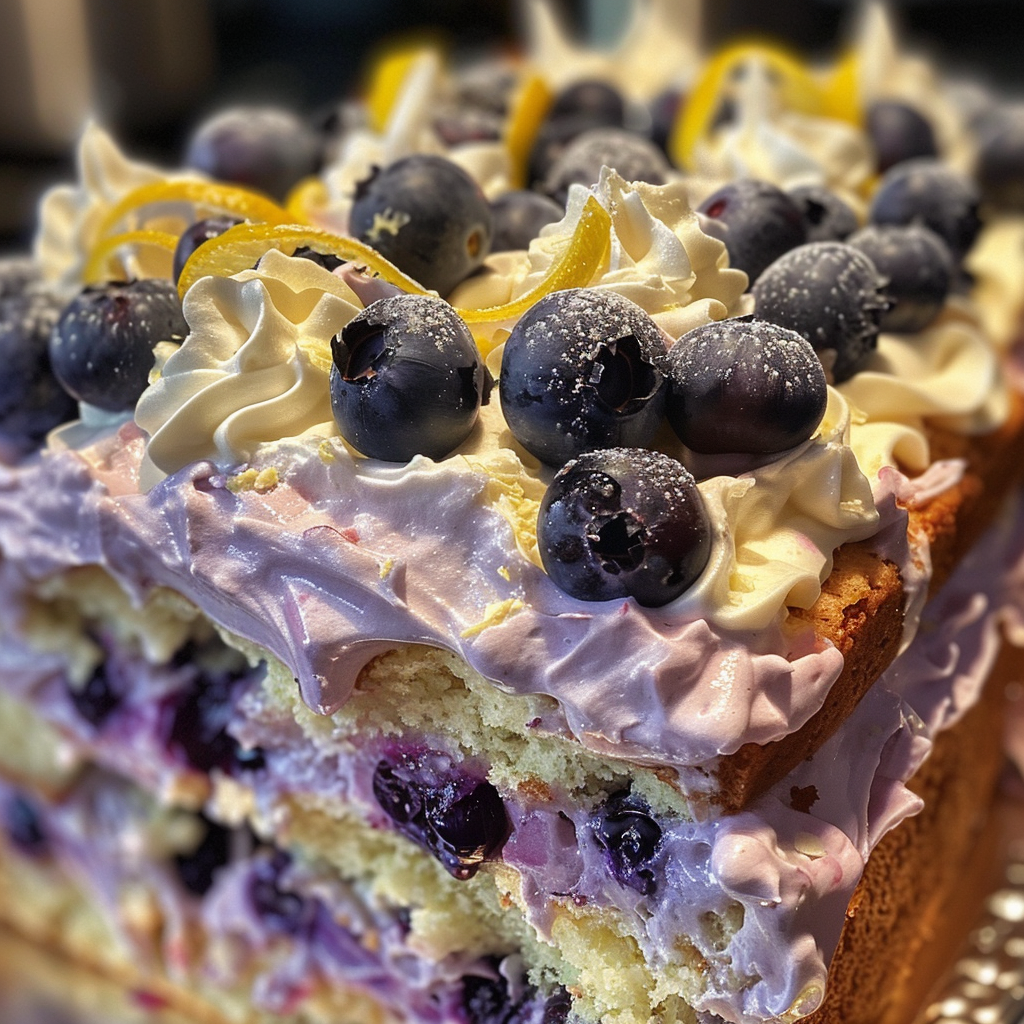
Blueberry whipped cream cake bakes fresh blueberries directly into a tender, buttery crumb, then finishes with a lemon-scented whipped cream frosting that melts the moment it hits your fork. It’s lighter than a layer cake and more elegant than a sheet cake, and it tastes like the best possible version of summer in every bite.
| Detail | Info |
|---|---|
| Prep Time | 20 minutes |
| Cook Time | 35 minutes |
| Cool Time | 45 minutes |
| Total Time | 1 hour 40 minutes |
| Servings | 8 to 10 |
| Difficulty | Easy to Medium |
| Cuisine | American |
Why This Recipe Works
Tossing the blueberries in a tablespoon of sugar before folding them into the batter does two things: it begins drawing moisture from the berries so they don’t release a flood of liquid into the crumb during baking, and it creates a thin syrupy coating that helps the berries distribute more evenly rather than sinking to the bottom of the pan. It’s a small step that produces a noticeably better result in both texture and berry distribution.
The alternating flour-milk-flour mixing method is standard in classic American butter cakes for a reason. Adding all the flour at once develops too much gluten, which makes the crumb tight and chewy. Adding all the milk at once breaks the emulsion of the creamed butter and sugar. Alternating in three additions of flour and two of milk keeps the batter smooth, maintains the emulsion, and produces the tender, even crumb this cake is known for.
Lemon zest in the whipped cream is the detail that elevates this dessert from pleasant to genuinely memorable. The zest adds brightness and a citrus note that sharpens the blueberry flavor rather than competing with it. Fresh zest has a floral, aromatic quality that lemon juice alone doesn’t provide — the essential oils in the zest are what make the difference.
Whipped cream frosting is not just a lighter alternative to buttercream — it’s the right choice for this specific cake. Buttercream would overwhelm the delicate berry-studded crumb and mask the flavors rather than complementing them. Whipped cream lets the blueberry and lemon notes come through cleanly and keeps the overall dessert feeling fresh rather than heavy.
Cooling the cake completely before adding the whipped cream is non-negotiable. Any residual warmth in the cake melts the whipped cream on contact, and it slides off the surface rather than staying in a defined layer. Forty-five minutes at room temperature, or 20 minutes in the refrigerator, is enough to bring the cake to a safe temperature for frosting.
Ingredients
| Ingredient | Quantity | Notes |
|---|---|---|
| Cake | ||
| Fresh blueberries | 2 cups | Frozen work too; do not thaw before folding into batter |
| Granulated sugar, divided | 1 cup | 1 tablespoon for the berries, the rest for creaming with butter |
| Unsalted butter, softened | 1/2 cup | Must be room temperature for proper creaming |
| Large eggs | 2 | Room temperature eggs incorporate more smoothly into batter |
| Vanilla extract | 1 teaspoon | Pure vanilla extract for best flavor |
| All-purpose flour | 1 1/2 cups | Spoon into measuring cup and level off; do not scoop directly |
| Baking powder | 1 1/2 teaspoons | Check expiration date; old baking powder won’t give adequate rise |
| Salt | 1/2 teaspoon | Balances sweetness and enhances all other flavors |
| Whole milk | 1/2 cup | Room temperature; whole milk adds richness |
| Whipped Cream Topping | ||
| Heavy whipping cream | 1 cup | Very cold; chill the bowl and beaters too |
| Powdered sugar | 2 tablespoons | Sift before adding to avoid lumps in the cream |
| Lemon zest | 1 teaspoon | From about half a large lemon; zest before juicing |
Step-by-Step Instructions
Phase 1: Prepare and Bake the Cake
- Preheat the oven to 350 degrees F. Grease a 9-inch round cake pan thoroughly with butter or cooking spray, then dust with flour, tapping out the excess. Alternatively, grease and line the bottom with a circle of parchment paper for the cleanest release.
- Place the blueberries in a medium bowl and toss with 1 tablespoon of the granulated sugar. Set aside while you prepare the batter.
- In a large mixing bowl, beat the softened butter and remaining granulated sugar together on medium-high speed until the mixture is pale, fluffy, and noticeably lighter in volume, about 3 to 4 minutes. Don’t rush this step — proper creaming creates the air pockets responsible for the cake’s rise and tender texture.
- Add the eggs one at a time, beating well after each addition and scraping down the sides of the bowl between additions. Add the vanilla extract with the second egg. The batter may look slightly curdled at this point — that’s normal and will smooth out when the flour goes in.
- In a separate bowl, whisk together the flour, baking powder, and salt.
- With the mixer on low, add one third of the flour mixture to the butter mixture and mix until just combined. Add half the milk and mix. Add another third of the flour and mix. Add the remaining milk and mix. Finish with the last third of the flour. Stop mixing the moment the last streaks of flour disappear — overmixing from this point develops gluten and toughens the cake.
- Fold the sugared blueberries gently into the batter using a rubber spatula. Use broad, sweeping strokes from the bottom of the bowl to distribute the berries without crushing them. A few streaks of color in the batter from broken berries is fine; keep the folding minimal.
- Pour the batter into the prepared pan and smooth the top with a spatula. Tap the pan gently on the counter once or twice to release any large air bubbles.
- Bake for 30 to 35 minutes, until a toothpick inserted into the center comes out clean or with just a few moist crumbs attached. If the top begins to brown too quickly before the center is set, tent loosely with foil.
- Cool the cake in the pan for 10 minutes, then run a thin knife around the edge and invert onto a wire rack. Flip it right-side up and cool completely before frosting, at least 45 minutes.
Phase 2: Make the Whipped Cream
- Place your mixing bowl and beaters in the freezer for 10 minutes before whipping. Cold equipment keeps the cream cold longer and helps it whip faster and to a more stable consistency.
- Pour the cold heavy cream into the chilled bowl. Beat on medium speed until it starts to thicken, then increase to high speed. Add the sifted powdered sugar and lemon zest and continue beating until soft peaks form — the cream should hold its shape when the beaters are lifted but the peak tips curl over slightly. Stop at soft peaks for a frosting that spreads smoothly; stop at medium peaks for a more defined, piped look.
Phase 3: Frost and Finish
- Place the completely cooled cake on a serving plate or cake stand. Spoon the whipped cream onto the center of the cake and spread it outward to the edges using an offset spatula or the back of a large spoon. A rustic, swooped finish looks more natural than a perfectly smooth layer and is much easier to achieve.
- Arrange fresh blueberries over the whipped cream for garnish. Serve immediately or refrigerate until ready to serve.
Chef Tips for Perfect Results
Measure flour by spooning, not scooping. Scooping the measuring cup directly into the flour bag compacts the flour and can add up to 20 percent more than the recipe calls for. Spoon flour into the measuring cup and level off the top with a straight edge. Extra flour makes the cake dense and dry.
Use room temperature butter, eggs, and milk. Room temperature ingredients incorporate into each other smoothly and create a stable emulsion. Cold butter won’t cream properly; cold eggs can cause the batter to break; cold milk shocks the emulsion. Pull everything from the refrigerator 30 to 60 minutes before baking.
Add a layer of lemon curd between the cake and whipped cream. Spread a thin layer of store-bought or homemade lemon curd over the cooled cake before the whipped cream goes on. It adds a concentrated citrus punch that connects the lemon zest in the frosting to the blueberries in the cake in a very compelling way.
Stabilize the whipped cream for make-ahead serving. Stir half a teaspoon of unflavored gelatin dissolved in a teaspoon of warm water into the heavy cream before whipping. Stabilized whipped cream holds its structure for up to 24 hours in the refrigerator rather than weeping and deflating within a few hours.
Use frozen blueberries without thawing. If fresh blueberries aren’t available, frozen ones work well as long as you fold them into the batter still frozen. Thawed frozen blueberries release a significant amount of purple juice that streaks the batter and affects the crumb texture.
Common Mistakes to Avoid
Not creaming the butter and sugar long enough. Three to four minutes on medium-high speed is the target. Under-creamed butter and sugar produces a dense, flat cake that lacks the tender crumb this recipe is built around. The mixture should be pale yellow and noticeably fluffy before the eggs go in.
Overmixing after adding the flour. Gluten develops quickly once flour hits liquid. Mix on low speed when adding the flour and stop the mixer the moment the batter looks smooth. Streaks of unmixed flour are better than an overmixed batter — finish them off with a gentle fold of the spatula.
Frosting a warm cake. This melts the whipped cream immediately. The cake must be completely cool — touching it in the center should feel like room temperature, not warm. When in doubt, give it another 15 minutes.
Overwhipping the cream. Whipped cream goes from perfect to grainy and butter-like in under 30 seconds if you’re not watching. Stop at soft to medium peaks — the cream should be thick enough to hold its shape but still smooth and spreadable. If you overwhip, fold in a tablespoon or two of cold unwhipped cream to bring it back.
Skipping the parchment liner. A greased and floured pan usually works for release, but blueberries that sink to the bottom of the pan during baking can stick to the pan surface. A parchment circle on the bottom eliminates this risk entirely.
Variations and Substitutions
Mixed berry version: Replace half the blueberries with fresh raspberries or blackberries for a mixed berry cake. The different flavors and textures complement each other well, and the mixed purple-red color of the berries throughout the crumb is striking.
Lemon blueberry cake: Add a tablespoon of fresh lemon juice and a teaspoon of lemon zest directly to the cake batter along with the vanilla extract. The lemon flavor in the cake mirrors the lemon in the whipped cream and makes every element feel intentionally connected.
Almond version: Swap the vanilla extract for almond extract in the cake batter. Almond and blueberry is a classic pairing, and the nutty, slightly floral note of almond extract works beautifully with the whipped cream topping.
Layer cake variation: Double the recipe and bake in two 9-inch pans. Stack the layers with whipped cream between them and a generous layer on top. Fresh blueberries cascading down the sides make it a showstopper dessert for a birthday or special occasion.
Serving Suggestions
Serve slices at room temperature or lightly chilled. A scattering of fresh blueberries and a thin strip of lemon zest on each plate adds visual polish. For a dessert table presentation, place the whole cake on a cake stand with a small bowl of extra blueberries alongside.
This cake pairs well with iced tea, lemonade, or a light sparkling wine. For a brunch spread, serve it alongside fresh fruit and a pitcher of mimosas. It’s also excellent with a strong cup of coffee, where the bitterness contrasts cleanly with the sweet blueberries and creamy frosting.
Storage and Reheating
Refrigerator: Store the frosted cake covered loosely with plastic wrap or under a cake dome in the refrigerator for up to 3 days. The whipped cream may weep slightly as it sits — this is normal and doesn’t affect the flavor. Blot any liquid gently with a paper towel before serving.
Freezer: Freeze the unfrosted cake, wrapped tightly in two layers of plastic wrap and then foil, for up to 2 months. Thaw overnight in the refrigerator, bring to room temperature, then make and apply the whipped cream fresh. The frosted cake does not freeze well — the whipped cream separates and loses its texture after thawing.
Nutritional Information
| Nutrient | Per Serving (based on 10 slices) |
|---|---|
| Calories | 310 |
| Protein | 4g |
| Carbohydrates | 38g |
| Fat | 16g |
| Saturated Fat | 10g |
| Fiber | 1g |
| Sodium | 210mg |
Nutritional values are estimates based on standard ingredients and will vary based on specific brands and portion sizes.
FAQ
Why did my blueberries all sink to the bottom?
Sinking usually happens for two reasons: the berries are too wet, or the batter is too thin. Make sure to toss the blueberries in sugar and let any excess juice drain before folding them in. If your batter seems very loose, check that you measured the flour correctly. A properly thick batter suspends the berries more effectively during baking. Tossing the berries in a tablespoon of flour before folding them in is another reliable trick for keeping them distributed throughout the crumb.
Can I use a different size pan?
An 8-inch round pan works but produces a taller, slightly denser cake that needs a few extra minutes in the oven. A 9×13-inch pan makes a sheet cake version that bakes in about 25 minutes and is easier to transport. Adjust the baking time in either case and start checking for doneness 5 minutes earlier than the recipe suggests.
How far in advance can I make this cake?
Bake the cake up to two days ahead and store it tightly wrapped at room temperature or in the refrigerator. Make and apply the whipped cream no more than a few hours before serving for the best appearance and texture. Stabilized whipped cream, made with a small amount of dissolved gelatin, extends that window to about 24 hours.
Can I use a hand mixer instead of a stand mixer?
Yes. A hand mixer works for every step in this recipe. Hold the bowl steady on a damp kitchen towel to keep it from sliding. The creaming step takes slightly longer with a hand mixer — aim for 4 to 5 minutes rather than 3 to 4 to achieve the same pale, fluffy result.
My whipped cream isn’t thickening. What’s wrong?
The most common cause is cream that isn’t cold enough. Heavy cream needs to be very cold to trap air and thicken. If your cream is sitting at the border of cold and room temperature, it will whip slowly and may never achieve proper peaks. Chill the cream, your bowl, and your beaters in the freezer for 10 minutes and try again. Also make sure you’re using heavy whipping cream — half-and-half and light cream don’t have enough fat to whip into a stable foam.
Conclusion
Blueberry whipped cream cake is everything a summer dessert should be: light but satisfying, visually beautiful, and built around a single seasonal ingredient at its best. The tender crumb, the juicy blueberries in every slice, and the lemon-kissed cream on top make this a cake people remember. Bring it to a gathering once and expect to be asked to bring it again every time.