
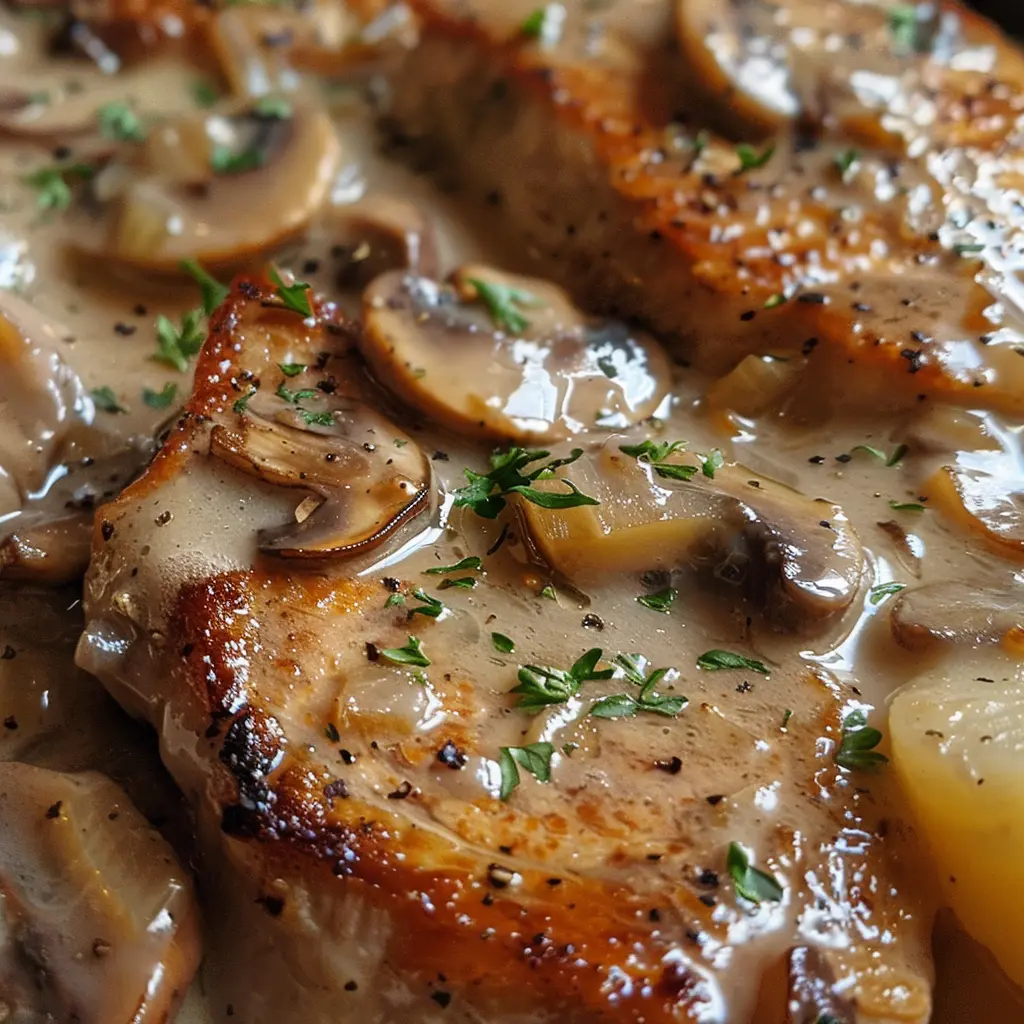
Pork Chop Supreme browns seasoned pork chops until golden, layers them over thinly sliced potatoes in a casserole dish, and bakes everything under a creamy onion mushroom sauce made from Lipton soup mix, cream of mushroom soup, and milk. The potatoes cook in the sauce beneath the pork chops, absorbing everything flavorful above and around them, and the result is a tender, comforting, deeply savory one-pan dinner that fills the kitchen with the best kind of smell for the hour it takes to bake.
| Detail | Info |
|---|---|
| Prep Time | 15 minutes |
| Bake Time | 1 hour |
| Total Time | 1 hour 15 minutes |
| Servings | 4 |
| Difficulty | Easy |
| Cuisine | American |
Why This Recipe Works
Browning the pork chops in a skillet before they go into the casserole dish is the step that adds the most flavor to the finished dish, and it’s the step most tempting to skip when the oven is preheating and dinner needs to happen. The Maillard reaction — the browning that happens when protein meets direct, high heat — produces hundreds of flavor compounds on the surface of the pork chops that don’t exist in raw or pale, oven-only pork. Those browned surfaces carry a savory depth into the casserole that the cream sauce alone cannot provide. Pork chops that go into the baking dish without browning first produce a good result; pork chops that are browned first produce a noticeably better one.
Lipton onion soup mix is a concentrated flavor delivery system that packs dehydrated onion, salt, and a savory yeast extract into a single packet. When dissolved into the cream of mushroom soup and milk, it creates an onion-forward, deeply seasoned sauce that would take significantly more effort to replicate from scratch. The mix rehydrates during the hour of baking, and the dehydrated onion pieces soften and sweeten in the liquid to become part of the sauce rather than a separate seasoning. This combination of two classic pantry items produces a sauce with more complexity than its convenience origin suggests.
Thinly sliced potatoes layered at the bottom of the casserole dish occupy a strategically important position. During the covered bake, the sauce poured over the pork chops flows down around and beneath the chops and submerges the potato slices in the creamy onion mushroom liquid. The potatoes absorb this sauce as they cook — they finish tender, saturated with flavor, and tasting nothing like plain boiled potatoes. Potatoes cooked on the side or added to the top of the casserole would have a completely different flavor profile and texture than ones that spent an hour submerged in the sauce beneath the pork.
The two-stage bake — covered for 45 minutes, then uncovered for 15 to 20 minutes — produces the ideal result for both the pork chops and the potatoes. The covered stage traps moisture and steam that keeps the pork chops tender and begins cooking the potatoes through from all sides. The uncovered stage allows the surface of the sauce to reduce and concentrate, the exposed edges of the pork chops to develop a slightly browned, caramelized appearance, and any excess moisture to evaporate rather than pooling in the bottom of the dish. Without the uncovered finish, the dish is good but looks underdone; with it, the sauce is glossy and thick and everything looks finished.
Milk in the sauce alongside the undiluted cream of mushroom soup thins the concentrated canned soup enough to pour and distribute evenly over the casserole without completely diluting the flavor. Cream of mushroom soup used straight from the can without any liquid added would be too thick to flow around the potatoes and coat the pork chops evenly. Adding the full amount of water called for on the can label would dilute the sauce too much and produce a thin, watery result. The quarter cup of milk hits the sweet spot between flowable and flavorful.
Ingredients
| Ingredient | Quantity | Notes |
|---|---|---|
| Boneless pork chops | 4 | About 1 inch thick; thinner chops may overcook before the potatoes are done |
| Medium potatoes, thinly sliced | 4 | About 1/4 inch thick; consistent thickness ensures even cooking |
| Lipton onion soup mix | 1 envelope | The flavor backbone of the sauce |
| Cream of mushroom soup | 1 can (10.5 oz) | Undiluted; forms the base of the creamy sauce |
| Milk | 1/4 cup | Thins the soup to a pourable, spreadable consistency |
| Vegetable oil | 1/4 cup | For browning the pork chops before baking |
| Salt and black pepper | To taste | Seasoned into the pork chops before browning |
Step-by-Step Instructions
Phase 1: Brown the Pork Chops
- Preheat the oven to 350 degrees F. Season the pork chops generously with salt and black pepper on both sides. The soup mix and cream of mushroom soup carry significant salt, but the pork itself needs its own seasoning to taste properly seasoned throughout.
- Heat the vegetable oil in a large skillet over medium-high heat until the oil shimmers. Add the pork chops and cook for 2 to 3 minutes per side until deeply golden brown. Don’t move them during the sear — sustained contact with the hot pan is what produces the browning. Work in batches if the skillet can’t fit all four without significant crowding. Transfer the browned chops to a paper towel-lined plate to drain the excess oil.
Phase 2: Assemble the Casserole
- Lightly grease a 9×13-inch casserole dish. Arrange the thinly sliced potatoes in an even, slightly overlapping layer across the entire bottom of the dish.
- Place the browned pork chops in a single layer over the potatoes.
- In a bowl, whisk together the Lipton onion soup mix, undiluted cream of mushroom soup, and milk until smooth and fully combined. The mix should dissolve fully into the soup — stir until no dry flakes remain.
- Pour the sauce mixture evenly over the pork chops and potatoes, making sure it flows around the chops and reaches the potato layer beneath them.
Phase 3: Bake and Finish
- Cover the casserole dish tightly with aluminum foil. Bake covered for 45 minutes.
- Remove the foil and continue baking uncovered for 15 to 20 minutes until the potatoes are completely tender when pierced with a knife, the sauce is bubbling and slightly reduced, and the pork chops are fully cooked. The pork should reach an internal temperature of 145 degrees F — check the thickest chop with an instant-read thermometer.
- Allow the casserole to rest for 5 minutes before serving. Spoon the sauce generously over each pork chop and portion of potatoes.
Chef Tips for Perfect Results
Slice the potatoes consistently thin. Potato slices that vary in thickness cook at different rates. The thinner pieces will be completely soft and falling apart before the thicker ones are done. A mandoline produces the most consistent quarter-inch slices with the least effort. A sharp knife and careful attention produce similar results. Consistent thickness is more important than the exact thickness — anywhere from a quarter inch to three-eighths of an inch works as long as all the slices are the same.
Use bone-in pork chops for even more flavor. Boneless chops work perfectly well and are more convenient. Bone-in chops, particularly rib chops, add extra flavor and moisture from the bone during the long bake and stay juicier because the bone conducts heat more evenly through the thicker part of the chop. If using bone-in chops, add 10 minutes to the covered bake time.
Don’t skip the browning step. The 5 minutes it takes to brown the chops in the skillet is the single biggest contributor to the depth of flavor in the finished dish. Pork chops that go into the casserole without browning are perfectly edible but noticeably less complex in flavor than browned ones. If you’re short on time, do the browning — skip something else.
Add sour cream to the sauce for extra richness. A quarter cup of sour cream whisked into the soup mixture before pouring it over the casserole adds a slightly tangy richness that elevates the sauce from satisfying to genuinely luxurious. It’s a simple addition that many people find makes the difference between a good version and their favorite version.
Check the potatoes for doneness at the 45-minute mark. Before removing the foil, lift a corner and test the potato slices with a fork or knife. If they’re still significantly firm, replace the foil and give them another 10 minutes before uncovering. Oven temperatures vary and the potato thickness affects cook time — always go by the potatoes’ actual texture rather than the clock alone.
Common Mistakes to Avoid
Using pork chops that are too thin. Pork chops thinner than three-quarters of an inch will be overcooked and dry by the time the potatoes have had enough time to become tender. Aim for 1-inch-thick chops. If only thin chops are available, reduce the bake time and check for 145 degrees F internal temperature earlier.
Not covering tightly with foil. A loose foil cover allows steam to escape, which means the potatoes won’t cook as evenly in the trapped steam and the sauce may reduce too quickly before the potatoes are done. Press the foil tightly against the rim of the casserole dish to create a proper seal.
Adding too much milk to the sauce. The quarter cup of milk is calibrated to thin the cream of mushroom soup to a pourable consistency without diluting its flavor. More milk produces a thinner, less flavorful sauce that doesn’t reduce to the right consistency during the uncovered bake. Use exactly a quarter cup.
Skipping the rest period. Pork chops removed from the casserole and cut immediately release their juices onto the plate. Five minutes of rest allows those juices to redistribute through the meat and produces noticeably more succulent servings.
Not checking for doneness with a thermometer. Pork chop thickness and oven temperature variability make visual checks unreliable. An instant-read thermometer at 145 degrees F is the only reliable confirmation that the pork is both safe to eat and at its optimal juiciness — well beyond 145 degrees and boneless chops begin to dry out.
Variations and Substitutions
Add sliced mushrooms: Arrange a cup of thinly sliced mushrooms over the potato layer before the pork chops go on top. They absorb the sauce and become deeply savory, adding a meaty texture alongside the pork.
Add sliced onion: A thinly sliced yellow onion layered with the potatoes adds sweetness and more onion flavor that complements the Lipton mix. The onion softens and caramelizes slightly during the bake, adding additional depth.
Cream of chicken instead of cream of mushroom: Cream of chicken soup produces a lighter-colored, slightly less earthy sauce that some people prefer alongside pork. The flavor is milder but still very satisfying.
Bone-in chicken thighs: Bone-in, skin-on chicken thighs work in this recipe with the same technique and timing. The result is equally satisfying — the onion mushroom sauce works just as well with chicken as with pork.
Serving Suggestions
Serve directly from the casserole dish with a large spoon, making sure each portion gets a pork chop, a generous serving of the sauce-saturated potatoes, and a spoonful of the creamy sauce spooned over the top. Green beans or roasted broccoli alongside provide a simple vegetable that pairs well with the rich sauce. Crusty bread for soaking up the sauce is optional but strongly recommended. This casserole needs very little alongside it — the potatoes are already built in and the sauce provides all the richness the plate needs.
Storage and Reheating
Refrigerator: Store covered for up to 4 days. The flavors deepen as it sits and the potatoes absorb additional sauce overnight, making day-two leftovers particularly good.
Reheating: Cover with foil and reheat in a 325 degree F oven for 20 to 25 minutes until heated through. Individual portions reheat well in the microwave in 60-second intervals.
Freezer: Freeze in portions for up to 2 months. The potato texture changes slightly after freezing — they become softer and less distinct — but the flavor remains very good. Thaw overnight in the refrigerator before reheating.
Nutritional Information
| Nutrient | Per Serving (approx.) |
|---|---|
| Calories | 520 |
| Protein | 36g |
| Carbohydrates | 38g |
| Fat | 24g |
| Saturated Fat | 6g |
| Fiber | 3g |
| Sodium | 1080mg |
Nutritional values are estimates based on standard ingredient brands. Sodium is significant due to the onion soup mix and cream of mushroom soup; use a low-sodium cream soup to reduce it if desired.
FAQ
Can I use bone-in pork chops instead of boneless?
Yes, and many people prefer them for the extra flavor the bone contributes during the long bake. Rib chops are the best choice — they’re meatier and stay moist through the bake time better than center-cut loin chops. Add 10 minutes to the covered baking time to account for the bone’s effect on heat transfer.
Do I need to pre-cook the potatoes?
No. Thinly sliced raw potatoes cook through completely in the hour of covered and uncovered baking, absorbing the sauce as they go. Pre-cooked potatoes would become mushy and fall apart over the full bake time. Use raw, thinly sliced potatoes for the best texture.
Can I make this in a slow cooker?
Yes. Brown the pork chops as directed, layer everything in the slow cooker the same way, and cook on LOW for 6 to 8 hours or HIGH for 3 to 4 hours. The result will be very tender — more braised than the oven version — and the potatoes will be softer. The sauce won’t reduce and brown the way it does uncovered in the oven, so finish under the broiler for 5 minutes if a browned top is desired.
What kind of potatoes work best?
Russet potatoes hold their shape during the bake and produce a slightly fluffy, absorbent texture that soaks up the sauce beautifully. Yukon Gold potatoes produce a creamier, more buttery potato layer that many people prefer. Both work excellently. Avoid waxy potatoes like red potatoes — they hold their shape too well and don’t absorb the sauce as effectively.
How do I prevent the sauce from being too salty?
The Lipton onion soup mix and cream of mushroom soup together carry a significant amount of sodium. Using a reduced-sodium cream of mushroom soup removes roughly a third of the total sodium. Seasoning the pork chops with pepper rather than salt before browning, and letting the soup mix do the seasoning, also helps control the final salt level. Always taste the sauce before it goes into the oven and dilute with a splash of water or an extra tablespoon of milk if it seems very salty.
Conclusion
Pork Chop Supreme is a recipe that earns its place through genuine, unfussy satisfaction — browned pork chops, tender sauce-soaked potatoes, and a creamy onion mushroom sauce that makes the whole kitchen smell like dinner is going to be worth sitting down for. It’s the kind of casserole that feeds four without any stress, reheats beautifully for leftovers, and reminds anyone who grew up eating it why some old-fashioned recipes deserve to stay in rotation indefinitely.