
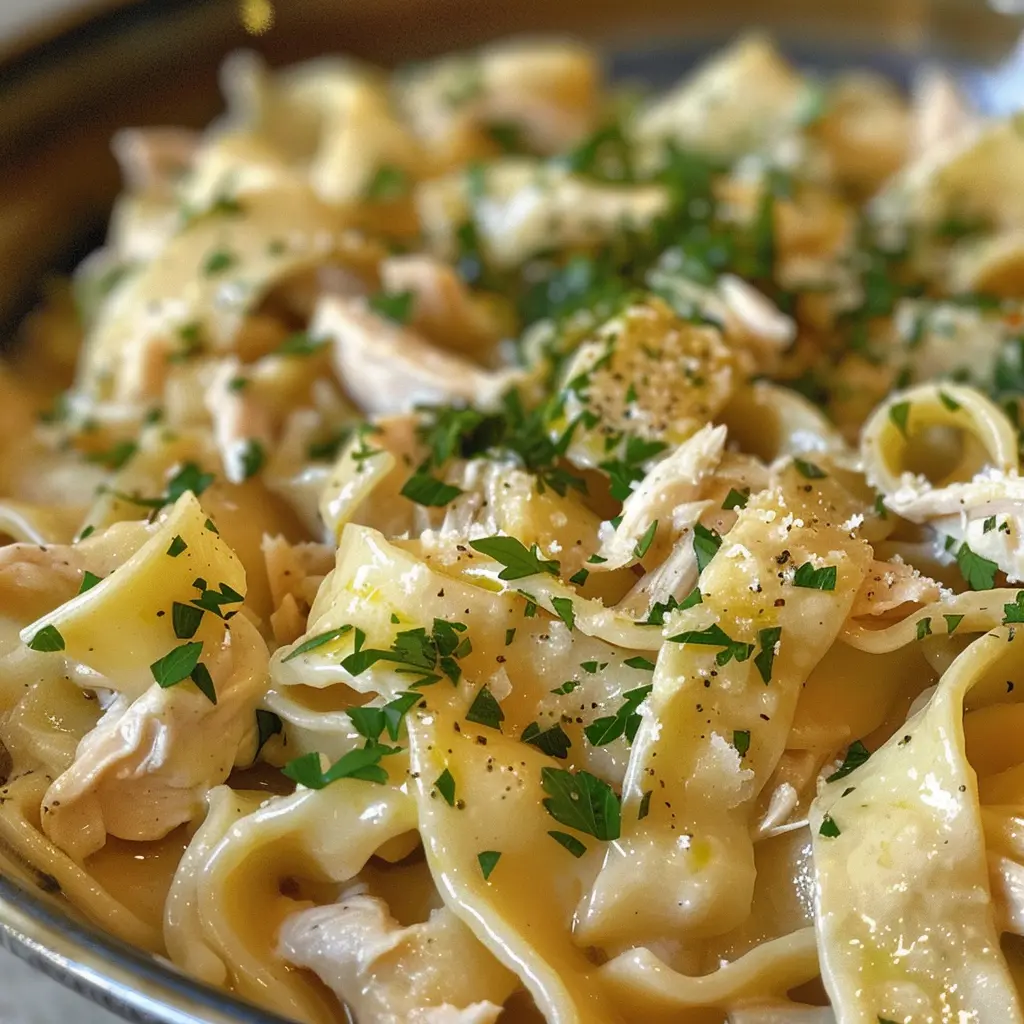
Slow cooker Amish butter noodles cook egg noodles directly in rich chicken stock with generous slices of butter until the liquid absorbs into the pasta and the whole thing becomes something deeply savory, silky, and satisfying in a way that’s difficult to explain given how few ingredients are involved. Six ingredients, one slow cooker, and you have a side dish that disappears faster than anything else on the table.
| Detail | Info |
|---|---|
| Prep Time | 5 minutes |
| Cook Time | 1.5 to 2 hours |
| Total Time | 2 hours |
| Servings | 6 to 8 |
| Difficulty | Easy |
| Cuisine | American / Amish |
Why This Recipe Works
Cooking pasta directly in chicken stock instead of water is a technique that makes an enormous difference in the final flavor of this dish. Standard pasta cooked in water absorbs plain water as it hydrates and softens — it tastes like pasta. Pasta cooked in chicken stock absorbs all that savory, collagen-rich liquid and becomes infused with chicken flavor from the inside out. Every strand of every noodle carries the flavor of the stock rather than depending on the sauce on the surface. This is the fundamental reason Amish butter noodles taste so much richer than their ingredient list suggests.
The slow cooker’s gentle, even heat is particularly well-suited to cooking pasta in liquid this way. On the stovetop, pasta cooked in stock requires constant attention to prevent it from sticking, scorching, or absorbing all the liquid before the pasta is fully tender. The slow cooker’s low, consistent heat — even on the High setting — distributes warmth evenly around the insert and creates the right environment for the pasta to hydrate gradually and absorb the stock at a controlled rate without sticking or scorching. Two stirs during the cook time is all the attention required.
Half a cup of butter for 12 ounces of noodles is a deliberate, generous ratio and it’s what gives the dish its characteristic richness. The butter slices placed on top of the noodles melt gradually as the slow cooker heats and blend with the chicken stock into a combined cooking liquid that’s part broth, part fat. This mixture coats every noodle as it cooks, creating the silky, slightly glossy finish on the cooked pasta that makes the dish feel indulgent. Less butter produces a noticeably less satisfying result.
Wide egg noodles are the right pasta for this recipe. Their flat, broad surface area gives them more contact with the stock-butter cooking liquid as they absorb it. Their thickness — thicker than most pasta shapes — means they hold up to the 90-minute cook time without becoming mushy. Their egg content gives them a richer flavor and a slightly firmer texture after cooking than semolina-only pasta would have at the same cook time. Thinner pasta shapes like angel hair or thin spaghetti would overcook and dissolve; egg noodles remain distinct and pleasantly chewy.
Salting at the end rather than the beginning is intentional. Chicken stock — especially store-bought — carries a significant amount of sodium. As the stock reduces and concentrates into the noodles during the 90-minute cook, the salt level in the cooking liquid intensifies. Salting at the beginning based on the raw stock’s taste almost always results in oversalted noodles by the end of cooking. Tasting and seasoning at the end lets you make a precise, informed adjustment based on the actual final flavor of the dish.
Ingredients
| Ingredient | Quantity | Notes |
|---|---|---|
| Egg noodles | 12 ounces | Wide egg noodles; hold up best to the slow cooker cook time |
| Chicken stock | 4 cups | Good quality stock makes a noticeable difference; homemade or low-sodium store-bought |
| Unsalted butter, sliced | 1/2 cup (1 stick) | Sliced into pats so it melts evenly across the noodles |
| Garlic powder (optional) | 1 teaspoon | Adds a savory depth; omit for a more purely buttery flavor |
| Onion powder (optional) | 1/2 teaspoon | Rounds out the savory notes alongside the garlic powder |
| Salt and black pepper | To taste | Season at the end after tasting; stock adds significant sodium |
| Fresh parsley, chopped | 2 tablespoons (optional) | Added just before serving for color and a fresh herbal note |
Step-by-Step Instructions
Phase 1: Load the Slow Cooker
- Add the dry egg noodles directly to the slow cooker insert. There is no need to pre-cook or soak the noodles — they go in completely dry and cook in the liquid during the slow cooker time.
- Pour the chicken stock evenly over the noodles, making sure all the noodles are moistened. The stock may not fully submerge all the noodles at first — the top layer may sit above the liquid. This is fine; the steam generated during cooking will reach those noodles and they will absorb moisture as they soften and compact.
- Place the sliced butter pats evenly across the top of the noodles and stock. Distributing them in a single layer rather than piling them in the center ensures even melting across the entire surface of the dish.
- Sprinkle the garlic powder and onion powder over the top if using. No stirring at this stage — the seasonings will incorporate on their own as the butter melts and the liquid heats up.
Phase 2: Cook
- Place the lid on the slow cooker and cook on High for 1.5 to 2 hours. Check at the 45-minute mark — if the top layer of noodles looks dry, stir gently to redistribute the liquid from the bottom of the insert. Stir once more at the 1-hour mark, pushing any noodles that seem underdone toward the bottom where the heat is most direct.
- The noodles are done when they are fully tender throughout, most of the liquid has been absorbed, and the remaining cooking liquid has reduced to a glossy, buttery sauce that coats the noodles rather than pooling at the bottom. If there is still significant liquid at the 2-hour mark, cook uncovered for an additional 10 to 15 minutes to allow excess liquid to evaporate.
Phase 3: Season and Serve
- Stir the noodles well once they’re done. The butter and stock will have combined into a rich, glossy coating on the noodles — the stir helps distribute this coating evenly throughout the dish so every noodle gets its share.
- Taste and season with salt and black pepper. Add carefully — the stock will have concentrated and the noodles may already be well-seasoned. A pinch of salt and several cracks of fresh pepper is often all that’s needed.
- Scatter chopped fresh parsley over the top if using and serve warm directly from the slow cooker insert.
Chef Tips for Perfect Results
Use homemade or high-quality store-bought stock. The chicken stock is the primary flavoring ingredient in this dish — everything else is supporting cast. A rich, deeply flavored stock produces noodles with genuinely complex, satisfying flavor. A thin, sodium-heavy commercial broth produces noodles that taste one-dimensional and overly salty. Swanson Natural Goodness, Kettle & Fire, or any homemade stock all perform well here. The quality of the stock is directly reflected in the quality of the finished dish.
Add a splash of heavy cream at the end. Two to three tablespoons of heavy cream stirred into the finished noodles while they’re still hot transforms the butter-stock coating into something closer to a cream sauce. It adds richness, rounds out any remaining sharpness from the stock, and produces a silkier, more cohesive coating on the noodles. This is the move that takes these noodles from excellent to genuinely indulgent.
Finish with freshly grated Parmesan. A quarter cup of freshly grated Parmesan stirred into the hot noodles right before serving melts into the butter-stock coating and adds a savory, slightly salty, umami-forward finish that makes the dish taste more complete and complex. It’s a two-minute upgrade that changes the character of the dish in the best possible way.
Use unsalted butter and low-sodium stock. This combination gives you complete control over the final salt level of the dish. The butter contributes richness without salt, and the low-sodium stock contributes flavor without an unpredictable sodium load that varies by brand. Season at the end with confidence, knowing exactly how much salt has been added rather than guessing at what’s already in the pot.
Stir at least twice during cooking. The noodles at the bottom of the slow cooker cook faster than the ones on top since they’re in direct contact with the heated insert. Without occasional stirring, the bottom layer can overcook and become mushy while the top layer is still firm. Two stirs — one at 45 minutes and one at 90 minutes — redistribute the layers and produce a more evenly cooked finished dish.
Common Mistakes to Avoid
Using too little stock. Four cups is the right ratio for 12 ounces of egg noodles in a slow cooker. Less stock results in noodles that absorb all the liquid before they’re fully tender and then start to dry out and stick. If the noodles seem to be absorbing liquid very quickly, add an additional half cup of warm stock or water to keep them hydrated through the cook time.
Cooking on Low instead of High. Low heat produces a slow cooker environment that isn’t hot enough for pasta to cook properly in the recommended time frame. Egg noodles need the High setting to hydrate and soften within 90 minutes. On Low, they can remain firm and chewy even after 3 or 4 hours because the liquid never reaches a temperature high enough for proper pasta hydration.
Lifting the lid frequently. Every time the slow cooker lid is lifted, the cooking environment loses 20 to 30 minutes of accumulated steam and heat. Pasta cooking in liquid needs that trapped steam to hydrate properly. Limit lid-lifting to the two planned stirs and resist the urge to check in between.
Over-salting early. Stock concentrates significantly as it cooks and absorbs into the noodles over 90 minutes. A stock that tastes mildly salty at the start of cooking will taste much saltier in the finished dish. Always taste before adding salt at the end and add in small increments — a pinch at a time — rather than a confident pour.
Serving without the final stir. The butter and stock settle at the bottom of the insert during cooking. Without a thorough final stir before serving, the top noodles are dry and under-sauced while the bottom noodles are sitting in pooled butter. A minute of stirring distributes the gloss and richness evenly throughout the entire dish.
Variations and Substitutions
Add Parmesan and cream: Stir in a quarter cup of freshly grated Parmesan and two tablespoons of heavy cream at the very end. The cheese melts into the butter-stock coating and the cream adds silkiness. This variation tastes like a simplified Alfredo made entirely in a slow cooker.
Herb butter noodles: Add a tablespoon of fresh thyme leaves and a teaspoon of fresh rosemary to the slow cooker with the butter. The herbs infuse into the cooking liquid during the 90 minutes and produce a subtly herbal, aromatic version of the dish that’s excellent alongside roasted chicken or lamb.
Use beef stock: Swap the chicken stock for beef stock for a deeper, more savory, slightly richer version. Beef stock pairs particularly well with wide egg noodles and turns this from a chicken-adjacent side dish into something that works equally well alongside steak, meatloaf, or pot roast.
Add mushrooms: Place a cup of sliced cremini mushrooms on top of the noodles before cooking. They release moisture as they cook and soften into the noodles, adding an earthy depth and a slightly meaty texture. The mushroom liquid joins the stock and butter in flavoring the noodles, making the finished dish more complex without any additional effort.
Lemon butter noodles: Add the zest of one lemon and a tablespoon of fresh lemon juice at the end of cooking. The brightness of the lemon cuts through the richness of the butter and gives the dish a fresh, summery quality that makes it work as well alongside grilled fish or shrimp as it does with chicken.
Serving Suggestions
These noodles are the ideal side dish for any simply cooked protein — roasted chicken, meatloaf, pork chops, or beef pot roast. They absorb and complement pan sauces and gravies rather than competing with them, making them the perfect accompaniment to any dish that produces liquid during cooking. Ladle that cooking liquid over the noodles at the table for a complete plate.
For a complete comfort food meal, serve alongside slow cooker chicken and vegetables and spoon the chicken cooking liquid generously over the noodles. For a lighter pairing, serve with pan-seared salmon or baked chicken breasts and a crisp green salad. The noodles are versatile enough to work with virtually any main course.
Storage and Reheating
Refrigerator: Store cooled noodles in an airtight container for up to 4 days. The noodles will absorb any remaining sauce during storage and become slightly drier — add a splash of chicken stock or a small pat of butter when reheating to restore the glossy coating.
Reheating: Add the noodles to a saucepan with a quarter cup of chicken stock and a small pat of butter. Warm over medium-low heat, stirring frequently, until heated through and the stock has been absorbed into a glossy sauce. The microwave works well too — add a splash of stock to the container, cover, and heat in 60-second intervals, stirring between each, until uniformly hot.
Freezer: Cooked pasta freezes adequately but the texture changes after thawing — egg noodles become softer and slightly mushy compared to their freshly cooked texture. If you need to freeze, portion into single servings, freeze flat, and thaw overnight in the refrigerator before reheating with additional stock to restore moisture.
Nutritional Information
| Nutrient | Per Serving (approx.) |
|---|---|
| Calories | 320 |
| Protein | 8g |
| Carbohydrates | 38g |
| Fat | 15g |
| Saturated Fat | 9g |
| Fiber | 2g |
| Sodium | 480mg |
Nutritional values are estimates based on low-sodium chicken stock and standard egg noodles. Values will vary based on specific brands used.
FAQ
Can I use a different pasta shape?
Wide egg noodles are strongly recommended, but other pasta shapes can work with adjustments. Medium egg noodles cook faster — check at 60 to 75 minutes. Rotini or penne take about the same time as wide egg noodles but absorb the stock differently and produce a less silky result. Avoid thin pasta shapes like angel hair or vermicelli entirely — they overcook to mush well before the stock is absorbed. Whatever shape you use, the pasta needs to be dry and uncooked when it goes into the slow cooker.
What makes this specifically “Amish” butter noodles?
Amish butter noodles are a staple of Amish and Pennsylvania Dutch home cooking, characterized by their simplicity — egg noodles cooked in broth with a generous amount of butter, and very little else. Amish cooking emphasizes whole, real ingredients, minimal processing, and feeding people generously. The dish reflects those values completely: real butter, good stock, proper egg noodles, and enough of each to produce something genuinely satisfying rather than a pale, skimped-on version. The slow cooker adaptation is a modern convenience that preserves the spirit of the original while making it practical for busy households.
Can I make this on the stovetop instead?
Yes. Bring the chicken stock to a boil in a large saucepan. Add the noodles and butter, reduce the heat to a simmer, and cook uncovered for 8 to 10 minutes, stirring frequently, until the noodles are tender and most of the stock has absorbed. Add the seasonings, stir well, taste and adjust, and serve. The stovetop version takes about 15 minutes total but requires more attention and frequent stirring to prevent sticking. The flavor is essentially identical.
How do I prevent the noodles from sticking together?
The butter in the recipe is the primary anti-sticking agent — it coats the noodles as it melts and prevents them from bonding together. Two stirs during the cook time help redistribute the butter and keep the noodles separated. If the noodles still seem to be clumping, add an extra tablespoon of butter and a splash of hot stock when you stir and toss to coat. The key is to make sure the butter is fully distributed throughout the noodles rather than pooled at the bottom of the insert.
Can I double this recipe?
Yes, in a 6-quart or larger slow cooker. Double all ingredients proportionally — 24 ounces of noodles, 8 cups of stock, 1 cup of butter. The cook time stays the same at 1.5 to 2 hours on High. Make sure the slow cooker is no more than two-thirds full with the raw noodles before the stock is added, since the noodles will expand as they hydrate and cook.
Conclusion
Slow cooker Amish butter noodles are living proof that the most satisfying food is often the simplest. Six ingredients, five minutes of prep, and a slow cooker do all the work of producing a side dish that’s rich, savory, and exactly the kind of thing people go back for a second helping of without hesitation. Keep egg noodles and good chicken stock in the pantry and you’re always a couple of hours away from one of the most reliably crowd-pleasing things you can put on a dinner table.