
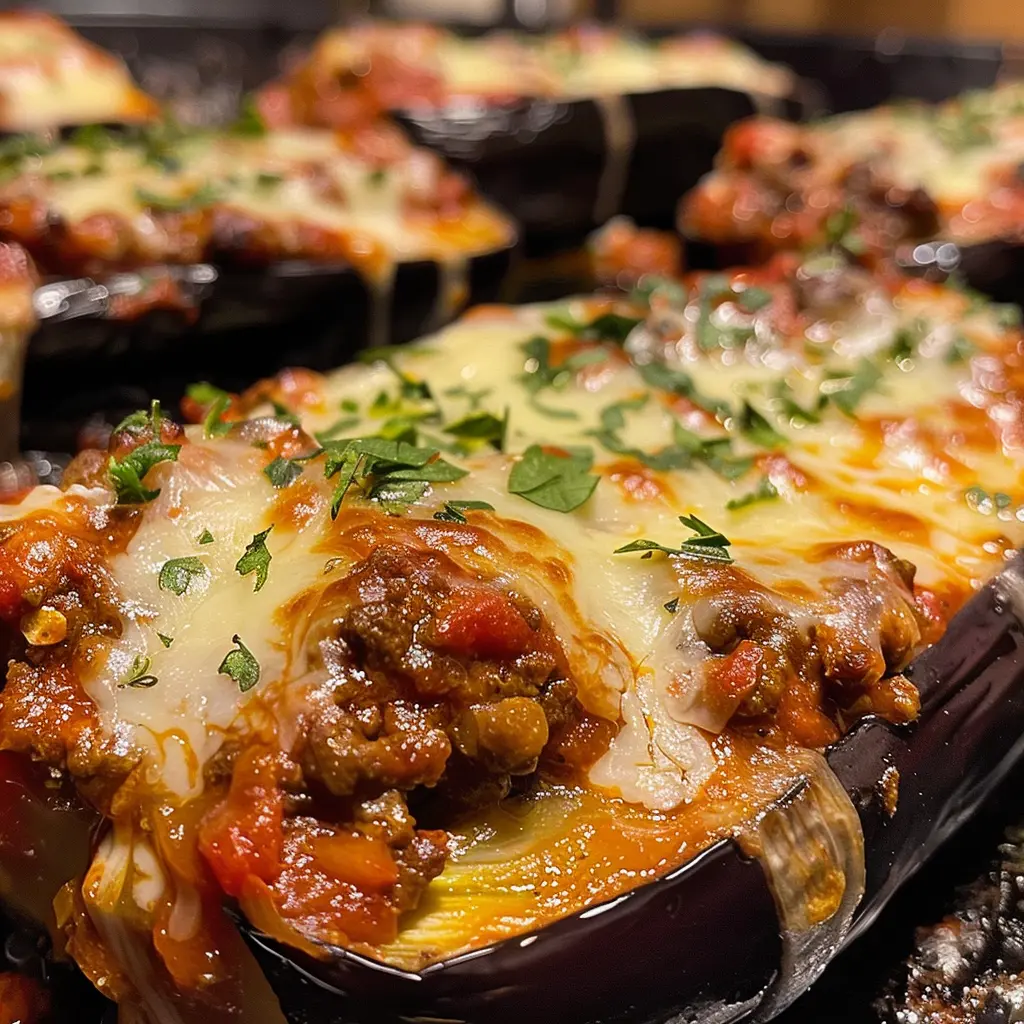
Cheesy beef stuffed eggplant boats hollow out roasted eggplant halves and fill them with seasoned ground beef, marinara sauce, and a generous double layer of mozzarella and Parmesan that melts into a golden, bubbling crust. The eggplant shell softens during roasting into something tender and slightly sweet, becoming the perfect edible vessel for a filling that tastes like the best parts of a meat lasagna compressed into a single satisfying serving.
| Detail | Info |
|---|---|
| Prep Time | 15 minutes |
| Cook Time | 40 minutes |
| Total Time | 55 minutes |
| Servings | 8 halves (4 servings) |
| Difficulty | Easy to Medium |
| Cuisine | Italian-American |
Why This Recipe Works
Pre-roasting the hollowed eggplant shells before filling them is the step that determines the entire character of the finished dish. Raw eggplant placed directly into the oven with filling on top takes significantly longer to soften and can be undercooked by the time the cheese has browned and the filling is hot. A 15-minute pre-roast at 375 degrees F gives the shell time to collapse into tenderness and develop a slightly caramelized interior before the filling goes in, so the second bake — just 20 to 25 minutes — is purely about melting the cheese and heating the filling through.
Scooping out the eggplant flesh before roasting rather than after serves two purposes. It creates the cavity that holds the filling, and it removes the dense, spongy interior that would otherwise absorb most of the olive oil and take the longest to cook. The remaining shell — about half an inch thick — has just enough flesh to provide structure and flavor without being unwieldy or undercooked. The scooped flesh isn’t wasted; it can be chopped and stirred into the beef filling to add volume and a mild, earthy eggplant note throughout.
Brushing the eggplant shells with olive oil before roasting is essential for flavor and texture. Eggplant is naturally dry and slightly bitter raw, and it has a high water content that cooks off during roasting. The olive oil coats the surface and promotes the caramelization that transforms raw eggplant from pale and grassy to golden and subtly sweet. Without it, the shells roast dry and tough rather than tender and flavorful.
The marinara sauce in the beef filling does more than add tomato flavor — it provides the moisture that keeps the ground beef mixture from drying out during the second bake. Browned ground beef without sauce becomes dry and crumbly when reheated in an oven. Folded into marinara, it stays moist and cohesive throughout the bake, and the tomato and herb flavors meld with the beef into something richer and more complex than either produces alone.
The two-cheese combination — mozzarella for melt and stretch, Parmesan for flavor and browning — uses each cheese for its specific strength. Mozzarella alone produces a uniformly pale, elastic layer without much flavor. Parmesan alone produces a crumbly, dry layer that doesn’t provide the stretchy visual appeal of melted cheese. Together they cover all the bases: the mozzarella delivers the dramatic melt and pull, the Parmesan delivers the golden-brown color and the sharp, salty, umami-forward flavor that makes the finished dish taste complete.
Ingredients
| Ingredient | Quantity | Notes |
|---|---|---|
| Medium eggplants, halved lengthwise | 4 | Look for firm, glossy eggplants without soft spots; globe or Italian variety both work |
| Ground beef | 1 pound (450g) | 80/20 blend for best flavor; drain excess fat after browning |
| Small onion, diced | 1 | Yellow or white onion; diced small for even cooking |
| Garlic cloves, minced | 3 | Fresh garlic; adds aromatic depth to the beef filling |
| Marinara sauce | 1 cup | Store-bought works well; homemade adds more depth |
| Mozzarella cheese, shredded | 2 cups | Low-moisture for the best melt and stretch; freshly shredded preferred |
| Parmesan cheese, grated | 1/2 cup | Freshly grated for best flavor and melt |
| Italian seasoning | 1 teaspoon | Stirred into the beef filling with the marinara |
| Olive oil | 2 tablespoons | Brushed over eggplant shells before roasting |
| Salt and black pepper | To taste | Season the eggplant shells and the beef filling |
| Fresh parsley, chopped | For garnish | Added after baking for color and freshness |
Step-by-Step Instructions
Phase 1: Prepare and Pre-Roast the Eggplant
- Preheat the oven to 375 degrees F. Line a large rimmed baking sheet with parchment paper or foil.
- Halve the eggplants lengthwise. Using a sharp spoon or melon baller, scoop out the flesh from each half, leaving a shell about half an inch thick on all sides and the bottom. The shell needs to be sturdy enough to hold the filling without collapsing — too thin and it falls apart, too thick and it doesn’t cook through properly. Reserve the scooped flesh and set aside.
- Brush the inside of each eggplant shell generously with olive oil. Season the interior with salt and black pepper. Place the shells cut-side up on the prepared baking sheet.
- Roast for 15 minutes until the shells are slightly softened, lightly golden at the edges, and no longer look raw and pale inside. They should still hold their shape — you’re softening them, not cooking them all the way through. Remove from the oven and set aside while you make the filling.
Phase 2: Make the Beef Filling
- While the eggplant roasts, prepare the filling. If using the reserved eggplant flesh, chop it into small pieces and set aside. Heat a large skillet over medium heat. Add the ground beef, diced onion, and minced garlic all at once. Cook, breaking the beef apart with a wooden spoon, until the beef is fully browned and no longer pink and the onion is soft and translucent, about 7 to 8 minutes.
- If you want to incorporate the reserved eggplant flesh, add it to the skillet with the beef and cook for 3 to 4 minutes until it softens and begins to break down into the filling.
- Drain any excess fat from the beef mixture. Return the skillet to medium heat. Stir in the marinara sauce and Italian seasoning. Season with salt and pepper to taste. Cook for 2 to 3 minutes, stirring to combine, until the filling is well-seasoned and the sauce has heated through and coated everything evenly. The filling should be moist but not soupy — if it seems wet, cook another minute to let some of the moisture reduce.
Phase 3: Fill, Top, and Bake
- Spoon the beef filling generously into each pre-roasted eggplant shell, dividing it evenly among the eight halves. Mound it slightly above the rim of the shell — it will settle during the second bake. Press the filling gently into the shell to ensure it makes full contact with the eggplant rather than sitting loosely on top.
- Mix the shredded mozzarella and grated Parmesan together in a bowl. Sprinkle the cheese mixture generously over each filled boat, covering the filling completely. Don’t be shy — a thick, even layer of cheese produces the most dramatic visual and the most satisfying eating experience.
- Return the filled eggplant boats to the oven and bake for 20 to 25 minutes until the cheese is fully melted, golden-brown in spots, and bubbling at the edges. The eggplant shells should be completely tender when pierced with a fork.
- Remove from the oven and scatter freshly chopped parsley over the top. Let rest for 3 to 4 minutes before serving — the filling is very hot and settles slightly during the rest, making the boats easier to plate cleanly.
Chef Tips for Perfect Results
Salt the eggplant flesh after scooping and let it sit for 10 minutes. Sprinkling a pinch of salt inside each scooped shell and letting it rest for 10 minutes draws out some of the moisture and any residual bitterness from the eggplant. Blot dry with paper towels before brushing with olive oil. This step is optional with modern eggplant varieties, which have been bred to be less bitter than older varieties, but it never hurts and can noticeably improve the flavor of particularly large or older eggplants.
Use good quality marinara sauce. The marinara is the primary seasoning of the beef filling and its flavor defines the character of the finished dish. A high-quality store-bought marinara — Rao’s Homemade is widely considered the benchmark — produces a noticeably better result than a basic, thin supermarket sauce. If making your own, a simple sauce of crushed San Marzano tomatoes, olive oil, garlic, and basil cooked for 20 minutes is excellent here.
Add the reserved eggplant flesh to the beef filling. Don’t discard the scooped-out eggplant. Chop it finely and add it to the skillet with the ground beef during browning. It cooks down into the filling and becomes virtually invisible while adding a subtle, earthy depth and stretching the filling further. This was the original Depression-era approach to stuffed vegetables — nothing wasted, everything used.
Broil for the last 2 to 3 minutes. After the 20 to 25 minute bake, switch to broil for the final 2 to 3 minutes to push the cheese topping past melted into properly browned and bubbling. Watch it closely — the difference between perfectly browned and burnt is about 60 seconds under a broiler. The broiled cheese has a slightly nutty, more complex flavor than simply melted cheese and the visual result is significantly more dramatic and appetizing.
Choose eggplants of similar size. Four eggplants that are all roughly the same size produce eight boats that cook evenly and are ready at the same time. If some eggplants are significantly larger than others, the smaller ones will be overcooked before the larger ones have finished. When shopping, pick eggplants that look similar in length and girth.
Common Mistakes to Avoid
Skipping the pre-roast. The most reliable way to end up with stuffed eggplant boats that have filling cooked to perfection but shells that are still firm, slightly bitter, and undercooked is to skip the 15-minute pre-roast. The shells need dedicated roasting time without the filling present. Filling and cheese added to raw eggplant shells and baked for 25 minutes produce a dish where the eggplant is still tough when everything else is done.
Making the shell too thin. An eggplant shell scooped too aggressively — less than a quarter inch of flesh remaining — collapses during roasting and can’t support the weight of the filling. Leave at least half an inch of flesh on all sides. The shell should feel sturdy when you press it — it should flex slightly but not feel paper-thin.
Not draining the beef. Ground beef releases fat during browning, and a greasy filling makes the eggplant shells soggy during the second bake. Drain the beef well after browning before adding the marinara sauce. Tilt the skillet and spoon off the excess fat, or transfer the beef briefly to a paper towel-lined plate.
Overfilling the shells. A mound of filling that towers several inches above the rim of the shell will slide off during the second bake and the cheese won’t adhere properly to the filling beneath it. Fill to just above the rim — a slight mound is fine, a large dome is not.
Using fresh mozzarella instead of low-moisture. Fresh mozzarella has a very high water content that releases during baking and can make the filling wet and the cheese layer pale and watery rather than golden and melted. Low-moisture mozzarella — the kind sold in blocks or pre-shredded bags — melts into the stretchy, browned layer the dish calls for.
Variations and Substitutions
Ground turkey or pork: Both work as substitutes for ground beef. Turkey is leaner and milder — add an extra clove of garlic and a pinch of smoked paprika to compensate. Pork has a slightly sweeter, richer flavor that pairs particularly well with marinara and Italian seasoning. Italian sausage removed from its casing is an especially good substitute that adds built-in seasoning and fennel notes to the filling.
Vegetarian version: Skip the ground beef entirely and fill with a mixture of sauteed mushrooms, diced zucchini, and the reserved eggplant flesh cooked in olive oil with garlic and onion until golden. Stir in the marinara sauce and a can of drained white beans for protein. The filling is hearty and satisfying without any meat and the cheese topping is exactly the same.
Add ricotta: Dollop a tablespoon of whole-milk ricotta over the beef filling in each boat before adding the mozzarella and Parmesan. The ricotta adds a creamy, slightly sweet layer that makes the filling richer and gives it more textural interest. It’s the move that takes these boats from Italian-inspired to genuinely Italian in character.
Spicy version: Add half a teaspoon of red pepper flakes to the beef filling with the Italian seasoning and use spicy Italian sausage instead of ground beef. Finish each boat with a few sliced pickled pepperoncini pressed into the cheese before baking for an additional hit of heat and acidity.
Serving Suggestions
Serve two eggplant halves per person as a main course alongside a simple green salad dressed with lemon vinaigrette. The lightness of the salad contrasts well with the richness of the cheese and beef filling. Crusty Italian bread or garlic bread alongside is useful for scooping up any filling and cheese that falls from the boats during eating.
For a larger Italian dinner spread, serve as a starter with one half per person before a pasta main course. The eggplant boats work well as part of a buffet or family-style spread alongside antipasto, roasted vegetables, and a bowl of pasta. They hold their temperature well for 15 to 20 minutes after coming out of the oven, making them practical for casual gatherings where not everyone sits down at the same moment.
Storage and Reheating
Refrigerator: Store cooled eggplant boats in an airtight container or covered baking dish for up to 3 days. The eggplant continues to soften as it sits, which some people prefer — the shell becomes more tender and the filling and shell flavors meld further overnight.
Reheating: The oven produces the best reheating result. Place the boats on a baking sheet and cover loosely with foil. Warm at 350 degrees F for 12 to 15 minutes until heated through. Remove the foil for the last 3 minutes to re-melt and slightly re-brown the cheese topping. The microwave works for quick reheating — cover and heat in 60-second intervals until hot throughout, though the cheese won’t re-brown.
Freezer: These boats freeze adequately but the eggplant texture changes after freezing and thawing — it becomes significantly softer and can feel slightly waterlogged. If freezing, cool completely, wrap each boat individually in plastic wrap, then foil, and freeze for up to 1 month. Thaw overnight in the refrigerator before reheating in the oven.
Nutritional Information
| Nutrient | Per Serving (2 halves) |
|---|---|
| Calories | 520 |
| Protein | 38g |
| Carbohydrates | 22g |
| Fat | 32g |
| Saturated Fat | 14g |
| Fiber | 8g |
| Sodium | 780mg |
Nutritional values are estimates based on standard ingredients and will vary depending on the size of the eggplants and specific brands used.
FAQ
How do I choose the right eggplant?
Look for eggplants that are firm, glossy, and heavy for their size with no soft spots, wrinkles, or dull patches. The stem should look fresh and green rather than brown and dried. Medium-sized globe eggplants — roughly 6 to 8 inches long and 3 to 4 inches in diameter — are the right size for this recipe. They produce shells sturdy enough to hold the filling without being so large that the shell is too thick to cook through in the allotted time. Avoid very large eggplants, which tend to have more seeds and can be more bitter than smaller ones.
Do I need to peel the eggplant?
No. The skin is left on and becomes the structural shell of the boat. It softens during roasting and the final bake to the point where it’s completely edible and actually pleasant to eat — slightly chewy in a way that contrasts nicely with the tender flesh and soft filling inside. Peeled eggplant boats fall apart during roasting since the skin provides all the structural support. Leave the skin intact.
Can I make these ahead of time?
Yes. Pre-roast the eggplant shells and make the beef filling up to 24 hours ahead. Store them separately in the refrigerator. When ready to bake, fill the cold shells with the cold filling, top with cheese, and bake at 375 degrees F for 25 to 30 minutes — add 5 minutes to account for the cold starting temperature. This make-ahead approach makes the recipe very practical for weeknight dinners since the active work is done the night before.
Why is my eggplant bitter?
Modern eggplant varieties have been bred to be significantly less bitter than older varieties, and bitterness is rarely a problem with fresh eggplant purchased from a good grocery store or farmers market. If you do encounter bitterness, the most common cause is an older or very large eggplant that has been stored for too long after harvest. The salting technique — sprinkling the scooped shell with salt, letting it sit 10 minutes, then blotting dry — draws out moisture and some of the bitter compounds. Cooking also reduces bitterness; eggplant that seems slightly bitter raw almost always tastes mild and pleasant after roasting.
Can I use a different sauce instead of marinara?
Yes. Arrabbiata sauce adds heat and a slightly more assertive tomato flavor. A simple tomato sauce made from canned crushed tomatoes cooked with garlic and olive oil for 15 minutes works well and is less sweet than commercial marinara. Bechamel stirred into the browned beef instead of tomato sauce produces a completely different but equally delicious filling — richer, creamier, and more French than Italian in character. Even a few tablespoons of tomato paste thinned with a splash of beef broth works as a more concentrated, less saucy alternative.
Conclusion
Cheesy beef stuffed eggplant boats deliver the flavors of a classic Italian meat bake in a format that’s visually striking, naturally portioned, and built from vegetables and pantry staples most households keep on hand. The pre-roasted eggplant shell, the savory marinara beef filling, and the golden double-cheese topping work together into something that feels genuinely special at the table despite being straightforward to make. Put them in the oven on a weeknight and you’ll have people asking what they smell before the timer goes off.