
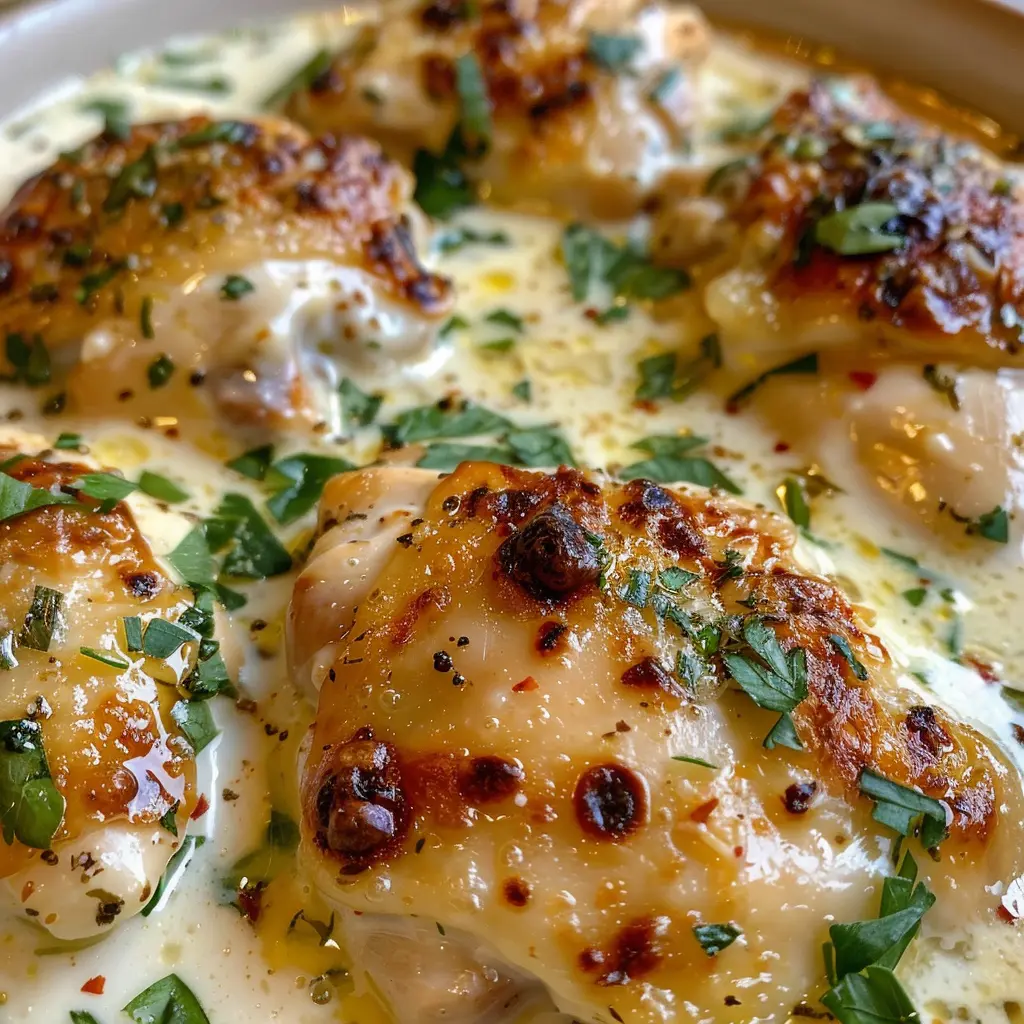
Creamy parmesan chicken bake starts with seared, golden-brown chicken thighs arranged in a baking dish, then gets blanketed in a rich garlic-parmesan cream sauce and finished under a layer of bubbling mozzarella. The whole dish takes less than an hour from start to table, and the result — tender chicken swimming in a savory, cheesy cream sauce — tastes like something that required significantly more effort than it actually did.
| Detail | Info |
|---|---|
| Prep Time | 10 minutes |
| Cook Time | 35 minutes |
| Total Time | 45 minutes |
| Servings | 6 |
| Difficulty | Easy |
| Cuisine | American / Italian-Inspired |
Why This Recipe Works
Chicken thighs are the right cut for this recipe and the choice makes a meaningful difference. Thighs have significantly more fat and connective tissue than breasts, which means they stay moist and tender through the 25 to 30 minute oven bake without any risk of drying out. Chicken breasts at the same bake time and temperature can turn dry and stringy, especially near the edges. Thighs are forgiving — a few extra minutes in the oven doesn’t ruin them the way it ruins a breast. For a dish built around a cream sauce and melted cheese, thighs deliver both better texture and more flavor than breasts would.
Searing the chicken before it goes into the oven is the step that separates a genuinely good baked chicken dish from a pale, soft one. Two to three minutes per side in a hot butter skillet creates a golden-brown crust through the Maillard reaction, developing flavor compounds that don’t exist in unbrowned chicken. Those flavors transfer into the cream sauce as the dish bakes and enrich every spoonful. Unseared chicken baked directly in cream sauce is technically the same dish but tastes noticeably flatter and looks less appealing.
The cream sauce is built from just three ingredients — heavy cream, minced garlic, and grated Parmesan — and those three together produce something considerably greater than their individual contributions. Heavy cream provides the fat and body. Parmesan dissolves into the cream during baking and thickens the sauce while contributing its characteristic sharp, salty, umami-forward flavor. The garlic infuses the cream as it bakes, releasing aromatic compounds that permeate every component of the dish. No roux, no thickening agent, no reduction step — the Parmesan handles all of that naturally.
The two-cheese topping strategy — Parmesan in the sauce, mozzarella on top — uses each cheese for what it does best. Parmesan dissolves into the cream and flavors the sauce throughout. Mozzarella melts into a stretchy, bubbly, golden-brown layer on the surface that provides visual drama and a creamy, mild richness that doesn’t compete with the Parmesan below. Using Parmesan on top would produce a dry, crumbly surface rather than a melted one. Using mozzarella in the sauce would make it stringy and difficult to work with. Each cheese is in exactly the right place.
Italian seasoning applied directly to the chicken before searing becomes part of the crust and stays with the chicken through the oven bake, providing an herbal note that bridges the chicken to the Italian-inspired cream sauce. Seasoning only the sauce would produce chicken that tastes of cream and cheese and nothing else — a richer result but a less interesting one. The herbs on the chicken create a second, distinct flavor layer that adds complexity to the finished dish.
Ingredients
| Ingredient | Quantity | Notes |
|---|---|---|
| Boneless chicken thighs | 6 | Skin-on or skinless; thighs stay juicy where breasts can dry out |
| Heavy cream | 1 cup | Full-fat; provides the body and richness of the sauce |
| Mozzarella cheese, shredded | 1.5 cups | Low-moisture for the best melt; freshly shredded preferred |
| Parmesan cheese, grated | 1/2 cup | Finely grated dissolves into the cream most effectively |
| Garlic cloves, minced | 3 | Fresh garlic; infuses the cream during baking |
| Italian seasoning | 1 teaspoon | Applied to the chicken before searing |
| Butter | 1 tablespoon | For searing; adds flavor and promotes golden browning |
| Salt and black pepper | To taste | Season the chicken generously before searing |
| Fresh parsley, chopped | For garnish | Added after baking; adds color and a fresh herbal note |
Step-by-Step Instructions
Phase 1: Season and Sear the Chicken
- Preheat the oven to 375 degrees F. Pat the chicken thighs dry with paper towels — dry surfaces sear rather than steam, and the golden crust is what makes this dish visually and texturally great.
- Season both sides of each chicken thigh generously with salt, black pepper, and Italian seasoning. Press the seasoning lightly into the surface with your fingers so it adheres rather than falling off in the pan.
- Heat the butter in a large oven-safe skillet or a regular skillet over medium-high heat until the butter is melted and foaming. Add the chicken thighs skin-side or smooth-side down in a single layer. Sear for 2 to 3 minutes without moving them until the bottom is deeply golden brown. Flip and sear the other side for another 2 minutes. The chicken will not be cooked through at this point — the centers will still be raw. That’s correct.
- Transfer the seared chicken thighs to a 9×13-inch baking dish, arranging them in a single layer with a little space between each piece.
Phase 2: Make the Sauce and Assemble
- In a medium bowl, whisk together the heavy cream, minced garlic, and grated Parmesan until combined. The Parmesan won’t fully dissolve at this stage — some grated pieces will remain visible in the cream. That’s fine; they melt completely during baking. Taste the sauce — it should be well-seasoned from the Parmesan’s natural saltiness, but add a small pinch of salt and pepper if it seems flat.
- Pour the cream mixture evenly over the chicken thighs in the baking dish, making sure the sauce flows around each piece rather than pooling only in the center.
- Sprinkle the shredded mozzarella evenly over the top of the chicken and sauce. Cover every piece of chicken with cheese — exposed sauce without cheese on top can develop a skin during baking, while cheese-covered sauce stays creamy underneath the melted topping.
Phase 3: Bake and Finish
- Bake uncovered for 25 to 30 minutes, until the chicken reaches an internal temperature of 165 degrees F, the sauce is bubbling around the edges of the dish, and the mozzarella on top is melted, golden, and spotty-brown in places. The golden spots on the cheese are caramelization and add a slightly nutty, more complex flavor than uniformly pale melted cheese.
- Remove from the oven and let the dish rest for 3 to 5 minutes. The cream sauce is actively boiling when it comes out of the oven and needs a brief rest to settle and thicken slightly before serving.
- Scatter freshly chopped parsley over the top and serve immediately, spooning the cream sauce generously over each portion.
Chef Tips for Perfect Results
Add a splash of dry white wine to the cream sauce. Two tablespoons of Sauvignon Blanc or Pinot Grigio whisked into the cream with the garlic and Parmesan adds a bright acidity that lifts the richness of the sauce and gives it more complexity. It cooks off completely during the bake, leaving only its flavor. This single addition pushes the dish from excellent to genuinely restaurant-quality.
Use freshly grated Parmesan rather than pre-grated. Pre-grated Parmesan from a shaker contains anti-caking agents that prevent it from dissolving smoothly into the cream. It can leave grainy patches in the finished sauce rather than the silky, cohesive texture that freshly grated Parmesan produces. A block of Parmigiano-Reggiano and a fine grater is the right approach for this recipe.
Add sun-dried tomatoes for color and depth. A quarter cup of oil-packed sun-dried tomatoes, drained and roughly chopped, scattered over the chicken before the cream sauce goes on adds a concentrated, slightly tangy tomato flavor that works beautifully against the rich Parmesan cream. They soften further during baking and become almost jammy in texture.
Broil for the last 2 minutes. After the 25 to 30 minute bake, switch the oven to broil and cook for 2 minutes until the mozzarella develops deeper golden-brown spots and a slightly crispy surface texture. Watch it constantly — the cheese can go from golden to burnt in under a minute under a broiler. This finishing step transforms the mozzarella topping from simply melted to properly browned and adds a textural contrast that makes the dish more interesting.
Let the cream sauce reduce slightly before pouring. For a thicker sauce in the finished dish, pour the cream, garlic, and Parmesan mixture into the same skillet used to sear the chicken and simmer over medium heat for 3 to 4 minutes, stirring frequently, until slightly thickened. Pour it over the chicken while still warm. This extra step produces a more cohesive, velvety sauce that clings to the chicken rather than pooling at the bottom of the dish.
Common Mistakes to Avoid
Skipping the sear. Chicken thighs baked directly in cream sauce without searing first come out pale, soft, and visually unappealing. The golden-brown crust from the sear is both a flavor contribution and the visual element that makes this dish look as good as it tastes. The 5 to 6 minutes of searing time is not optional.
Using light cream or half-and-half. Lower-fat dairy products don’t have enough fat to stay stable through the baking process and can break or curdle when exposed to the oven heat alongside the acidic Parmesan. Heavy cream — minimum 36 percent fat — is what produces a smooth, cohesive sauce that doesn’t separate. If the sauce separates during baking, the fat from the cream has broken away from the liquid — it will taste fine but look unappetizing.
Not checking the internal temperature. Chicken thigh size varies significantly. A small thigh might reach 165 degrees F at 22 minutes while a large one needs the full 30. Cooking by time alone risks serving undercooked chicken or drying out the smaller pieces while waiting for the larger ones to finish. An instant-read thermometer inserted into the thickest part of the largest thigh takes 2 seconds and removes all uncertainty.
Crowding the baking dish. Chicken thighs packed too tightly in the baking dish steam each other rather than baking in the cream sauce properly. The cream sauce pools between packed pieces rather than surrounding each thigh evenly. A 9×13-inch dish gives six chicken thighs enough room to sit in a single layer with the sauce able to flow around each piece.
Serving without spooning the sauce. The cream sauce that develops in the bottom of the baking dish during the oven bake is the best part of the dish. Plating a chicken thigh without ladling a generous spoonful of the Parmesan cream sauce over it and alongside it on the plate leaves the best element of the recipe in the pan. Spoon it over everything — the chicken, the side dish, the plate.
Variations and Substitutions
Chicken breasts: If you prefer white meat, boneless skinless chicken breasts can replace the thighs. Pound them to an even thickness of about three-quarters of an inch before seasoning to ensure even cooking. Check for doneness at 20 minutes — breasts cook faster than thighs and dry out if left in the oven too long.
Add spinach: Scatter two large handfuls of fresh baby spinach over the chicken before pouring the cream sauce on top. The spinach wilts and cooks into the sauce during baking, adding color, nutrition, and a mild earthy note that balances the richness of the cream and cheese. It virtually disappears into the sauce but you can taste its presence in every bite.
Mushroom version: Saute a cup of sliced cremini mushrooms in the same skillet used to sear the chicken, cooking until golden, before adding them to the baking dish around the chicken. Mushrooms and Parmesan cream are natural partners — the earthiness of the mushroom deepens the savory quality of the sauce and adds textural contrast.
Lemon garlic cream: Add a tablespoon of fresh lemon juice and a teaspoon of lemon zest to the cream sauce. The acid brightens the richness of the heavy cream and Parmesan and gives the finished dish a lighter, more vibrant quality. This variation works particularly well in warmer months when a slightly fresher-tasting cream sauce feels more appropriate.
Bacon addition: Cook four strips of bacon until crisp in the skillet before searing the chicken, remove, and crumble. Scatter the bacon crumbles over the chicken after the cream sauce goes on and before the mozzarella goes over the top. The salty, smoky bacon adds another flavor dimension and a textural contrast in every bite.
Serving Suggestions
The cream sauce is abundant and needs something to absorb it. Garlic mashed potatoes are the ideal partner — they soak up the Parmesan cream and create a unified, deeply satisfying plate. Buttered egg noodles or fettuccine are a close second and make the dish feel more explicitly Italian. Steamed white rice works well for a simpler, lighter approach.
For vegetables alongside, roasted broccoli or asparagus are the right call — their slight bitterness cuts through the richness of the cream sauce and provides balance on the plate. Steamed green beans or sauteed zucchini work equally well. A Caesar salad alongside keeps the Italian flavor theme consistent and provides acidity and crunch that contrast with the creamy main course.
Storage and Reheating
Refrigerator: Store the chicken and sauce together in an airtight container for up to 4 days. The cream sauce thickens considerably in the refrigerator — this is expected and it loosens back to its original consistency when gently reheated with a splash of cream or milk.
Freezer: Freeze in airtight portions for up to 2 months. Note that cream-based sauces can separate slightly when frozen and thawed — whisk the sauce vigorously during reheating to bring it back together. The flavor is unaffected. Thaw overnight in the refrigerator before reheating.
Reheating: The oven is the best reheating method. Place in a covered baking dish and warm at 325 degrees F for 15 to 20 minutes until heated through, adding a splash of cream over the top before covering. The microwave works for quick reheating — cover and heat in 60-second intervals, stirring the sauce between each, until uniformly hot. Avoid boiling during reheating since cream sauces can break at high temperatures.
Nutritional Information
| Nutrient | Per Serving (1 chicken thigh with sauce) |
|---|---|
| Calories | 520 |
| Protein | 42g |
| Carbohydrates | 3g |
| Fat | 38g |
| Saturated Fat | 20g |
| Fiber | 0g |
| Sodium | 580mg |
Nutritional values are estimates based on standard ingredients. Values will vary based on chicken thigh size and specific cheese brands used.
FAQ
Can I make this dish ahead of time?
Yes. Sear the chicken and arrange it in the baking dish up to 24 hours ahead. Make the cream sauce and refrigerate it separately. When ready to bake, pour the cold sauce over the chicken, top with mozzarella, and bake as directed — add 5 minutes to the bake time since the sauce starts cold. This approach makes the recipe even more weeknight-friendly since the only active work at dinnertime is pouring cold sauce and putting the dish in the oven.
Why did my cream sauce break or curdle?
Cream sauce breaks when it gets too hot too quickly or when exposed to high acid. In this recipe, the most common cause is using a lower-fat dairy product — half-and-half or light cream doesn’t have enough fat to stay stable through 30 minutes in the oven. Heavy cream with at least 36 percent fat is the correct choice. If the sauce looks broken when you take the dish out of the oven, whisk it vigorously — sometimes it comes back together as it cools slightly. The flavor is unaffected even if the appearance isn’t perfect.
Can I use chicken breasts instead of thighs?
Yes, with adjustments. Pound boneless skinless breasts to an even three-quarter-inch thickness before seasoning to prevent the thin end from overcooking before the thick end is done. Sear as directed and reduce the oven bake time to 18 to 22 minutes, checking internal temperature at 18 minutes. Breasts are less forgiving than thighs and can turn dry quickly once they go past 165 degrees F.
How do I get the mozzarella to brown rather than just melt?
Two approaches: switch the oven to broil for the last 2 minutes of cooking and watch constantly until the desired color develops, or bake uncovered for the full time at 375 degrees F and then broil briefly at the end. The broil method produces the most dramatic browning in the shortest time. Make sure the oven rack is positioned in the upper third of the oven for broiling so the cheese is close to the heat source.
What can I substitute for heavy cream?
For a lighter version, full-fat coconut cream can replace heavy cream and produces a slightly sweeter sauce with a subtle coconut note that works surprisingly well with the Parmesan and Italian seasoning. Evaporated milk is another option that produces a thinner but still stable sauce. Neither replicates the richness of heavy cream exactly, but both work without the sauce breaking. Avoid regular milk — it doesn’t have enough fat to stay stable at oven temperatures alongside the acidic Parmesan.
Conclusion
Creamy parmesan chicken bake is the kind of weeknight dinner that makes people think you cook better than you do. The technique is minimal — season, sear, sauce, bake — but the result is a dish with restaurant-quality flavors and a golden, bubbling presentation that looks genuinely impressive on the table. Forty-five minutes, one skillet, one baking dish, and dinner is done. Keep the ingredients stocked and this becomes the answer whenever you need something satisfying without much effort.