
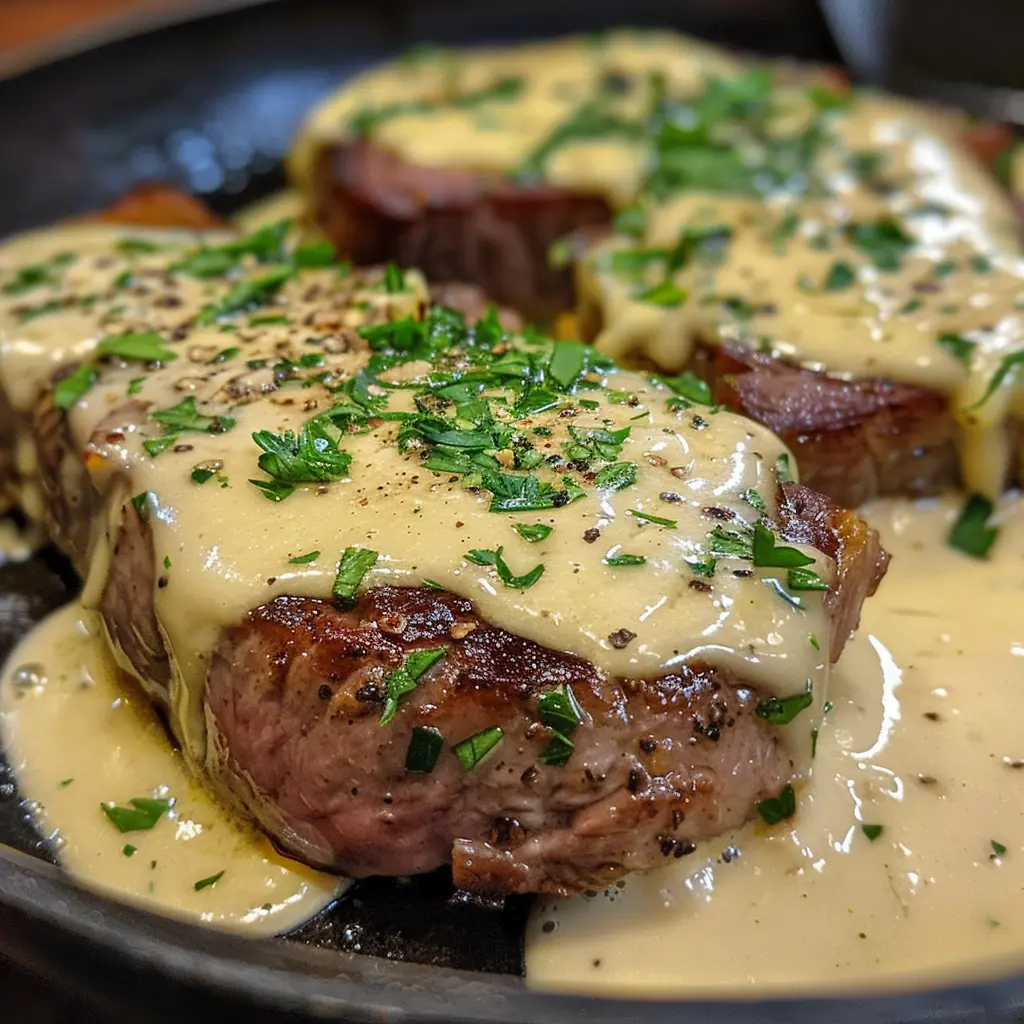
Juicy steak with creamy garlic sauce sears four generously seasoned steaks to a perfect golden crust, then builds a glossy Parmesan-enriched garlic cream sauce directly in the same pan using the rendered butter and browned beef drippings. The sauce goes over the top of the steaks rather than beside them, and the combination of seared beef and that velvety, savory cream makes every bite taste like something you’d pay serious money for at a steakhouse.
| Detail | Info |
|---|---|
| Prep Time | 5 minutes |
| Cook Time | 20 minutes |
| Rest Time | 5 minutes |
| Total Time | 30 minutes |
| Servings | 4 |
| Difficulty | Medium |
| Cuisine | American / French-Inspired |
Why This Recipe Works
The entire flavor architecture of this dish rests on one decision: building the garlic cream sauce in the same skillet where the steaks were seared. During the sear, the beef releases juices and proteins that caramelize against the hot pan surface into a layer of deeply savory fond. When the butter melts and the garlic is added to that pan, it immediately picks up every bit of that beef flavor and carries it into the cream and broth that follow. A sauce built this way has a richness and complexity that a cream sauce made in a clean pan simply cannot achieve — the fond is doing the work of hours of stock reduction in the matter of seconds it takes to dissolve into the butter.
The olive oil and butter combination for searing the steaks is a deliberate choice rather than one or the other. Olive oil has a higher smoke point than butter and handles the initial high heat of searing without burning. Butter adds richness and promotes browning through its milk solids, which caramelize at lower temperatures than pure fat. The combination produces a sear that’s both hot enough to develop deep color quickly and flavorful enough to lay the groundwork for the cream sauce that follows.
Beef broth in the garlic cream sauce does more than add liquid volume. The broth carries its own savory, gelatin-rich quality that thickens the sauce slightly as it reduces alongside the cream and gives the finished sauce a body that’s more cohesive than cream alone. More importantly, it provides a counterpoint to the richness of the cream — a pure cream sauce can taste flat and fatty without something savory and slightly thinner to balance it. The half cup of broth provides exactly that counterbalance.
Parmesan stirred into the simmering cream and broth does three things simultaneously: it thickens the sauce through its dissolved proteins, it adds the sharp, salty, umami-forward flavor that makes the sauce taste complete, and it contributes fat that enriches the texture into something genuinely velvety. This is why a small amount of Parmesan in a cream sauce has an outsized impact on the finished quality — it’s contributing to flavor, texture, and body all at once.
Returning the steaks to the skillet and spooning the sauce over them — rather than plating the steaks and pouring sauce separately — allows the hot sauce to continue gently warming the steaks without overcooking them. The sauce permeates any cuts or edges on the steak surface, and the two minutes the steaks spend back in the pan give the sauce time to cling to the beef rather than sliding off when it’s plated. This is the move that makes the finished dish look intentional and coherent rather than like two separate items combined at the end.
Ingredients
| Ingredient | Quantity | Notes |
|---|---|---|
| Beef steaks (sirloin or ribeye) | 4 | About 1 inch thick; room temperature before searing for more even cooking |
| Olive oil | 2 tablespoons | For the initial sear; higher smoke point than butter alone |
| Butter | 2 tablespoons | Added to the olive oil for flavor and browning during the sear |
| Garlic cloves, minced | 4 | Fresh garlic; sauteed in the pan drippings after the steak is removed |
| Heavy cream | 1 cup | Full-fat for the richest, most stable sauce |
| Beef broth | 1/2 cup | Adds savory depth and balances the richness of the cream |
| Parmesan cheese, grated | 1/2 cup | Freshly grated melts most smoothly; thickens and flavors the sauce |
| Italian seasoning | 1 teaspoon | Stirred into the sauce; adds herbal depth |
| Salt and black pepper | To taste | Season the steaks generously before searing |
| Fresh parsley, chopped | For garnish | Adds color and a fresh finish before serving |
Step-by-Step Instructions
Phase 1: Sear the Steaks
- Remove the steaks from the refrigerator at least 15 minutes before cooking to take the chill off. Cold steaks placed directly into a hot pan lower the pan temperature and can result in uneven cooking — a cool exterior and raw center rather than the even sear you want. Pat them completely dry with paper towels. Moisture on the surface of the meat creates steam rather than sear, which prevents browning.
- Season both sides of each steak generously with salt and freshly cracked black pepper. Don’t be shy — steaks need more seasoning than most people intuitively apply.
- Heat the olive oil and butter together in a large, heavy skillet over medium-high heat until the butter is melted and foaming. Let the foam subside — this signals the pan is at the right temperature to sear without burning the butter solids. Add the steaks and cook for 3 to 5 minutes per side, depending on thickness and desired doneness, without moving them. For a 1-inch steak: 3 minutes per side for medium-rare, 4 minutes for medium, 5 for medium-well.
- Transfer the steaks to a plate and tent loosely with aluminum foil. Let them rest while you make the sauce — this rest period is not optional. It allows the juices driven to the center during cooking to redistribute through the meat, producing noticeably more juicy slices when cut.
Phase 2: Build the Garlic Cream Sauce
- In the same skillet over medium heat, add the minced garlic to the residual butter and beef drippings. Saute for about 30 to 45 seconds, stirring constantly, until the garlic is fragrant and just beginning to turn golden. The garlic will cook quickly in the hot fat — watch it carefully and don’t let it brown beyond pale gold or it will turn bitter.
- Pour in the beef broth and stir, scraping up any browned bits from the pan bottom. Let it simmer for about 1 minute.
- Add the heavy cream and bring to a gentle simmer. Stir in the Italian seasoning. Cook for 3 to 4 minutes, stirring frequently, until the sauce begins to thicken slightly.
- Add the grated Parmesan in two additions, stirring well after each until fully melted and the sauce is smooth. Taste and adjust seasoning with salt and pepper.
Phase 3: Finish and Serve
- Return the rested steaks to the skillet. Spoon the garlic cream sauce generously over each steak and let them sit in the sauce for about 1 minute over low heat, just enough to rewarm the surface without continuing to cook the interior.
- Plate the steaks and spoon additional sauce over each one. Garnish with freshly chopped parsley and serve immediately.
Chef Tips for Perfect Results
Use an instant-read thermometer for precise doneness. Internal temperatures: 125 degrees F for rare, 130 to 135 for medium-rare, 140 to 145 for medium, 150 to 155 for medium-well. The steak temperature rises 5 to 10 degrees during the rest period, so pull it slightly below your target temperature. This is the most reliable way to hit your desired doneness consistently regardless of steak thickness or your specific stove’s heat output.
Don’t move the steaks during the sear. The crust forms through sustained contact between the meat surface and the hot pan. Moving or pressing the steak interrupts that contact and prevents proper browning. Set the steak down, leave it completely alone for the designated time, and flip only once.
Baste the steaks with butter during cooking. In the last minute of cooking each side, tilt the pan slightly and spoon the pooled butter and fat over the top of each steak repeatedly. This basting adds flavor, promotes more even browning on the surface, and baste the seasoning into the crust.
Add a teaspoon of Dijon mustard to the cream sauce. Whisk a teaspoon of Dijon mustard into the sauce after the cream has begun to simmer. It adds a sharp, tangy depth and acts as an emulsifier that makes the sauce smoother and less likely to separate. The mustard flavor is subtle in the finished sauce but its absence is immediately noticeable if you ever leave it out after trying it with.
Freshly grate the Parmesan. Pre-grated Parmesan in bags contains anti-caking agents that prevent smooth melting into cream sauces. A block of Parmesan grated fresh on a microplane or fine box grater produces a sauce that’s visibly silkier and more cohesive.
Common Mistakes to Avoid
Searing cold steak straight from the refrigerator. Cold meat lowers the pan temperature on contact, prolonging the time needed to develop a sear and increasing the risk of a thick gray band just below the surface where the meat cooked through at a lower temperature. Fifteen minutes at room temperature makes a genuine difference.
Not patting the steaks dry. Moisture on the surface of the steak creates steam when it hits the hot pan, preventing browning. A paper towel and 10 seconds of blotting is all it takes to ensure the steak sears rather than steams.
Skipping the rest period. Steak cut immediately after searing loses a significant amount of its juice onto the cutting board rather than staying in the meat. Five minutes of rest under loose foil makes slices visibly more moist. Do not skip this step.
Boiling the cream sauce. A rolling boil can cause the cream to reduce too fast and potentially break the sauce, making it grainy or oily. Maintain a gentle simmer throughout the sauce-making phase — small, steady bubbles at the edges of the pan.
Adding all the Parmesan at once. Adding the full amount of grated Parmesan in a single pour can cause it to clump together before it can melt smoothly. Two additions with stirring between each produces a much more cohesive, lump-free sauce.
Variations and Substitutions
Mushroom garlic cream sauce: Add a cup of thinly sliced cremini mushrooms to the pan after removing the steaks, before adding the garlic. Saute until golden and their moisture has cooked off, then proceed with the garlic and cream. Mushrooms and steak cream sauce is a classic combination that adds earthy depth and extra substance to the dish.
Herb butter finish: Instead of returning the steaks to the sauce, top each plated steak with a coin of compound herb butter (softened butter mixed with herbs, garlic, and lemon zest, rolled and chilled) that melts over the hot steak and pools with the cream sauce below. This approach keeps the sauce and butter as separate elements that combine on the plate.
Peppercorn cream sauce: Add a tablespoon of crushed black peppercorns to the garlic when it’s sauteed, and replace the Parmesan with an extra quarter cup of broth for a classic steak au poivre-style sauce that pairs particularly well with filet mignon or sirloin.
Different cuts: This sauce works equally well with filet mignon for the most tender result, ribeye for the most flavorful, New York strip for a balance of both. Thinner cuts like skirt or flank steak cooked quickly over very high heat are also excellent with this sauce, though they need only 1 to 2 minutes per side.
Serving Suggestions
Serve the steaks on warmed plates with the cream sauce spooned generously over the top and pooling around the base of the steak. Garlic mashed potatoes are the ideal accompaniment — the potatoes absorb the cream sauce and create a complete, deeply satisfying plate. Roasted asparagus or green beans alongside add a slightly bitter counterpoint to the richness of the sauce. Crusty bread at the table for the sauce is practically mandatory.
For a plated dinner presentation, slice the steak across the grain into half-inch pieces and fan them across the plate with the cream sauce drizzled over the top rather than pooled beneath. A sprig of fresh thyme alongside adds visual elegance with minimal effort.
Storage and Reheating
Refrigerator: Store cooked steaks and sauce separately in airtight containers for up to 3 days. The sauce thickens considerably when cold.
Reheating the sauce: Warm gently in a small saucepan over low heat with a splash of broth or cream to loosen it, stirring frequently. Avoid boiling during reheating as this can cause the sauce to break.
Reheating the steak: For the best result, bring the steak to room temperature and warm in a 250-degree F oven for 10 to 15 minutes until heated through, then briefly sear in a hot pan for 30 seconds per side to re-crisp the exterior. The microwave works in a pinch but can make the steak tough and grey.
Nutritional Information
| Nutrient | Per Serving (approx.) |
|---|---|
| Calories | 580 |
| Protein | 46g |
| Carbohydrates | 4g |
| Fat | 42g |
| Saturated Fat | 20g |
| Fiber | 0g |
| Sodium | 640mg |
Nutritional values are estimates based on a 6-ounce sirloin steak. Values will vary significantly based on steak cut, size, and specific brands used.
FAQ
How do I know when my steak is done without a thermometer?
The hand test is the most widely used tactile method: press the fleshy pad at the base of your thumb while your hand is relaxed (rare), touching your thumb to your index finger (medium-rare), middle finger (medium), ring finger (medium-well), or pinky (well done). Each position changes the firmness of that pad to match the firmness of a steak at the corresponding doneness. It requires practice and isn’t as accurate as a thermometer, but it’s a useful fallback. A thermometer is always the more reliable option.
Sirloin or ribeye — which should I choose?
Ribeye has significantly more intramuscular fat (marbling) than sirloin, which means more flavor and a more forgiving cooking window — the fat melts and bastes the muscle from within as the steak cooks, keeping it juicy even at higher temperatures. Sirloin is leaner, slightly firmer in texture, and has a cleaner, beefier flavor that some people prefer. For the cream sauce application specifically, ribeye’s richness pairs particularly well with the heavy cream and Parmesan. Sirloin is the better choice if you want the beef flavor to be more distinct from the sauce.
Can I make the sauce without Parmesan?
Yes. Omit the Parmesan and increase the broth by a quarter cup for a pure garlic cream sauce. It will be thinner and less flavored, so adjust the seasoning more assertively with salt and consider adding a teaspoon of Dijon mustard and a squeeze of lemon juice to compensate for the complexity the Parmesan would have contributed. Gruyere or Pecorino Romano are also excellent substitutes that melt cleanly into cream sauces.
Can I make this dish for a dinner party?
Yes, with a small adjustment. Sear the steaks to one degree below your target doneness, rest them, and hold in a 150-degree F oven for up to 20 minutes while you make the sauce and finish any sides. This holding technique keeps multiple steaks at the correct temperature without overcooking them while you manage other elements of the meal.
Why is my cream sauce too thin?
The sauce needs 3 to 4 minutes of gentle simmering before the Parmesan goes in to reduce and begin thickening. If it’s still thin after that, let it simmer another 1 to 2 minutes uncovered. The Parmesan will thicken it further as it melts. If the sauce still seems thin after both the simmer and the cheese addition, it likely means the heat was too low to reduce the cream properly. Increase to medium and simmer for a few more minutes, stirring frequently.
Conclusion
Juicy steak with creamy garlic sauce is the dinner that turns a Tuesday into something worth looking forward to. The technique is straightforward — sear, rest, build sauce in the same pan, finish — but the result is something that tastes genuinely accomplished. Four steaks, one skillet, 30 minutes, and you have a restaurant-quality meal that makes no compromises on flavor or satisfaction. Make it once and you’ll have it memorized by the second time.