
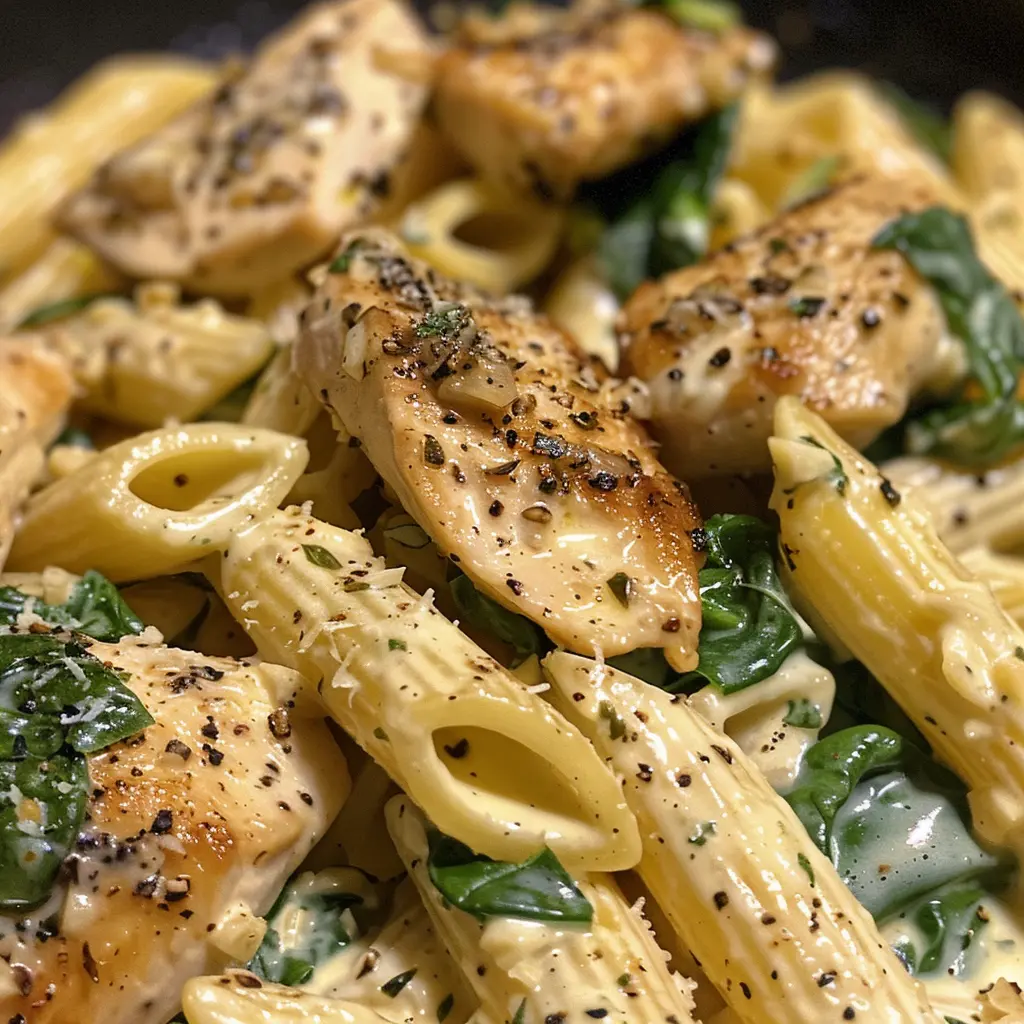
Creamy garlic chicken penne with spinach builds a rich Parmesan cream sauce directly in the same pan used to sear the chicken, so every bit of that golden, flavorful fond ends up in the sauce. Tender chicken, al dente penne, wilted spinach, and five cloves of garlic come together in 30 minutes into a pasta that tastes far more effort-intensive than it actually was to make.
| Detail | Info |
|---|---|
| Prep Time | 10 minutes |
| Cook Time | 20 minutes |
| Total Time | 30 minutes |
| Servings | 4 |
| Difficulty | Easy |
| Cuisine | Italian-American |
Why This Recipe Works
Searing the chicken in olive oil before building the sauce isn’t just about cooking the protein — it’s about flavor infrastructure. The chicken releases natural juices and proteins that caramelize against the hot pan surface into a browned layer of fond. When the butter and garlic go into that same pan, they immediately pick up all that concentrated chicken flavor and carry it into the cream sauce. A sauce built in a clean pan would taste good; a sauce built in the pan where the chicken seared tastes genuinely great.
Five cloves of garlic sauteed in butter before the cream is added gives this sauce its defining character. Unlike garlic powder or garlic paste, fresh minced garlic in hot butter releases aromatic compounds that bloom into a sweet, rounded, deeply savory note that infuses the cream at every stage of the sauce-making process. The quantity matters too — five cloves for four servings is generous enough that the garlic flavor is unmistakably present without being overwhelming.
The combination of heavy cream and whole milk produces a sauce that’s rich but not oppressively heavy. Pure heavy cream results in a sauce so thick and rich that it can feel more like a dip than a pasta coating by the time the Parmesan is stirred in. The addition of milk lightens the fat content slightly and produces a sauce that flows around the pasta and chicken rather than clinging in thick, heavy dollops. The ratio in this recipe keeps the sauce firmly in indulgent territory while still feeling like food rather than a composition.
Adding the spinach to the sauce before returning the chicken and pasta allows it to wilt down fully and integrate into the cream. Spinach added at the very end with everything else barely has time to soften before the dish is served, leaving raw-tasting leaves with a slightly bitter edge. Two minutes in the warm cream is enough to collapse the spinach into tender, vivid green ribbons that blend into the sauce and add both color and a mild earthy note to every bowl.
Tossing the pasta directly in the sauce rather than plating the sauce over the pasta ensures every piece of penne is thoroughly coated from the inside out. Penne has ridged surfaces and hollow centers designed specifically to trap sauce, and they do their job best when the pasta has a chance to absorb the cream and Parmesan while everything is still hot. This tossing step is what separates a cohesive, flavorful dish from a plate of pasta with sauce sitting separately on top.
Ingredients
| Ingredient | Quantity | Notes |
|---|---|---|
| Pasta | ||
| Penne | 16 oz | Cook al dente; it finishes in the sauce |
| Chicken | ||
| Chicken breast | 1.5 lbs | Pounded to even thickness or sliced horizontally for faster, more even cooking |
| Salt and black pepper | To taste | Season generously on both sides |
| Garlic powder | 1 teaspoon | Seasons the chicken before searing |
| Olive oil | 2 tablespoons | For searing the chicken over medium-high heat |
| Sauce | ||
| Butter | 3 tablespoons | Forms the base of the garlic sauce |
| Garlic cloves, minced | 5 | Fresh garlic; the foundation of the sauce’s flavor |
| Heavy cream | 1 cup | Full-fat for the richest result |
| Whole milk | 3/4 cup | Lightens the sauce slightly |
| Parmesan cheese, grated | 1 cup | Freshly grated melts most smoothly |
| Vegetables | ||
| Fresh spinach | 2 cups | Baby spinach wilts most quickly and evenly |
Step-by-Step Instructions
Phase 1: Cook the Pasta and Sear the Chicken
- Bring a large pot of generously salted water to a boil. Cook the penne until al dente — about 1 minute less than the package direction suggests. Reserve half a cup of pasta water before draining. Set the drained pasta aside.
- Season the chicken breasts on both sides with salt, black pepper, and garlic powder. For more even cooking, pound the breasts to an even thickness or slice them horizontally into thinner cutlets.
- Heat the olive oil in a large skillet over medium-high heat until shimmering. Add the chicken and cook without moving for 4 to 5 minutes until deeply golden on the bottom. Flip and cook for another 4 to 5 minutes until cooked through to 165 degrees F. Transfer to a cutting board and let rest for a few minutes, then slice or dice into bite-sized pieces. Set aside.
Phase 2: Build the Cream Sauce
- In the same skillet over medium heat, melt the butter. Add the minced garlic and cook for about 60 seconds, stirring constantly, until fragrant and just barely golden. Don’t let it brown — garlic that’s too dark turns bitter and will make the sauce taste acrid.
- Pour in the heavy cream and milk, stirring to combine with the garlic and scraping up any browned bits from the pan. Bring to a gentle simmer and cook for 3 to 4 minutes, stirring occasionally, until the sauce begins to thicken slightly.
- Add the grated Parmesan in two or three additions, stirring well after each until fully melted and the sauce is smooth and creamy. Taste and adjust seasoning with salt and pepper.
Phase 3: Add Spinach, Chicken, and Pasta
- Add the spinach to the sauce and stir until wilted, about 1 to 2 minutes.
- Return the sliced chicken to the skillet along with the drained penne. Toss everything together until the pasta and chicken are evenly coated in the sauce. If the sauce seems too thick, add a splash of the reserved pasta water to loosen it to your preferred consistency.
- Serve immediately in warm bowls with extra grated Parmesan on top.
Chef Tips for Perfect Results
Pound the chicken to even thickness before cooking. Chicken breasts are naturally thicker at one end, which means the thin end overcooks before the thick end reaches a safe temperature. A quick pound with a meat mallet or rolling pin to an even three-quarter-inch thickness produces chicken that cooks uniformly and stays juicy throughout.
Use freshly grated Parmesan. Pre-grated bagged Parmesan contains anti-caking agents that prevent smooth melting and can leave the sauce slightly grainy. A block of Parmigiano-Reggiano grated fresh on a microplane or box grater dissolves into the cream seamlessly.
Reserve pasta water before draining. The starchy cooking water is the best tool for loosening a cream sauce that’s become too thick after adding the pasta. A splash or two added while tossing the pasta in the sauce adjusts the consistency without diluting the flavor.
Don’t rush the garlic. A full minute of garlic cooking in the butter before any liquid goes in is what gives this sauce its rounded, sweet garlic flavor rather than a sharp, raw bite. But watch it closely — the line between perfectly golden and burnt is about 30 seconds.
Add red pepper flakes with the garlic. A pinch of red pepper flakes bloomed in the butter alongside the garlic adds a low, building warmth that makes each bite more interesting without making the dish noticeably spicy.
Common Mistakes to Avoid
Overcooking the chicken. Chicken breast is very lean and dries out quickly when overcooked. Pull it from the pan the moment it reaches 165 degrees F internally and let it rest before slicing — this keeps it juicy even after it’s returned to the hot sauce.
Adding all the Parmesan at once. Dumping the full cup of Parmesan into the simmering cream all at once can cause it to clump. Add it in stages and stir between each addition for the smoothest result.
Boiling the cream sauce. Cream brought to a full rolling boil can reduce too fast and risk separating. Keep it at a gentle simmer — small lazy bubbles at the edges — throughout the sauce-making process.
Plating without tossing. Pouring sauce over pasta on the plate doesn’t give the penne time to absorb and integrate the sauce. Tossing everything together in the pan for a minute or two makes the dish cohesive rather than feeling like separated components.
Not tasting before serving. Parmesan is salty, and different brands vary significantly. Taste the finished dish before adding more salt and adjust based on what’s actually in the pan.
Variations and Substitutions
Add mushrooms: Slice 8 ounces of cremini mushrooms and saute them in the butter before the garlic goes in. They add an earthy depth and meaty texture that complements the cream sauce beautifully.
Add sun-dried tomatoes: A quarter cup of oil-packed sun-dried tomatoes, drained and roughly chopped, stirred in with the spinach adds a concentrated, slightly tangy tomato note that cuts through the richness of the cream.
Swap chicken for shrimp: Large shrimp seasoned and seared for 1 to 2 minutes per side work perfectly in this dish. Add them back to the sauce at the very end — shrimp overcook quickly and need only about a minute in the warm sauce before serving.
Lighter version: Replace the heavy cream with half-and-half and reduce the milk to half a cup. The sauce will be thinner and less rich but still creamy, and the calorie count drops meaningfully.
Add bacon: Cook four strips of bacon until crisp, crumble them, and scatter over the finished pasta. The salty, smoky crunch against the garlic cream sauce and spinach is a combination worth trying.
Serving Suggestions
Serve immediately in warmed bowls with a generous extra grating of Parmesan and a crack of fresh black pepper. Garlic bread alongside is the classic pairing for any cream pasta — the bread is ideal for the sauce that inevitably collects at the bottom of the bowl. A simple green salad dressed with lemon vinaigrette provides a bright, acidic contrast that cuts through the richness of the cream.
Storage and Reheating
Refrigerator: Store in an airtight container for up to 3 days. The sauce thickens significantly as it chills — add a splash of milk or cream when reheating to restore the consistency.
Reheating: Warm gently in a skillet over low heat with a splash of milk or cream, stirring frequently. The microwave works for individual portions in 60-second intervals, stirring between each.
Freezer: Not recommended. Cream sauces tend to separate when frozen and thawed, and the pasta texture suffers as well.
Nutritional Information
| Nutrient | Per Serving (approx.) |
|---|---|
| Calories | ~550 |
| Protein | 48g |
| Carbohydrates | 48g |
| Fat | 28g |
| Saturated Fat | 15g |
| Fiber | 3g |
| Sodium | 580mg |
Nutritional values are estimates based on standard ingredients and will vary depending on specific brands used.
FAQ
Can I use chicken thighs instead of breasts?
Yes, and many cooks prefer thighs for this recipe since they’re more forgiving to cook — they stay juicy even a few degrees above the minimum internal temperature where breasts can start to dry out. Boneless, skinless thighs sear in the same time and work identically in the sauce.
Why did my sauce turn grainy?
Grainy cream sauce is almost always caused by cheese that was added over too-high heat or pre-shredded cheese with anti-caking agents. Reduce the heat to a gentle simmer before adding the Parmesan and use freshly grated cheese for the smoothest result.
Can I make this gluten-free?
Yes. Substitute your preferred gluten-free penne and the rest of the recipe stays exactly the same. Most gluten-free pasta shapes perform well in cream sauces since they’re sauced and served immediately rather than baked.
How do I keep the sauce from becoming too thick?
The reserved pasta water is the answer. Stir in a tablespoon at a time while tossing the pasta and chicken into the sauce until it reaches your preferred consistency. The starch in the pasta water helps the sauce cling to the pasta rather than pooling at the bottom of the bowl.
Can I add other vegetables?
Yes. Cherry tomatoes halved and added with the spinach add bursts of acidity and sweetness. Roasted red peppers add a sweet, smoky note. Broccoli florets blanched separately and added at the end work well for extra nutrition and texture.
Conclusion
Creamy garlic chicken penne with spinach is the pasta recipe that earns a permanent spot in the weeknight rotation because it delivers on every front: it’s fast, the flavors are bold and satisfying, and the cleanup is minimal since most of the cooking happens in one pan. Make it once and it’s the dish you find yourself making whenever you want something that feels genuinely good without requiring any real effort.