
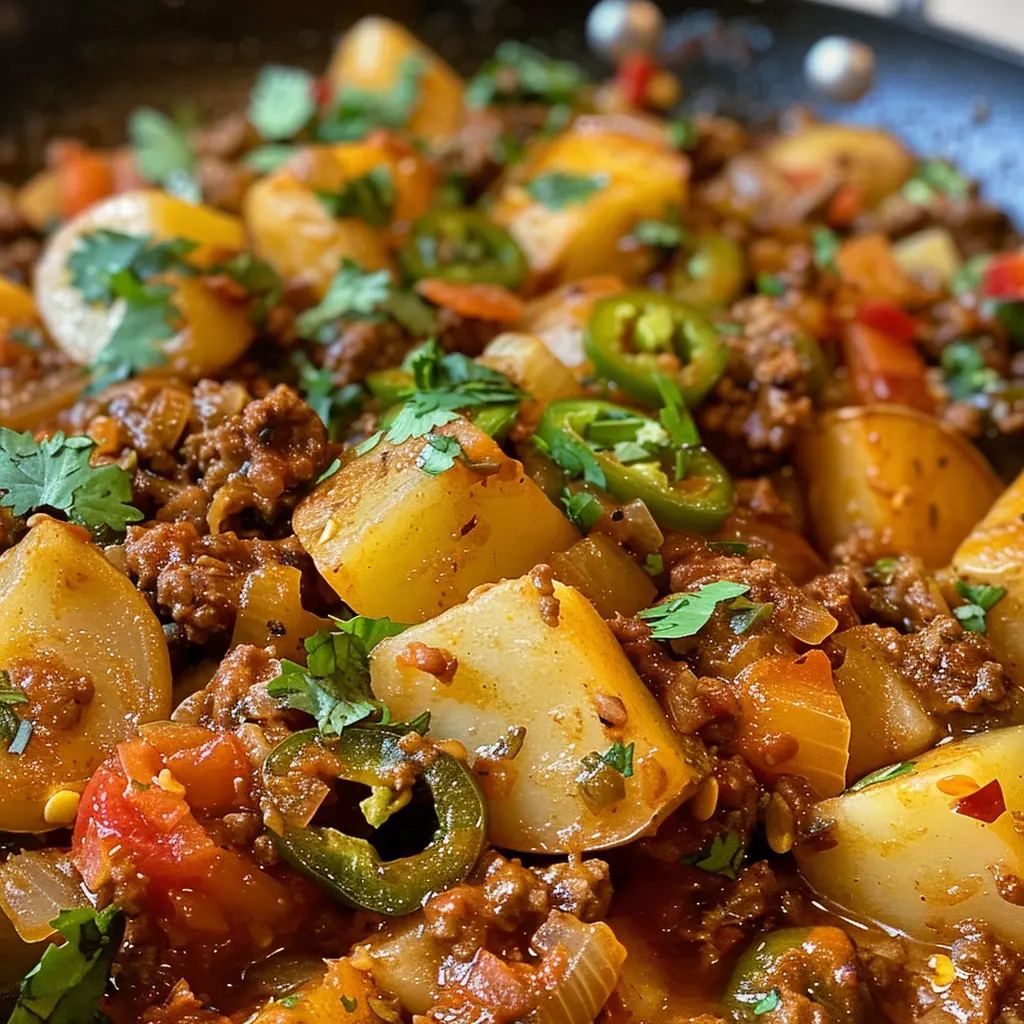
Authentic Mexican picadillo starts with a roasted chile-tomato sauce made from blistered Roma tomatoes, charred jalapeños, and caramelized garlic blended smooth, then simmers seasoned ground beef and tender potato cubes in that sauce until everything melds into a deeply flavored, satisfying skillet meal. This is homestyle Mexican cooking at its most straightforward and most delicious — the kind of recipe that fills a kitchen with the smell of something worth coming home for.
| Detail | Info |
|---|---|
| Prep Time | 10 minutes |
| Cook Time | 40 minutes |
| Total Time | 50 minutes |
| Servings | 4 to 6 |
| Difficulty | Easy |
| Cuisine | Mexican |
Why This Recipe Works
The roasted sauce is what separates this picadillo from the versions that use canned tomatoes or raw salsa blended in at the end. Roasting the tomatoes, jalapeños, serrano, and garlic in a dry or lightly oiled skillet until they blister and char drives off moisture, concentrates their natural sugars, and creates complex smoky flavor compounds through direct heat contact. The resulting blended sauce has a depth that’s impossible to achieve from raw ingredients — it tastes cooked and developed even before it ever touches the beef, and it infuses every component of the skillet during the final simmer in a way that raw sauce simply cannot.
Using an 80/20 ground beef blend is intentional. The 20 percent fat renders during browning and bastes the meat from within, producing a richer, more flavorful base for the dish. Some of that fat is drained after browning, but a small amount is left in the pan intentionally — it carries flavor and prevents the onion and potato from sticking during the next phase of cooking. Leaner beef produces a drier, less flavorful picadillo that the roasted sauce has to work harder to compensate for.
Adding the potatoes to the skillet with the beef rather than cooking them separately is a technique decision that pays off significantly in flavor. As the raw potato cubes cook alongside the seasoned beef and onion, they absorb the fat, juices, and seasoning in the pan. By the time the roasted sauce goes in, the potatoes are already carrying savory flavor from the beef and seasonings, so the final simmer deepens what’s already there rather than having to build from scratch on a plain boiled potato. This is the difference between potatoes that taste like they belong in the dish and potatoes that taste like they were added as filler.
The covered simmer at the end — 15 to 20 minutes on low heat — is what brings the whole dish together. During this time the potatoes finish cooking through in the chile-tomato sauce, the sauce reduces and thickens around the beef and potato, and the flavors of every component fully integrate. The lid traps steam that gently cooks the potato from above while the sauce works from below, producing a more evenly cooked result than an uncovered high-heat finish would.
The serrano pepper is listed as optional but worth including if you want genuine heat. Jalapeños provide mild to moderate warmth with a bright, grassy flavor. The serrano adds a more intense, cleaner heat that sits differently on the palate and makes the sauce taste more complex. The combination of the two chile types in the roasted sauce creates a layered heat rather than a single-note spiciness, which is more characteristic of traditional Mexican sauces than a single pepper used alone.
Ingredients
| Ingredient | Quantity | Notes |
|---|---|---|
| For the Picadillo | ||
| Ground beef (80/20) | 1.5 pounds | The fat content is important for flavor; drain only the excess |
| Medium potatoes, peeled and diced small | 2 | Russet or Yukon Gold; small cubes cook through in the simmer time |
| Onion, diced | 1/2 cup | White onion is traditional |
| Salt | 1 teaspoon | Seasons the beef; adjust after adding the sauce |
| Black pepper | 1 teaspoon | Freshly cracked for best flavor |
| For the Roasted Sauce | ||
| Roma tomatoes | 2 | Roasted until blistered and slightly charred |
| Jalapeños | 3 | Adjust based on your heat tolerance |
| Serrano pepper (optional) | 1 | Adds a hotter, cleaner heat than jalapeño; use or omit to taste |
| Garlic cloves | 2 | Roasted whole alongside the other vegetables |
| Water | 1/4 cup | Helps blend the roasted vegetables to a smooth sauce |
| Oil | 1 teaspoon | For the skillet when roasting the sauce vegetables |
Step-by-Step Instructions
Phase 1: Make the Roasted Sauce
- Heat the teaspoon of oil in a small skillet over medium heat. Add the Roma tomatoes, jalapeños, serrano pepper if using, and garlic cloves. Cook for 8 to 10 minutes, turning the vegetables occasionally with tongs, until they are blistered and lightly charred on multiple sides. The tomatoes should be soft and collapsing, the peppers should have dark spots, and the garlic should be golden and fragrant. Some char is not only acceptable but desirable — it’s where a significant portion of the smoky depth in the finished sauce comes from.
- Transfer the roasted vegetables to a blender. Add the quarter cup of water. Blend on high until completely smooth. If the blender struggles with the thick mixture, add a tablespoon more water at a time. Set the sauce aside.
Phase 2: Brown the Beef
- In a large skillet over medium-high heat, add the ground beef. Break it apart into small, even crumbles using a wooden spoon or spatula as it cooks. Season with the salt and black pepper. Cook for 6 to 8 minutes until fully browned with no pink remaining and some pieces have developed a slight crust from direct contact with the hot pan.
- Drain the excess fat from the skillet, leaving a thin coating in the pan — about a tablespoon. This residual fat is what carries the flavor of the beef into the next steps and keeps the potato and onion from sticking.
Phase 3: Add Potatoes and Onion
- Add the diced potatoes and diced onion directly to the beef in the skillet. Cook over medium heat for 5 to 7 minutes, stirring frequently, until the onion softens and the potato cubes have started to cook through on the outside and are beginning to pick up some color from the beef fat in the pan.
Phase 4: Simmer with the Sauce
- Pour the roasted chile-tomato sauce into the skillet over the beef, potato, and onion. Stir well to combine and coat every component evenly.
- Reduce the heat to low, cover the skillet, and simmer for 15 to 20 minutes, stirring once or twice during cooking, until the potatoes are completely fork-tender and the sauce has thickened and clings to the beef rather than pooling loosely at the bottom.
- Taste and adjust seasoning with additional salt or pepper as needed. Serve hot.
Chef Tips for Perfect Results
Don’t skip the char on the roasted vegetables. The black spots on the tomatoes, peppers, and garlic are not a sign that anything has gone wrong — they’re a deliberate flavor element. That char is where the smokiness in the finished sauce comes from, and a sauce made from under-roasted, pale vegetables will taste flat and one-dimensional compared to one made with properly blistered produce.
Dice the potatoes small. Half-inch cubes or smaller cook through reliably in the 15 to 20 minute simmer time. Larger chunks may still be firm in the center when the sauce has reduced to the right consistency and everything else is done. Small, consistent pieces also distribute more evenly through the beef so every spoonful has a good balance of meat and potato.
Let the beef develop some crust before stirring. Resist the urge to stir constantly during the browning phase. Leaving the beef in contact with the hot pan for a minute or two before breaking it apart allows the bottom layer to develop real color, which contributes more flavor to the finished dish than evenly gray, steamed beef crumbles.
Adjust the heat level through the peppers. For a mild picadillo, remove the seeds and membranes from all the jalapeños before roasting and omit the serrano entirely. For medium heat, keep the seeds in the jalapeños and omit the serrano. For a more traditional level of heat, include the serrano and let it roast alongside the jalapeños. The heat mellows somewhat during the long simmer, so what seems spicy in the fresh sauce will be more moderate by the time the dish is fully cooked.
Use the lid during the final simmer. The covered simmer is what finishes the potatoes properly. An uncovered simmer reduces the sauce too fast and can leave the potato cubes still slightly firm when the liquid has already thickened down too much. Keep the lid on and let the trapped steam do its work.
Common Mistakes to Avoid
Using raw tomatoes and peppers instead of roasting them. Raw blended salsa added to the beef produces a brighter, more acidic sauce but lacks the smoky depth and mellowness that comes from roasting. The roasting step is what makes this an authentic, developed sauce rather than a quick shortcut version.
Draining all the fat from the beef. A completely dry skillet after draining makes the potato and onion stick during their initial cook and removes the flavor the remaining beef fat would carry into the sauce. Leave a thin coating in the pan.
Cutting the potatoes too large. Large potato cubes need significantly more than 20 minutes to become fork-tender inside a thick, simmering sauce. Keep them small — half an inch or less — for reliable results within the recipe’s timing.
Not covering the skillet during the simmer. The lid is what creates the enclosed, steamy environment the potatoes need to finish cooking through. Without it, the sauce can reduce faster than the potatoes cook and the dish runs dry before everything is done.
Serving without a final taste and seasoning adjustment. The roasted sauce carries the pepper’s natural heat and some salt, and the beef was seasoned during browning. The final seasoning check accounts for all of these accumulated flavors and allows for a precise adjustment rather than guessing at the start.
Variations and Substitutions
Add carrots: A diced carrot added with the potatoes softens in the simmer time and adds a slight sweetness that balances the heat of the chile sauce. This is a common regional variation in Mexican home cooking.
Add peas: A half cup of frozen peas stirred in during the last 5 minutes of simmering adds color, sweetness, and a slight pop of texture that’s a traditional addition in many Mexican picadillo versions.
Milder sauce: Use only one jalapeño with seeds removed and omit the serrano entirely for a family-friendly version that keeps the smoky tomato flavor without significant heat.
Add cumin: A teaspoon of ground cumin added to the beef along with the salt and pepper gives the dish a warmer, earthier quality that’s common in Tex-Mex-influenced versions of this recipe.
Ground turkey version: Ground turkey works as a leaner substitute for the beef, though it needs more aggressive seasoning since it’s milder. Add an extra half teaspoon each of salt and pepper and consider a pinch of smoked paprika to compensate for the flavor depth the higher-fat beef naturally provides.
Serving Suggestions
Serve picadillo with warm flour or corn tortillas for scooping — the combination of beef, potato, and sauce wrapped in a soft tortilla is one of the most satisfying bites in Mexican home cooking. Steamed white rice alongside absorbs the sauce beautifully and makes the meal more substantial. Refried beans on the side round out the plate into a complete, traditional Mexican dinner.
Picadillo also works as a filling for tacos, burritos, tamales, and stuffed peppers. Its thick, chunky texture holds up well inside any of these formats and the chile-tomato sauce keeps it moist and flavorful even after wrapping or stuffing.
Storage and Reheating
Refrigerator: Store in an airtight container for up to 4 days. The flavors deepen as it sits overnight and many people find day-two picadillo tastes even better than the freshly cooked version.
Freezer: Freeze in portions for up to 3 months. The potatoes change texture slightly after freezing and thawing — they become softer and more crumbly — but the flavor is unaffected. Thaw overnight in the refrigerator before reheating.
Reheating: Warm in a skillet over medium-low heat with a splash of water to prevent sticking and restore the saucy consistency. The microwave works for individual portions in 60-second intervals, stirring between each.
Nutritional Information
| Nutrient | Per Serving (approx.) |
|---|---|
| Calories | 380 |
| Protein | 28g |
| Carbohydrates | 18g |
| Fat | 22g |
| Saturated Fat | 8g |
| Fiber | 2g |
| Sodium | 520mg |
Nutritional values are estimates based on standard ingredients. Values will vary based on the fat content of the beef and the number of peppers used.
FAQ
What does picadillo mean?
Picadillo comes from the Spanish word picar, meaning “to mince” or “to chop,” and refers broadly to a dish made from minced or ground meat combined with other chopped ingredients. The dish exists in many Latin American and Spanish cuisines, with each region and family having its own distinct version. The Mexican version typically features ground beef with potatoes and a tomato-chile sauce, but variations across the country include raisins, olives, capers, almonds, or different regional chiles depending on the cook’s background and preferences.
Can I use dried chiles instead of fresh jalapeños?
Yes, and it’s a common approach in traditional Mexican cooking. Guajillo chiles, ancho chiles, or pasilla chiles toasted in a dry pan and rehydrated in hot water before blending produce a sauce with a distinctly different — deeper, earthier, and more complex — flavor profile than the fresh chile version. Toast the dried chiles in a dry skillet for 30 to 60 seconds per side until fragrant, then soak in hot water for 20 minutes before blending with the roasted tomatoes and garlic.
How spicy is this recipe?
Using three jalapeños with the serrano produces a moderately spicy dish that most people who enjoy Mexican food would describe as pleasantly warming rather than aggressively hot. The heat mellows during the simmer, so the finished dish is milder than the raw sauce tastes immediately after blending. For a mild version, use one seeded jalapeño and omit the serrano. For a hotter version, leave all the seeds in the jalapeños, keep the serrano, and add another chile or two.
Can I make picadillo without potatoes?
Yes. Potatoes are one regional addition but not universally included in every version. Without them, the dish is purely a seasoned ground beef in chile-tomato sauce, which is equally delicious and slightly faster to cook since the simmer time can be reduced to 10 minutes. Add other vegetables in their place if desired — diced zucchini, chayote, or corn kernels all work well.
What’s the best way to serve picadillo for a crowd?
Set up a taco bar with warm tortillas, the picadillo in a serving bowl, and small bowls of diced onion, chopped cilantro, sliced jalapeños, lime wedges, sour cream, and shredded cheese. Guests assemble their own tacos, which makes it easy to serve a large group without individual plating. The picadillo stays warm well in a slow cooker on the warm setting for up to two hours.
Conclusion
Authentic Mexican picadillo with roasted chile-tomato sauce is the kind of recipe that rewards you for doing things properly. The extra step of roasting the sauce vegetables — which takes less than 10 minutes — produces a flavor foundation that no shortcut can replicate, and the covered simmer at the end brings everything together into a cohesive, deeply satisfying dish. Serve it with tortillas and rice and it becomes a complete meal that earns its place as a family staple.