
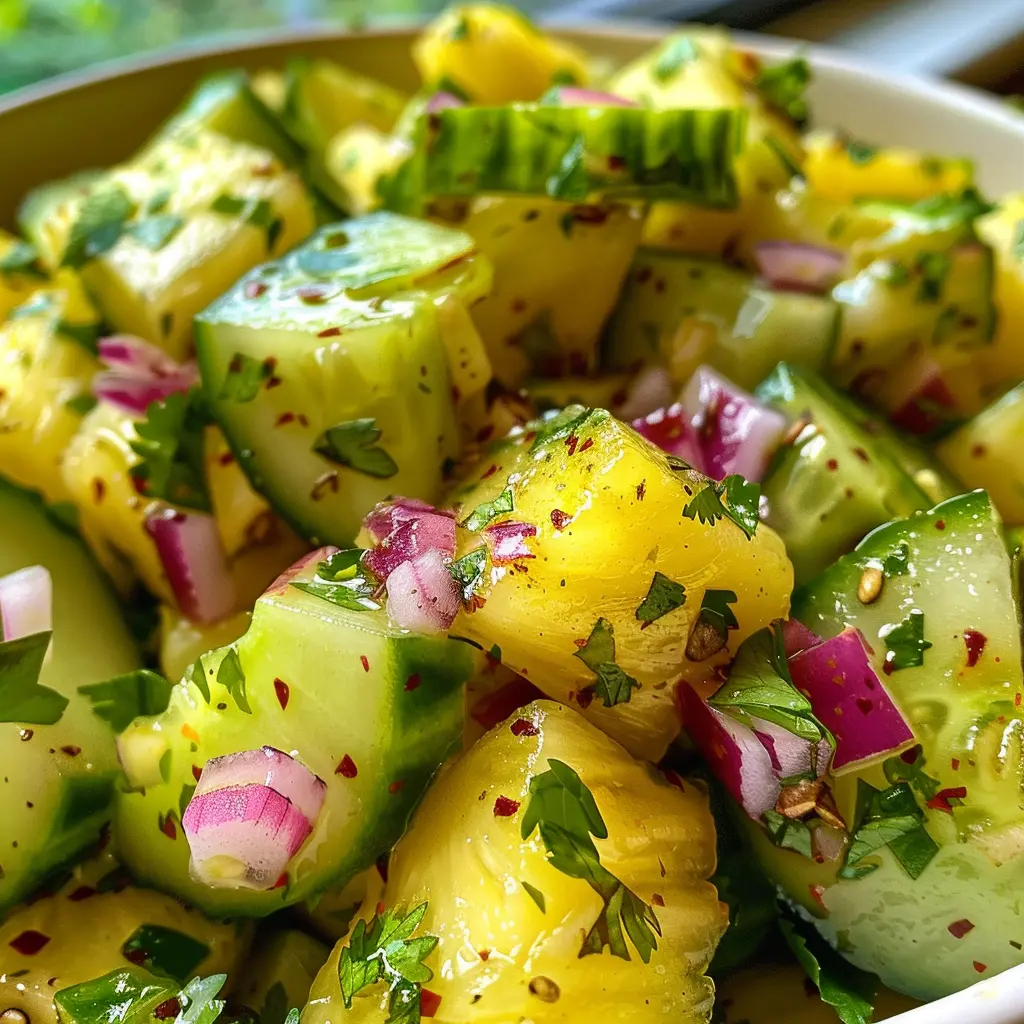
Pineapple cucumber salad combines juicy fresh pineapple, crisp cucumber, thinly sliced red onion, and cilantro in a lime and olive oil dressing with optional Tajín or chili flakes, then rests in the refrigerator just long enough for the dressing to integrate and the flavors to sharpen into something that tastes considerably more composed than a five-ingredient salad assembled in 10 minutes has any right to be.
| Detail | Info |
|---|---|
| Prep Time | 10 minutes |
| Chill Time | 15 minutes |
| Total Time | 25 minutes |
| Servings | 4 to 6 |
| Difficulty | Easy |
| Cuisine | American / Latin-Inspired |
Why This Recipe Works
The combination of pineapple and cucumber is rooted in a genuine flavor relationship, not just visual variety. Pineapple is sweet and very acidic, with a tropical brightness that’s bold and attention-getting. Cucumber is mild, slightly vegetal, and very cooling — almost neutral in flavor but crisp and refreshing in texture. Together, the pineapple’s sweetness and acidity animate the cucumber, and the cucumber’s mildness and crunch temper the pineapple’s intensity. Neither ingredient is complete on its own for this application; together they create the sweet-cool-crunchy balance that makes this salad so refreshing.
The 10 to 15 minute chill in the refrigerator before serving is the step that most distinguishes a good version of this salad from a mediocre one. During that time, the salt in the dressing draws a small amount of moisture from the pineapple and cucumber and the lime juice penetrates the outer layer of each piece, seasoning the salad from within rather than just coating the surface. The red onion mellows in the acid of the lime juice, losing its raw sharpness and becoming milder and more pleasant. By the time the salad reaches the table, all the flavors have had a chance to meld into a cohesive whole rather than tasting like their separate components tossed together.
Fresh lime juice is specifically what makes the dressing work. Bottled lime juice lacks the fragrant, volatile aromatics that make fresh lime so bright and distinctive, and those aromatics are exactly what lifts this simple dressing above a plain acidic coating. A tablespoon of freshly squeezed lime over this combination of pineapple, cucumber, and cilantro is the difference between a dressing that tastes like citrus acid and one that tastes like summer. Always use fresh.
Red onion rather than white or yellow onion is the right choice for this salad on two counts. Red onion has a sharper, more pungent raw flavor than white or yellow onion, but it mellows quickly in lime juice during the chill period into a pleasantly mild, slightly sweet sharpness. White or yellow onion stays more aggressively raw-tasting for longer. Red onion’s color also adds visual contrast to the pale pineapple and green cucumber, contributing the kind of vibrant, multi-colored presentation that makes a salad look as fresh as it tastes.
Tajín or chili flakes is the optional addition that takes this salad from pleasant to genuinely exciting. Tajín’s combination of dried chile, lime, and salt echoes and amplifies the dressing’s existing lime flavor while adding a mild, warming heat that creates a lingering finish the plain dressing lacks. The heat from chile against the sweetness of pineapple is one of the most universally appealing flavor contrasts in Mexican and Latin cooking — it makes sweet things taste sweeter and heat more interesting. Even a light dusting over the finished salad changes the eating experience meaningfully.
Ingredients
| Ingredient | Quantity | Notes |
|---|---|---|
| Fresh pineapple, cubed | 2 cups | Ripe and fragrant; the sweetness of the pineapple defines the salad |
| Cucumber, sliced | 1 cup | Persian or English cucumbers; thinner skin and fewer seeds than regular cucumbers |
| Red onion, thinly sliced | 1/4 cup | Sliced as thin as possible; mellows in the lime juice during the chill |
| Fresh cilantro, chopped | 2 tablespoons | Adds herbal brightness; substitute flat-leaf parsley or mint if preferred |
| Fresh lime juice | 1 tablespoon | Freshly squeezed only; about half a lime |
| Olive oil | 1 tablespoon | Rounds out the dressing and helps it coat the fruit and vegetables |
| Salt | 1/2 teaspoon | Seasons and draws a small amount of moisture from the fruit during the chill |
| Black pepper | 1/4 teaspoon | Freshly cracked adds a subtle warmth |
| Chili flakes or Tajín seasoning (optional) | 1/4 teaspoon | Adds heat and tang that contrasts beautifully with the sweet pineapple |
Step-by-Step Instructions
Phase 1: Prepare the Salad
- Cut the pineapple into roughly three-quarter-inch cubes — large enough to provide a satisfying bite of fruit but small enough to be coated by the dressing rather than just glazed on the surface. If the pineapple is very juicy, allow the cubes to drain briefly on paper towels to prevent the salad from becoming watery.
- Slice the cucumber into rounds or half-moons about a quarter inch thick. Persian or English cucumbers can be sliced without peeling; regular cucumbers benefit from peeling and deseeding if the seeds are large and watery.
- Slice the red onion as thinly as possible — ideally translucent-thin. Thick slices of raw onion in a fresh salad are aggressive and unpleasant; paper-thin slices are mild and elegant. A sharp mandoline produces the best results; a very sharp knife and patience produces a close second.
- Combine the pineapple, cucumber, red onion, and chopped cilantro in a large bowl.
Phase 2: Dress and Rest
- In a small bowl, whisk together the fresh lime juice, olive oil, salt, black pepper, and chili flakes or Tajín if using until the salt is dissolved and the dressing is cohesive.
- Pour the dressing over the salad and toss gently until everything is evenly coated. Handle the pineapple gently — aggressive tossing breaks down the cubes and produces a mush rather than distinct pieces with texture.
- Refrigerate for 10 to 15 minutes before serving. This chill time is the step that integrates the flavors and mellows the onion — don’t skip it.
- Toss gently once more before serving to redistribute any dressing that has settled at the bottom of the bowl. Taste and adjust seasoning — add a squeeze more lime if it needs brightness, a pinch more salt if it tastes flat, or a dusting of Tajín on top for extra heat and visual appeal.
Chef Tips for Perfect Results
Use perfectly ripe pineapple. The pineapple is the dominant flavor in this salad and there’s nothing in the dressing that can compensate for an underripe one. A ripe pineapple smells fragrant and tropical at the base, yields slightly when pressed, and has a base that pulls away a leaf easily. An underripe pineapple is firm, pale, and tastes more sour than sweet. At the peak, it produces a salad that’s genuinely sweet and vibrant.
Slice the red onion as thin as possible. The difference between thin-sliced and thick-sliced red onion in a fresh salad is significant. Thick pieces are sharp, crunchy, and dominate every bite they appear in. Paper-thin slices soften quickly in the lime juice and become mild, slightly sweet, and unobtrusive — present in the background rather than competing with the pineapple.
Don’t skip the chill period. The 10 to 15 minutes seems short but it’s when the salad transforms from assembled ingredients into a cohesive dish. The lime juice penetrates the fruit, the salt draws out moisture that thins the dressing and seasons everything from within, and the onion mellows. Served immediately after tossing, the salad tastes disjointed. After the chill, it tastes finished.
Add avocado for creaminess. A diced ripe avocado folded gently into the salad just before serving adds a creamy, buttery richness that contrasts beautifully with the sweet pineapple and cool cucumber. Avocado added during the chill period will oxidize and discolor — always add it at the last minute.
Use Tajín rather than plain chili flakes for the best result. Tajín already contains lime and salt in its blend, which means it echoes and amplifies the dressing’s existing flavor rather than adding an entirely different flavor profile. Plain chili flakes add heat and slightly fruity pepper flavor, which also works well but doesn’t integrate quite as seamlessly.
Common Mistakes to Avoid
Using canned pineapple. Canned pineapple has been cooked during the canning process, which softens its texture and mutes its bright, aromatic flavor. Fresh pineapple has a firmer texture that holds up in a salad and a more complex, tropical sweetness. The difference in this recipe is immediately perceptible.
Not letting the salad rest before serving. A freshly tossed salad and one that’s rested in the dressing for 15 minutes are noticeably different — the rested version has integrated, cohesive flavors; the fresh version tastes like ingredients. The 15 minutes is the minimum; up to 30 minutes produces an even better result.
Overdressing the salad. This is a fresh, light salad and the dressing is deliberately minimal. A tablespoon each of lime juice and olive oil coats the salad with brightness and richness without drowning it. Adding significantly more dressing produces something closer to a fruit soaked in vinaigrette than a crisp, refreshing salad.
Using bottled lime juice. Bottled lime juice is flat, slightly bitter, and lacks the volatile aromatics that make fresh lime so bright and effective in a dressing. One fresh lime takes 30 seconds to cut and squeeze. Always use fresh.
Cutting the cucumber too thin. Very thin cucumber slices become limp and lose their refreshing crunch within minutes of being dressed. A quarter-inch slice holds its texture through the chill period and retains the crispness that makes cucumber such a useful contrast to the soft pineapple.
Variations and Substitutions
Add mango: Replace half the pineapple with fresh mango for a more complex tropical flavor with a creamier texture and less acidity. Mango and cucumber is a classic pairing in many Latin and Southeast Asian salads.
Add jalapeño: Finely dice half a seeded jalapeño and toss it with the other salad ingredients for fresh, vegetal heat that builds slowly through the salad. The jalapeño’s brightness pairs better with the fresh lime and pineapple than dried chili flakes in this application.
Mint instead of cilantro: Fresh mint adds a cooling, slightly sweet herbal note that works beautifully with the cucumber and pineapple combination. It’s the better choice for people who dislike cilantro and also produces a slightly more Southeast Asian-inspired flavor profile.
Add shrimp: Season and sear large shrimp, cool them slightly, and serve them over the salad for a light, summery main course. The lime and cilantro dressing doubles as a natural accompaniment for the shrimp.
Serving Suggestions
Serve cold from the refrigerator in a shallow bowl or on a platter with a dusting of extra Tajín or chili flakes and a few cilantro leaves scattered over the top. This salad pairs naturally with grilled chicken, fish tacos, pulled pork, or any grilled meat where a fresh, acidic side is the right complement. At a barbecue or picnic it works alongside heavier, richer dishes as a palate cleanser between bites of something more substantial. It’s also excellent spooned over grilled fish or shrimp as a relish-style topping.
Storage
Refrigerator: Store covered for up to 2 days. The salad continues to soften as it sits — the cucumber loses some of its crunch by day two, and the pineapple releases more juice, making the dressing thinner. It remains delicious but is at its textural best on the day it’s made, ideally within a few hours of the initial chill.
Do not freeze. Pineapple and cucumber both lose their texture completely when frozen and thawed.
Nutritional Information
| Nutrient | Per Serving (approx., based on 5 servings) |
|---|---|
| Calories | 80 |
| Protein | 1g |
| Carbohydrates | 14g |
| Fat | 3g |
| Saturated Fat | 0g |
| Fiber | 1g |
| Sugar | 10g |
| Sodium | 240mg |
Nutritional values are estimates based on standard ingredients without optional Tajín or chili flakes.
FAQ
Can I use frozen pineapple?
Thawed frozen pineapple is softer and releases significantly more juice than fresh, which makes the salad watery and produces a different texture. If fresh pineapple isn’t available, drain the thawed frozen pineapple very thoroughly and blot with paper towels before using. The flavor will be acceptable but the texture won’t match fresh.
How do I make this less sweet?
Use slightly underripe pineapple, which is more tart than sweet. Add extra lime juice to increase the acidity relative to the sweetness. Increase the Tajín or chili flakes to add heat that subjectively reduces the perception of sweetness. Adding cucumber in a higher ratio to pineapple (1.5 cups cucumber to 1.5 cups pineapple) dilutes the sweetness without changing the recipe significantly.
What’s the best cucumber for this salad?
Persian cucumbers are the best choice — they’re small, thin-skinned, have minimal seeds, and are consistently crisp. English cucumbers are a close second and more widely available. Both can be used with the skin on. Regular American cucumbers have a tougher skin and larger, more watery seeds that should be peeled and removed before using in a fresh salad.
Can I make this salad a day ahead?
The salad can be assembled and refrigerated up to 4 hours before serving with good results. Beyond that, the cucumber loses its crunch and the pineapple releases enough juice to dilute the dressing significantly. For the best texture, prepare the components ahead and toss with the dressing 15 to 30 minutes before serving.
How do I reduce the sharpness of the raw red onion?
Two quick techniques: soak the sliced onion in cold water for 10 minutes, then drain and pat dry before adding to the salad. This draws out the pungent sulfur compounds responsible for raw onion’s sharpness without removing its flavor. Alternatively, the lime juice in the dressing mellows the onion significantly during the 15-minute chill — slicing thinly and allowing the full chill time achieves most of the softening effect without any pre-soaking.
Conclusion
Pineapple cucumber salad is the recipe that earns a regular spot in the summer meal rotation not because it’s complex but because it’s exactly right — sweet, cool, crisp, tangy, and optionally spiced with heat that makes it impossible to eat just one serving of. Ten minutes to make, fifteen minutes to rest, and it brings something genuinely refreshing to whatever table it’s served on.