
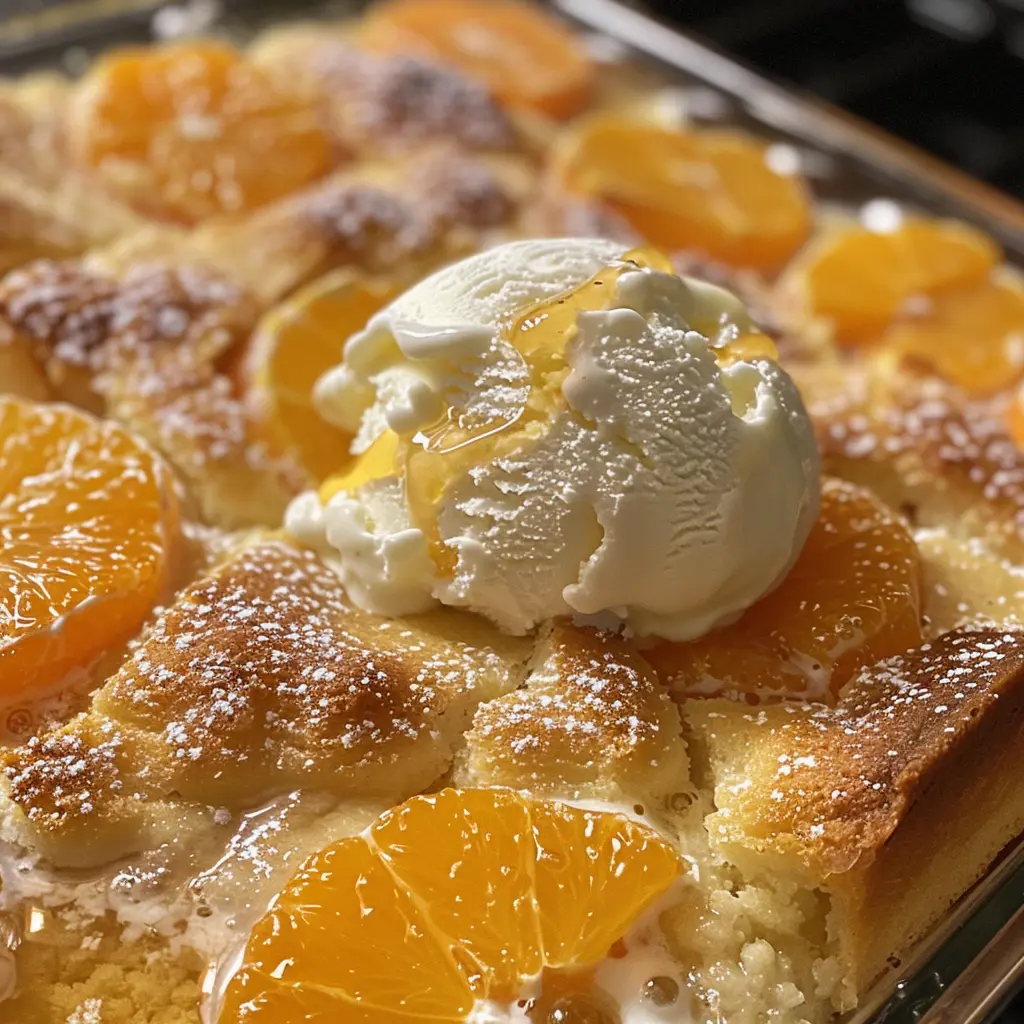
Orange creamsicle dump cake layers mandarin oranges, vanilla pudding mix, dry vanilla cake mix, orange soda, and melted butter in a baking dish without a single bowl or a single stir, then bakes into something that tastes unmistakably like a creamsicle in warm, golden, soft dessert form. The orange soda hydrates the cake mix from below, the vanilla pudding thickens and enriches the orange layer, and the butter creates the golden, slightly crisp top crust that makes dump cake one of the most satisfying and deceptively simple desserts in existence.
| Detail | Info |
|---|---|
| Prep Time | 5 minutes |
| Bake Time | 40 to 45 minutes |
| Total Time | 50 minutes |
| Servings | 12 |
| Difficulty | Easy |
| Cuisine | American |
Why This Recipe Works
Orange soda replacing the water that a standard boxed cake mix would call for is the central flavor decision that produces the creamsicle character this cake is named for. Orange soda is sweet, brightly citrusy, and intensely orange-flavored in a way that’s more concentrated and more distinctly orange than orange juice. It also contains carbonation that, when poured over the dry cake mix, creates small bubbles that begin breaking down the dry powder and distributing liquid more evenly than still water would during the pour stage. As the soda bakes into the cake mix layer, its orange flavor permeates the entire topping, producing a vanilla-orange combination in the cake layer that reads immediately as creamsicle.
The vanilla pudding mix layer between the oranges and the cake mix is the ingredient that transforms this from a straightforward fruit dump cake into something with a more complex, creamy interior. Instant pudding mix contains modified food starch and other thickeners that, when they absorb moisture from the oranges below and the soda above, swell and create a thicker, more custard-like middle layer between the fruit and the cake. This layer has a texture closer to a creamy filling than either plain fruit or cake, and it’s the component most responsible for the “cream” part of the creamsicle flavor combination — it bridges the orange fruit layer and the vanilla cake layer in both texture and taste.
Mandarin oranges are the right choice over fresh or canned regular oranges for several reasons. Mandarins are sweet, tender, and seedless with no fibrous membrane to contend with, which means they soften fully and become almost jammy during the bake without any unpleasant texture. Regular orange segments have a thicker membrane that stays slightly chewy and can produce a stringy texture in the finished dessert. Canned mandarins are already sweet and processed to the right tenderness, draining easily and distributing in an even layer that produces consistent results across the full 9×13 dish.
The layer order in this dump cake is not arbitrary — it’s the sequence that produces the right result through the laws of liquid movement in a hot oven. Oranges at the bottom provide the fruit base and moisture foundation. Pudding mix on top of the oranges absorbs the orange juice released by the fruit and creates the creamy middle layer. Dry cake mix on top of the pudding provides the cake structure and absorbs liquid from below and the soda poured above. Orange soda poured over the cake mix begins hydrating it from the top. Butter drizzled over everything seals the surface and promotes browning. Each layer has a specific relationship with the layers above and below it, and the oven heat drives liquid upward from the fruit while the butter seals the surface — producing the characteristic dump cake texture zones without any mixing.
Drizzling rather than pouring the melted butter is the technique that produces more even coverage and a more uniformly golden crust. Butter poured in one spot pools and creates a very buttery area surrounded by dry, pale areas. Drizzled in a back-and-forth motion across the entire surface of the cake mix, the butter distributes more evenly and ensures the entire top crust browns uniformly during baking. Any dry patches of cake mix visible after the butter is applied will stay powdery rather than crisping into the golden crust the rest of the top achieves.
Ingredients
| Ingredient | Quantity | Notes |
|---|---|---|
| Canned mandarin oranges, drained | 2 cans (about 15 oz each) | Drain well; excess liquid makes the bottom layer watery |
| Vanilla instant pudding mix | 1 package (3.4 oz) | Dry, straight from the box — do not prepare; sprinkled between the fruit and cake mix |
| Vanilla cake mix | 1 box (15.25 oz) | Dry, straight from the box — do not prepare; this is a dump cake |
| Orange soda | 1 can (12 oz) | Poured slowly over the dry cake mix to hydrate it |
| Butter, melted | 1/4 cup (half stick) | Drizzled evenly over the top for the golden crust |
Step-by-Step Instructions
Phase 1: Layer the Dish
- Preheat the oven to 350 degrees F. Grease a 9×13-inch baking dish with cooking spray or butter.
- Drain both cans of mandarin oranges thoroughly and spread them in an even layer across the bottom of the prepared dish. Pat gently with a paper towel if they seem very wet — excess liquid from the cans can make the bottom layer too soupy.
- Sprinkle the dry vanilla pudding mix evenly over the oranges, covering them completely.
- Sprinkle the dry vanilla cake mix evenly over the pudding layer, spreading it gently with the back of a spoon to an even depth. Do not stir any of the layers together.
- Slowly pour the orange soda over the entire surface of the dry cake mix, moving the can in a back-and-forth motion to distribute it as evenly as possible. The soda will bubble as it hits the dry mix — this is normal and part of the process. Some areas may look wetter than others immediately after pouring; they will even out during baking.
- Drizzle the melted butter over the entire surface in a back-and-forth pattern, covering as much of the surface as possible. Check for dry white patches of cake mix and drizzle a little extra butter over any areas that didn’t receive coverage.
Phase 2: Bake and Serve
- Bake for 40 to 45 minutes until the top is golden brown and the filling is visibly bubbling around the edges and through any gaps in the crust. The bubbling is the reliable indicator that the fruit layer is hot and the dump cake is done — check for it at the 40-minute mark.
- Allow to cool for at least 10 minutes before scooping. The bubbling filling is very hot directly from the oven and needs time to settle from its liquid state into the jammy, scoopable consistency that makes this dessert so satisfying. Serve warm with vanilla ice cream or whipped cream.
Chef Tips for Perfect Results
Cover dry patches with butter. After drizzling the butter, look across the surface of the dish — any visible white area of dry cake mix that the butter didn’t reach will stay powdery rather than crisping into the golden crust. Use a pastry brush or a small spoon to push pooled butter from well-covered areas into the dry patches before it goes in the oven.
Pour the soda slowly. Dumping the entire can of orange soda in one pour creates a cascade that pushes the cake mix to one end of the dish. A slow, even pour distributed across the whole surface keeps the layers as even as possible before baking moves everything around anyway.
Serve with vanilla ice cream for the full creamsicle experience. Warm orange creamsicle dump cake alongside cold vanilla ice cream recreates the exact temperature and flavor contrast of the childhood ice cream bar the dessert is inspired by. The ice cream melts slightly into the warm cake and produces a combination that’s greater than either component alone.
Let it cool the full 10 minutes. The orange layer directly from the oven is liquid and will run off the spoon. After 10 minutes it settles into the thick, jam-like consistency that scoops cleanly and holds its shape in a bowl. The cake layer also firms slightly during cooling.
Add orange zest for extra citrus intensity. Scatter the zest of one orange over the mandarin layer before adding the pudding mix for a burst of fresh, concentrated orange fragrance that amplifies the creamsicle flavor throughout the finished dessert.
Common Mistakes to Avoid
Preparing the pudding or cake mix before adding. Both the pudding mix and the cake mix go in dry, straight from the package. This is the entire point of dump cake — the dry mixes hydrate during baking from the fruit moisture and liquid poured over the top. Prepared pudding would be too wet and would produce a soggy, undifferentiated result.
Stirring the layers together. The distinct layering is what creates the dump cake’s characteristic texture zones — bubbling fruit filling on the bottom, soft pudding-cake middle, golden crust on top. Stirring before baking eliminates the layering and produces an even, dense, unremarkable result.
Not draining the oranges well enough. Excess liquid from the mandarin cans pools in the bottom of the dish and can make the orange layer too watery, preventing the pudding mix from thickening it properly. Drain thoroughly and blot with paper towels if needed.
Pulling it from the oven before it’s bubbling. A dump cake that looks golden on top but isn’t bubbling from the edges and through the crust hasn’t had enough time for the fruit layer to cook through and the pudding to set. The bubbling is the reliable doneness cue — time alone isn’t enough.
Serving immediately from the oven. The filling is molten at oven temperature and pours off the spoon rather than scooping. The 10-minute cooling rest is when it sets to its ideal consistency.
Variations and Substitutions
Lemon creamsicle version: Replace the mandarin oranges with a 20 oz can of lemon pie filling, use lemon-lime soda instead of orange soda, and add a teaspoon of lemon zest over the fruit layer. The lemon version has a sharper, more tart character that works beautifully with the vanilla cake and pudding layers.
Pineapple creamsicle version: Replace the mandarin oranges with a 20 oz can of crushed pineapple (with juice, not drained) and use cream soda instead of orange soda. The pineapple version tastes tropical and slightly caramelized from the pineapple’s sugars.
Strawberry soda version: Replace the orange soda with strawberry soda for a strawberry-vanilla creamsicle character. Combine with the mandarin oranges or replace them with sliced fresh strawberries for a more summery variation.
Add cream cheese dollops: Drop small spoonfuls of softened cream cheese over the pudding layer before the cake mix goes on top. They melt during baking into small pockets of tangy richness distributed through the dessert that amplify the creamsicle cream flavor.
Serving Suggestions
Serve warm, scooped into bowls with a generous scoop of vanilla ice cream or a dollop of freshly whipped cream alongside. The vanilla cream against the warm orange dessert is the complete creamsicle combination. For a potluck or gathering, this travels well in the baking dish and reheats easily at the destination. Serve with a large spoon directly from the dish.
Storage and Reheating
Refrigerator: Store covered for up to 4 days. The texture continues to set as it cools and day-two dump cake often has a firmer, more defined texture than day-one.
Reheating: Individual portions reheat well in the microwave for 30 to 45 seconds. The full dish can be warmed in a 300 degree F oven covered with foil for 15 to 20 minutes. Serve with fresh ice cream or whipped cream after reheating.
Freezer: Freezes reasonably well for up to 2 months. The orange layer texture changes slightly after thawing but the flavor remains very good. Thaw overnight in the refrigerator before reheating.
Nutritional Information
| Nutrient | Per Serving (approx.) |
|---|---|
| Calories | 290 |
| Protein | 2g |
| Carbohydrates | 55g |
| Fat | 7g |
| Saturated Fat | 3g |
| Fiber | 1g |
| Sugar | 38g |
| Sodium | 320mg |
Nutritional values are estimates based on standard ingredient brands without ice cream or whipped cream. Values will vary based on specific cake mix and pudding brands used.
FAQ
Why is it called a dump cake?
The name refers directly to the method: you dump the ingredients into the pan in layers without mixing, stirring, or preparing them into a batter first. The term has been used for this category of American no-mix baked dessert since at least the 1980s, and it accurately describes the simplicity of the technique even if it doesn’t do justice to how good the result actually tastes. No bowls, no beaters, no batter — just layers and a hot oven.
Can I use diet soda or a different flavor?
Diet soda works but produces a slightly different flavor — the artificial sweeteners can have a noticeable aftertaste in a baked application that regular soda doesn’t have. Any citrus-flavored soda (orange, mandarin orange, citrus blend) works well in place of orange soda. Cream soda produces a vanilla-forward result that pairs beautifully with the mandarin oranges for a different but equally delicious version.
Do I need to use name-brand ingredients?
No. Store-brand mandarin oranges, generic vanilla cake mix, store-brand vanilla pudding mix, and any orange soda all produce excellent results. The specific brands listed in the original recipe are just what many home cooks have on hand — the category matters more than the brand.
Why is there still dry cake mix on top after baking?
Dry spots on top mean those areas didn’t receive enough butter or soda to hydrate during baking. The butter drizzle needs to cover the entire surface — any patch that stays dry produces powdery, uncooked-tasting cake mix in the finished dessert. Ensure thorough butter coverage before baking, and if dry spots appear at the end of baking, drizzle a small amount of additional melted butter over them and return to the oven for 3 to 5 minutes.
Can I make this ahead and bake it later?
Yes, up to about an hour ahead. Layer the dish, cover, and refrigerate. Bake from cold, adding 5 minutes to the bake time. Don’t assemble much further in advance than this — the soda will continue to hydrate the cake mix in the refrigerator and can produce a soggy, dense result if it sits for hours before baking.
Conclusion
Orange creamsicle dump cake is the dessert that proves convenience and deliciousness are not mutually exclusive. Five ingredients, five minutes of prep, one pan, and 45 minutes in the oven produces a warm, golden, citrusy dessert that tastes unmistakably like a creamsicle and disappears from the table as quickly as you can set it down. Serve it warm with vanilla ice cream and watch it become someone’s new favorite dessert.