
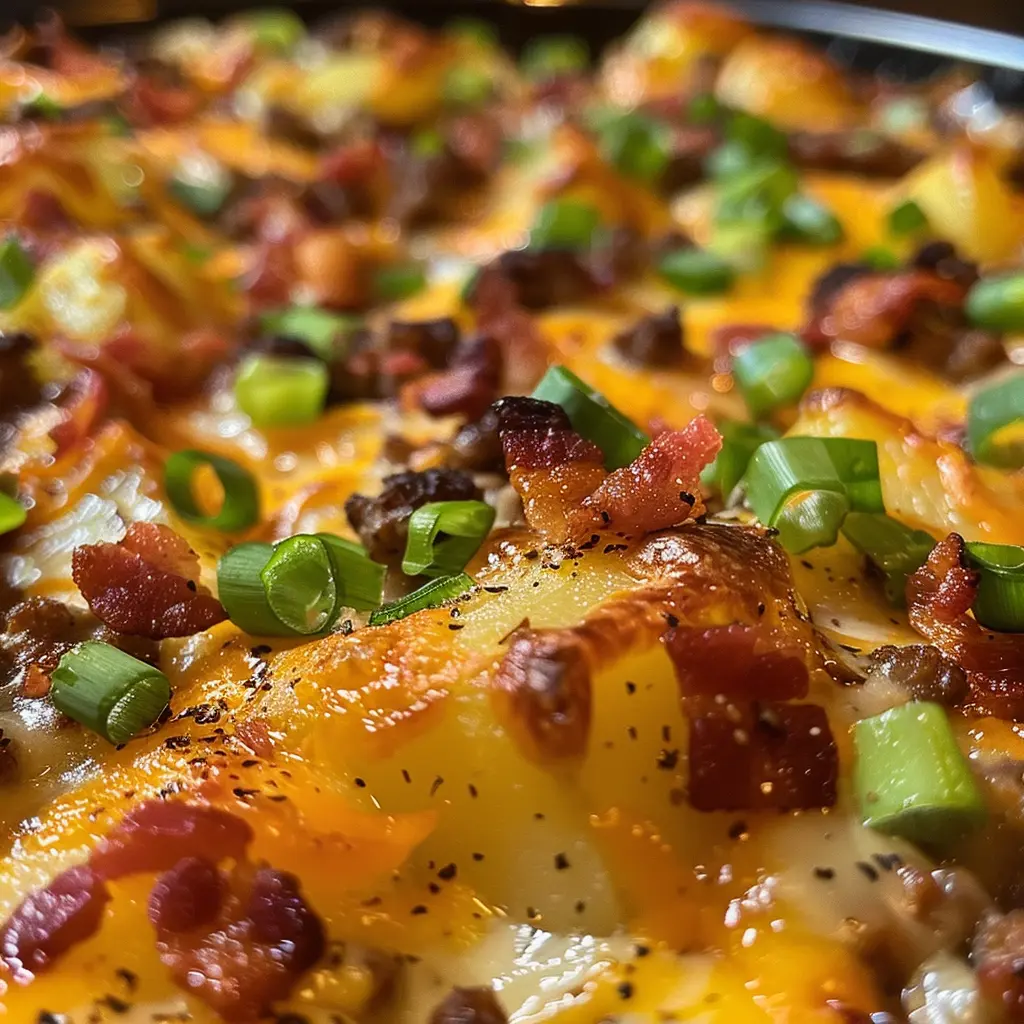
Loaded cheeseburger potato casserole combines seasoned ground beef, par-boiled diced potatoes, and a creamy cheddar and sour cream sauce in a baking dish, tops everything with more shredded cheddar and crumbled bacon, and bakes until hot, bubbly, and golden. Every component of a loaded cheeseburger — the beef, the cheese, the bacon, the creamy sauce — is present in a single casserole that feeds eight and reheats as well as it bakes the first time.
| Detail | Info |
|---|---|
| Prep Time | 20 minutes |
| Bake Time | 30 to 35 minutes |
| Total Time | 55 minutes |
| Servings | 6 to 8 |
| Difficulty | Easy |
| Cuisine | American |
Why This Recipe Works
Par-boiling the potatoes for 8 to 10 minutes before they go into the casserole is the technique that ensures they’re properly cooked in the finished dish without requiring a longer bake time that would dry out the beef and overcook the cheese topping. Raw diced potatoes need significantly more than 30 to 35 minutes at 375 degrees F to cook through when surrounded by a thick cream sauce — the insulating effect of the sauce slows heat transfer to the potato interior. Par-boiled potatoes that are just tender going into the dish finish cooking fully in the oven bake, absorbing the cheesy sauce around them and arriving at the table soft and flavorful throughout rather than firm and starchy in the center.
Combining the cream of cheddar soup, sour cream, milk, and most of the shredded cheddar into a unified sauce before the beef and potatoes are added ensures every component ends up evenly coated rather than some bites being rich and cheesy and others dry. A sauce mixed separately and then poured over solid components that have already been placed in the baking dish distributes unevenly — it pools in the gaps and doesn’t reach the pieces it needs to coat. Mixing the beef and potatoes into the sauce in a bowl produces a uniformly coated, cohesive mixture where every piece has the same cheese-to-filling ratio before it even reaches the baking dish.
Cream of cheddar soup as the base of the sauce produces a cheesier, more intensely flavored result than cream of mushroom soup in this particular recipe. Both work — cream of mushroom produces a milder, earthier sauce that lets the beef and bacon flavors lead. Cream of cheddar amplifies the cheddar cheese already in the sauce and produces a dish where the cheese flavor is the unmistakable dominant note, which is precisely what a recipe called cheeseburger casserole should deliver. The soup is used undiluted, which keeps the sauce thick enough to coat the potatoes and beef without becoming watery during the bake.
Sour cream in the sauce adds tangy richness that lifts the heavy cheddar and cream soup base and keeps the finished casserole from tasting one-dimensionally rich. Without the sour cream, the sauce is all fat and salt — satisfying but slightly flat. The sour cream’s lactic acid cuts through the heaviness and adds a subtle tang that makes the whole dish taste more balanced and brighter than the ingredient list suggests. It also contributes a creaminess that’s slightly different from the soup’s texture — together they produce a sauce that’s richer and more complex than either alone.
Bacon on top rather than mixed throughout the casserole is the choice that preserves the bacon’s texture through the bake. Bacon folded into the mixture before baking becomes soft and integrated, losing its crispness and much of its distinct texture in the surrounding sauce. Bacon crumbled over the top goes into the oven exposed to dry heat, stays relatively crisp, and provides a textural contrast to the soft, creamy filling below it. The visual contrast of the golden bacon against the melted cheddar also makes the finished casserole look considerably more appealing than a uniform surface would.
Ingredients
| Ingredient | Quantity | Notes |
|---|---|---|
| Ground beef | 1.5 pounds | 80/20 for flavor; drain excess fat after browning |
| Medium potatoes, peeled and diced | 6 | Russet or Yukon Gold; par-boiled until just tender before combining |
| Small onion, diced | 1 | Cooked with the beef until softened |
| Garlic cloves, minced | 2 | Added to the beef and onion during cooking |
| Cheddar cheese, shredded | 2 cups, divided | 1.5 cups into the sauce; 0.5 cup reserved for the topping |
| Sour cream | 1 cup | Full-fat; adds tang and richness to the sauce |
| Cream of cheddar or cream of mushroom soup | 1 can (10.5 oz) | Undiluted; the base of the creamy sauce |
| Milk | 1/2 cup | Thins the sauce to a coatable consistency |
| Bacon, cooked and crumbled | 6 slices | Cooked until crispy before crumbling; scattered over the top before baking |
| Garlic powder | 1 teaspoon | Stirred into the browned beef for seasoning |
| Onion powder | 1 teaspoon | Adds onion depth to the beef beyond the fresh onion |
| Salt and black pepper | To taste | The soup and cheese carry salt; taste before adding more |
| Green onions, chopped | Optional | Scattered over the finished casserole for color and freshness |
Step-by-Step Instructions
Phase 1: Prep the Potatoes and Beef
- Preheat the oven to 375 degrees F. Grease a 9×13-inch baking dish and set aside.
- Peel and dice the potatoes into roughly 3/4-inch cubes — consistent sizing ensures even cooking. Place in a pot of salted cold water, bring to a boil, and cook for 8 to 10 minutes until just tender when pierced with a fork. They should have slight resistance — not fully soft. Drain well and set aside.
- In a large skillet over medium heat, cook the ground beef, diced onion, and minced garlic together, breaking the beef into crumbles, until the beef is fully browned and the onion is soft. Drain the excess fat. Stir in the garlic powder, onion powder, salt, and black pepper.
Phase 2: Make the Sauce and Combine
- In a large bowl, whisk together the undiluted cream soup, sour cream, and milk until smooth. Add 1.5 cups of the shredded cheddar and stir to combine. Taste the sauce before the next step and adjust seasoning — it should be well-seasoned and noticeably cheesy.
- Add the drained par-boiled potatoes and the seasoned beef mixture to the bowl. Stir gently until everything is evenly coated in the cheese sauce.
Phase 3: Assemble and Bake
- Transfer the mixture to the prepared baking dish and spread evenly.
- Sprinkle the remaining half cup of cheddar evenly over the surface. Scatter the crumbled bacon over the cheese.
- Bake uncovered for 30 to 35 minutes until hot throughout, bubbling at the edges, and the cheese topping is melted and lightly golden.
- Garnish with chopped green onions immediately before serving if desired. Let stand for 5 minutes before scooping.
Chef Tips for Perfect Results
Don’t over-boil the potatoes. The single most important par-cooking step is stopping the potatoes while they still have slight resistance. Fully soft potatoes stirred into the cheese sauce and baked for 30 more minutes will be mushy and formless in the finished casserole. Just-tender potatoes finish perfectly in the oven and hold their shape while absorbing the surrounding sauce.
Cook the bacon until genuinely crispy. Bacon that’s only partially cooked before it goes on top of the casserole will become completely soft and chewy during the bake. Fully crisp bacon maintains more of its texture and snap through the oven time and provides the contrast the dish needs. Cook the bacon until it’s crispier than you’d normally serve it — it will soften slightly in the oven regardless.
Use sharp cheddar for the most pronounced cheese flavor. Mild cheddar produces a cheesy casserole that’s pleasant but understated. Sharp or extra-sharp cheddar delivers the bold, assertive cheese flavor the cheeseburger concept promises. Freshly shredded from a block melts more smoothly into the sauce than pre-shredded, which contains anti-caking agents that can produce a slightly grainy texture.
Add diced pickles or pickle juice for the full cheeseburger profile. Two tablespoons of diced dill pickles or a tablespoon of pickle brine stirred into the cheese sauce before combining with the beef and potatoes adds the tangy, briny note that a real cheeseburger always has and this casserole can replicate. It’s an optional addition that takes the cheeseburger theme from a naming decision to an actual flavor truth.
Let it stand 5 minutes before serving. The sauce is very fluid directly from the oven. A short rest allows it to firm slightly and produce scoopable portions that hold their shape on the plate rather than running together.
Common Mistakes to Avoid
Using raw potatoes. Raw potatoes won’t cook through the thick cheese sauce in 30 to 35 minutes at 375 degrees F. Always par-boil before combining with the other ingredients.
Not draining the beef fat. Excess rendered fat from 1.5 pounds of ground beef will make the cheese sauce greasy and produce an oily layer on top of the finished casserole. Always drain thoroughly after browning.
Mixing bacon into the casserole instead of topping. Bacon folded into the mixture loses its texture completely and becomes soft and indistinct. Always scatter crispy bacon over the top for the textural contrast that makes each bite more satisfying.
Covering the dish during baking. A covered bake prevents the cheese topping from developing its golden color and keeps the bacon from staying crisp. Bake uncovered the full time.
Over-seasoning before tasting the sauce. The cream soup and shredded cheddar both carry significant salt. Always taste the assembled sauce before adding any additional salt — the combination of ingredients often means very little extra salt is needed.
Variations and Substitutions
Add diced jalapeños: Two tablespoons of diced pickled jalapeños stirred into the sauce before combining adds a building heat that pairs naturally with the cheddar and bacon for a spicy cheeseburger version.
Add frozen corn or peas: A cup of thawed frozen corn or peas stirred into the mixture adds color, sweetness, and a slightly different texture that makes the casserole more varied in each bite. Both are classic casserole additions that work naturally with the beef and cheddar base.
Use ground turkey: Ground turkey substitutes well for beef for a leaner version. Season more assertively — an extra half teaspoon each of garlic powder and onion powder compensates for the milder flavor of turkey.
Add a breadcrumb topping: A quarter cup of panko breadcrumbs tossed with a tablespoon of melted butter and scattered over the cheese and bacon before baking creates a golden, crunchy crust that adds another textural layer to an already satisfying casserole.
Serving Suggestions
Serve directly from the baking dish with a large spoon, ensuring each portion gets plenty of the cheesy filling along with bacon and melted cheese from the top. Scatter green onions over the dish immediately before serving for color and a mild allium bite. Ketchup, mustard, or hot sauce on the side leans into the cheeseburger theme and gives each person at the table the condiment experience they’d expect. A simple green salad alongside provides a fresh counterpoint to the richness of the casserole.
Storage and Reheating
Refrigerator: Store covered for up to 4 days. The potatoes absorb additional sauce overnight and the flavors deepen — leftovers are particularly satisfying.
Reheating: Individual portions reheat well in the microwave in 60-second intervals. For the full dish, cover with foil and reheat in a 325 degree F oven for 20 to 25 minutes. A splash of milk stirred in before reheating restores the sauce consistency if it has thickened in the refrigerator.
Freezer: Freeze in portions for up to 2 months. The potato texture softens slightly after thawing but the flavor remains very good. Thaw overnight in the refrigerator before reheating.
Nutritional Information
| Nutrient | Per Serving (approx., based on 7 servings) |
|---|---|
| Calories | 560 |
| Protein | 34g |
| Carbohydrates | 32g |
| Fat | 32g |
| Saturated Fat | 15g |
| Fiber | 3g |
| Sodium | 820mg |
Nutritional values are estimates based on 80/20 ground beef and cream of cheddar soup. Values will vary based on specific soup and cheese brands used.
FAQ
Can I use frozen diced potatoes to skip the par-boiling step?
Yes. Thawed frozen diced potatoes or frozen hash browns are a practical shortcut that eliminates the par-boiling step entirely. Thaw completely and drain any excess moisture before combining with the cheese sauce and beef. The texture will be slightly softer than fresh par-boiled potatoes but the flavor difference in the finished casserole is minimal.
Can I make this ahead and bake it the next day?
Yes. Assemble the casserole through step 7 — everything in the dish with the cheese and bacon on top — cover tightly, and refrigerate overnight. Bake the next day directly from the refrigerator, adding 10 minutes to the bake time. Hold off on the green onion garnish until just before serving.
What’s the best potato variety for this casserole?
Russet potatoes par-boil quickly, hold their shape well during the oven bake, and have a fluffy, absorbent interior that soaks up the cheese sauce. Yukon Gold potatoes produce a slightly creamier, more buttery result and hold their shape even better than russets. Both are excellent — the choice comes down to preference. Waxy red potatoes hold their shape very firmly but don’t absorb the surrounding sauce as readily, producing a distinct potato texture rather than the integrated result russets and Yukons achieve.
Can I add other vegetables?
Yes. Diced bell pepper sauteed with the beef and onion adds color and mild sweetness. Frozen peas, corn, or broccoli florets (thawed and drained) stirred in with the potatoes add variety and nutrition without significantly changing the dish’s character. Avoid vegetables that release a lot of moisture during baking, like zucchini or tomatoes, as they can water down the cheese sauce.
How do I get the cheese topping to brown more?
If the cheese is melted but hasn’t developed enough color in the 30 to 35 minute bake, switch the oven to broil on high for 2 to 3 minutes at the end — watch it constantly, as the transition from golden to scorched happens in under a minute under the broiler. Alternatively, increase the oven temperature to 400 degrees F for the last 5 minutes of baking for more aggressive browning without the risk of the broiler burning the edges.
Conclusion
Loaded cheeseburger potato casserole is the weeknight dinner that delivers on its name completely — every bite has the beef, cheese, bacon, and creamy richness the title promises, in a format that feeds a crowd, reheats beautifully, and takes under an hour from start to table. It’s the kind of casserole that empties the baking dish without leftovers making it to the next day, and the kind of recipe that gets added to the regular rotation after the first time it’s made.