
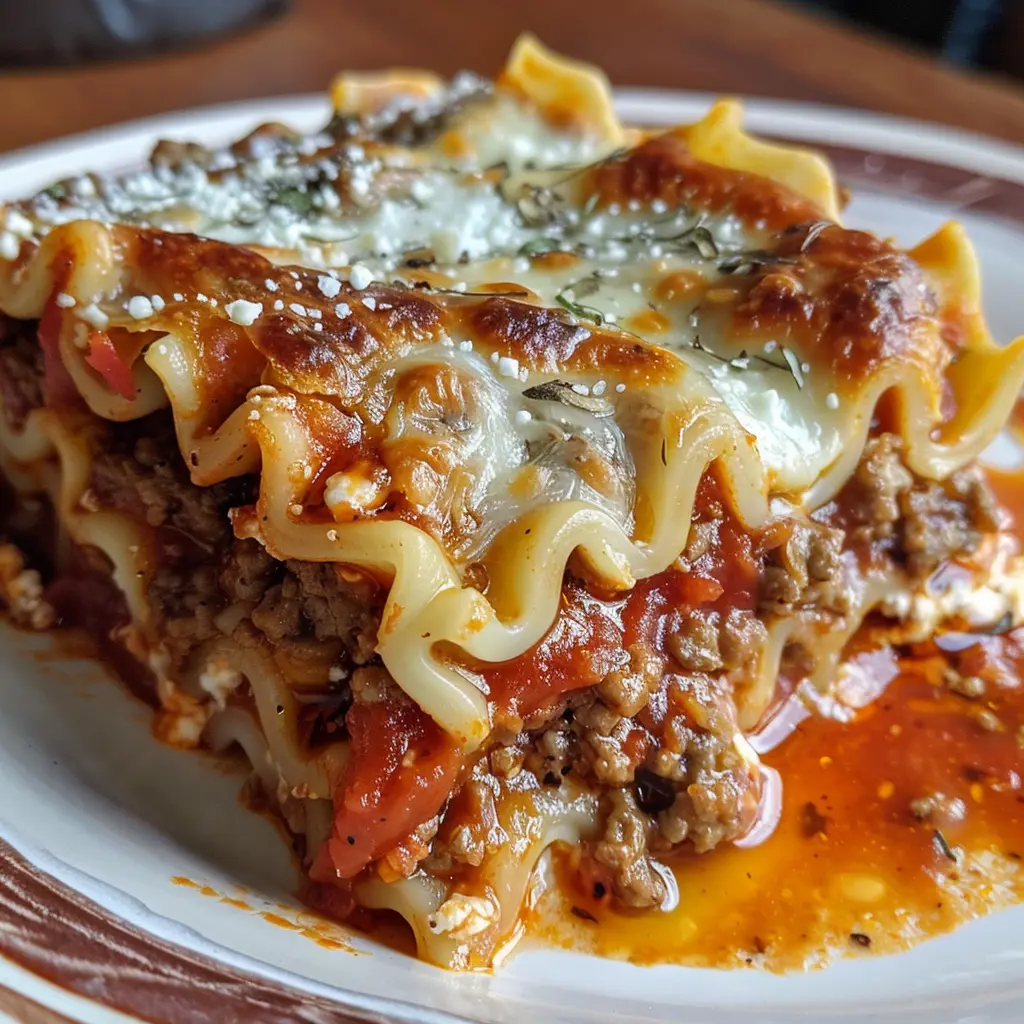
Slow-cooker meat-stuffed lasagna rolls spread a savory ground beef, ricotta, Parmesan, and mozzarella filling across cooked lasagna noodles, roll each one tightly, nestle them seam-side down in a slow cooker lined with marinara, cover with more sauce and mozzarella, and cook on low for three to four hours. The result is a dinner that has all the comfort and flavor of a full lasagna, comes to the table in tidy individual portions, and spent the afternoon cooking itself while you did something else entirely.
| Detail | Info |
|---|---|
| Prep Time | 25 minutes |
| Cook Time | 3 to 4 hours on Low |
| Total Time | 3 hours 25 minutes |
| Servings | 6 |
| Difficulty | Medium |
| Cuisine | Italian-American |
Why This Recipe Works
Rolling the filling into individual noodles rather than layering everything in a baking dish solves the most common lasagna serving problem: uneven portions. A standard layered lasagna sliced into squares gives some people edge pieces with more crust and less filling, others interior squares with more filling and softer noodles, and the presentation varies from serving to serving. Lasagna rolls produce identical individual portions — each roll contains the same amount of filling, the same amount of noodle, and the same exposure to the surrounding marinara. Every person at the table gets the same experience, and the serving process is simply lifting rolls from the slow cooker rather than cutting uneven squares and hoping they hold together.
Incorporating the ground beef directly into the ricotta filling rather than using it as a separate layer produces a filling where the beef and cheese are fully integrated. A separate beef layer in a lasagna roll would slide out when the roll is picked up or cut, since there’s nothing binding it to the cheese layer above it. Ground beef crumbles mixed into the ricotta bind with the egg and cheese proteins and become part of a cohesive, scoopable filling that stays inside the roll through the cooking process and through serving. The filling can be cut through cleanly and every cross-section shows the beef and cheese evenly distributed.
The egg in the ricotta filling is the structural binder that keeps the filling from becoming loose and flowing out of the rolled noodles during the three to four hour cook. Ricotta without a binder is soft and somewhat loose — under the sustained heat and moisture of the slow cooker environment, unbound ricotta can liquefy and seep out of the rolls into the surrounding sauce. The egg’s proteins set under heat and firm the filling into a cohesive, sliceable mixture that holds its shape inside the noodle through the full cook time. Without it, the rolls would arrive at the table with filling that has partially dissolved into the sauce.
Placing the rolls seam-side down in the slow cooker is the positioning choice that keeps them closed through the long cook without any toothpicks or additional securing. The seam of a rolled noodle naturally wants to unroll — the pasta’s curl from cooking gives it a tendency to spring back to flat. Placed seam-side down, the weight of the roll itself and the surrounding rolls hold the seam closed against the bottom of the slow cooker. The marinara sauce on the bottom cushions the rolls and prevents sticking while also providing the moisture environment that keeps the noodles tender throughout the cook.
The slow cooker’s sealed, moist cooking environment is particularly well-suited to this dish because it keeps the noodles from drying out over the long cook time and allows the marinara to slowly penetrate the exterior of each roll, flavoring the noodle from the outside in. An oven-baked version of this recipe requires precise timing to avoid drying out the exposed noodle surfaces; the slow cooker’s consistent, moist heat requires no such precision and produces noodles that are tender and sauce-infused throughout rather than potentially dry or leathery at the surface.
Ingredients
| Ingredient | Quantity | Notes |
|---|---|---|
| Lasagna noodles | 12 | Cooked al dente and laid flat before filling |
| Ground beef | 1 pound | Browned and drained before mixing into the filling |
| Ricotta cheese | 15 oz | Whole milk for the richest filling |
| Mozzarella cheese, shredded | 1.5 cups, divided | 1 cup into the filling; 0.5 cup over the top before cooking |
| Parmesan cheese, grated | 1/2 cup | Mixed into the filling for sharpness and depth |
| Large egg | 1 | Binds the ricotta filling so it holds shape during cooking |
| Garlic cloves, minced | 2 | Mixed into the filling |
| Italian seasoning | 1 teaspoon | Seasons the filling with herbal depth |
| Garlic powder | 1/2 teaspoon | Additional garlic depth in the filling |
| Marinara sauce | 24 oz | Divided between the bottom of the slow cooker and over the rolls |
| Salt and black pepper | To taste | Season the filling; the cheeses carry significant salt |
| Fresh parsley, chopped | Optional | Scattered over before serving for color |
Step-by-Step Instructions
Phase 1: Prep the Noodles and Filling
- Cook the lasagna noodles in a large pot of generously salted boiling water until al dente — slightly firmer than fully cooked since they will continue softening in the slow cooker. Drain and lay flat on a lightly oiled baking sheet or parchment paper to prevent sticking while you prepare the filling.
- Brown the ground beef in a skillet over medium heat, breaking it into fine crumbles. Drain the excess fat and let the beef cool for 5 minutes before adding it to the cheese mixture — hot beef can partially cook the egg in the ricotta and affect the filling’s texture.
- In a large bowl, combine the cooled ground beef, ricotta, egg, Parmesan, 1 cup of the mozzarella, minced garlic, Italian seasoning, garlic powder, salt, and black pepper. Mix until fully combined and evenly distributed. Taste the filling and adjust seasoning — it should be well-seasoned since it’s the primary flavor component of each roll.
Phase 2: Roll and Load
- Spread a generous, even layer of the filling across each lasagna noodle, going close to the edges on all sides. Each noodle should use roughly 3 to 4 tablespoons of filling — enough to fill the roll generously without making it impossible to roll tightly.
- Roll each noodle tightly from one short end to the other. A tight roll holds its shape better and produces a more cohesive filling-to-noodle ratio in each cross-section.
- Spread about a third of the marinara sauce across the bottom of the slow cooker insert in an even layer.
- Arrange the lasagna rolls seam-side down in the slow cooker, standing them upright or laying them on their sides depending on the size and shape of your slow cooker. They can be snug but shouldn’t be crushed together.
- Spoon the remaining marinara sauce over the rolls, covering each one. Sprinkle the remaining half cup of mozzarella evenly over the top.
Phase 3: Cook and Serve
- Cover and cook on Low for 3 to 4 hours until the cheese is melted, the filling is set, and the rolls are heated through. Avoid lifting the lid during cooking — each lid lift adds 15 to 20 minutes to the cook time.
- Serve by lifting each roll carefully with a wide spatula or large spoon, spooning extra marinara from the bottom of the slow cooker over each portion. Garnish with fresh parsley if desired.
Chef Tips for Perfect Results
Let the beef cool before mixing with the ricotta. Hot ground beef added directly to the ricotta and egg filling partially cooks the egg on contact, which can produce uneven texture in the filling. Five minutes of cooling produces a filling that mixes smoothly and bakes evenly.
Lay noodles on oiled parchment after draining. Cooked lasagna noodles stacked or piled together fuse and tear when separated. Lay each noodle flat in a single layer on oiled parchment or a lightly oiled baking sheet immediately after draining and they’ll remain pliable and intact until you’re ready to fill and roll.
Fill generously but not excessively. Under-filled rolls taste mostly noodle; over-filled rolls can’t be rolled tightly and burst during cooking. Three to four tablespoons of filling per noodle, spread in an even layer from edge to edge, produces a roll with the right filling-to-noodle ratio throughout.
Use a 6-quart slow cooker for the best fit. Twelve rolls fit comfortably in a standard 6-quart oval slow cooker either standing upright or arranged in a single layer. A smaller slow cooker may require stacking, which affects cooking evenness. If stacking is necessary, add an extra half hour to the cook time and check the center rolls for doneness.
Finish under the broiler for melted, golden cheese. The slow cooker’s moist heat melts the mozzarella topping but can’t brown it. For golden, bubbly cheese on top, transfer the finished rolls to an oven-safe dish and broil on high for 2 to 3 minutes before serving. This optional step takes three minutes and significantly improves the visual appeal of the finished dish.
Common Mistakes to Avoid
Overcooking the noodles before rolling. Fully cooked noodles that spend three to four hours in the slow cooker become very soft and can lose structural integrity, making the rolls difficult to lift without tearing. Cook to al dente — they’ll finish perfectly in the slow cooker.
Rolling too loosely. Loose rolls allow the filling to expand and push out the ends during cooking. Roll firmly from one end, applying gentle but consistent pressure, and place seam-side down immediately.
Lifting the lid during cooking. Every lid lift releases significant heat and moisture and extends the cook time. Set it and leave it — the slow cooker does not need monitoring once the lid is on.
Not cooling the beef before mixing. Hot beef partially sets the egg in the ricotta filling prematurely, producing a grainy, uneven filling texture. Always cool to near room temperature before combining.
Skipping the bottom marinara layer. Rolls placed directly on the slow cooker insert without a sauce layer beneath them can stick to the ceramic surface and tear when lifted. The bottom sauce layer is both flavor and function.
Variations and Substitutions
Italian sausage version: Replace the ground beef with mild or hot Italian sausage, removed from casings and crumbled. Sausage brings fennel, pepper, and herbal complexity that makes the filling more deeply flavored than beef alone.
Spinach and beef version: Add one cup of thawed, thoroughly squeezed frozen spinach to the filling mixture. The spinach adds color, nutrition, and a mild earthiness that pairs naturally with the ricotta and Parmesan.
Vegetarian version: Omit the ground beef and increase the ricotta to 20 oz. Add a cup of thawed frozen spinach and half a cup of finely diced sauteed mushrooms for a filling with enough substance and flavor to stand without meat.
Vodka sauce version: Replace the marinara with a good jarred vodka sauce for a creamier, slightly tangy exterior that produces a richer finished dish. The vodka sauce’s cream base pairs particularly well with the ricotta filling.
Serving Suggestions
Lift each roll carefully with a wide spatula and serve two per person in a wide, shallow bowl or on a plate. Spoon the marinara from the bottom of the slow cooker generously over each portion. A shower of fresh Parmesan and a sprinkle of fresh parsley finishes each serving. Crusty bread alongside for sauce-soaking is strongly recommended. A simple green salad with Italian dressing rounds out the meal without competing with the richness of the rolls.
Storage and Reheating
Refrigerator: Store rolls and sauce together in an airtight container for up to 4 days. The flavors deepen overnight and the rolls reheat very well.
Reheating: Individual rolls reheat well in the microwave with a spoonful of sauce over them, covered loosely, in 90-second intervals. For multiple rolls, place in a baking dish with the sauce, cover with foil, and reheat in a 325 degree F oven for 20 to 25 minutes.
Freezer: Freeze rolls individually in sauce for up to 3 months. Thaw overnight in the refrigerator before reheating. The ricotta filling texture changes slightly after freezing but remains very good.
Nutritional Information
| Nutrient | Per Serving (2 rolls, approx.) |
|---|---|
| Calories | 580 |
| Protein | 38g |
| Carbohydrates | 44g |
| Fat | 26g |
| Saturated Fat | 13g |
| Fiber | 3g |
| Sodium | 860mg |
Nutritional values are estimates based on 85/15 ground beef and standard ingredient brands. Values will vary based on specific marinara and cheese brands used.
FAQ
Can I assemble the rolls the night before and slow cook in the morning?
Yes. Assemble all the rolls, arrange them in the slow cooker insert with the sauce, cover, and refrigerate the entire insert overnight. In the morning, place the cold insert in the slow cooker base and cook on Low for 4 to 4.5 hours — the extra time accounts for the cold start. This is one of the most practical make-ahead dinner approaches for a busy weekday.
Can I cook these on High to reduce the time?
Yes. Cook on High for 1.5 to 2 hours. The High setting produces the same result in roughly half the time. Check at 1.5 hours — the filling should be set and the rolls heated through. The Low setting produces a slightly more tender noodle over the longer cook, but High is a perfectly good option when time is limited.
How do I keep the rolls from unrolling in the slow cooker?
Three things keep them rolled: rolling tightly from the start, placing seam-side down immediately, and arranging them snugly enough that the surrounding rolls provide lateral support. Rolls with too much space around them have room to unroll; rolls nestled together support each other. If your slow cooker is large and the rolls have significant room around them, fill the gaps with extra marinara sauce.
Can I use no-boil lasagna noodles?
Not recommended for this recipe. No-boil noodles are very brittle before cooking and crack rather than roll. They’re designed to absorb moisture from surrounding sauce during baking, not to be rolled around a filling. Standard lasagna noodles cooked to al dente are pliable, flexible, and roll cleanly without cracking.
How do I get the cheese on top to melt properly in the slow cooker?
The mozzarella on top will melt fully in the slow cooker’s moist heat but won’t brown. If melted-but-pale cheese is fine for your purposes, the slow cooker alone is sufficient. For golden, bubbly cheese, transfer the cooked rolls to an oven-safe baking dish and broil on high for 2 to 3 minutes before serving — watch constantly, as the transition from golden to scorched is fast under the broiler.
Conclusion
Slow-cooker meat-stuffed lasagna rolls are the solution to every complaint about traditional lasagna: uneven portions, complicated assembly, precise oven timing, and a dish that needs to be made and served the same day. The rolls assemble quickly, cook unattended, serve cleanly, and reheat beautifully. Put them together in the morning, come home to a dinner that’s ready, and serve individual portions that look like someone spent the afternoon cooking — which, technically, the slow cooker did.