
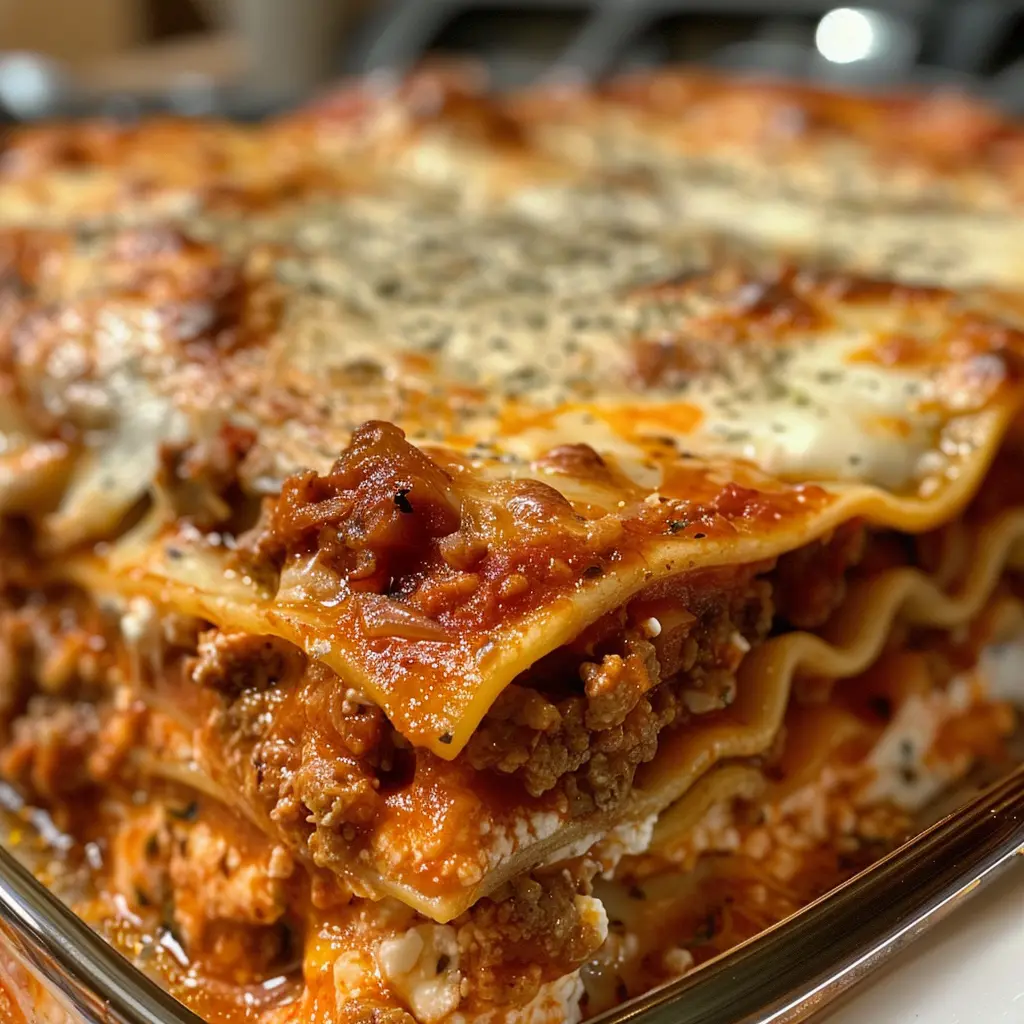
Classic comfort lasagna layers tender noodles, a simmered beef and tomato meat sauce, a creamy ricotta and Parmesan filling, and generous amounts of mozzarella in a 9×13 baking dish, covers it with foil, and bakes until everything has melded into a cohesive, deeply satisfying casserole with a golden, bubbly cheese top. It’s the dinner that earns its reputation through every layer — each one doing something specific that the others can’t — and the result is one of those rare dishes that tastes even better the next day.
| Detail | Info |
|---|---|
| Prep Time | 25 minutes |
| Bake Time | 50 minutes |
| Total Time | 1 hour 15 minutes |
| Servings | 8 |
| Difficulty | Medium |
| Cuisine | Italian-American |
Why This Recipe Works
Simmering the meat sauce for 10 minutes after the pasta sauce is added rather than using it immediately is the step that concentrates the sauce’s flavor and improves its texture for layering. Fresh pasta sauce from a jar is liquid enough to pour — too thin to stay in a defined layer in the lasagna without running through the noodles and pooling at the bottom. Ten minutes of simmering drives off some of that liquid, producing a thicker sauce that stays where it’s placed between the noodle layers. The simmer also allows the garlic, Italian seasoning, and beef to begin integrating with the tomato base, producing a sauce that tastes cooked rather than assembled.
The egg in the ricotta filling is the structural element that keeps the cheese layer from becoming runny or sliding out of the lasagna during the bake and when the dish is cut into servings. Raw ricotta is soft and loose — without a binder, it flows under the heat of the oven and merges with the surrounding sauce rather than maintaining its distinct creamy layer. The egg’s proteins set as the oven heats and firm the ricotta into a cohesive, sliceable layer that holds its position between the noodles and stays creamy rather than liquid. Lasagna without the egg can taste identical but serves as a messy, sliding assembly. The egg produces the clean layers that make a properly sliced lasagna so satisfying to look at.
Spreading a thin layer of meat sauce on the bottom of the baking dish before the first noodles go down prevents the noodles from sticking to the dish during the long bake and provides a moisture layer that keeps the bottom noodles from drying out. Noodles placed directly on a greased but dry baking dish can fuse to the surface during 50 minutes of baking and tear when the lasagna is served. The thin sauce layer acts as both lubricant and moisture source for the bottom layer of noodles, producing a first layer that lifts cleanly and serves as intact as the layers above it.
Mozzarella between each layer rather than only on top produces a lasagna where every bite contains melted cheese regardless of where in the dish the serving comes from. Top-only mozzarella means the interior layers are held together only by the ricotta filling and the pasta sauce — the structural contribution of the melted mozzarella, which binds the layers as it cools slightly from its molten state, only exists at the top. Interior mozzarella creates a network of melted cheese throughout the dish that binds every layer to the one above and below it and ensures that every interior portion has the same cheesy quality as the top.
The two-stage bake — covered for 35 minutes, then uncovered for 15 — is the technique that produces both a fully cooked interior and a properly golden top. The covered stage creates a steam environment that heats the interior of the lasagna, softens the noodles in the layers that didn’t get submerged in sauce, and prevents the cheese topping from browning before the interior is hot. The uncovered stage allows the top mozzarella and Parmesan to bubble, brown, and develop the golden, slightly caramelized surface that signals a properly baked lasagna and produces the textural contrast between the crispy top edge cheese and the molten interior.
Ingredients
| Ingredient | Quantity | Notes |
|---|---|---|
| Lasagna noodles | 12 | Cook al dente; they finish cooking in the oven |
| Ground beef | 1 pound | 80/20 or 85/15; drain excess fat after browning |
| Small onion, diced | 1 | Yellow or white; cooked with the beef until softened |
| Garlic cloves, minced | 2 | Added after the beef and onion; cooked 1 minute |
| Pasta sauce | 24 oz | Any marinara or tomato-based pasta sauce; simmered to thicken |
| Ricotta cheese | 15 oz | Whole milk ricotta for the richest, creamiest filling |
| Large egg | 1 | Binds the ricotta filling so it holds its shape during baking |
| Mozzarella cheese, shredded | 2 cups | Low-moisture; used between layers and on top |
| Parmesan cheese, grated | 1/2 cup | Half into the ricotta filling; half reserved for the top |
| Italian seasoning | 1 teaspoon | Stirred into the meat sauce; a pinch more over the final cheese layer |
| Garlic powder | 1/2 teaspoon | Added to the ricotta filling for seasoning depth |
| Salt and black pepper | To taste | Season both the meat sauce and the ricotta filling |
| Fresh parsley, chopped | Optional | Scattered over the finished lasagna before serving for color |
Step-by-Step Instructions
Phase 1: Make the Meat Sauce
- Preheat the oven to 375 degrees F. Grease a 9×13-inch baking dish and set aside.
- Cook the lasagna noodles in a large pot of generously salted boiling water according to package directions until al dente — slightly firmer than fully cooked, since they finish in the oven. Drain, lay flat on a lightly oiled baking sheet to prevent sticking, and set aside.
- In a large skillet over medium heat, brown the ground beef with the diced onion, breaking the beef into crumbles, until the beef is fully cooked and the onion is soft, about 8 minutes. Add the minced garlic and cook for 1 minute, stirring constantly.
- Drain the excess fat. Stir in the pasta sauce, Italian seasoning, salt, and black pepper. Bring to a simmer and cook for 10 minutes, stirring occasionally, until the sauce has thickened slightly. Remove from heat.
Phase 2: Make the Ricotta Filling
- In a bowl, combine the ricotta cheese, egg, garlic powder, half of the Parmesan cheese, and a pinch of salt. Stir until fully combined and smooth. Taste and adjust seasoning — the ricotta filling should be well-seasoned on its own since it’s a distinct layer in the final dish.
Phase 3: Layer the Lasagna
- Spread a thin layer of meat sauce — about half a cup — evenly across the bottom of the prepared baking dish. This prevents sticking and provides moisture for the bottom noodle layer.
- Lay 3 to 4 lasagna noodles over the sauce in a single layer, slightly overlapping if needed to cover the bottom of the dish.
- Spread half of the ricotta mixture evenly over the noodles, going to the edges. Spoon a layer of meat sauce over the ricotta and spread evenly. Sprinkle a third of the mozzarella over the sauce.
- Repeat: another layer of noodles, the remaining ricotta, more meat sauce, another third of the mozzarella.
- Add the final layer of noodles. Top with the remaining meat sauce, the remaining mozzarella, the reserved Parmesan, and a pinch of Italian seasoning over the top.
Phase 4: Bake and Rest
- Cover the dish tightly with aluminum foil. Bake covered for 35 minutes.
- Remove the foil and bake uncovered for an additional 15 minutes until the cheese is melted, golden, and bubbling at the edges.
- Remove from the oven and let the lasagna rest for 10 to 15 minutes before slicing. This rest period is essential — it allows the layers to firm from their molten state into a cohesive, sliceable structure. Lasagna cut immediately from the oven collapses and the layers slide apart. After 10 minutes, it holds its layers and slices cleanly.
Chef Tips for Perfect Results
Salt the pasta water generously. Lasagna noodles that are cooked in properly salted water are seasoned from within and taste noticeably better than noodles cooked in plain water, even after 50 minutes of baking in a seasoned sauce. The water should taste like light sea water — more salt than feels comfortable.
Lay cooked noodles on oiled parchment, not stacked. Stacked wet lasagna noodles fuse together and tear when separated. Lay them flat on a lightly oiled baking sheet or parchment paper in a single layer until you’re ready to assemble. If they need to overlap, a light drizzle of olive oil between layers prevents sticking.
Let the meat sauce cool slightly before layering. Very hot meat sauce poured over the ricotta filling partially cooks the egg in the ricotta layer prematurely and can cause the filling to become slightly grainy rather than smooth and creamy. A sauce that’s warm but not scalding produces the best layering result.
Cover every inch of the top noodle layer with sauce. Any exposed noodle on the top layer that isn’t covered by sauce or cheese will dry out and become hard and crispy during the uncovered bake. Make sure the final meat sauce layer covers the top noodles completely before the mozzarella and Parmesan go on.
Make it the day before for the best result. Assembled lasagna refrigerated overnight before baking is, by most accounts, better than lasagna assembled and baked the same day. The layers have time to meld and the noodles absorb some of the sauce, producing a more cohesive, deeply flavored result. Bake directly from the refrigerator, adding 10 to 15 minutes to the covered bake time.
Common Mistakes to Avoid
Overcooking the noodles before baking. Fully cooked noodles baked for 50 minutes become soft and structureless, and the layers lose their definition. Cook to al dente and they’ll finish perfectly in the oven.
Skipping the bottom sauce layer. Noodles placed directly on the greased dish can fuse to it during the bake. The thin sauce layer on the bottom is both lubricant and the structural start of the layering.
Not resting before cutting. This is the most commonly skipped step and the most visually consequential. Lasagna needs 10 to 15 minutes to firm from molten to sliceable. Cut too early and every serving is a collapsed pile rather than a neat, layered square.
Using too much ricotta between layers. A thick ricotta layer produces a lasagna that’s heavy and dense with cheese rather than balanced between meat, pasta, and dairy. Spread the ricotta in an even, moderate layer — just enough to cover the noodles without mounding.
Not covering tightly with foil. A loose foil cover lets steam escape and the top cheese can brown before the interior is heated through. Press the foil firmly against the rim of the dish for a proper seal during the covered bake stage.
Variations and Substitutions
Italian sausage version: Replace half or all of the ground beef with mild or hot Italian sausage, removed from its casings and crumbled. Italian sausage brings fennel, red pepper, and herbal notes that produce a more complex, deeply flavored meat sauce than beef alone.
Vegetable lasagna: Omit the ground beef and replace with a combination of sauteed zucchini, mushrooms, spinach, and bell pepper. Use the same pasta sauce base. The vegetable version is lighter but equally satisfying when the vegetables are properly seasoned and the layers are assembled the same way.
Add bechamel: Replace the ricotta layer with a homemade bechamel — 3 tablespoons butter, 3 tablespoons flour, 2 cups milk, seasoned with nutmeg, salt, and pepper. The bechamel version produces a more traditionally Italian lasagna with a silkier, creamier interior layer that many people consider the definitive version.
No-boil noodle version: Substitute no-boil lasagna noodles and add an extra quarter cup of water to the meat sauce before layering. The no-boil noodles absorb moisture from the sauce during the bake. Increase the covered bake time by 10 minutes to ensure the noodles fully soften.
Serving Suggestions
Let the lasagna rest the full 10 to 15 minutes, then cut into squares with a sharp knife and serve with a wide spatula that supports each portion from underneath. A simple green salad with Italian dressing and crusty garlic bread alongside is the classic combination that turns lasagna into a complete meal. Scatter fresh parsley over each serving for color if desired. The dish holds its heat well and can sit covered at the table for 20 minutes without cooling significantly.
Storage and Reheating
Refrigerator: Store covered for up to 5 days. Day-two lasagna is widely considered better than day-one — the layers firm and meld overnight into a more cohesive structure that slices even more cleanly.
Reheating: Individual portions reheat well in the microwave in 60 to 90 second intervals. For a full or half dish, cover with foil and reheat in a 325 degree F oven for 25 to 30 minutes until heated through. A tablespoon of water added to the dish before covering helps rehydrate the noodles if they’ve dried slightly in the refrigerator.
Freezer: Lasagna freezes exceptionally well for up to 3 months. Freeze in individual portions or as a full dish, tightly wrapped. Thaw overnight in the refrigerator and reheat as above. Many people assemble and freeze lasagna unbaked specifically for this purpose — bake from frozen at 375 degrees F covered for 60 to 75 minutes, then uncovered for 15 minutes.
Nutritional Information
| Nutrient | Per Serving (approx.) |
|---|---|
| Calories | 490 |
| Protein | 32g |
| Carbohydrates | 42g |
| Fat | 20g |
| Saturated Fat | 10g |
| Fiber | 3g |
| Sodium | 740mg |
Nutritional values are estimates based on 85/15 ground beef and standard ingredient brands. Values will vary based on specific pasta sauce and cheese brands used.
FAQ
Can I use cottage cheese instead of ricotta?
Yes, and many home cooks prefer it. Cottage cheese produces a slightly lighter, less rich filling with a mild tang. Drain it well before using — excess liquid from cottage cheese can make the filling runny. Small-curd cottage cheese blended briefly with the egg until smooth most closely approximates the texture of ricotta in the finished lasagna. The flavor difference is subtle in the context of the full dish.
Do I have to boil the noodles first?
With regular lasagna noodles, yes. Raw regular noodles won’t fully soften in the bake time and will have a firm, undercooked texture in the finished lasagna. If you want to skip boiling, use noodles specifically labeled “no-boil” or “oven-ready” and increase the moisture in the recipe slightly by adding extra sauce or a few tablespoons of water.
How do I prevent watery lasagna?
Watery lasagna has three common causes: pasta sauce that wasn’t simmered long enough and is too thin, ricotta that wasn’t drained (whole milk ricotta from the container can carry excess liquid — drain in a fine mesh strainer for 30 minutes if it seems very wet), and noodles that weren’t drained thoroughly enough after cooking and brought extra water into the dish. Address all three and the finished lasagna will be thick, cohesive, and sliceable rather than soupy.
Can I assemble this the night before and bake the next day?
Yes — and it’s actively recommended. Assembled, covered, and refrigerated overnight lasagna is generally better than same-day lasagna. The noodles absorb some sauce, the layers meld, and the whole dish bakes more evenly from a cold, set state. Add 10 to 15 minutes to the covered bake time when baking cold from the refrigerator.
Why does my lasagna fall apart when I serve it?
Lasagna that collapses when served hasn’t rested long enough after baking. The cheese and sauce are still molten and fluid directly from the oven and flow rather than hold their shape when cut. Ten to fifteen minutes of rest allows the dish to firm from fluid to sliceable. If it’s still collapsing after a full rest, the sauce was too thin going in — simmer longer next time to a thicker consistency before layering.
Conclusion
Classic comfort lasagna is the dish that earns its place at the center of the table through genuine, layered satisfaction — each component playing its specific role in a result that’s greater than the sum of its parts. Brown the beef properly, simmer the sauce, season the ricotta, layer generously, bake with patience, and rest before cutting. Do those things and you’ll produce a lasagna that people talk about on the drive home and ask about the next time they’re invited for dinner.