
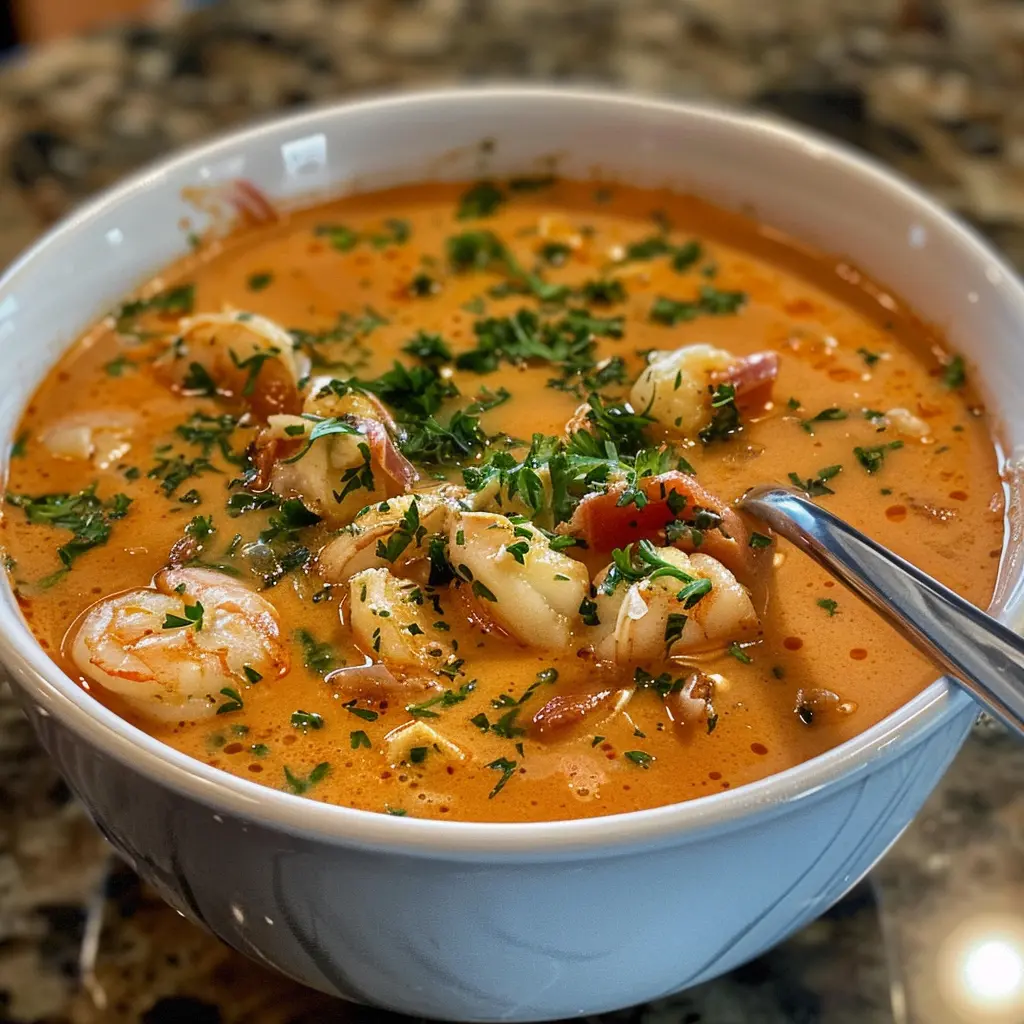
Creamy crab and shrimp seafood bisque starts with a deeply flavored vegetable base, builds into a velvety, wine-kissed cream soup, and finishes with tender shrimp and sweet lump crab folded in at the very end. The result is a bowl that tastes like it took all day and actually comes together in under an hour — rich, layered, and exactly the kind of thing you’d pay good money for at a coastal restaurant.
| Detail | Info |
|---|---|
| Prep Time | 15 minutes |
| Cook Time | 35 minutes |
| Total Time | 50 minutes |
| Servings | 4 to 6 |
| Difficulty | Medium |
| Cuisine | American / French-Inspired |
Why This Recipe Works
A proper bisque is built in layers, and each layer contributes something irreplaceable to the final result. The mirepoix of onion, celery, and carrot cooked slowly in butter is the foundation. Those vegetables release their natural sugars as they soften, creating a sweet, savory base that gives the bisque its depth. Without this step done properly, the soup tastes flat regardless of how much cream goes in.
Cooking the flour into the softened vegetables for two full minutes before any liquid is added eliminates the raw, starchy taste that makes a poorly made cream soup taste chalky and thick in the wrong way. That two-minute cook time on the roux is not optional — it’s what separates a bisque that tastes finished from one that tastes like thickened flour.
Dry white wine added to the base before the cream and broth does two things: it deglazes any browned bits from the bottom of the pot, picking up concentrated flavor, and it contributes an acidic brightness that prevents the cream soup from tasting heavy and one-dimensional. A quarter cup is enough to make a meaningful difference without the wine flavor being identifiable in the finished bisque.
Tomato paste is another essential building block. It adds color, umami depth, and a subtle sweetness that connects all the other flavors. It also gives the bisque its characteristic reddish-orange hue that signals richness before the first spoonful.
Adding the seafood at the very end, after the base has simmered and developed, protects it from overcooking. Shrimp added too early become rubbery and tough; crab added too early loses its sweet, delicate flavor to the broth. Three to five minutes for the shrimp, two to three for the crab, is all either needs. The residual heat in the bisque finishes them gently and keeps them tender.
Ingredients
| Ingredient | Quantity | Notes |
|---|---|---|
| Shrimp, peeled and deveined | 1 pound | Medium or large; fresh or thawed frozen both work well |
| Crab meat | 1 pound | Lump or jumbo lump for best texture; check for shell pieces |
| Unsalted butter | 2 tablespoons | Forms the base of the roux and softens the vegetables |
| Small onion, finely chopped | 1 | Yellow onion; finely chopped so it melts into the base |
| Garlic cloves, minced | 2 | Fresh garlic only; adds aromatic depth |
| Celery stalks, finely chopped | 2 | Part of the classic mirepoix base |
| Carrot, finely chopped | 1 | Adds natural sweetness to balance the savory broth |
| All-purpose flour | 1/4 cup | Thickens the bisque; cook into the vegetables fully |
| Seafood or chicken broth | 4 cups | Seafood broth adds more depth; low-sodium allows seasoning control |
| Heavy cream | 1 cup | Full-fat for the richest, most velvety texture |
| Whole milk | 1 cup | Lightens the cream slightly without sacrificing richness |
| Dry white wine | 1/4 cup | Sauvignon Blanc or Pinot Grigio; adds brightness and depth |
| Tomato paste | 2 tablespoons | Adds color, umami, and subtle sweetness |
| Bay leaf | 1 | Remove before blending or serving |
| Paprika | 1 teaspoon | Sweet or smoked; smoked adds a subtle depth |
| Cayenne pepper | 1/2 teaspoon | Adjust to your heat preference |
| Salt and black pepper | To taste | Season at the end; broth and crab both carry salt |
| Fresh parsley, chopped | For garnish | Adds color and a fresh finish |
Step-by-Step Instructions
Phase 1: Build the Base
- Melt the butter in a large pot or Dutch oven over medium heat. Add the onion, garlic, celery, and carrot. Cook, stirring occasionally, for 5 to 7 minutes until all the vegetables are fully softened and the onion is translucent. Don’t rush this step — soft, properly cooked vegetables blend into the base smoothly and give the bisque its sweet, savory foundation.
- Add the flour to the softened vegetables and stir constantly for 2 full minutes. The mixture will look thick and paste-like. Keep stirring and keep the heat at medium so the flour cooks through without burning. This step eliminates the raw flour taste and builds the thickening power of the roux.
- Pour in the white wine and stir vigorously, scraping any bits from the bottom of the pot. Let it cook for 30 seconds.
- Slowly whisk in the seafood broth in a steady stream, whisking constantly to prevent lumps from forming. Add the heavy cream, milk, tomato paste, bay leaf, paprika, and cayenne pepper. Whisk until the tomato paste is fully incorporated and the mixture is smooth.
Phase 2: Simmer and Blend
- Bring the bisque to a gentle boil over medium heat, then reduce to a low simmer. Cook uncovered for 15 minutes, stirring occasionally, until the base has thickened and the flavors have developed fully. Remove the bay leaf.
- For a smooth bisque, use an immersion blender to blend the soup directly in the pot until completely smooth. For a bisque with some texture, blend only half the soup and stir it back in. For a heartier, chunkier result, skip the blending entirely. All three are valid approaches depending on your preference.
- If the bisque seems too thick after blending, stir in a splash of additional broth or cream to reach your desired consistency.
Phase 3: Add the Seafood and Serve
- Return the pot to medium-low heat. Add the shrimp and cook for 3 to 5 minutes, stirring gently, until they are pink and just cooked through. Do not let the bisque boil at this stage — a gentle simmer is all the shrimp needs.
- Stir in the crab meat and cook for 2 to 3 minutes until heated through. Crab is already cooked; you’re just warming it gently.
- Taste and adjust the seasoning with salt, black pepper, and additional cayenne if desired. Remember that crab meat carries salt naturally, so taste before adding.
- Ladle into warm bowls, garnish generously with fresh chopped parsley, and serve immediately with crusty bread alongside.
Chef Tips for Perfect Results
Use seafood broth over chicken broth. Chicken broth works in a pinch, but seafood broth amplifies the crab and shrimp flavor in a way chicken broth cannot. Clam juice diluted with a little water is an excellent alternative if seafood broth isn’t available — it adds a clean, briny depth that reads unmistakably as ocean.
Check crab meat for shell pieces before adding. Even high-quality packaged crab meat occasionally contains small shell fragments. Spread it on a plate and run your fingers through it before stirring it into the bisque. A single unexpected shell piece in a bowl of elegant bisque is a disappointing experience.
Warm your bowls before serving. Fill them with hot water for a minute, then empty and dry them before ladling in the bisque. Hot bisque in a cold bowl cools down dramatically in the first few minutes. Warm bowls keep the soup at the right temperature through the entire meal.
Add a splash of sherry instead of white wine. Dry sherry is the traditional bisque addition and has a slightly nuttier, more complex flavor than white wine. Use the same amount — a quarter cup — and add it at the same point in the recipe. It’s a small swap with a noticeable impact on the final flavor.
Don’t boil the bisque after adding the cream. Boiling cream-based soups causes the fat to separate and the texture to turn grainy. Keep the heat at a gentle simmer from the moment the cream goes in and especially after the seafood is added.
Common Mistakes to Avoid
Skipping the roux cook time. One minute on the flour-vegetable mixture is not enough. Two full minutes at medium heat is the minimum to cook out the raw flour taste. Under-cooked roux makes the bisque taste starchy and dull no matter how well everything else is seasoned.
Adding the seafood too early. Shrimp and crab added to the simmering base too soon overcook completely by the time the bisque is ready to serve. Add them in the last 5 to 8 minutes of cooking, just before you’re ready to ladle into bowls.
Over-blending the bisque. If you blend the entire bisque completely smooth, you lose all textural interest. Leaving some of the vegetable base intact gives the soup body and visual appeal. A partial blend — about half the soup — produces the best balance of smooth and textured.
Under-seasoning. Cream soups need more seasoning than you might expect because the cream mutes salt and spice. Season the base before adding the seafood, then taste again after the seafood goes in and adjust once more before serving. Three rounds of seasoning is normal for a bisque of this richness.
Using pre-cooked frozen shrimp. Pre-cooked shrimp are already done — adding them to a hot bisque for 5 minutes overcooks them into a rubbery, unpleasant texture. If using pre-cooked shrimp, add them with the crab in the last 2 minutes, just long enough to heat through.
Variations and Substitutions
Lobster bisque version: Replace the crab and shrimp with cooked lobster meat, cut into chunks. Use the lobster shells to make a quick stock by simmering them in water with a bay leaf and peppercorns for 20 minutes, then strain and use in place of the seafood broth for an intensely flavored base.
Lighter version: Replace the heavy cream with half-and-half and reduce the milk to half a cup. The bisque will be slightly less rich but still deeply flavorful. Adding an extra tablespoon of tomato paste compensates for some of the body lost by reducing the cream.
Spicier Cajun version: Double the cayenne, add a teaspoon of Cajun seasoning to the base, and finish with a few dashes of hot sauce before serving. Serve over white rice for a bisque that eats more like a stew.
Corn and seafood bisque: Add a cup of fresh or frozen corn kernels to the vegetable base. Blend half the corn with the base for a naturally sweet, slightly thicker soup, and leave the rest as whole kernels for texture. The corn and seafood combination is a classic Gulf Coast pairing.
Serving Suggestions
Serve in warmed bowls with crusty French bread or sourdough for dipping. Oyster crackers on the side are a traditional accompaniment that adds a pleasant crunch between spoonfuls. A simple green salad with a sharp lemon vinaigrette cuts through the richness of the cream soup and makes the meal feel balanced.
For a dinner party presentation, ladle the bisque into small cups or shot glasses as an elegant starter before a main course. A small curl of shrimp perched on the rim of the bowl and a drizzle of cream swirled into the surface makes the presentation look polished and intentional.
Storage and Reheating
Refrigerator: Cool the bisque completely before transferring to an airtight container. Store for up to 3 days. The seafood continues to absorb flavor from the broth as it sits, which makes day-two bisque taste even better than day one.
Freezer: Freeze for up to 2 months. Note that cream-based soups can separate slightly when frozen and thawed — whisk vigorously during reheating to bring the texture back together. The flavor is unaffected. Thaw overnight in the refrigerator before reheating.
Reheating: Warm gently in a saucepan over low heat, stirring frequently. Never bring it to a boil during reheating — boiling separates the cream and makes the texture grainy. If it has thickened in the refrigerator, add a splash of broth or milk and stir to loosen it before serving.
Nutritional Information
| Nutrient | Per Serving (approx.) |
|---|---|
| Calories | 480 |
| Protein | 38g |
| Carbohydrates | 14g |
| Fat | 30g |
| Saturated Fat | 17g |
| Fiber | 1g |
| Sodium | 920mg |
Nutritional values are estimates and will vary based on specific ingredients and brands used.
FAQ
Can I make this bisque without wine?
Yes. Replace the white wine with an equal amount of additional seafood broth plus a teaspoon of white wine vinegar or lemon juice. The vinegar or lemon juice replaces the acidity the wine contributes, which is an important balancing element in the finished bisque. The flavor won’t be identical but it will still be excellent.
What’s the difference between a bisque and a chowder?
A bisque is a smooth, cream-based soup traditionally made from shellfish where the base is blended to a velvety consistency. A chowder is a heartier, chunkier soup that typically includes potatoes and is not blended. Both use cream as a base, but the texture and composition are fundamentally different. This recipe sits between the two — it can be made fully smooth like a classic bisque or left partially chunky depending on how much you blend.
Can I use imitation crab meat?
You can, though the flavor is noticeably different. Real crab meat has a sweet, delicate, slightly briny flavor that imitation crab doesn’t replicate convincingly. Imitation crab also releases more moisture when heated, which can thin the bisque slightly. If budget is a concern, a smaller amount of real crab combined with the imitation product gives you better flavor than imitation alone at a lower cost than all real crab.
How do I prevent the cream from curdling?
Keep the heat at medium-low once the cream goes in and never let the bisque reach a full boil after that point. If you’re reheating leftovers, warm them very slowly over low heat. Adding the cream to a soup that’s too hot, or boiling the soup after the cream is added, are the two most common causes of curdling in cream-based soups.
Can I make this ahead for a dinner party?
Make the base up to two days ahead and refrigerate it without the seafood. When ready to serve, bring the base to a gentle simmer, add the shrimp and crab, and cook as directed. This approach actually improves the flavor of the base since the vegetables and seasonings have more time to meld, and it means minimal work at serving time.
Conclusion
Creamy crab and shrimp seafood bisque is the kind of recipe that makes people think you spent hours in the kitchen when the reality is closer to 50 minutes. The technique is straightforward once you understand why each step matters, and the result is a bowl of soup that genuinely competes with what you’d pay restaurant prices for. Make it for a special occasion and it will become the dish people request every time.