
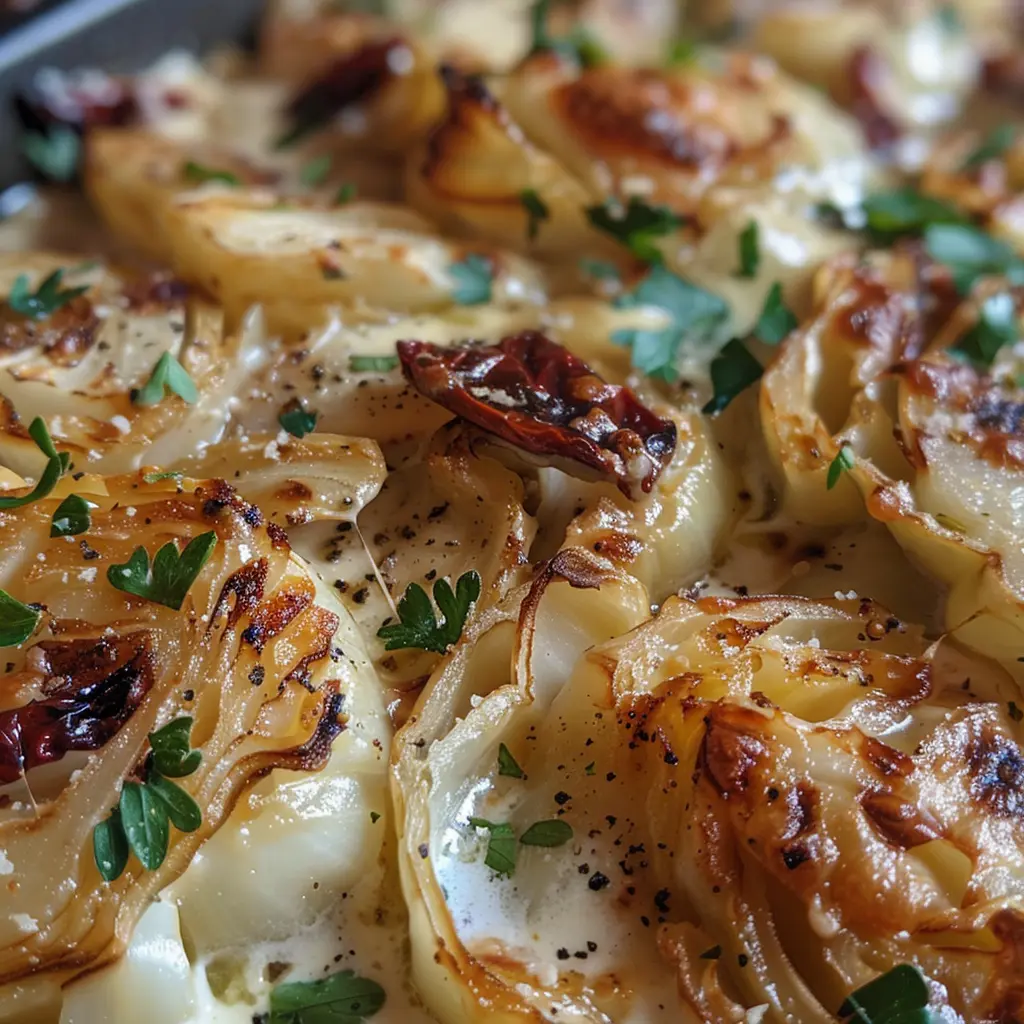
Creamy garlic Parmesan melting cabbage sears cabbage wedges until golden, builds a rich garlic cream sauce with cream cheese, heavy cream, Parmesan, sun-dried tomatoes, and three herbs directly in the same skillet, then braises everything together in the oven until the cabbage becomes impossibly tender and the sauce reduces to something you’ll want to eat with a spoon. This is what cabbage tastes like when it’s treated with the same attention as any other ingredient worth cooking.
| Detail | Info |
|---|---|
| Prep Time | 15 minutes |
| Cook Time | 1 hour 5 minutes |
| Total Time | 1 hour 20 minutes |
| Servings | 6 |
| Difficulty | Easy to Medium |
| Cuisine | American / European-Inspired |
Why This Recipe Works
Searing the cabbage wedges in olive oil before anything else goes into the pan is the step that elevates this dish from braised cabbage to something with genuine complexity. Direct contact with a hot, oiled skillet develops caramelization on the cabbage’s cut faces through the Maillard reaction — the same browning process that makes steak and bread deeply flavorful. The outer leaves char slightly at the edges and the cut surface turns golden, developing a sweet, nutty flavor that raw or boiled cabbage never achieves. These seared faces retain their character through the long braise and provide a depth of flavor that contrasts with the rich cream sauce surrounding them.
Keeping the core intact when cutting the cabbage into wedges is a structural decision with practical consequences. The cabbage core holds all the leaves together during the searing and braising process. Without it, the wedge falls apart into individual leaves the moment it’s lifted from the pan, making it impossible to serve as an elegant portion. With the core intact, the wedge holds its shape through the full hour of cooking and arrives on the plate as a coherent, attractive wedge that cuts cleanly and shows all the layers of the cabbage in cross-section.
Building the cream sauce directly in the skillet after searing the cabbage — using the butter, onion, and garlic in the same pan — captures every bit of caramelized cabbage flavor left in the oil and on the pan surface. As the butter melts and the onion softens, it dissolves the browned bits left from the sear and carries that concentrated cabbage flavor into the cream sauce. A sauce built in a separate, clean pan would taste good; this sauce tastes like it belongs specifically with the cabbage wedges it was made alongside.
Cream cheese whisked into the chicken broth creates the thick, stable base for the sauce that heavy cream alone cannot achieve without extensive reduction. Cream cheese emulsifies into the broth and creates a cohesive, body-rich liquid that coats the cabbage wedges from the start of the braise rather than being thin and watery until the long oven time reduces it. This means the cabbage is bathed in a genuinely creamy sauce throughout the cook time rather than spending the first 30 minutes braising in diluted liquid.
The two-stage bake — covered for 45 minutes, then uncovered for 15 to 20 minutes — is the technique that produces both tender cabbage and a properly reduced, concentrated sauce. The covered stage traps steam that penetrates the dense cabbage and breaks down its structure from within, achieving the melt-in-your-mouth tenderness that gives this dish its name. The uncovered stage allows surface moisture to evaporate and the sauce to reduce and concentrate, producing the bubbling, slightly thickened, golden-edged finish that makes this dish look as good as it tastes.
Ingredients
| Ingredient | Quantity | Notes |
|---|---|---|
| Large green cabbage, cut into 8 wedges (core intact) | 1 | Keep the core attached; it holds the wedge together through cooking |
| Olive oil | 3 tablespoons | For searing the cabbage wedges in the oven-safe skillet |
| Butter | 2 tablespoons | Added after searing; forms the base for the aromatics |
| Red onion, finely diced | 1/2 cup | Cooked until softened in the butter after searing |
| Garlic cloves, minced | 4 | Fresh garlic; cooked with the onion until fragrant |
| Low-sodium chicken broth | 1 cup | The liquid base for the cream sauce |
| Cream cheese, softened | 4 oz | Whisked into the broth to create a thick, stable sauce base |
| Heavy cream | 1 cup | Added after the cream cheese for additional richness |
| Sun-dried tomatoes, sliced | 1/2 cup | Oil-packed preferred; adds concentrated sweetness and color |
| Dried oregano | 1 teaspoon | Part of the three-herb blend that defines the sauce’s herbal character |
| Dried thyme | 1 teaspoon | Earthy and slightly floral; complements both cabbage and cream |
| Dried rosemary | 1/2 teaspoon | Used sparingly; rosemary can dominate if overused |
| Salt | 1 teaspoon | Adjust based on the saltiness of the broth and Parmesan |
| Black pepper | 1/2 teaspoon | Freshly cracked preferred |
| Red pepper flakes (optional) | 1 teaspoon | Adds background warmth; use or omit based on preference |
| Parmesan cheese, grated | 1/2 cup | Stirred into the sauce before the cabbage is returned; plus more for serving |
| Fresh parsley, chopped | For garnish | Added just before serving for color and freshness |
Step-by-Step Instructions
Phase 1: Sear the Cabbage
- Preheat the oven to 375 degrees F. Cut the cabbage into 8 even wedges, keeping the core attached to each wedge so they hold their shape.
- Heat the olive oil in a large oven-safe skillet over medium-high heat until shimmering. Add the cabbage wedges in batches if needed and sear for 2 to 3 minutes per side until the cut faces are lightly golden and caramelized. Don’t rush this step — the browning is where the flavor begins. Transfer the seared wedges to a plate and set aside.
Phase 2: Build the Cream Sauce
- Reduce the heat to medium. Add the butter to the same skillet. Once melted, add the diced red onion and cook for 2 to 3 minutes until softened. Add the minced garlic and cook for 30 seconds until fragrant.
- Pour in the chicken broth and add the softened cream cheese. Whisk constantly until the cream cheese is fully dissolved into the broth and the mixture is smooth with no lumps remaining.
- Stir in the heavy cream, sliced sun-dried tomatoes, oregano, thyme, rosemary, salt, pepper, and red pepper flakes if using. Bring to a gentle simmer and cook for 2 to 3 minutes, stirring occasionally.
- Add the Parmesan cheese and stir until fully melted and the sauce is smooth and creamy. Taste and adjust seasoning.
Phase 3: Braise and Finish
- Nestle the seared cabbage wedges into the sauce, arranging them so they’re partially submerged and the sauce can access all sides. Spoon some sauce over any exposed cabbage.
- Cover the skillet with a lid or tightly with aluminum foil. Transfer to the oven and bake covered for 45 minutes.
- Remove the cover. Spoon the sauce generously over the cabbage wedges. Continue baking uncovered for 15 to 20 minutes until the cabbage is completely tender when pierced with a knife at its thickest point and the sauce is bubbling and slightly reduced.
- Let the dish rest for 5 minutes before garnishing with fresh parsley and extra grated Parmesan. Serve directly from the skillet.
Chef Tips for Perfect Results
Use an oven-safe skillet large enough for all 8 wedges. A 12-inch cast iron skillet or large oven-safe stainless steel pan works best. The wedges need to fit in a single, relatively tight layer so the sauce surrounds them properly during the braise. If the pan is too large, the sauce spreads too thin and reduces before the cabbage is tender.
Get the cream cheese fully smooth before adding the cream. Cream cheese lumps that aren’t fully dissolved before the cream goes in will remain as small lumps in the finished sauce. Whisk vigorously after adding the cream cheese to the warm broth until the mixture is completely smooth — this takes 1 to 2 minutes of active whisking.
Spoon sauce over the wedges during the uncovered bake. As the sauce reduces in the uncovered baking stage, the tops of the cabbage wedges can dry slightly while the sauce concentrates below. Spoon the thickening sauce over the wedges once or twice during this stage to keep them lacquered and moist.
Use oil-packed sun-dried tomatoes. Dry-packed sun-dried tomatoes are significantly tougher and less flavorful than oil-packed. The oil-packed variety is already softened and carries the concentrated tomato flavor that makes them worth including — they melt slightly into the sauce during the long braise and distribute their sweet, slightly acidic tomato character through every component.
Check tenderness at the thickest point of the wedge. The outer leaves of the wedge become tender long before the thicker portion near the core. Probe the thickest part of the wedge near the core with a sharp knife — it should slide through with no resistance before the cabbage is done. If there’s still some resistance, cover and bake for another 10 minutes.
Common Mistakes to Avoid
Cutting off the core before cooking. The core is what holds the wedge together. A coreless wedge falls apart into individual leaves within minutes of entering the hot pan, making it impossible to sear and essentially impossible to serve attractively. Always keep the core attached through the entire cooking process.
Not searing the cabbage long enough. Pale, barely-touched cabbage wedges that haven’t had time to develop real color on their cut faces miss the flavor development that makes this dish exceptional. The 2 to 3 minutes per side is a minimum for medium-high heat — look for genuine golden color before flipping.
Skipping the covered bake phase. The covered 45 minutes is what produces the melt-in-your-mouth tenderness that defines the dish. Without it, the cabbage would need to bake uncovered for so long that the sauce would over-reduce and the exposed cabbage would dry out rather than becoming tender. Both stages are necessary.
Adding cold cream cheese. Cold cream cheese resists dissolving into the warm broth and leaves lumps that don’t smooth out fully even with vigorous whisking. Always soften the cream cheese to room temperature before adding it to the sauce.
Not letting the dish rest. The sauce directly from the oven is very hot and slightly thinner than it will be after a brief rest. Five minutes of rest allows the sauce to settle and thicken slightly to the ideal consistency for serving.
Variations and Substitutions
Add mushrooms: Slice 8 ounces of cremini mushrooms and saute them in the butter with the onion before adding the garlic. They add earthy depth and a meaty texture that makes the dish even more substantial as a standalone vegetarian main.
Add fresh spinach: Stir two cups of fresh spinach into the sauce just before the cabbage wedges are nestled in. The spinach wilts immediately and adds color and a mild vegetal note that complements the rich cream sauce.
Use vegetable broth: Substitute vegetable broth for the chicken broth for a fully vegetarian version. The flavor will be slightly lighter but the dish remains deeply satisfying.
Add bacon: Cook four strips of bacon until crisp, crumble them, and scatter over the finished dish alongside the parsley. The smoky, salty bacon against the creamy garlic sauce and tender cabbage is a combination that many people find irresistible.
Serving Suggestions
Serve directly from the skillet with crusty bread alongside for scooping up the creamy sauce — this is the most satisfying way to eat it. As a side dish, it pairs naturally with roasted chicken, pork tenderloin, or a simple pan-seared steak. The richness of the cream sauce means smaller portions alongside a protein are appropriate; larger portions make a satisfying vegetarian main. A simple green salad with a sharp vinaigrette provides the acidic contrast that cuts through the richness of the cream.
Storage
Refrigerator: Store in an airtight container for up to 4 days. The cabbage continues to absorb the sauce as it sits and becomes even more tender by the second day.
Reheating: Reheat covered in a 325 degree F oven for 15 to 20 minutes until warmed through, or gently on the stovetop over low heat with a splash of broth or cream if the sauce has thickened too much in the refrigerator.
Freezer: Freeze for up to 2 months. Thaw overnight in the refrigerator and reheat gently on the stovetop or in the oven. The cabbage texture changes slightly after freezing but the flavor remains excellent.
Nutritional Information
| Nutrient | Per Serving |
|---|---|
| Calories | 320 |
| Protein | 9g |
| Carbohydrates | 12g |
| Fat | 28g |
| Saturated Fat | 14g |
| Fiber | 4g |
| Sugar | 6g |
| Sodium | 610mg |
| Cholesterol | 70mg |
Nutritional values are estimates based on standard ingredients. Values will vary based on specific brands used.
FAQ
Can I use red or Savoy cabbage instead of green?
Yes. Savoy cabbage has a more delicate, slightly crinkled leaf structure and becomes tender slightly faster than green cabbage — check for doneness at the 40-minute mark of the covered bake. Red cabbage takes longer to become tender and its color can bleed into the cream sauce, turning it purple — it works but produces a visually different result. Green cabbage is the most reliable and most visually appealing choice for this recipe.
What can I substitute for sun-dried tomatoes?
Roasted red peppers, drained and sliced, produce a similar sweet-acidic note with a different flavor profile. Cherry tomatoes halved and stirred into the sauce work well for a fresher, less concentrated tomato flavor. Artichoke hearts quartered and added with the cream are a more neutral substitute that adds texture without a strong tomato presence.
Can I make this ahead?
Yes. Complete through the covered bake, allow to cool, and refrigerate. When ready to serve, return to 375 degrees F and bake uncovered for 20 to 25 minutes until heated through and the sauce is bubbling. The uncovered bake serves double duty as the reheating stage. This make-ahead approach actually improves the tenderness of the cabbage since it has more time to absorb the sauce.
What if my sauce breaks or turns grainy?
Sauce that breaks (separates into fat and liquid) usually means the heat was too high when the cream and cream cheese were added or the dish was boiled vigorously rather than simmered gently. To fix a broken sauce, reduce the heat to very low and whisk in a tablespoon of cold cream. This often brings the emulsion back together. Prevention: always keep the sauce at a gentle simmer, never a boil.
Is this dish keto-friendly?
Yes. Cabbage is a very low-carbohydrate vegetable and the sauce is built primarily from cream, cream cheese, and Parmesan — all keto-compatible ingredients. The sun-dried tomatoes add a small amount of natural sugar, but the per-serving carbohydrate count remains well within typical ketogenic limits at 12 grams per serving, 4 of which are dietary fiber.
Conclusion
Creamy garlic Parmesan melting cabbage is the recipe that changes how people think about cabbage. The sear, the cream sauce built in the same pan, the long covered braise that produces a tenderness the vegetable almost never achieves, and the final uncovered reduction that concentrates everything into something rich and complex — each step is deliberate and each one contributes to a finished dish that earns the word “melting” and makes people reach for the bread to get every drop of the sauce.