
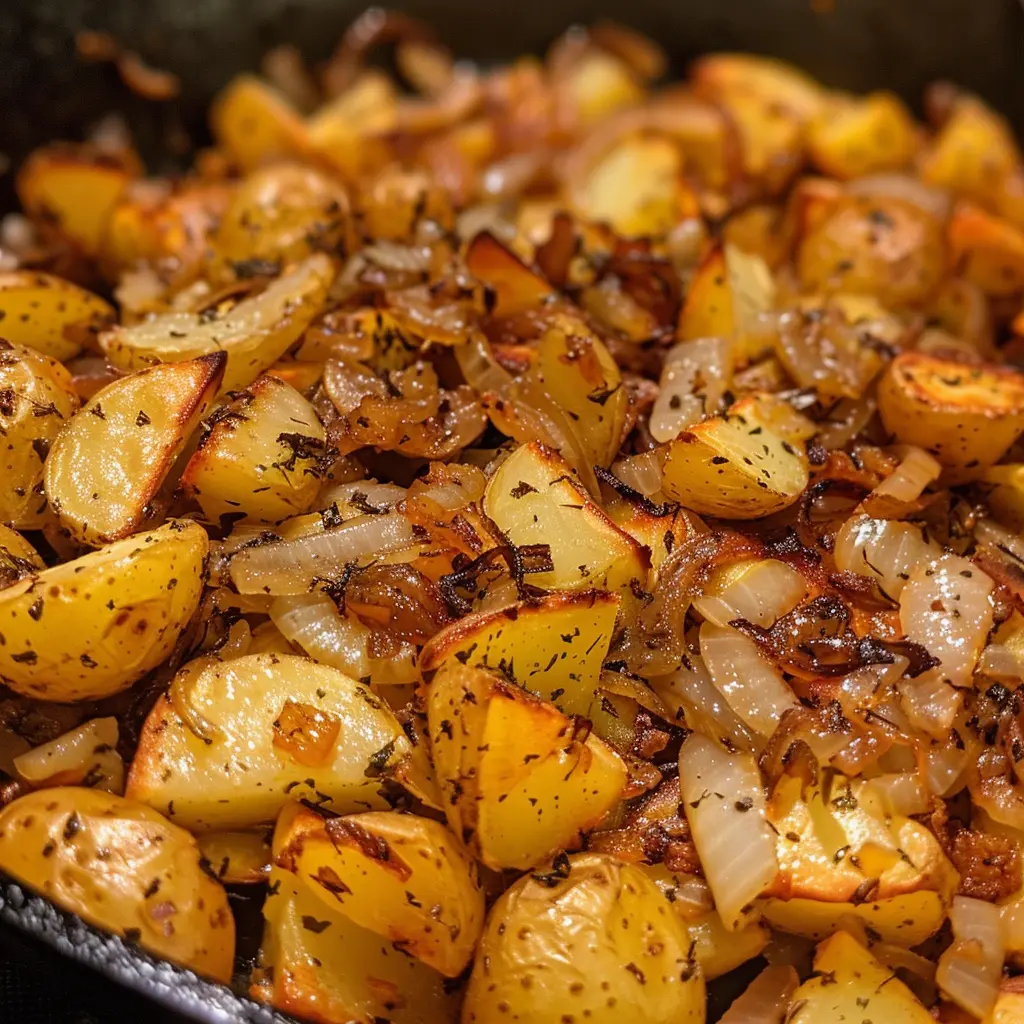
Fried potatoes and onions are one of the most satisfying things a skillet can produce — thin-sliced potatoes fried slowly until their edges turn deep golden and their interiors turn soft and creamy, finished with sweet caramelized onions and seasoned with nothing more than salt and pepper. Simple as it sounds, the technique here is what separates a genuinely great version from the pale, steamed version most people settle for.
| Detail | Info |
|---|---|
| Prep Time | 10 minutes |
| Cook Time | 30 minutes |
| Total Time | 40 minutes |
| Servings | 4 |
| Difficulty | Easy |
| Cuisine | American / Irish-Inspired |
Why This Recipe Works
The secret to crispy fried potatoes is patience and restraint. The most common mistake people make is stirring the potatoes too frequently. Every time you move the potatoes, you interrupt the contact between the starchy surface of the potato and the hot pan surface — and it’s that sustained contact that creates the golden, crisp exterior. Leave them alone. Let them sizzle. Turn them only when they release naturally from the pan and have developed a deep golden crust on the bottom.
Starting with a generous amount of oil is not optional. Potatoes are starchy and will stick aggressively to an under-oiled pan, especially in the early minutes before the outer surface has had time to crisp and release. A generous coating of oil in a heavy pan creates the right frying environment — enough fat to conduct heat evenly and prevent sticking without the potatoes being deep-fried.
Adding the onions after the potatoes are already golden is a timing decision that matters. Raw onions added at the start of cooking with the potatoes need moisture to soften, which they release as steam — and steam is the enemy of crispy potatoes. Adding them in the last 5 minutes means they cook quickly in the hot fat, caramelize at the edges, and add sweetness to the finished dish without contributing excess moisture that ruins the texture.
A cast-iron skillet is the right pan for this recipe. Cast iron holds heat more evenly and more consistently than stainless or non-stick, and it gets hot enough to produce the deep golden crust that defines this dish. Non-stick pans don’t get hot enough to properly fry potatoes — they steam and stick rather than sear. Stainless works but requires more attention to heat management. Cast iron is what grandmothers used for good reason.
Yukon Gold potatoes are the superior choice for this application. Their waxy texture holds together during frying without falling apart, their natural buttery flavor comes through in the finished dish, and they brown more evenly than floury Russets. Russets work too but tend to break apart more during turning. Whatever you use, slice them thin and evenly — consistent thickness means consistent cooking from slice to slice.
Ingredients
| Ingredient | Quantity | Notes |
|---|---|---|
| Large potatoes | 3 to 4 | Yukon Gold for best flavor and texture; Russet also works |
| Onion, sliced | 1 | Yellow onion; sliced into half-moons about 1/4 inch thick |
| Oil for frying | 3 to 4 tablespoons | Vegetable, canola, or avocado oil; needs a high smoke point |
| Salt | To taste | Season in layers — during cooking and again at the end |
| Black pepper | To taste | Freshly cracked adds more heat and aroma than pre-ground |
| Green onions, sliced | For garnish | Optional but adds fresh flavor and color to the finished dish |
Step-by-Step Instructions
Phase 1: Prep the Potatoes
- Peel the potatoes and slice them into rounds about 1/8 to 1/4 inch thick. A mandoline slicer produces perfectly even slices in seconds; a sharp chef’s knife works well too. Consistency in thickness is more important than the specific thickness — uneven slices mean some pieces are overdone before others are cooked through.
- Pat the potato slices dry with paper towels. Surface moisture on the potatoes creates steam when they hit the hot oil and prevents browning. A dry surface sears immediately and starts developing color from the first moment of contact with the pan.
- Slice the onion into thin half-moons, about a quarter inch thick. Set aside separately from the potatoes since they go in at a different time.
Phase 2: Fry the Potatoes
- Heat the oil in a large cast-iron skillet over medium heat until it shimmers. Test the heat by dropping a small piece of potato into the oil — it should sizzle immediately on contact. If it doesn’t sizzle, the oil isn’t hot enough yet.
- Add the potato slices in as close to a single layer as your pan allows. Some overlap is acceptable in a full batch; just avoid stacking them more than two deep since layers that don’t touch the pan won’t brown.
- Season the top layer of potatoes with a pinch of salt and pepper. Cook without stirring for 6 to 8 minutes, until the bottoms are deeply golden and the potatoes release cleanly from the pan when nudged with a spatula. If they stick, they need more time — do not force them.
- Flip the potatoes in sections using a wide spatula. Don’t try to flip every slice individually — flip in groups and accept that some will break. Broken pieces that get extra surface contact with the pan often end up as the crispiest bites in the whole dish. Season again lightly.
- Continue cooking for another 10 to 15 minutes, turning every 5 minutes or so, until the potatoes are golden and crispy on multiple sides and tender all the way through when pierced with a fork.
Phase 3: Add Onions and Finish
- When the potatoes are golden and nearly done, add the sliced onions directly to the skillet. Stir gently to incorporate the onions with the potatoes without breaking the potatoes apart more than necessary.
- Cook for 4 to 5 minutes, stirring occasionally, until the onions soften, turn translucent, and begin to caramelize at the edges. The onions should be tender and sweet, not raw and sharp.
- Taste and adjust the seasoning with salt and pepper. The potatoes absorb salt as they cook, so taste before adding more rather than seasoning by instinct.
- Transfer to a serving plate, scatter sliced green onions over the top, and serve immediately while hot and crispy.
Chef Tips for Perfect Results
Don’t overcrowd the pan. Too many potato slices in the pan at once drops the oil temperature and the potatoes steam rather than fry. If you’re cooking for a large group, work in two batches, keeping the first batch warm in a 200-degree F oven on a wire rack while you fry the second. A wire rack rather than a plate keeps the bottom crispy rather than letting it steam against a flat surface.
Add butter in the last two minutes of cooking. A tablespoon of butter added to the pan when the onions go in melts and coats the potatoes with a richness that oil alone can’t provide. The butter also promotes additional browning on the final turn. Don’t add it earlier — butter has a lower smoke point than oil and burns if it’s in the pan through the whole long cook.
Season in layers. A pinch of salt when the potatoes first go in, another light season after the first flip, and a final taste and adjustment at the end produces more evenly seasoned potatoes than a single heavy seasoning at the start or end.
Add garlic powder or smoked paprika. A half teaspoon of either, sprinkled over the potatoes during the last few minutes of cooking, adds a flavor dimension that elevates the dish without changing its fundamental character. Garlic powder adds savory depth; smoked paprika adds warmth and a subtle smokiness that’s particularly good alongside eggs.
Use a splatter screen. Frying potatoes with any surface moisture generates steam that causes the oil to spatter. A splatter screen keeps the stovetop clean and protects your hands without trapping steam and making the potatoes soggy.
Common Mistakes to Avoid
Stirring too often. This is the single most reliable way to end up with soft, pale potatoes instead of crispy golden ones. Set a timer for 6 to 8 minutes after the potatoes go in and do not touch them until the timer goes off. The crust forms from sustained contact with the hot pan, and interrupting that contact repeatedly prevents any crust from forming at all.
Starting with cold oil. Potatoes added to cold or insufficiently hot oil absorb the oil and become greasy rather than crisping at the surface. The oil must be fully hot and shimmering before the potatoes go in. Test with a small piece first — if it sizzles immediately, you’re ready.
Slicing the potatoes too thick. Thick slices take too long to cook through, which means the exterior overbrowns before the interior softens. A quarter inch is the maximum; an eighth of an inch gives you a crispier result with a faster cook time.
Adding the onions too early. Onions added with the raw potatoes release moisture that steams the potatoes and prevents browning. They also cook faster than the potatoes and turn from sweet and caramelized to dark and bitter if they’re in the pan for the full 25 minutes. Add them in the last 5 minutes only.
Using a non-stick pan. Non-stick surfaces don’t get hot enough to produce the deep golden crust that makes this dish what it is. They keep food from sticking at the expense of browning, which is the exact opposite of what you need here. Cast iron or stainless steel, properly preheated, is the right tool.
Variations and Substitutions
Add bacon: Cook four strips of bacon in the skillet first, remove them, and fry the potatoes in the rendered bacon fat. Crumble the bacon and fold it back in with the onions in the last 5 minutes. The bacon fat produces the most flavorful, most golden potatoes you’ll ever make from this recipe.
Add bell pepper: Slice a red or green bell pepper and add it with the onions in the last 5 minutes. The pepper softens quickly in the hot fat and adds sweetness, color, and a classic diner-style flavor that makes this a natural pairing with eggs.
Herb version: Add a teaspoon of fresh rosemary or thyme leaves to the pan with the onions. The herbs bloom in the hot fat and infuse the potatoes and onions with an herbal, aromatic note that pairs particularly well with roasted meats.
Spicy version: Add a pinch of red pepper flakes and a half teaspoon of smoked paprika with the onions. Finish with a few dashes of hot sauce before serving. The heat and smoke play well against the natural sweetness of the caramelized onion.
Serving Suggestions
These potatoes are equally at home at a breakfast table alongside fried eggs and bacon as they are on a dinner table next to meatloaf, grilled chicken, or roasted pork. Ketchup on the side is the classic accompaniment for the breakfast version. Sour cream works well for the dinner version. A drizzle of hot sauce adds life to either.
For a heartier breakfast plate, pile the finished potatoes onto a plate, make two wells in the center, and crack an egg into each well. Cover the pan and cook for 3 to 4 minutes until the whites are set and the yolks remain runny. The yolks break over the potatoes as you eat and become part of the sauce — one of the simple pleasures of home cooking.
Storage and Reheating
Refrigerator: Store cooled leftovers in an airtight container for up to 3 days. The potatoes will lose their crispness in the refrigerator — this is inevitable and expected.
Reheating: The skillet is the right tool for reheating. Spread the potatoes in a single layer in a lightly oiled skillet over medium heat and cook without stirring for 3 to 4 minutes until the bottom crisps again, then flip and repeat. An air fryer at 375 degrees F for 5 minutes also restores the crunch effectively. The microwave reheats them quickly but leaves them soft.
Freezing: Not recommended. Cooked potatoes develop an unpleasant, grainy texture when frozen and thawed. Make only what you’ll eat within a few days.
Nutritional Information
| Nutrient | Per Serving (approx.) |
|---|---|
| Calories | 220 |
| Protein | 4g |
| Carbohydrates | 34g |
| Fat | 8g |
| Saturated Fat | 1g |
| Fiber | 3g |
| Sodium | 180mg |
Nutritional values are estimates based on standard ingredients and will vary based on oil amount and potato size.
FAQ
Do I need to parboil the potatoes first?
Not for this recipe. Parboiling before frying is a technique used for thick-cut roasted potatoes to ensure the interior cooks through before the exterior browns. At the thin slice thickness called for here — an eighth to a quarter inch — the potato cooks through completely during the frying time without any pre-cooking. Parboiling thin-sliced potatoes makes them too soft to hold together in the pan.
Why are my potatoes sticking to the pan?
Two most likely causes: the pan wasn’t hot enough when the potatoes went in, or the potatoes aren’t ready to be turned yet. Potatoes stick to a pan during the early stages of cooking because their starch is bonding to the metal surface. As the crust develops and the starch cooks, the potato releases naturally. If it’s sticking when you try to turn it, give it another minute — it will tell you when it’s ready by releasing on its own.
Can I use olive oil instead of vegetable oil?
Extra virgin olive oil has a lower smoke point than vegetable or canola oil and can burn at the temperatures needed for properly crisped potatoes. Light or refined olive oil has a higher smoke point and works better. If you want the flavor of olive oil, use a blend — two tablespoons of vegetable oil and one of olive — which gives you the high smoke point of vegetable oil with a hint of olive oil flavor.
How do I get the onions to caramelize properly in just 5 minutes?
True deep caramelization takes 30 to 45 minutes. In 5 minutes over medium-high heat in a hot pan with fat already in it, the onions will soften, turn translucent, and develop some golden color at the edges — which is the goal here. They won’t be the deeply jammy, mahogany-colored caramelized onions that come from the long, slow method, but they’ll be sweet, soft, and flavorful. If you want deeper caramelization, cook the onions separately in another pan while the potatoes fry and combine them at the end.
What’s the best potato variety for this recipe?
Yukon Gold is the top choice. Their waxy flesh holds together during the repeated turning required for even browning, their natural buttery flavor is more pronounced than Russet, and they brown to a deeper, more appealing golden color. Russet potatoes work and produce a crispier, more shatter-y exterior since their higher starch content promotes crispness — but they also break apart more easily during turning. Red potatoes are the third option: waxy, firm, and less prone to breaking, but with a milder flavor than Yukon Gold.
Conclusion
Fried potatoes and onions are proof that the simplest recipes often require the most attention to technique. There’s nothing complicated here — just potatoes, onions, oil, and seasoning. But the patience to leave them alone, the heat management to fry rather than steam, and the timing to add the onions at the right moment are what separate a forgettable side dish from one that people scrape the pan clean for. Master the technique once and you’ll make it on repeat for years.