
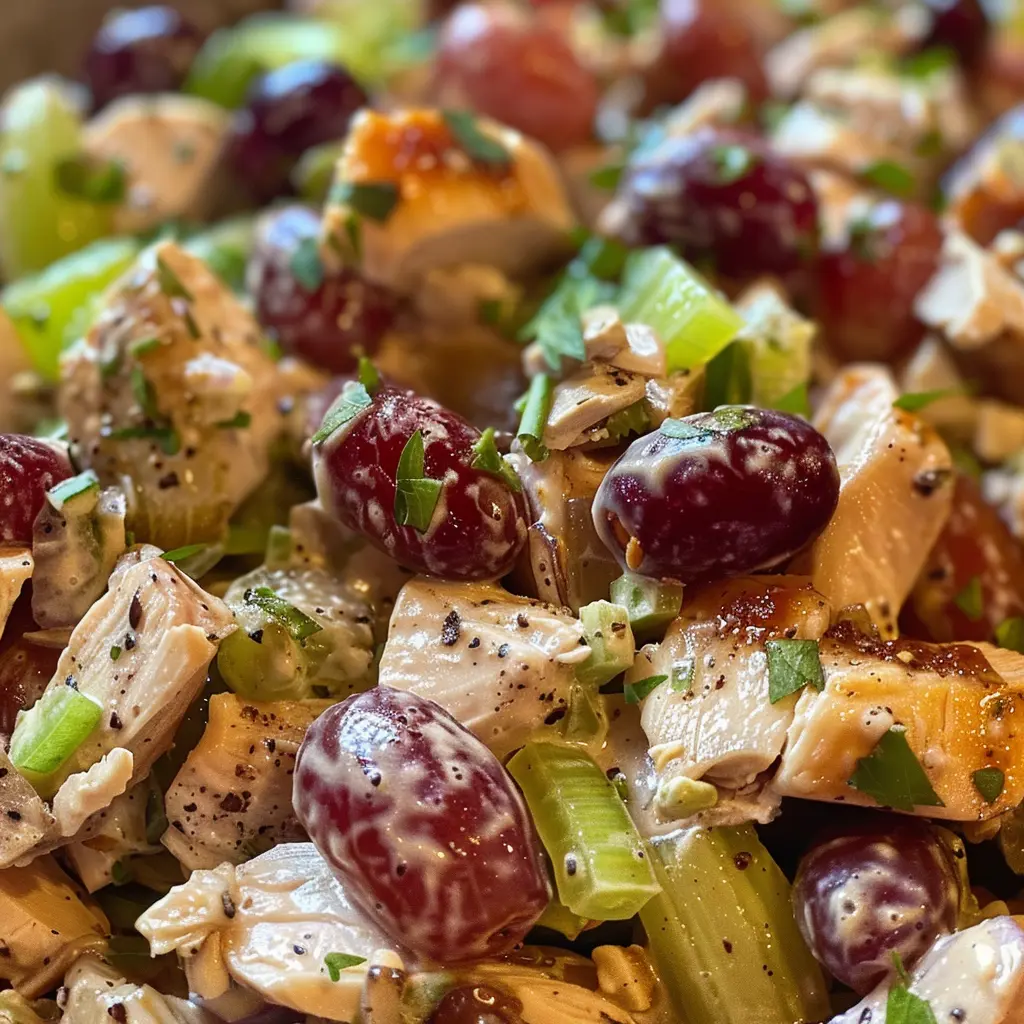
Chicken salad with grapes hits every note you want in a cold salad — tender chicken, juicy bursts of sweetness from halved red grapes, the crunch of celery and toasted pecans, and a tangy Dijon dressing that ties every element together without overwhelming any of them. It’s the kind of recipe that works equally well tucked into a croissant at lunch or spooned over mixed greens for a light dinner.
| Detail | Info |
|---|---|
| Prep Time | 15 minutes |
| Chill Time | 1 hour |
| Total Time | 1 hour 15 minutes |
| Servings | 4 to 6 |
| Difficulty | Easy |
| Cuisine | American |
Why This Recipe Works
The sweet-savory balance in this salad is what makes it so appealing and so endlessly snackable. Red grapes bring natural sugar and a juicy, almost wine-like depth that contrasts beautifully with the savory chicken and the tangy dressing. The combination isn’t novel, but it works reliably because the contrast between the sweet grape and the herby, acidic dressing creates a flavor dynamic that makes each bite taste more complex than any single component would suggest.
Making the dressing separately before adding it to the salad is a small step with a meaningful impact. Whisking the mayonnaise, Dijon, lemon juice, salt, and pepper together in its own bowl creates a fully emulsified, evenly seasoned dressing before it ever touches the chicken. If you add the condiments directly to the chicken mixture without mixing them first, you end up with pockets of plain mayo next to undissolved mustard next to unseasoned chicken — an uneven result that no amount of stirring fully corrects.
Dijon mustard in the dressing does two things beyond adding flavor. Its natural emulsifying properties help bind the dressing and prevent it from separating as the salad sits. It also adds a clean, sharp acidity that brightens the mayonnaise and keeps the dressing from tasting heavy or flat. Regular yellow mustard is milder and sweeter — it’s a workable substitute but produces a noticeably different, less sophisticated result.
Lemon juice is essential for the same reason it’s essential in any cold salad with mayonnaise — it lifts the heaviness of the fat and keeps the dressing tasting fresh rather than rich and cloying. Freshly squeezed is always better than bottled; the difference in flavor is immediate and clear.
Chilling the finished salad for at least an hour before serving allows the dressing to penetrate the chicken and the flavors to fully integrate. A freshly mixed chicken salad tastes like its components. A chicken salad that has rested for an hour tastes like a unified dish. The difference is worth the wait.
Ingredients
| Ingredient | Quantity | Notes |
|---|---|---|
| Cooked chicken, diced or shredded | 3 cups | Rotisserie chicken thigh meat gives the best flavor and texture |
| Red seedless grapes, halved | 1 cup | Red grapes are sweeter and more complex than green; halving prevents rolling |
| Celery, finely chopped | 1/2 cup | About 2 stalks; finely chopped for texture without bulk |
| Red onion, finely diced | 1/4 cup | Soak in cold water for 5 minutes to mellow the bite |
| Mayonnaise | 1/2 cup | Full-fat; Duke’s or Hellmann’s for best flavor |
| Dijon mustard | 1 tablespoon | Adds tang and helps emulsify the dressing |
| Fresh lemon juice | 1 tablespoon | Freshly squeezed; lifts the dressing and keeps it tasting fresh |
| Salt | 1/2 teaspoon | Season the dressing, then taste and adjust after mixing |
| Black pepper | 1/2 teaspoon | Freshly cracked for the sharpest flavor |
| Chopped pecans or walnuts (optional) | 1/4 cup | Toast before using for significantly better flavor |
Step-by-Step Instructions
Phase 1: Prepare the Ingredients
- If using rotisserie chicken, pull the meat from the bones while it’s still slightly warm — warm meat shreds more easily and the shreds stay more tender than meat pulled cold. Dice or shred into bite-sized pieces and set aside. If using cooked chicken breast, let it cool completely before dicing to prevent it from steaming and becoming rubbery when mixed with the cold dressing.
- Halve the grapes lengthwise. This makes them easier to eat and prevents them from rolling around on a sandwich or plate. It also increases the surface area in contact with the dressing, so they pick up a bit of that tangy flavor as they sit.
- If the raw onion flavor seems sharp, soak the diced red onion in a small bowl of cold water for 5 minutes, then drain and pat dry. This removes some of the sulfur compounds responsible for the harsh, lingering bite of raw onion without removing the onion flavor itself.
- If using nuts, toast them in a dry skillet over medium heat for 3 to 4 minutes, stirring constantly, until fragrant and lightly golden. Transfer to a plate to cool completely before adding to the salad. Warm nuts melt the mayonnaise on contact.
Phase 2: Make the Dressing and Assemble
- In a small bowl, whisk together the mayonnaise, Dijon mustard, lemon juice, salt, and black pepper until smooth and fully combined. Taste the dressing on its own — it should be tangy, creamy, and well-seasoned. Adjust with more lemon juice, salt, or pepper as needed before it touches the chicken.
- In a large mixing bowl, combine the diced chicken, halved grapes, chopped celery, and diced red onion. Stir gently to distribute the ingredients evenly.
- Pour the dressing over the chicken mixture and stir gently until everything is evenly coated. The dressing should lightly coat all the ingredients without the salad looking wet or heavy. If it seems dry, add a tablespoon more mayonnaise; if it seems too rich, add another squeeze of lemon juice.
- Fold in the toasted nuts, if using, with a gentle hand so they stay intact rather than breaking apart.
Phase 3: Chill and Serve
- Cover the bowl tightly with plastic wrap and refrigerate for at least 1 hour before serving. During this time the dressing soaks into the chicken, the flavors meld, and the salad firms up to a better serving consistency.
- Taste once more just before serving and adjust the seasoning. Cold food often needs a touch more salt than you’d expect since cold temperature mutes saltiness.
- Serve chilled in your preferred format — on croissants, sandwich bread, lettuce wraps, with crackers, or over mixed greens.
Chef Tips for Perfect Results
Use rotisserie chicken thighs over breast meat. Thigh meat has more fat and more connective tissue that breaks down into gelatin during cooking, which keeps the shreds moist and flavorful even after refrigerating with the dressing. Breast meat can turn dry and chalky in a cold salad, especially after sitting in the refrigerator overnight. If you only have breast meat, undercook it very slightly — pull it at 160 degrees F rather than 165 — to keep it from over-firming in the dressing.
Soak the red onion. Even people who love raw onion often find it too aggressive in a delicate chicken salad where it can dominate every other flavor. Five minutes in cold water eliminates the harshness while preserving the onion flavor and the color. Dry it thoroughly before adding — excess water dilutes the dressing.
Add fresh tarragon or chives. Two tablespoons of fresh tarragon leaves chopped and folded into the finished salad add a herbal, slightly anise-like note that pairs exceptionally well with grapes and Dijon. Fresh chives add a mild onion flavor and vibrant green color. Either herb elevates the salad from good to genuinely memorable.
Don’t overdress the salad. Start with the full amount of dressing and stir it in — but evaluate the result before adding more. The goal is every ingredient lightly coated, not swimming in cream. A correctly dressed chicken salad has enough dressing to bind and season without drowning out the textures and flavors of the individual components.
Add apple for extra texture. Dice half a crisp apple — Honeycrisp or Granny Smith both work well — and fold it in with the grapes. The apple adds crunch, a different kind of sweetness, and a slightly tart note that makes the salad taste more complex. Toss the diced apple in a teaspoon of lemon juice before adding to prevent browning.
Common Mistakes to Avoid
Using warm chicken. Warm chicken added to mayonnaise-based dressing raises the temperature of the dressing into the danger zone for food safety and also melts the mayonnaise slightly, resulting in a greasy, separated dressing. Let the chicken cool completely to room temperature before mixing, then refrigerate the finished salad immediately.
Chopping the celery too large. Large celery chunks create a textural imbalance — some bites are all celery, others have none. Finely chopped celery distributes evenly throughout the salad so every forkful gets a bit of crunch without it being the dominant texture of any bite.
Using bottled lemon juice. Bottled lemon juice has a flat, slightly oxidized flavor that doesn’t brighten the dressing the way fresh juice does. Fresh lemon juice takes 30 seconds and makes an immediate difference in how lively and fresh the dressing tastes.
Serving without chilling. Freshly mixed chicken salad is good. Chicken salad that has rested in the refrigerator for an hour is significantly better. The rest time is not optional — it’s the step that takes the salad from a collection of dressed ingredients to a cohesive dish.
Adding nuts too early. Nuts folded into the salad hours before serving absorb moisture from the dressing and lose their crunch. If you’re making this ahead, add the nuts within 30 minutes of serving to preserve their texture.
Variations and Substitutions
Green grapes: Swap the red grapes for green seedless grapes for a tarter, crisper variation. Green grapes have less sugar and more acid, which shifts the flavor balance of the salad slightly toward savory. Both colors work well; the choice depends on how sweet you want the salad to read.
Greek yogurt swap: Replace half the mayonnaise with full-fat plain Greek yogurt for a lighter version with more protein and a tangier flavor. The salad will be slightly less rich but equally creamy. Avoid fat-free yogurt — it’s too thin and too tart to work well here.
Add dried cranberries: A quarter cup of dried cranberries adds a chewy, sweet-tart element that works particularly well alongside the Dijon dressing. They also add a pop of color that makes the salad look more festive — a good choice for holiday gatherings or potlucks.
Curry chicken salad: Add a teaspoon of curry powder and a quarter teaspoon of turmeric to the dressing. The warm spice combination pairs unexpectedly well with the sweet grapes and creates a version of the salad that stands out from the crowd at any potluck or picnic table.
Serving Suggestions
Croissants are the classic and best vehicle for chicken salad with grapes — the buttery, flaky pastry complements the creamy dressing and the sweet grapes in a way that bread simply doesn’t match. Split the croissant, add a butter lettuce leaf, and fill generously with the chilled salad.
For a lighter presentation, spoon the salad into butter lettuce cups for a low-carb option that looks clean and elegant on a plate. Over mixed greens with a drizzle of extra lemon juice makes a complete salad plate. With crackers alongside is ideal for a party spread where guests can help themselves.
Storage and Reheating
Refrigerator: Store in an airtight container in the refrigerator for up to 3 days. The grapes release a small amount of juice over time which gradually thins the dressing slightly — stir well before serving and taste for seasoning since the flavor can mellow as it sits.
Freezing: Not recommended. Mayonnaise-based dressings separate and become watery when frozen and thawed, and the grape and celery textures deteriorate significantly. This salad is meant to be made fresh and eaten within three days.
Make-ahead tip: The dressing can be made up to 3 days ahead and stored separately. Keep the chicken, grapes, celery, and onion together in one container. Combine with the dressing and chill for an hour before serving for the best result.
Nutritional Information
| Nutrient | Per Serving (approx.) |
|---|---|
| Calories | 310 |
| Protein | 26g |
| Carbohydrates | 10g |
| Fat | 18g |
| Saturated Fat | 3g |
| Fiber | 1g |
| Sodium | 420mg |
Nutritional values are estimates based on standard ingredients. Values will vary based on specific brands and portion sizes.
FAQ
Can I use canned chicken?
You can, but canned chicken has a softer, more uniform texture and a mild, slightly processed flavor that produces a less interesting salad than freshly cooked or rotisserie chicken. If canned chicken is what’s available, drain it very thoroughly, break it apart, and season the salad generously to compensate for the milder base flavor. The recipe still works — it’s just a different experience than the version made with real shredded chicken.
How do I prevent the salad from getting watery?
Three things cause chicken salad to weep: wet chicken, undrained celery, and grapes that have been sitting sliced for too long before assembly. Pat the chicken dry if it’s moist. Dry the celery after washing. Halve the grapes right before mixing rather than ahead of time. Soaked red onion should be patted thoroughly dry before going in. Following all four steps produces a salad that stays creamy and cohesive rather than pooling liquid at the bottom of the bowl.
What’s the best bread for chicken salad sandwiches?
Croissants are the top choice for this particular salad — the butter in the pastry complements the creaminess of the dressing and the grapes in a way no other bread quite matches. Soft potato rolls and brioche buns are excellent alternatives with a similar richness. Classic white sandwich bread works for an everyday version. Avoid anything too crusty or dense that would overpower the delicate flavors of the salad.
Can I make this salad the night before?
Yes, and it’s actually a good make-ahead dish. The flavors develop overnight and the salad tastes better the next day than it does freshly made. Hold the nuts until just before serving to preserve their crunch. Give the salad a good stir and a taste for seasoning before serving since flavors can shift slightly after refrigeration.
How do I make this more filling for a main course?
Increase the chicken to 4 cups and serve over a bed of mixed greens dressed with lemon juice and olive oil. Add sliced avocado, hard-boiled egg halves, and extra toasted nuts alongside for a salad plate that’s genuinely satisfying as a main course. Pita pockets filled with the salad and topped with shredded romaine also make a more substantial lunch option.
Conclusion
Chicken salad with grapes is one of those recipes that punches well above the effort it requires. Fifteen minutes of active work, an hour in the refrigerator, and you have something that impresses at a lunch table, disappears at a potluck, and satisfies as a quick weeknight dinner. The sweet-savory balance, the textural variety, and the tangy dressing make it a recipe worth keeping in regular rotation.