
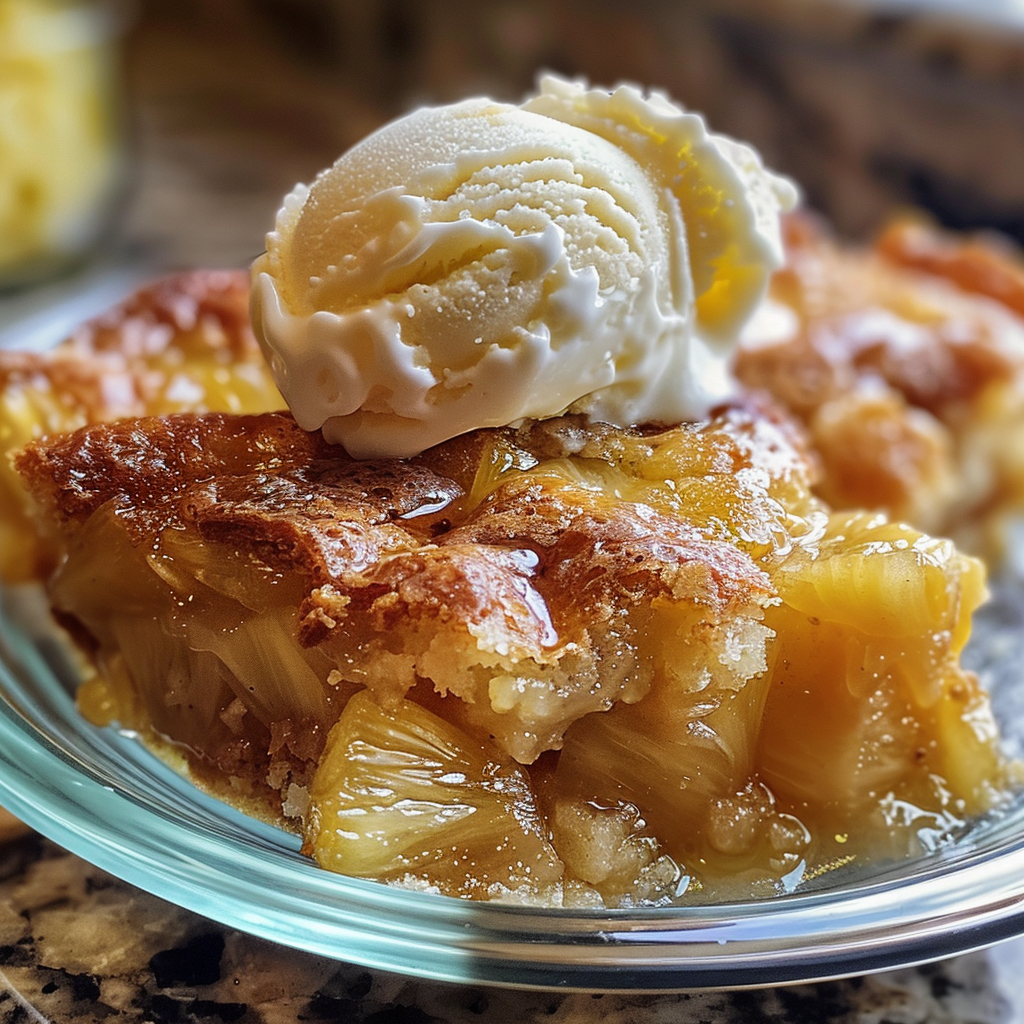
Gooey Amish pineapple dump cake layers crushed pineapple, dry yellow cake mix, and melted butter in a baking dish without a single bowl, a single whisk, or a single moment of mixing, then bakes into something that somehow produces a golden, buttery, crisp top layer over a bubbling, sweet pineapple filling that tastes nothing like the five minutes of effort that went into making it.
| Detail | Info |
|---|---|
| Prep Time | 5 minutes |
| Cook Time | 50 minutes |
| Cool Time | 10 minutes |
| Total Time | 1 hour 5 minutes |
| Servings | 12 |
| Difficulty | Easy |
| Cuisine | American |
Why This Recipe Works
Dump cakes work on a principle that seems like it shouldn’t produce anything worth eating: dry cake mix poured over fruit and covered in butter somehow bakes into a cohesive, layered dessert with distinct texture zones. The reason it works is that the pineapple juice — which is deliberately kept in the can rather than drained — provides all the liquid the cake mix needs to hydrate during the long bake. As the oven heat drives moisture upward from the pineapple layer, it absorbs into the dry cake mix above it, forming a soft, cake-like middle layer. The butter drizzled on top seals the surface and creates the golden, slightly crisp, sandy crust that contrasts with the gooey interior beneath it.
The pineapple juice is non-negotiable and the most important technical detail in the recipe. Dump cakes made with drained pineapple don’t have enough liquid to hydrate the cake mix fully, and the result is a dry, powdery layer rather than a tender crumb. The instructions specify crushed pineapple with its juice for this exact reason — the juice is the structural ingredient that makes the chemistry of the recipe work.
Melted butter drizzled over the cake mix rather than cold butter cut in or softened butter spread on top is specific to the dump cake format. The melted butter flows into the spaces between the dry cake mix particles and coats them evenly as it soaks downward during the early stage of baking. As the oven temperature rises, this butter-soaked surface crisps and browns, forming the golden crust that’s the most visually and texturally satisfying part of the finished dessert. Cold or softened butter applied to dry mix doesn’t distribute evenly and produces uneven browning.
The 45 to 50 minute bake time at 350 degrees F is longer than most cake recipes for a reason. The extended time allows the pineapple layer to heat through completely until it bubbles actively, which is the visual signal that the filling is fully cooked and the fruit’s natural sugars have concentrated into a jammier, more intensely flavored base. A dump cake pulled before the filling is bubbling will be too liquid at the bottom and the top layer won’t have had enough steam from below to hydrate properly.
Letting the cake rest for 10 minutes before serving is the step that allows the bubbling pineapple filling to settle from its oven-hot liquid state back to a gooey, scoopable consistency. Served immediately from the oven, the filling is thin and runny and pours off the spoon. After 10 minutes of rest, it thickens into the sticky, glossy filling that gives this cake its name and character.
Ingredients
| Ingredient | Quantity | Notes |
|---|---|---|
| Crushed pineapple with juice | 1 can (20 oz) | Do NOT drain — the juice is essential to hydrating the cake mix |
| Yellow cake mix | 1 box (15.25 oz) | Standard size; do not prepare according to package directions |
| Unsalted butter, melted | 1/2 cup | Drizzled evenly over the cake mix for the golden crust |
| Chopped pecans (optional) | 1/2 cup | Adds crunch and a nutty richness to the topping |
| Ground cinnamon (optional) | 1 teaspoon | Adds warmth; pairs naturally with pineapple and butter |
| Whipped cream or vanilla ice cream (optional) | For serving | A cold, creamy contrast to the warm, gooey filling |
Step-by-Step Instructions
Phase 1: Layer the Ingredients
- Preheat the oven to 350 degrees F. Lightly grease a 9×13-inch baking dish with nonstick cooking spray or a thin coat of butter.
- Pour the entire can of crushed pineapple, juice included, into the prepared baking dish. Spread it into an even layer with a spoon or spatula. Every corner of the pan should be covered with pineapple so the cake mix above it has an even source of moisture throughout.
- Sprinkle the dry yellow cake mix evenly over the pineapple layer directly from the box. Do not stir, do not mix, do not add any of the ingredients listed on the cake mix package. Spread the dry mix gently with your fingers or the back of a spoon into an even layer that covers the pineapple completely.
- Drizzle the melted butter slowly and evenly over the surface of the cake mix, moving back and forth across the entire pan to distribute it as uniformly as possible. The butter should cover as much of the surface as it can — any dry patches of cake mix that don’t receive butter will stay powdery on top rather than crisping into the golden crust.
- If using, sprinkle the chopped pecans evenly over the butter, then dust the cinnamon over the top.
Phase 2: Bake and Rest
- Bake for 45 to 50 minutes, until the top is deeply golden brown and the pineapple filling is visibly bubbling around the edges and through any gaps in the crust. The bubbling is the reliable indicator that the filling is fully cooked — don’t rely on time alone since oven temperatures vary.
- Remove from the oven and allow to rest for 10 minutes before serving. The filling will settle from thin and liquid to gooey and scoopable during this time.
- Scoop into bowls and serve warm with whipped cream or a scoop of vanilla ice cream if desired.
Chef Tips for Perfect Results
Cover any dry patches of cake mix with butter. After drizzling the butter, look across the surface of the pan — any visible dry patches of white cake mix that the butter didn’t reach will stay powdery rather than crisping into the golden crust. If you spot them, drizzle a little extra melted butter over those spots, or use a pastry brush to sweep some of the pooled butter from other areas into the dry patches.
Watch for bubbling, not just time. Ovens vary by 25 to 50 degrees from their dial setting, and a dump cake in a slightly cooler oven may need 55 minutes rather than 45. The filling bubbling actively around the edges is the reliable signal that the cake is done, not the color of the top alone.
Use a full-fat, standard yellow cake mix. Sugar-free or reduced-fat cake mixes don’t behave the same way in the dump cake format and can produce a different, less reliable crust. The standard version of any major yellow cake mix brand works consistently.
Add the pecans on top of the butter, not beneath it. Nuts placed directly on the dry cake mix before the butter drizzle can end up buried and soft. Nuts scattered over the melted butter stay on the surface, toast during baking, and give the finished top a satisfying crunch.
Don’t overbake. A deeply golden top with actively bubbling edges is done. A very dark brown top with edges that have gone from bubbling to scorched is overbaked. Check the pan at the 40-minute mark to gauge how quickly your oven is browning the crust.
Common Mistakes to Avoid
Draining the pineapple. This is the most common and most impactful mistake in any dump cake recipe. Without the juice, there isn’t enough liquid in the pan to hydrate the cake mix during baking, and the finished dessert will have a thick, dry, powdery top layer rather than the tender, golden crust the recipe produces when made correctly.
Stirring the layers together. The distinct layering is what creates the dump cake’s characteristic texture — gooey fruit filling on the bottom, cake-like middle, crispy buttery crust on top. Stirring the pineapple, cake mix, and butter together before baking destroys this layering and produces something more like a wet, dense cake that bakes unevenly.
Using cold butter. Cold butter in chunks or slices on top of the cake mix doesn’t distribute evenly as it melts and leaves the crust unevenly buttered — some areas overbrown, others stay pale. Melted butter flows and distributes far more evenly before it begins to absorb into the mix.
Serving immediately from the oven. The filling straight from the oven is extremely hot and very liquid. The 10-minute rest is what produces the gooey, scoopable consistency that makes the dessert work. Skip it and you get a hot liquid pouring out of the spoon rather than the thick, sticky filling that earns the name.
Under-baking. A cake mix top that’s pale or only lightly golden and a filling that isn’t bubbling yet means the dessert needs more time. The crust won’t be crispy and the filling won’t have concentrated properly. Give it another 5 minutes and check again.
Variations and Substitutions
Cherry pineapple dump cake: Add a can of cherry pie filling spooned in dollops over the crushed pineapple before adding the cake mix. The combination of tart cherry and sweet pineapple under the buttery cake crust is a classic dump cake variation that’s been around for decades.
Coconut topping: Scatter half a cup of sweetened shredded coconut over the cake mix alongside or instead of the pecans. The coconut toasts golden during baking and adds a tropical flavor that complements the pineapple.
Butter pecan version: Swap the yellow cake mix for a butter pecan cake mix for a richer, more complex flavor that pairs particularly well with the pineapple and optional pecans in the recipe.
Pineapple coconut cream dump cake: Swap half the crushed pineapple for a can of coconut cream (not coconut milk) for a richer, more dessert-like filling with a pronounced coconut flavor. Top with shredded coconut and toasted macadamia nuts for a tropical version.
Serving Suggestions
Serve warm, scooped into bowls or onto dessert plates, with a generous scoop of vanilla ice cream or a mound of whipped cream alongside. The contrast of the warm, gooey, golden-topped cake against cold ice cream is the best version of this dessert. A drizzle of caramel sauce over the top adds an extra layer of richness that pairs naturally with the pineapple and butter.
Storage and Reheating
Refrigerator: Store covered with plastic wrap or foil in the refrigerator for up to 4 days. The crust softens as it sits and absorbs moisture from the filling, which some people find even more appealing than the freshly baked version.
Reheating: Reheat individual portions in the microwave for 30 to 60 seconds until warmed through. The oven works well for reheating the whole pan — cover loosely with foil and warm at 300 degrees F for 15 to 20 minutes.
Freezer: Freeze in an airtight container for up to 2 months. The texture changes slightly after freezing — the crust loses some of its crispiness — but the flavor remains excellent. Thaw overnight in the refrigerator and reheat before serving.
Nutritional Information
| Nutrient | Per Serving (approx.) |
|---|---|
| Calories | 280 |
| Protein | 2g |
| Carbohydrates | 46g |
| Fat | 10g |
| Saturated Fat | 5g |
| Fiber | 1g |
| Sugar | 30g |
| Sodium | 310mg |
Nutritional values are estimates based on standard ingredients without optional toppings. Values will vary based on specific cake mix brand used.
FAQ
Why is it called a dump cake?
The name comes directly from the preparation method: you dump the ingredients into the pan in layers without mixing. No bowls, no beaters, no batter preparation — just layer and bake. The term has been used in American home cooking since at least the 1980s and refers to the entire category of fruit-and-cake-mix baked desserts made with this no-mix method.
Why is part of my top still powdery?
Powdery spots on the finished crust mean that portion of the cake mix didn’t receive enough butter or enough moisture from the pineapple beneath it to hydrate during baking. Ensure the pineapple layer is spread completely to the edges of the pan, and drizzle the butter methodically across the entire surface. A pastry brush can help spread pooled butter into dry areas before baking.
Can I use a different flavor of cake mix?
Yes. White cake mix produces a lighter, more neutral topping that lets the pineapple flavor stand out more prominently. Butter pecan cake mix adds a rich, nutty dimension. Spice cake mix introduces warming spices that complement the pineapple and optional cinnamon. Any of these work in the same quantities and with the same technique.
Can I make this without butter?
Technically yes, but the result will be significantly different. Butter is what creates the golden, crispy crust that distinguishes a dump cake from a soggy mess of cake mix and fruit. Substituting a neutral-flavored coconut oil in the same quantity produces a similar crust with a slight coconut undertone. Omitting fat entirely leaves the top dry and powdery.
Is this the same as a cobbler or a crisp?
Dump cake occupies its own category, though it has elements of all three. Cobblers have a biscuit or batter topping that’s deliberately mixed and dropped over the fruit. Crisps have an oat and butter crumble topping. Dump cakes use dry cake mix as the topping, which produces a texture that’s softer and more cake-like than a crisp and more uniform than a cobbler. The no-mix technique is the defining characteristic that separates dump cakes from all of the above.
Conclusion
Gooey Amish pineapple dump cake is the dessert that belongs in every home baker’s back pocket — five ingredients, one pan, no mixing, and 50 minutes in the oven produces something that tastes far more impressive than the effort involved. The bubbling pineapple filling, the tender middle layer, and the golden buttery crust make it the kind of dessert that people go back for a second scoop of, and the ease of making it means there’s never a good reason not to.