
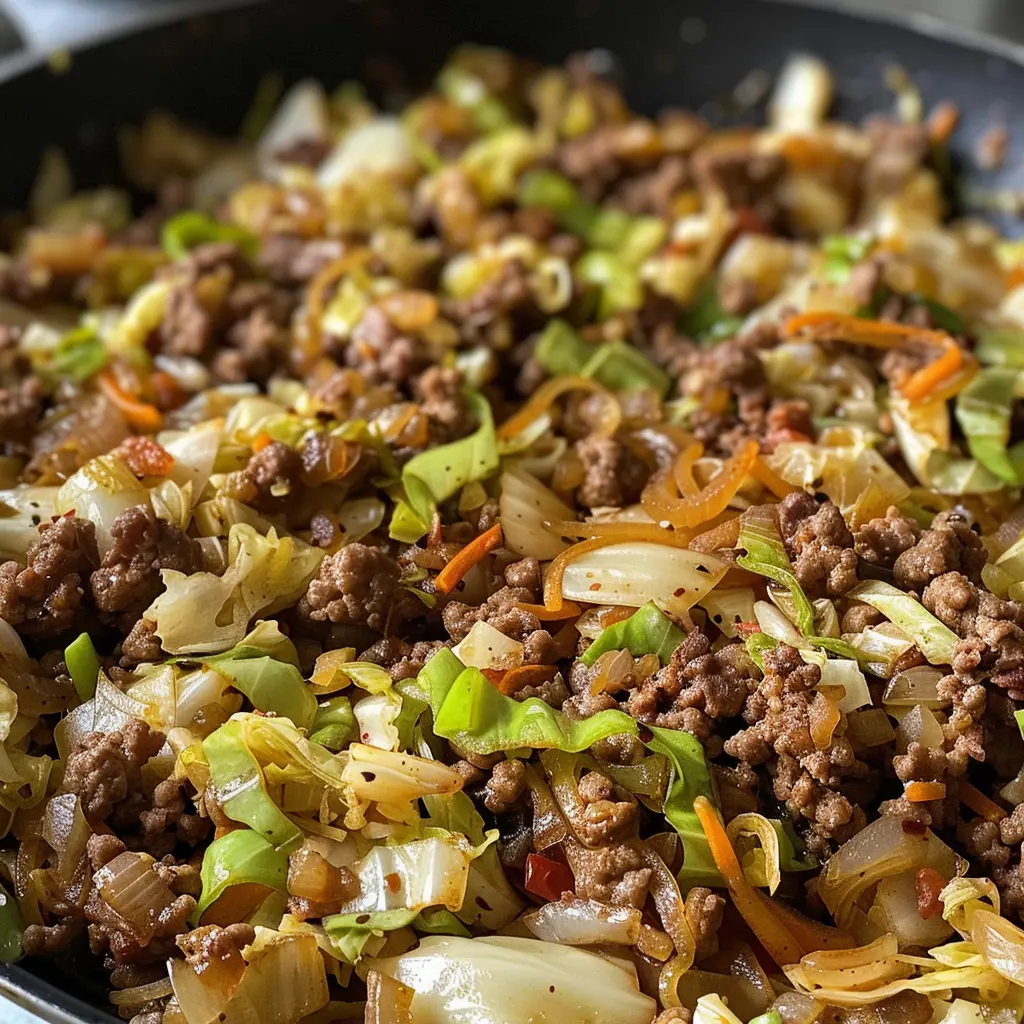
Ground beef and cabbage skillet builds a savory, paprika-seasoned beef base in one pan, adds shredded cabbage and beef broth, and simmers everything together until the cabbage is tender and the broth has reduced into a flavorful, lightly glossed dish that tastes like something much more involved than a 30-minute weeknight dinner. It’s the kind of recipe that disappears quietly from the rotation until you make it again and wonder why you ever stopped.
| Detail | Info |
|---|---|
| Prep Time | 10 minutes |
| Cook Time | 25 minutes |
| Total Time | 35 minutes |
| Servings | 4 |
| Difficulty | Easy |
| Cuisine | American |
Why This Recipe Works
The foundation of this dish is the order of operations in the skillet: onion first, then garlic, then beef. Each step builds on the last. Onion cooked in olive oil before any other ingredient goes in softens and sweetens, releasing its natural sugars into the fat and laying a sweet, savory base. Garlic added after the onion and cooked briefly blooms its aromatic compounds in the hot fat rather than raw into the broth. By the time the beef goes in, it’s cooking in a fat that already carries the flavors of softened onion and fragrant garlic — every crumble of beef is seasoned from the moment it hits the pan.
Browning the ground beef until it develops real color rather than just cooking it through to gray is the step that determines whether the finished dish tastes merely adequate or genuinely good. The Maillard reaction that produces browning on the beef’s surface creates hundreds of flavor compounds that don’t exist in raw or barely-cooked beef. Properly browned beef in a skillet also leaves behind browned bits on the pan surface that dissolve into the broth when it’s added, deepening the flavor of the entire dish in a way that’s noticeable in the finished plate.
Adding the cabbage while it’s still raw and letting it cook directly in the seasoned beef mixture and broth is what gives the cabbage its best flavor. Raw cabbage added to liquid and cooked in it absorbs the beef, onion, garlic, and paprika flavors as it softens — it becomes seasoned from within rather than sitting in a bowl of liquid that’s seasoned around it. Cabbage pre-cooked and then added would taste boiled and plain next to the beef. Cabbage that cooks in the same pan as everything else tastes like part of the dish.
Paprika in the seasoning blend does more than add color. Paprika is made from dried, ground red peppers and contributes a mild pepper warmth, a slightly sweet earthiness, and the distinctive rust-red hue that makes the finished dish look more attractive than its simple ingredient list might suggest. Smoked paprika, if substituted for the sweet variety, adds a light smokiness that works particularly well with beef and cabbage. Either version adds a dimension to the seasoning that salt and black pepper alone can’t achieve.
The cup of beef broth serves multiple purposes. It provides the moisture the cabbage needs to steam and soften during the covered 10 to 12 minute cook. It dissolves any browned bits stuck to the pan surface and carries them into the dish. And as it reduces slightly over the cook time, it concentrates and creates a light, savory glaze that coats the beef and cabbage rather than pooling at the bottom as excess liquid. The result is a dish that’s moist and flavorful without being soupy.
Ingredients
| Ingredient | Quantity | Notes |
|---|---|---|
| Lean ground beef | 1 pound | 85/15 blend gives good flavor without excessive grease |
| Cabbage, shredded | 4 cups | Green cabbage; shred into thin strips for the fastest, most even cooking |
| Medium onion, chopped | 1 | Yellow or white; cooked first to build the flavor base |
| Garlic cloves, minced | 2 | Fresh garlic for the most aromatic result |
| Olive oil | 1 tablespoon | For sauteing the onion and garlic |
| Salt | 1 teaspoon | Adjust to taste; the broth also carries sodium |
| Black pepper | 1 teaspoon | Freshly cracked preferred |
| Paprika | 1 teaspoon | Sweet or smoked; smoked adds a light, pleasant smokiness |
| Beef broth | 1 cup | Provides moisture and savory depth during the simmer |
Step-by-Step Instructions
Phase 1: Build the Flavor Base
- Heat the olive oil in a large skillet over medium heat. Add the chopped onion and cook, stirring occasionally, for 4 to 5 minutes until softened and just beginning to turn golden at the edges.
- Add the minced garlic and cook for 30 seconds, stirring constantly, until fragrant. Don’t let the garlic brown — it turns bitter quickly and will affect the flavor of the entire dish.
Phase 2: Brown the Beef
- Add the ground beef to the skillet. Break it apart into small, even crumbles using a wooden spoon or spatula as it cooks. Let it cook without constant stirring — leaving it in contact with the hot pan for a minute at a time allows the bottom to develop real browning rather than steaming gray. Cook for 6 to 8 minutes until fully browned throughout with no pink remaining.
- Drain excess grease if needed, leaving a thin coating in the pan. Season the beef with salt, black pepper, and paprika. Stir to distribute the seasoning evenly through the meat.
Phase 3: Add Cabbage and Simmer
- Add the shredded cabbage to the skillet and stir to combine it with the seasoned beef. The cabbage will seem like a lot at first — it takes up significant volume raw — but it wilts down to roughly a quarter of its raw volume within a few minutes of heat.
- Pour in the beef broth and stir to combine. Scrape up any browned bits from the pan bottom as the liquid goes in.
- Cover the skillet and cook over medium heat for 10 to 12 minutes, stirring once or twice during cooking, until the cabbage is tender and the broth has reduced to a light, glossy coating rather than pooling at the bottom.
- Taste and adjust seasoning with additional salt, pepper, or paprika as needed. Serve hot.
Chef Tips for Perfect Results
Shred the cabbage thin. Thick-cut cabbage takes significantly longer to become tender and can leave you with undercooked, crunchy pieces by the time the broth has reduced. Thin strips — roughly an eighth of an inch — cook through evenly in the 10 to 12 minute covered simmer. A sharp knife and a steady hand, or the slicing disk of a food processor, produce the most consistent results.
Don’t rush the onion. Onion cooked until genuinely softened and lightly golden tastes sweet and mellow and becomes part of the dish’s background flavor. Onion barely cooked for a minute before the garlic and beef go in tastes sharp and vegetal and doesn’t integrate as smoothly. Four to five minutes over medium heat is the right amount of time.
Use smoked paprika for extra depth. The recipe calls for paprika without specifying which kind, and either sweet or smoked works. Smoked paprika adds a subtle, woody smokiness that makes the finished dish taste more complex and lends the beef and cabbage combination a slightly BBQ-adjacent character that most people find very appealing.
Let the broth reduce before uncovering. After the 10 to 12 minutes of covered cooking, if the broth still seems too liquid, remove the lid and cook for 2 to 3 additional minutes over medium heat, stirring occasionally, until it reduces to the right consistency. The dish should be moist but not soupy.
Add a splash of soy sauce or Worcestershire. A tablespoon of either stirred in with the broth adds a deep umami note that makes the beef taste meatier and the overall dish taste more complex without changing its fundamental character.
Common Mistakes to Avoid
Not browning the beef properly. Beef that’s cooked to gray without any browning lacks the Maillard-reaction flavor that makes the difference between this dish tasting like seasoned ground beef with vegetables and tasting like something genuinely satisfying. Let the beef sit undisturbed in the pan long enough to develop real color.
Adding the cabbage before the beef is browned. Cabbage releases significant moisture as it cooks, and adding it before the beef is properly browned will cause the beef to steam rather than continue to brown. Get the beef fully cooked and seasoned before the cabbage goes in.
Cutting the cabbage too thick. Thick pieces of cabbage don’t cook through in the covered simmer time and produce a dish where the beef is perfectly cooked but the cabbage is still crunchy and raw-tasting in the center. Thin, even strips ensure the cabbage becomes tender at the same time as everything else.
Cooking uncovered during the simmer. The cover traps steam that softens the cabbage from above while the broth works from below. Without the lid, the broth evaporates too quickly before the cabbage has a chance to cook through properly, leaving the cabbage still firm.
Not tasting before serving. The broth carries sodium, and the seasoning was added mid-cook before the cabbage and broth went in. Always taste the finished dish and adjust — a pinch of extra salt or an extra dusting of paprika can make the difference between good and great.
Variations and Substitutions
Add diced potato: One or two medium potatoes peeled and cut into half-inch cubes, added with the cabbage, cook through in the simmer time and make the dish more substantial and filling. A classic Central European combination that turns this into a complete one-pan meal.
Add tomatoes: A can of diced tomatoes (drained) or a cup of halved cherry tomatoes added with the broth introduces acidity and a slightly sweet tomato note that brightens the whole dish and adds color.
Caraway seeds: A teaspoon of caraway seeds toasted briefly in the olive oil before the onion goes in adds the traditional Eastern European flavor that cabbage and beef dishes are famous for in German and Polish cuisines. It’s an optional addition that takes the dish in a distinctly different direction.
Ground turkey version: Ground turkey substitutes well for the beef and produces a lighter, less rich version. Season more generously since turkey is milder, and consider adding an extra half teaspoon of paprika and a splash of Worcestershire sauce to compensate for the flavor depth that beef naturally provides.
Serving Suggestions
Serve directly from the skillet into bowls or plates. This dish works as a standalone one-pan dinner or alongside steamed white rice, which absorbs the light broth and makes the meal more filling. Mashed potatoes alongside are a natural pairing. A dollop of sour cream over the top adds a cool, tangy contrast to the savory beef and cabbage. Crusty bread for soaking up the broth completes a simple, satisfying dinner.
Storage and Reheating
Refrigerator: Store in an airtight container for up to 4 days. The flavors deepen overnight and the dish often tastes even better on day two as the beef and cabbage continue to absorb the seasoned broth.
Reheating: Warm in a skillet over medium-low heat with a splash of broth or water to prevent sticking, stirring occasionally. The microwave works well for individual portions in 60-second intervals.
Freezer: Freezes well for up to 3 months. The cabbage softens further after freezing and thawing but remains flavorful. Thaw overnight in the refrigerator before reheating on the stovetop.
Nutritional Information
| Nutrient | Per Serving (approx.) |
|---|---|
| Calories | 280 |
| Protein | 26g |
| Carbohydrates | 10g |
| Fat | 15g |
| Saturated Fat | 5g |
| Fiber | 3g |
| Sodium | 580mg |
Nutritional values are estimates based on 85/15 ground beef and standard ingredients. Values will vary based on specific brands used.
FAQ
Can I use pre-shredded bagged coleslaw mix instead of shredding my own cabbage?
Yes, and it’s a legitimate time-saver. A standard 14-ounce bag of coleslaw mix provides roughly 4 cups of shredded cabbage and carrot that works identically in this recipe. The carrot in the mix adds a slight sweetness and color variation that most people find pleasant rather than out of place.
Do I need to add the beef broth?
The broth is what provides the moisture the cabbage needs to steam and soften during the covered cooking time and what dissolves the browned bits from the pan into the dish. Without it, the cabbage risks scorching on the bottom before it has a chance to become tender. If you don’t have beef broth, chicken broth or a cup of water with a teaspoon of Worcestershire sauce both work as substitutes.
Can I make this keto-friendly?
This recipe is naturally very low in carbohydrates as written — cabbage is one of the most keto-friendly vegetables available. The only ingredients that carry carbohydrates in meaningful amounts are the onion and the cabbage itself, both of which are well within typical keto carbohydrate limits per serving. No substitutions needed.
How do I keep the cabbage from getting mushy?
Two things prevent mushy cabbage: not overcooking it and not cutting it too thin. The 10 to 12 minute covered simmer produces cabbage that’s tender but still has some texture. Extending the cook time significantly beyond that, or using very finely shredded cabbage, risks it becoming soft and falling apart. Check it at the 10-minute mark and remove the lid once it’s reached the texture you prefer.
Can I add rice directly to the skillet?
Yes. Add half a cup of long-grain white rice with the broth, increase the broth to 1.5 cups, and extend the covered cooking time to 20 to 25 minutes until the rice is cooked through and has absorbed most of the liquid. Stir once or twice during cooking to prevent the rice from sticking to the bottom. This turns the dish into a more substantial, all-in-one meal similar to a deconstructed stuffed cabbage.
Conclusion
Ground beef and cabbage skillet is a recipe that earns respect precisely because it doesn’t try to be more than it is. Simple ingredients, a clear technique, and one pan produce a dinner that’s genuinely satisfying and genuinely repeatable — the kind of weeknight meal that becomes a household staple not because it’s trendy but because it works every single time and costs almost nothing to make.