
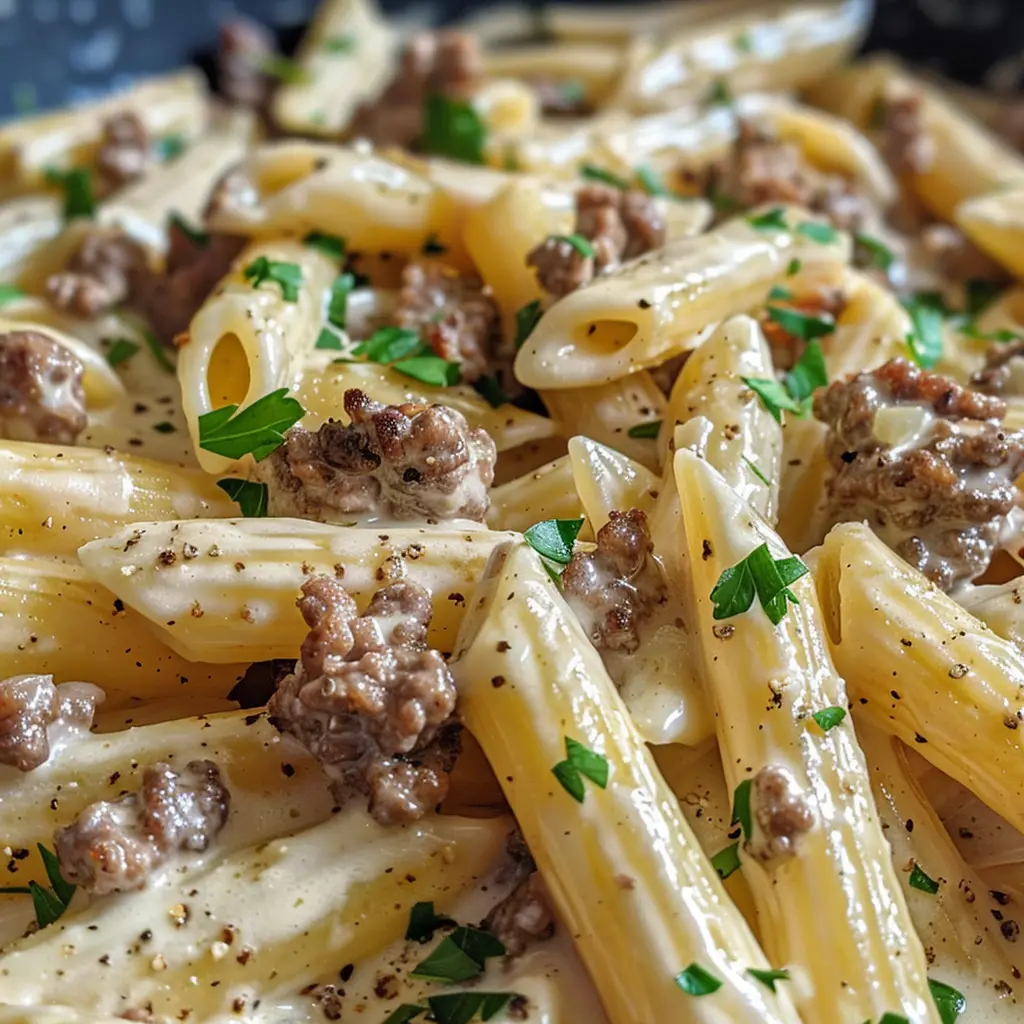
One-pot creamy beef and garlic butter pasta starts with garlic bloomed in butter, builds a seasoned ground beef base, then cooks pasta directly in beef broth until the liquid is absorbed and the starch thickens everything into a creamy, Parmesan-finished sauce — all in the same pot without draining a single thing. The result is a deeply flavored, richly textured pasta dish that takes 30 minutes and leaves only one pot to wash.
| Detail | Info |
|---|---|
| Prep Time | 5 minutes |
| Cook Time | 25 minutes |
| Total Time | 30 minutes |
| Servings | 4 |
| Difficulty | Easy |
| Cuisine | American / Italian-Inspired |
Why This Recipe Works
Starting the pot with garlic in butter before the beef goes in is what gives this dish its defining garlic butter character. Garlic cooked in hot butter blooms — its aromatic compounds release into the fat and the fat carries that flavor into everything that follows. The beef added after the garlic cooks in that garlic-infused butter, the broth poured over the beef picks up those flavors, and the pasta cooking in that broth absorbs them throughout. A dish that starts with garlic in butter tastes garlic-buttery from the first bite to the last; a dish that adds garlic later doesn’t achieve the same depth of integration.
Cooking uncooked pasta in beef broth rather than in separately boiled, salted water is the central technique that makes this one-pot dish so flavorful. As the pasta absorbs the broth during cooking, it takes on the savory, beefy flavor of the liquid rather than remaining a neutral starch. The pasta arrives at the table already seasoned throughout its structure rather than being seasoned only on its surface from sauce applied at the end. Additionally, the starch the pasta releases as it cooks thickens the remaining broth into a natural sauce that coats everything without requiring a separate roux or thickening step.
Adding the heavy cream after the pasta is cooked — reduced to low heat, not still boiling — is a deliberate sequencing choice. Cream added to a vigorous boil can reduce too quickly and risk breaking, producing a grainy or separated sauce. Adding it after the pasta is done and the heat is lowered brings it gently into a sauce that’s already partially thickened from the pasta starch, where it enriches and smooths the remaining liquid into a cohesive, velvety coating rather than fighting with excess heat.
Parmesan stirred in last, off the boil, is the step that finishes the sauce and transforms it from a brothy, cream-enriched pasta to something genuinely silky. Parmesan’s natural glutamates add umami depth, its salt seasoning enhances everything in the pot, and its proteins and fat bind with the starch-thickened liquid and cream into a sauce that clings to every piece of pasta rather than pooling at the bottom of the bowl. Adding it while the heat is still very low prevents it from seizing or turning grainy.
Paprika alongside the Italian seasoning is not redundant seasoning — each does something distinct. Italian seasoning provides herbal notes from oregano, basil, and thyme that give the dish its recognizable Italian-American character. Paprika adds warmth, a subtle sweetness, and the rust-red color that gives the finished dish a more visually appealing depth of color than the pallor that a cream and beef broth sauce alone would produce. The two spices work in different dimensions and their combination produces a more complete and interesting seasoning profile than either alone.
Ingredients
| Ingredient | Quantity | Notes |
|---|---|---|
| Ground beef | 1 pound | 80/20 for the best flavor; drain excess fat after browning |
| Butter | 2 tablespoons | The base for blooming the garlic before the beef goes in |
| Garlic cloves, minced | 4 | Cooked first in the butter to infuse the fat with flavor |
| Pasta | 12 oz | Medium shapes work best: penne, rotini, or shells hold the sauce well |
| Beef broth | 2 cups | The pasta cooks in this; low-sodium gives better control over final salt |
| Heavy cream | 1 cup | Added after the pasta is cooked and the heat is reduced |
| Parmesan cheese, shredded | 1 cup | Freshly grated melts most smoothly; stirred in last |
| Italian seasoning | 1 teaspoon | Provides the herbal backbone of the seasoning profile |
| Paprika | 1/2 teaspoon | Adds warmth and color alongside the Italian seasoning |
| Salt and black pepper | To taste | Season after adding Parmesan; it also carries salt |
| Fresh parsley, chopped | For garnish | Adds color and a clean, herbal finish before serving |
Step-by-Step Instructions
Phase 1: Build the Base
- Melt the butter in a large pot or Dutch oven over medium heat. Add the minced garlic and cook for about 30 seconds, stirring constantly, until fragrant and just beginning to turn pale gold. Don’t let it brown — burnt garlic turns bitter and dominates the entire dish.
- Add the ground beef and cook, breaking it into crumbles, for 6 to 8 minutes until fully browned with no pink remaining. Drain excess fat if needed, leaving a thin coating in the pot.
- Stir in the Italian seasoning, paprika, salt, and black pepper until evenly distributed through the meat.
Phase 2: Cook the Pasta in the Broth
- Pour in the beef broth and bring to a gentle boil over medium-high heat.
- Add the uncooked pasta and stir well to submerge it in the liquid. Cover the pot and cook for 10 to 12 minutes, stirring occasionally, until the pasta is tender and most of the broth has been absorbed. If the pasta needs more liquid before it’s tender, add a splash of broth or water and continue cooking.
Phase 3: Finish the Sauce
- Reduce the heat to low. Stir in the heavy cream and let it warm through for 1 to 2 minutes, stirring gently to incorporate it into the thickened broth.
- Add the shredded Parmesan in two additions, stirring between each until fully melted and the sauce is smooth and glossy. Taste and adjust salt and pepper.
- Garnish with chopped fresh parsley and serve immediately.
Chef Tips for Perfect Results
Don’t let the garlic brown. Thirty seconds in hot butter is enough to bloom the garlic and release its flavor into the fat without burning it. Brown or dark garlic turns acrid and bitter and will flavor the entire dish accordingly. Watch it closely and add the beef the moment it smells fragrant.
Match the pasta to the sauce. Medium pasta shapes with ridges or hollows — penne, rotini, farfalle, shells — work best in this one-pot format. Their surface texture and interior volume give the creamy sauce something to cling to and creates a more satisfying eating experience than smooth, thin pasta shapes that let sauce slide off.
Stir during the pasta cooking stage. The combination of starchy pasta and beef broth over heat can build up on the pot bottom if left undisturbed. Stir every 3 to 4 minutes during the covered cook to prevent sticking and ensure even cooking throughout the pot.
Add cream and Parmesan off the boil. Both dairy additions should happen at low heat only. High heat can cause the cream to reduce too fast and the Parmesan to seize or turn grainy. Reduce to the lowest setting before the cream goes in and keep it there through the Parmesan addition.
Taste before adding extra salt. The beef broth, Parmesan, and the seasoning on the beef all carry salt. The finished dish may need no additional salt at all. Always taste after the Parmesan is incorporated before reaching for the salt shaker.
Common Mistakes to Avoid
Adding cream to a boiling pot. Cream added while the pot is still at a vigorous boil can break the sauce or reduce too quickly, making the finished dish too thick and potentially grainy. Always reduce the heat first.
Not stirring the pasta during cooking. Pasta cooked in broth without stirring can stick to the bottom of the pot and form a layer that burns or becomes gummy. Stir occasionally throughout the covered cook time.
Under-browning the beef. Beef that’s only just cooked through without developing real browning produces a blander base. Let it sit undisturbed in the pot for a minute at a time before breaking it apart to encourage real Maillard browning.
Adding all the Parmesan at once. A large addition of Parmesan to a hot sauce can clump. Add in two stages, stirring fully between each, for the smoothest possible result.
Serving without a rest. A brief 2 to 3 minute rest after the Parmesan is incorporated allows the sauce to thicken slightly to its ideal consistency. Served immediately it can be slightly loose; rested briefly it clings to the pasta properly.
Variations and Substitutions
Add mushrooms: Sliced cremini mushrooms cooked in the butter before the garlic adds an earthy depth that pairs naturally with the beef and cream sauce.
Add spinach: Two cups of baby spinach stirred in with the cream wilts in under a minute and adds color and a mild vegetable note.
Spicy version: Add half a teaspoon of red pepper flakes with the other seasonings for a persistent warmth that builds through the bowl.
Ground turkey: A leaner substitute for the beef; season more generously since turkey is milder, and add a splash of Worcestershire sauce for extra depth.
Serving Suggestions
Serve hot directly from the pot into wide, shallow bowls with extra Parmesan grated over the top and a crack of fresh black pepper. Garlic bread alongside is ideal for the sauce that collects at the bottom of the bowl. A crisp green salad with lemon vinaigrette provides a bright, acidic contrast to the richness of the cream and beef.
Storage and Reheating
Refrigerator: Store in an airtight container for up to 3 days. The pasta absorbs the sauce as it sits; add a splash of broth or cream when reheating.
Reheating: Warm gently in a pot over low heat with a splash of liquid, stirring frequently. Microwave in 60-second intervals for individual portions.
Freezer: Not recommended — cream sauces tend to separate when frozen and thawed.
Nutritional Information
| Nutrient | Per Serving (approx.) |
|---|---|
| Calories | 660 |
| Protein | 38g |
| Carbohydrates | 46g |
| Fat | 36g |
| Saturated Fat | 19g |
| Fiber | 2g |
| Sodium | 680mg |
Nutritional values are estimates based on standard ingredients. Values will vary based on pasta shape and specific brands used.
FAQ
Can I use a different broth?
Beef broth is ideal for the depth it adds to the beef-based dish. Chicken broth produces a lighter, slightly less rich result that still works well. Vegetable broth is the most neutral option and works if that’s what’s on hand, though it contributes the least complementary flavor to the ground beef base.
What pasta shape works best?
Medium ridged or hollow shapes: penne, rotini, shells, or rigatoni. They hold the creamy sauce and cook reliably in the broth volume specified. Avoid very thin pasta like angel hair, which cooks too fast and becomes mushy before the liquid is absorbed properly.
Why is my sauce too thick?
The pasta absorbed more liquid than expected, which can vary by brand. Stir in a splash of broth or water after the cream and Parmesan are incorporated until the sauce reaches your preferred consistency.
Can I make this without heavy cream?
Half-and-half produces a lighter, thinner sauce. Whole milk works but produces a noticeably less rich result. Neither is as stable as heavy cream over heat — reduce the temperature carefully and stir constantly if using lower-fat dairy.
How do I prevent the pasta from sticking?
Stir every 3 to 4 minutes during the covered cook, maintain a gentle rather than vigorous simmer, and use a heavy-bottomed pot that distributes heat evenly. These three steps eliminate virtually all sticking risk.
Conclusion
One-pot creamy beef and garlic butter pasta is the weeknight recipe that makes the tradeoff between effort and reward feel genuinely unfair in the best way. Garlic bloomed in butter, beef browned in that garlic butter, pasta cooked in seasoned broth, finished with cream and Parmesan — it’s a complete, satisfying dinner in one pot in 30 minutes, with a cleanup that takes less time than the meal did to cook.