
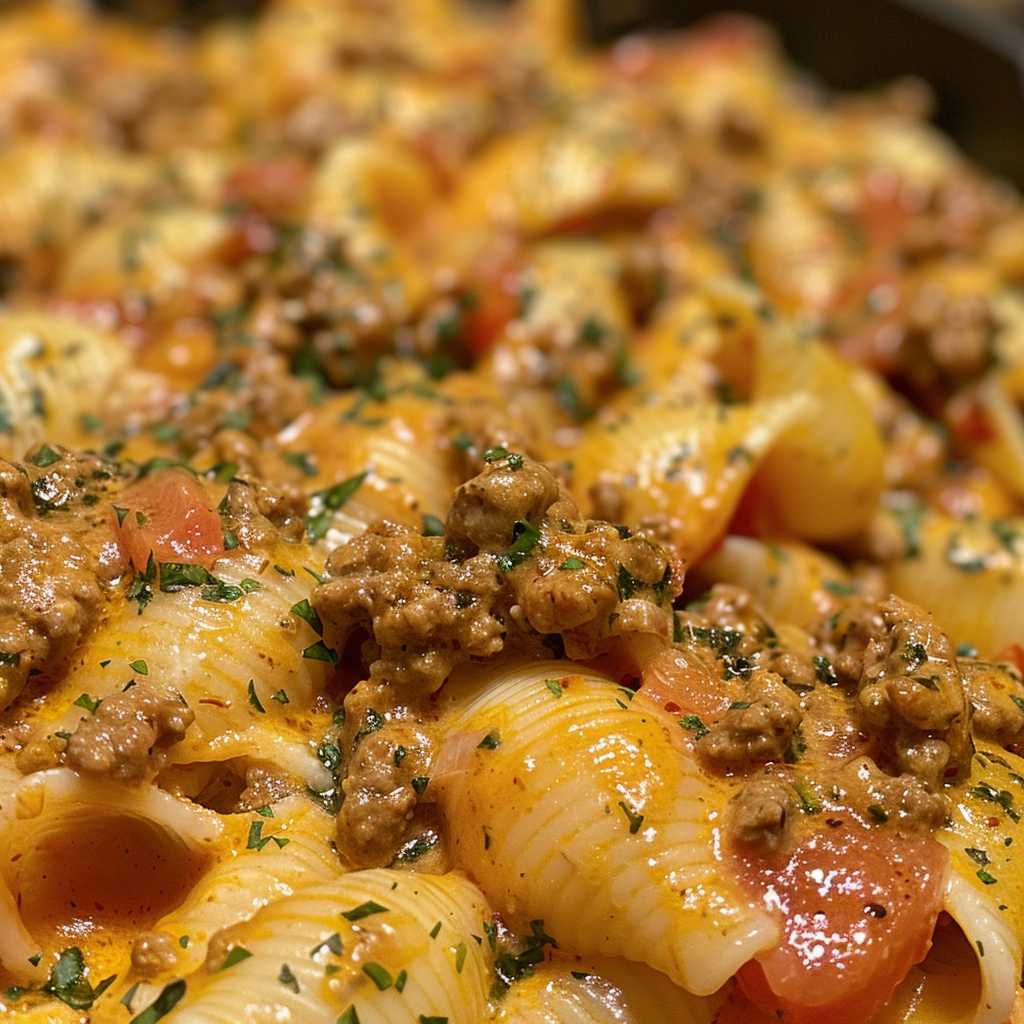
One-pot creamy beef and shells delivers everything you want from a weeknight dinner: rich, cheesy sauce clinging to tender pasta, seasoned ground beef in every bite, and a single pot to wash when it’s all over. This is the kind of recipe that hits the table in under 30 minutes and disappears just as fast.
| Detail | Info |
|---|---|
| Prep Time | 5 minutes |
| Cook Time | 20 minutes |
| Total Time | 25 minutes |
| Servings | 4 to 6 |
| Difficulty | Easy |
| Cuisine | American Comfort Food |
Why This Recipe Works
The magic of this dish comes down to how everything cooks together in one pot. The pasta absorbs the seasoned beef broth and tomato base as it simmers, which means the shells are soaking up flavor the entire time rather than boiling in plain water. That makes a real difference in the final taste.
Using condensed tomato soup alongside diced tomatoes gives you two layers of tomato flavor. The soup adds body and a natural sweetness, while the diced tomatoes bring texture and a brighter, more acidic note. Together they create a sauce with real depth without requiring anything complicated.
Pulling the pot off the heat before stirring in the cheddar cheese is one of those small moves that matters more than it seems. Adding cheese to a pan that’s still actively boiling causes the proteins to seize up and the fat to separate, leaving you with a grainy texture instead of a smooth, creamy sauce. Off the heat, the residual warmth melts the cheese gradually and gently, and the result is that glossy, cohesive sauce that coats every shell.
An 80/20 ground beef blend is the right call here. The fat carries flavor and keeps the meat from turning dry as it cooks down with the rest of the ingredients. Leaner blends can work, but you lose some of that richness that makes this dish feel indulgent.
Ingredients
| Ingredient | Quantity | Notes |
|---|---|---|
| Ground beef | 1 pound | 80/20 blend recommended for best flavor and texture |
| Small onion, diced | 1 | Yellow or white onion works well |
| Garlic cloves, minced | 2 | Fresh garlic delivers the best flavor |
| Diced tomatoes (with juices) | 1 can (14 oz) | Fire-roasted tomatoes add a nice smoky depth |
| Condensed tomato soup | 1 can (10 oz) | Do not dilute; adds body and sweetness to the sauce |
| Beef broth | 2 cups | Low-sodium allows you to control the salt level |
| Medium pasta shells | 2 cups | Uncooked; the shells trap sauce inside them |
| Shredded cheddar cheese | 1 cup | Freshly shredded melts far more smoothly than bagged |
| Salt and black pepper | To taste | Season at the end once flavors have developed |
| Fresh parsley, chopped | For garnish | Optional but brightens the finished dish |
Step-by-Step Instructions
Phase 1: Build the Beef Base
- Place a large skillet or Dutch oven over medium heat. Add the ground beef and cook, breaking it apart with a wooden spoon or spatula, until it’s fully browned and no pink remains. This takes about 6 to 8 minutes. Drain off any excess grease and return the pan to the heat.
- Add the diced onion to the beef and cook for 3 to 4 minutes, stirring occasionally, until the onion softens and turns translucent. Add the minced garlic and cook for another 30 seconds, just until fragrant. Keep the heat at medium so the garlic doesn’t burn.
Phase 2: Bring the Sauce Together
- Pour in the diced tomatoes with their juices, the condensed tomato soup, and the beef broth. Stir everything together, scraping up any browned bits from the bottom of the pan. Those bits are flavor — you want them incorporated into the sauce.
- Add the dry pasta shells and stir to submerge them in the liquid. Bring the mixture to a gentle simmer over medium heat.
- Cover the pan and cook for 10 to 12 minutes, stirring every few minutes to prevent the pasta from sticking to the bottom. The shells are ready when they’re tender but still have a slight bite — taste one to check. If the liquid absorbs before the pasta is done, splash in a little extra broth.
Phase 3: Finish and Serve
- Remove the pan from the heat entirely. Stir in the shredded cheddar cheese until it melts completely into a smooth, creamy sauce that coats all the shells and beef.
- Season with salt and black pepper to taste. Let the dish rest uncovered for 3 to 5 minutes — the sauce thickens as it sits.
- Scatter chopped fresh parsley over the top and serve directly from the pot.
Chef Tips for Perfect Results
Grate your own cheese. Pre-shredded cheese contains anti-caking agents like cellulose that interfere with smooth melting. A block of sharp cheddar grated on a box grater takes 90 seconds and makes a noticeable difference in the final texture of the sauce.
Keep the simmer gentle. A rolling boil will cook the liquid off too quickly before the pasta has time to soften properly. Aim for a steady simmer with small bubbles breaking the surface, then cover the pot to trap the steam.
Season in stages. Add a pinch of salt when you brown the beef, but hold off on the final seasoning until after the cheese goes in. The broth and tomato soup both carry sodium, and the cheddar adds more. Tasting at the end lets you make a precise adjustment.
Add a teaspoon of Italian seasoning. Stir it in with the broth and tomatoes. It adds an herbal note that rounds out the tomato base without making the dish taste like pasta marinara.
Let it rest. Those 3 to 5 minutes off the heat are not optional. The sauce tightens up considerably as it cools slightly, and the shells finish absorbing the liquid. If you serve it straight off the heat, the sauce will look thin. Give it a moment and it transforms.
Common Mistakes to Avoid
Skipping the grease drain. Ground beef releases a significant amount of fat as it cooks. Leaving it in the pan makes the final sauce greasy and heavy rather than creamy. Tilt the pan and spoon it off, or blot the meat briefly with paper towels.
Adding cheese over active heat. This is the most reliable way to end up with a broken, grainy sauce. Always take the pan fully off the burner before the cheese goes in.
Not stirring the pasta. Pasta shells will sink and stick to the bottom of the pan if left undisturbed. A stir every two or three minutes keeps them moving and ensures even cooking.
Using a pan that’s too small. Everything needs room to simmer without overflowing. A 12-inch skillet or a 4-quart Dutch oven is the right size for this recipe. Going smaller means the liquid will boil over before the pasta cooks through.
Cooking the pasta too long before adding cheese. If you let the pasta keep cooking after it’s tender, it turns mushy. Pull the pan off heat the moment the shells are done, then add the cheese immediately.
Variations and Substitutions
Ground turkey or chicken: Both work as a lighter swap for the beef. The flavor is milder, so bump up the seasoning — an extra clove of garlic and a pinch of smoked paprika help compensate.
Different cheeses: Mozzarella gives you a stretchy, mild melt. Monterey Jack is creamier and slightly buttery. A smoked Gouda adds serious depth. You can also use a mix — half sharp cheddar and half Monterey Jack is a popular combination.
Add vegetables: Stir a couple of handfuls of baby spinach into the finished dish and let the residual heat wilt it. Diced mushrooms can go in with the onion. Frozen peas or corn can be added in the last two minutes of simmering.
Spice it up: Add a pinch of red pepper flakes with the garlic, or stir in a teaspoon of smoked paprika with the broth. A diced chipotle pepper in adobo sauce takes it in a smokier direction.
Make it gluten-free: Swap in your favorite gluten-free pasta shells. Keep an eye on the cooking time since GF pasta can cook faster and turn soft more quickly.
Serving Suggestions
This dish is substantial on its own, but a few simple sides round it out into a full meal. A crisp green salad with a sharp vinaigrette cuts through the richness of the cheese sauce. Garlic bread or crusty rolls are ideal for mopping up every bit of sauce from the bowl. Steamed broccoli or roasted zucchini work well alongside if you want to add vegetables without mixing them into the casserole.
For garnish beyond the parsley, a light dusting of smoked paprika adds color and a hint of smokiness. A dollop of sour cream on top works surprisingly well, adding a cool, tangy contrast to the warm, cheesy pasta.
Storage and Reheating
Refrigerator: Transfer cooled leftovers to an airtight container and refrigerate for up to 3 days. The pasta will absorb more of the sauce as it sits, so the leftovers will be thicker than the freshly made dish.
Freezer: Spoon into a freezer-safe container and freeze for up to 3 months. Thaw overnight in the refrigerator before reheating. Note that the pasta texture softens somewhat after freezing.
Reheating: On the stovetop over low heat with a splash of beef broth, milk, or water to loosen the sauce and bring it back to a creamy consistency. Stir frequently to prevent it from sticking. You can also microwave individual portions in 60-second intervals, stirring between each, until heated through.
Nutritional Information
| Nutrient | Per Serving (approx.) |
|---|---|
| Calories | 520 |
| Protein | 32g |
| Carbohydrates | 42g |
| Fat | 22g |
| Saturated Fat | 10g |
| Fiber | 3g |
| Sodium | 780mg |
Nutritional values are estimates based on standard ingredients and will vary depending on specific brands used.
FAQ
Can I use a different pasta shape?
Yes. Rotini, penne, elbow macaroni, and cavatappi all work well and cook in a similar time frame. Avoid long pasta like spaghetti or linguine since they don’t behave well in a one-pot stovetop simmer. The goal is a short pasta that traps sauce and cooks evenly in the liquid.
Can I make this ahead of time?
You can, but keep in mind the pasta continues to absorb liquid as it sits. If you’re making it ahead, slightly undercook the pasta so it finishes to the right texture when reheated. Store in the refrigerator and reheat on the stovetop with a splash of broth to loosen the sauce back to a creamy consistency.
What’s the best way to avoid a watery sauce?
Let the dish rest for several minutes after removing it from the heat. The pasta absorbs excess liquid as it sits and the sauce tightens naturally. If it still seems thin, return the pan to low heat for a minute or two, stirring constantly, until it reduces to your preferred consistency.
Can I double the recipe?
Easily. Use a large Dutch oven or stock pot to give everything room to simmer without crowding. The cooking time stays roughly the same, but give the pasta an extra stir or two since a fuller pot takes slightly longer to come back to a simmer after you add the cold broth and pasta.
Do I have to use condensed tomato soup?
It’s a key ingredient for the texture of the sauce, but you can substitute it. A half cup of tomato paste thinned with a half cup of water or extra broth is a reasonable swap. It gives you a deeper, more concentrated tomato flavor without the sweetness of the soup, so taste and adjust the seasoning accordingly.
Conclusion
One-pot creamy beef and shells is exactly what a weeknight dinner should be: fast, satisfying, and deeply flavorful without requiring any real effort. One pot, 25 minutes, and a handful of ingredients you likely already have. Make it once and it becomes part of the regular rotation without any convincing required.