
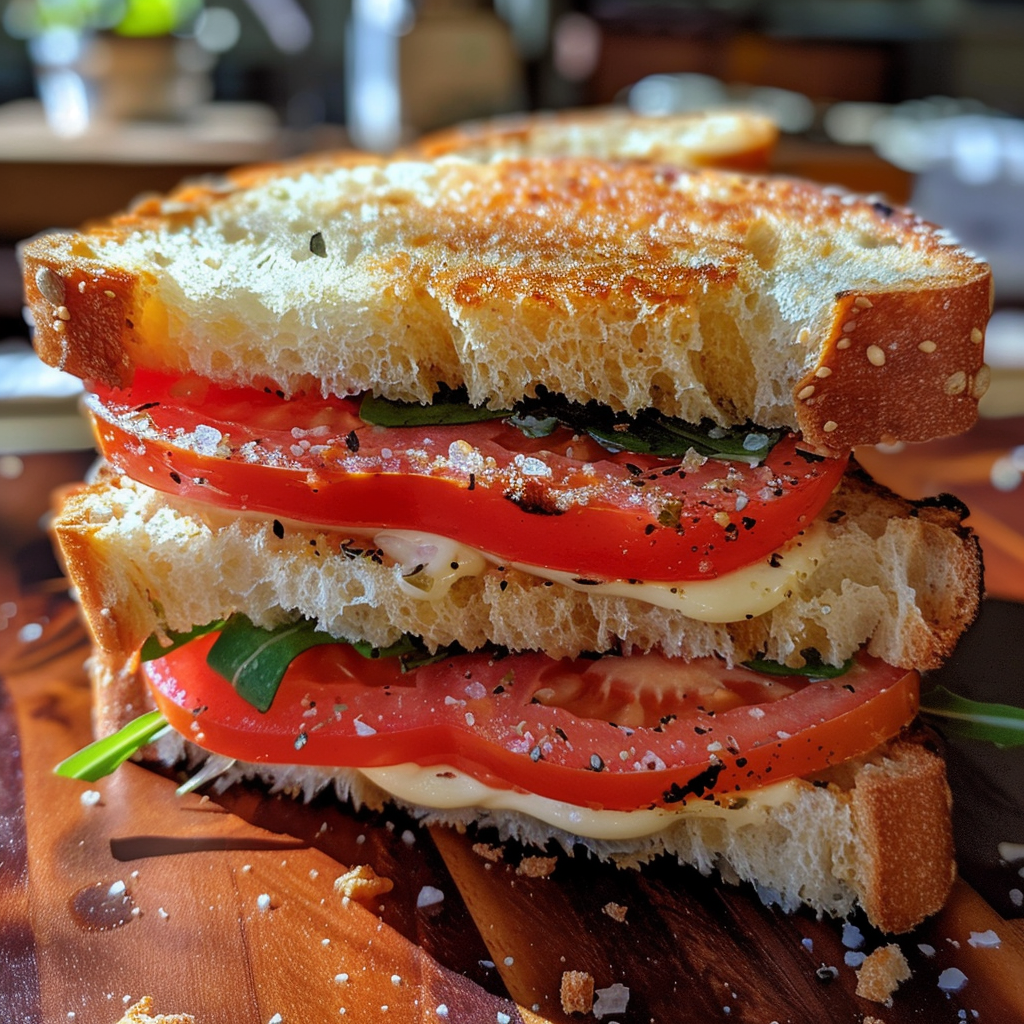
Tomato sandwich season is short, and people who know it treat it seriously. Two slices of soft white bread, a generous layer of mayonnaise, thick-cut ripe tomatoes, a heavy hand with the salt — this is one of those recipes where the quality of a single ingredient determines everything. Get a good tomato at peak ripeness and this sandwich rivals anything more elaborate.
| Detail | Info |
|---|---|
| Prep Time | 10 minutes |
| Cook Time | 0 minutes |
| Total Time | 10 minutes |
| Servings | 4 sandwiches |
| Difficulty | Easy |
| Cuisine | American |
Why This Recipe Works
The tomato sandwich works because it respects the tomato rather than burying it. There are only a handful of components, which means each one pulls its full weight. Soft white bread compresses slightly under the weight of the tomatoes and soaks up their juices without falling apart, acting as a sponge for all that flavor rather than competing with it. A sturdy artisan loaf would fight for dominance; soft white bread yields, and that’s exactly what you want.
Mayonnaise is not a neutral choice here — it’s the counterpoint that makes the tomato taste more like itself. The fat in the mayo rounds out the tomato’s acidity, and the slight tang from the egg yolks mirrors and amplifies the tomato’s own complexity. Duke’s is the traditional Southern choice and has a slightly tangier, less sweet profile than Hellmann’s. Either works; what matters is that you use enough of it. A thin smear is a mistake. You want a generous, cloud-like layer on both slices of bread.
Salt is arguably the most important ingredient after the tomato itself. Salt draws moisture from the tomato slices and concentrates the flavor sitting on the surface of each slice. It also seasons the juice that releases into the bread, turning what would be plain tomato water into something savory and complex. Don’t be shy with it — tomatoes need salt the way pasta water needs salt.
Serving immediately is not just a suggestion. The moment a tomato sandwich is assembled, the bread begins absorbing tomato juice. For the first few minutes, this is desirable — the bread softens just slightly and takes on the tomato’s flavor. After ten minutes, the bread starts to go soggy and the structural integrity of the sandwich deteriorates. This is a made-to-order situation, not a make-ahead one.
Ingredients
| Ingredient | Quantity | Notes |
|---|---|---|
| Soft white bread | 8 slices | Pullman or classic sandwich bread; the softness is intentional and essential |
| Large ripe tomatoes, sliced | 2 | Peak-season heirloom or beefsteak tomatoes are ideal; never refrigerated |
| Mayonnaise | 4 tablespoons | Full-fat; Duke’s for Southern tradition, Hellmann’s for classic flavor |
| Salt | To taste | Flaky sea salt or kosher salt; be generous |
| Black pepper | To taste | Freshly cracked; pre-ground pepper lacks the necessary bite here |
| Lettuce leaves | 4 (optional) | Butter lettuce or iceberg; adds crunch without overpowering the tomato |
Step-by-Step Instructions
Phase 1: Prepare the Tomatoes
- Slice the tomatoes about a quarter-inch thick using a sharp serrated knife. A dull knife crushes and drags through the tomato rather than cutting cleanly, and you lose juice and structure in the process. If your tomatoes are very large, two or three slices per sandwich is plenty. If they’re smaller, three or four slices gives you full coverage.
- Lay the tomato slices out on a cutting board or plate and season them generously with salt and freshly cracked black pepper on both sides. Let them sit for a minute or two while you prepare the bread. The salt starts drawing the juices to the surface, which intensifies the flavor of each slice.
Phase 2: Build the Sandwich
- Spread mayonnaise evenly across one side of each slice of bread. Go edge to edge — every corner of the bread should have coverage so no bite is dry. Use a generous tablespoon per slice; this is not the place for restraint.
- Arrange the seasoned tomato slices on four of the bread slices. Lay them in a single layer with slight overlap so the coverage is even. If you stack them too thick, the sandwich becomes difficult to eat and the top slice of bread lifts off with the first bite.
- Add a lettuce leaf on top of the tomatoes if using. Butter lettuce adds a mild, fresh note; iceberg adds crunch. Either works — or skip it entirely if you want the tomato to be the undivided focus.
- Place the remaining four bread slices mayo-side down onto the filled halves. Press gently but firmly to bring everything together without squeezing the tomato juice out the sides.
Phase 3: Slice and Serve
- Slice each sandwich in half diagonally. The diagonal cut exposes more of the tomato and mayo layers at the cut edge, which makes the sandwich look better and gives you a good cross-section of flavor in the first bite.
- Serve immediately. The window between assembled and optimal is short — eat these within five minutes of making them.
Chef Tips for Perfect Results
Never refrigerate your tomatoes. Cold temperatures break down the cell structure that gives a ripe tomato its texture and mute the volatile compounds responsible for its flavor. A tomato that has been refrigerated and brought back to room temperature is a diminished tomato. Store them on the counter, stem-side down, and use them within a day or two of peak ripeness.
Salt the tomatoes before they go on the bread. Salting them directly on the cutting board and giving them a minute to rest before assembling the sandwich draws the juices to the surface and concentrates the flavor. It also means the salt has time to dissolve and distribute evenly rather than sitting as undissolved crystals on the surface.
Use flaky salt if you have it. Flaky sea salt like Maldon adds a clean, bright salinity and a subtle crunch that regular table salt doesn’t provide. It dissolves just slowly enough that you get little pockets of seasoning in each bite rather than a uniform saltiness throughout.
Spread the mayo all the way to the edges. Bare corners and edges are the enemy of a well-made sandwich. The mayo acts as a moisture barrier between the bread and the tomato juice — if the edges aren’t covered, the juice soaks directly into the crust and the bread goes soft faster.
Slice the tomato at the table if possible. Pre-sliced tomatoes sitting on a plate begin releasing juice immediately. Slicing right before assembly keeps more of that juice inside the tomato where it belongs, so the sandwich stays structured for longer.
Common Mistakes to Avoid
Using an underripe or out-of-season tomato. This is the single most common mistake and the one that ruins the sandwich entirely. An underripe tomato is mealy, pale, and flavorless. The tomato sandwich has nowhere to hide — there’s no seasoned beef, no melted cheese, no spice blend to compensate. If the tomatoes in front of you aren’t fully ripe and fragrant, wait or choose a different recipe for the day.
Using too little mayonnaise. A thin scrape of mayo produces a dry, flat-tasting sandwich. The mayo is doing multiple jobs: adding fat, adding flavor, and creating a barrier between the bread and the tomato. You need enough of it for all three functions to work properly.
Making them ahead of time. A tomato sandwich assembled 20 minutes before eating has soggy bread and a structure that’s falling apart. These need to be made and eaten immediately. If you’re feeding a group, set up an assembly line and hand them out as you make them.
Using bread that’s too dense or too thick. Thick-cut sourdough or a crusty baguette overwhelms the tomato and makes the sandwich too chewy. The bread-to-filling ratio tips in the wrong direction. Soft white sandwich bread is the traditional choice for a reason — it stays in its lane and lets the tomato lead.
Skipping the pepper. Black pepper is not optional here. The heat and sharpness of freshly cracked pepper provides a necessary counterpoint to the sweet acidity of the tomato. Pre-ground pepper lacks the volatile oils that make it aromatic, so crack it fresh if at all possible.
Variations and Substitutions
Heirloom tomato version: Use a mix of heirloom varieties in different colors — yellow, green zebra, purple Cherokee — for a sandwich that’s visually striking and more complex in flavor. Each variety has a slightly different sugar-acid balance, and the combination is more interesting than any single type alone.
Herb mayo: Stir a tablespoon of finely chopped fresh basil or chives into the mayonnaise before spreading. The herbs add a fresh, herbal note that complements the tomato without overpowering it. Tarragon is an underrated option here — its anise-like flavor pairs beautifully with ripe summer tomatoes.
Add bacon: A BLT is this sandwich with bacon, and it’s excellent. Cook the bacon until crisp, blot the grease, and add it on top of the tomatoes. The smoky, salty crunch is a natural partner for everything already in the sandwich.
Whole grain or sourdough: If you prefer more texture and nuttiness in the bread, a soft whole grain loaf works well. Avoid anything with a hard, thick crust — it makes the sandwich unwieldy. A lightly toasted sourdough works if you eat the sandwich immediately before the tomato juice softens the toast.
Vegan version: Swap the mayonnaise for a good vegan mayo. Several brands now produce vegan mayo with a very similar flavor and texture profile to the original. The sandwich works just as well with the substitution.
Serving Suggestions
The tomato sandwich needs very little alongside it. A handful of kettle chips or a simple green salad is all that’s required for a full lunch. Lemonade or iced tea is the traditional Southern pairing and cuts the richness of the mayonnaise cleanly.
For a spread, set out a plate of tomato sandwiches cut into quarters as finger sandwiches alongside other summer dishes — cold pasta salad, corn on the cob, watermelon. They disappear faster than anything else on the table when the tomatoes are at their best.
Storage and Reheating
Storage: Tomato sandwiches do not store well once assembled. The tomato juice soaks into the bread within minutes and the texture deteriorates quickly. If you need to prep ahead, keep the components separate — sliced tomatoes on a plate, mayo already spread on the bread slices, stored in the refrigerator. Assemble right before serving.
Leftover tomatoes: Sliced tomatoes that don’t make it into the sandwich can be stored covered in the refrigerator for up to one day, though their texture softens. Use them on salads, chop them into a quick bruschetta topping, or stir them into scrambled eggs the next morning.
Reheating: There is no reheating. This is a cold sandwich built around a fresh ingredient. Make it fresh, eat it fresh.
Nutritional Information
| Nutrient | Per Serving (1 sandwich, approx.) |
|---|---|
| Calories | 280 |
| Protein | 6g |
| Carbohydrates | 30g |
| Fat | 15g |
| Saturated Fat | 2g |
| Fiber | 2g |
| Sodium | 420mg |
Nutritional values are estimates based on standard ingredients and will vary depending on the specific bread, mayonnaise brand, and amount of seasoning used.
FAQ
What type of tomato works best for a tomato sandwich?
A large, fully ripe beefsteak tomato is the classic choice — the slices are wide enough to cover the bread in one or two layers, and the flesh is meaty and juicy without being watery. Heirloom varieties like Brandywine or Cherokee Purple are exceptional when in season. The one non-negotiable is ripeness. A tomato that gives slightly when pressed, smells fragrant at the stem end, and has deep, saturated color is what you’re after. Anything pale, firm, or odorless will produce a disappointing sandwich no matter what else you do.
Can I toast the bread?
You can, and some people strongly prefer it. Toast adds structural rigidity that holds up to the tomato juice longer, and the slight bitterness of toasted bread contrasts well with the sweet acidity of the tomato. The tradeoff is that toasted bread is harder and can be more difficult to bite through cleanly without the tomato slipping. If you toast, eat the sandwich immediately — once the toast absorbs moisture from the tomato it goes from crisp to rubbery faster than soft bread goes from fresh to soggy.
Why does mayonnaise work so much better than butter here?
Butter and tomato don’t have a natural affinity — the fat in butter is neutral and doesn’t interact with the tomato’s acidity in any meaningful way. Mayonnaise, made from emulsified egg yolks and oil with a touch of acid, has a tangy richness that actively complements the tomato. The emulsification also means it stays creamy and doesn’t soak into the bread as readily as melted butter would. It’s not just tradition — it’s the correct choice for the flavor and texture of this specific sandwich.
How do I keep the sandwich from getting soggy if I need to pack it?
Pack the components separately and assemble on site. Spread the mayo on the bread and wrap the slices individually. Keep the sliced and salted tomatoes in a small container. Pack the lettuce separately if using. Assemble right before eating. There is no preparation method that keeps an assembled tomato sandwich from going soggy over time — the juice migration is inevitable once the tomato makes contact with the bread.
Is this the same as a Southern tomato sandwich?
This recipe follows the Southern tomato sandwich tradition closely. The Southern version is specifically white bread, Duke’s mayonnaise, ripe summer tomatoes, salt, and pepper — nothing more. It’s considered a seasonal ritual in the South, made only when garden tomatoes are at their peak in July and August. Adding lettuce, bacon, or other ingredients technically moves it toward a BLT or club sandwich territory. The purist version is just five ingredients, and the people who grew up eating it that way tend to feel strongly about keeping it exactly that simple.
Conclusion
The tomato sandwich asks almost nothing of you and delivers something genuinely special when the one ingredient that matters — the tomato — is at its best. It’s a recipe that proves simplicity isn’t laziness; it’s confidence. Make it in the height of summer with a tomato that’s been ripening on the vine, use enough mayonnaise, salt it properly, and eat it the moment it’s assembled. That’s the whole recipe, and it’s enough.