
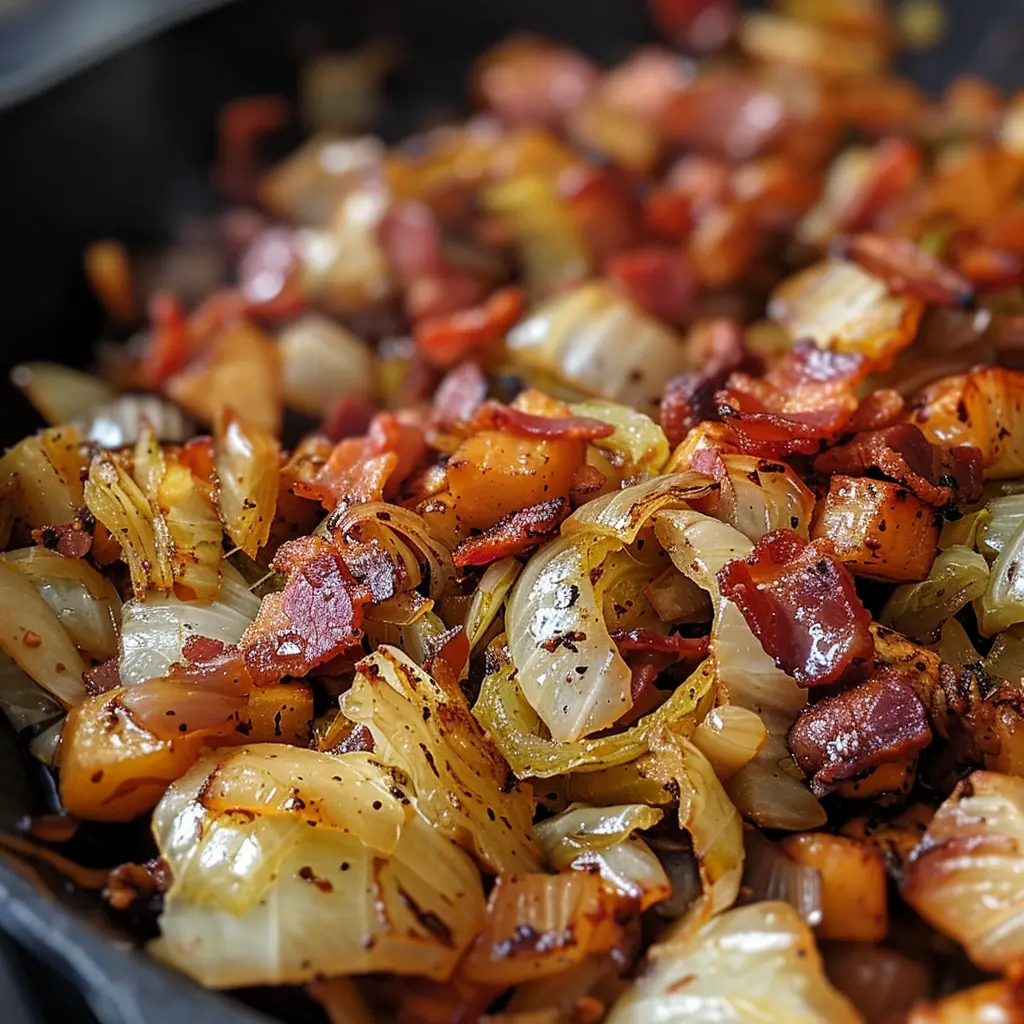
Fried cabbage with onions and turkey bacon takes a humble head of cabbage and transforms it into something smoky, savory, and deeply satisfying through the right combination of fat, heat, and time. The turkey bacon renders into crispy, flavorful pieces, the onions caramelize into something sweet and soft, and the cabbage slowly wilts and picks up color from the pan — all working together in one skillet to produce a side dish that outperforms its ingredient list by a wide margin.
| Detail | Info |
|---|---|
| Prep Time | 15 minutes |
| Cook Time | 20 minutes |
| Total Time | 35 minutes |
| Servings | 6 |
| Difficulty | Easy |
| Cuisine | Southern American |
Why This Recipe Works
Cooking the turkey bacon first and building the rest of the dish in the same pan is the move that gives this recipe its depth. As the turkey bacon cooks, it renders fat and leaves browned, caramelized bits on the surface of the pan. When the olive oil, butter, onions, garlic, and cabbage go in afterward, they absorb those bits and carry that smoky, savory flavor throughout the entire dish. A clean pan with fresh oil produces a significantly flatter result. The pan drippings are where the flavor lives.
The combination of olive oil and butter is deliberate. Olive oil has a higher smoke point and handles the initial heat of cooking the bacon and onions without burning. Butter adds richness and a nutty, dairy-forward flavor that olive oil alone doesn’t provide. Together they create a cooking fat that’s both stable at higher temperatures and flavorful in a way that neither achieves independently. The butter goes in after the bacon so it doesn’t burn during that initial high-heat cook.
Cooking the onions before the cabbage goes in is a sequencing choice that matters. Onions need 4 to 5 minutes of sustained heat to soften and begin releasing their natural sugars. If the cabbage goes in at the same time, its high water content creates steam that prevents the onions from caramelizing properly — they end up soft but pale and mildly flavored rather than sweet and golden. Starting the onions first, then adding the cabbage once they’ve had time to develop, produces a finished dish where the onion flavor is noticeably richer and more complex.
The 12 to 15 minute cook time for the cabbage after it’s added is long enough for genuine transformation. In the first few minutes the cabbage wilts and releases its moisture. In the middle minutes it softens and begins to absorb the seasoned fat in the pan. In the final minutes it picks up color at the edges and some pieces develop a slight char that adds bitterness to balance the sweetness of the onion. Stirring occasionally rather than constantly is what allows that browning to happen — frequent stirring keeps the cabbage moving and prevents it from making contact with the hot pan long enough to develop color.
Returning the turkey bacon at the end rather than leaving it in the pan throughout preserves its texture. Turkey bacon left in the skillet while the cabbage cooks for 15 minutes loses its crispness and becomes chewy and soft. Added back in the last 2 to 3 minutes, it reheats quickly while retaining the crisp edges from its initial cook. The textural contrast between the tender cabbage and the slightly crispy bacon pieces is one of the best things about this dish.
Ingredients
| Ingredient | Quantity | Notes |
|---|---|---|
| Cabbage, sliced | 1 head | Green cabbage; slice into thin strips about a quarter inch wide |
| Large onion, sliced | 1 | Yellow onion sliced into thin half-moons for even cooking |
| Turkey bacon, chopped | 8 slices | Chopped into half-inch pieces before cooking for better rendering |
| Garlic cloves, minced | 2 | Added after the onion softens; blooms quickly in the hot fat |
| Olive oil | 2 tablespoons | Added with the butter after the bacon is removed |
| Salt | 1 teaspoon | Season in stages; taste and adjust at the end |
| Black pepper | 1/2 teaspoon | Freshly cracked for best flavor |
| Paprika | 1/2 teaspoon | Adds color and mild warmth; smoked paprika amplifies the bacon flavor |
| Crushed red pepper flakes (optional) | 1/4 teaspoon | Adds a gentle background heat; omit for a mild version |
| Butter | 1 tablespoon | Added with the olive oil; contributes richness and a nutty note |
Step-by-Step Instructions
Phase 1: Cook the Turkey Bacon
- Place the chopped turkey bacon in a large skillet or Dutch oven over medium heat. Cook, stirring occasionally, for 5 to 6 minutes until the pieces are lightly crisped and have rendered some fat. Turkey bacon has less fat than pork bacon and won’t produce as much rendered fat, but it will leave flavorful browned bits on the pan surface that are essential to the finished dish.
- Remove the turkey bacon with a slotted spoon and transfer it to a plate. Leave any rendered fat and browned bits in the pan — do not wipe it out. Those bits are flavor.
Phase 2: Build the Aromatics
- Add the olive oil and butter to the same skillet over medium heat. Let the butter melt and foam, then subside. The foam subsiding is your cue that the pan is at the right temperature to add the onions.
- Add the sliced onion to the skillet and spread it into an even layer. Cook for 4 to 5 minutes, stirring occasionally, until the onion is softened and translucent and beginning to develop some golden color at the edges. Don’t rush this step — properly softened onion provides the sweet backbone of the finished dish.
- Add the minced garlic and stir it into the onion. Cook for 30 seconds, stirring constantly, until fragrant. Reduce the heat slightly if the garlic is browning too quickly — burnt garlic is bitter and will affect the flavor of the entire dish.
Phase 3: Cook the Cabbage
- Add all the sliced cabbage to the skillet at once. It will look like an enormous volume — fill the skillet to the top. Toss it with tongs or a large spoon to coat it with the onion, garlic, and fat in the pan. It will compact significantly within the first 3 to 4 minutes as it wilts.
- Season the cabbage with the salt, black pepper, paprika, and red pepper flakes if using. Toss to distribute the seasoning evenly through the cabbage.
- Cook over medium heat for 12 to 15 minutes, stirring every 3 to 4 minutes. Allow the cabbage to sit undisturbed between stirs so it can develop some color and caramelization on the pieces in contact with the hot pan. The cabbage is done when it’s fully tender and limp, has reduced to about a third of its original volume, and has picked up a slight golden color in places.
Phase 4: Finish and Serve
- Return the reserved turkey bacon to the skillet and stir it into the cabbage. Cook for 2 to 3 more minutes until the bacon is heated through and everything is well combined.
- Taste the finished dish and adjust seasoning with additional salt, pepper, or a pinch more paprika if needed. The flavors should be balanced — savory from the bacon, sweet from the onion, slightly bitter and earthy from the cabbage, with warmth from the paprika and pepper.
- Serve hot directly from the skillet.
Chef Tips for Perfect Results
Use smoked paprika instead of sweet. Smoked paprika amplifies the smoky quality of the turkey bacon and gives the cabbage a deeper, more complex flavor. Turkey bacon has less inherent smokiness than pork bacon, and smoked paprika compensates for that gap meaningfully. It’s a one-for-one swap that makes the dish taste considerably more developed.
Slice the cabbage thinly and evenly. Quarter-inch strips cook more evenly and more quickly than thicker cuts and produce a better texture in the finished dish. Very thin shreds disappear into the pan too quickly and don’t provide enough substance. Very thick chunks take too long to soften and can be unevenly cooked — tender on the outside and still firm in the center — by the time the rest of the dish is done.
Add a splash of apple cider vinegar at the end. A teaspoon of apple cider vinegar stirred in during the last minute of cooking brightens all the flavors and cuts through the richness of the butter and olive oil. It doesn’t make the dish taste sour — it just makes everything taste more alive and defined. This is particularly valuable with turkey bacon, which has a milder flavor than pork bacon and can leave the dish tasting slightly flat without an acid element to lift it.
Don’t overcrowd the pan. A large skillet or Dutch oven — at least 12 inches — is necessary to cook a full head of cabbage without steaming rather than frying. A smaller pan causes the cabbage to pile up and trap steam, which produces a soft, watery result rather than the slightly caramelized, lightly charred texture that makes this dish genuinely satisfying. If you only have a smaller pan, cook the cabbage in two batches.
Let the cabbage sit between stirs. The caramelization that gives this dish its character happens through sustained contact between the cabbage and the hot pan surface. If you stir constantly, no caramelization can develop — the cabbage just steams in its own moisture. Stir every 3 to 4 minutes and leave it alone between stirs. The slightly darkened pieces that develop during the undisturbed periods are the best bites in the whole pan.
Common Mistakes to Avoid
Wiping the pan after cooking the bacon. The browned bits and rendered fat left in the pan after the turkey bacon is removed are concentrated flavor. Everything cooked in that pan afterward picks up that smoky, savory depth. A clean pan with fresh oil produces a noticeably flatter result. Leave the drippings and scrape them up as the onion and cabbage cook.
Adding the cabbage before the onion is properly softened. Raw onion added to the pan at the same time as the cabbage never fully caramelizes — the moisture from the cabbage creates a steamy environment that keeps the onion from developing color and sweetness. Give the onion 4 to 5 minutes of dedicated cook time before the cabbage goes in.
Cooking on high heat throughout. High heat works for the bacon and the initial sear of the onion, but the cabbage needs medium heat to cook through properly. Too high and the exterior chars before the interior softens, producing cabbage that’s bitter and tough rather than tender and sweet. Medium heat gives the cabbage time to wilt gently and develop color gradually.
Adding all the seasoning at the start. Salt added early draws moisture from the cabbage and creates steam in the pan — which is fine, but it means you lose some of the caramelization potential during the cook. Seasoning the cabbage after it goes in but before it fully wilts allows some surface moisture to cook off first and promotes better browning during the later stages of cooking.
Serving without tasting and adjusting. Turkey bacon is saltier than its flavor intensity suggests, and the amount of salt it contributes to the dish varies by brand. Always taste before serving and adjust seasoning based on what’s actually in the pan rather than what the recipe specifies. The recipe’s salt quantity is a starting point, not a guaranteed final answer.
Variations and Substitutions
Pork bacon version: Swap the turkey bacon for regular pork bacon for a richer, more traditional Southern fried cabbage. Pork bacon renders significantly more fat during cooking — drain off most of it after the bacon is done, leaving just enough to cook the onion and cabbage. The finished dish will have a deeper, smokier flavor than the turkey bacon version.
Add potatoes: Dice two medium potatoes into half-inch cubes and add them to the skillet with the onion. They take longer than the cabbage to cook through, so they need the full time from the beginning. Yukon Gold potatoes hold their shape best and absorb the smoky, savory flavors from the pan particularly well.
Kielbasa addition: Slice a half pound of kielbasa or smoked sausage into half-inch rounds and brown them in the skillet before the turkey bacon. Remove both and proceed with the recipe. Return them together with the turkey bacon at the end. The addition of kielbasa turns this from a side dish into a complete one-pan meal.
Red cabbage version: Substitute red cabbage for green for a dish with a striking purple color and a slightly more assertive, peppery flavor. Add a tablespoon of apple cider vinegar with the seasoning to help preserve the vibrant color during cooking — red cabbage turns an unappetizing gray-purple without acid to stabilize the pigment.
Spicy version: Double the red pepper flakes and add a diced jalapeño with the onion. Finish with a few dashes of hot sauce before serving. The heat works well against the natural sweetness of the caramelized onion and cabbage and makes the dish more interesting for people who enjoy spice.
Serving Suggestions
Serve straight from the skillet as a side dish alongside grilled or roasted chicken, meatloaf, roasted turkey, or pork chops. The savory, smoky flavors complement almost any simply cooked protein. Cornbread alongside is a natural pairing that leans into the Southern character of the dish — the slightly sweet, crumbly cornbread is an ideal contrast to the savory cabbage.
For a light main course, serve over steamed white rice or mashed potatoes with a fried egg on top. The egg yolk breaks over the cabbage and onion and creates a rich, impromptu sauce that ties everything together. This combination is satisfying, inexpensive, and completely delicious.
Storage and Reheating
Refrigerator: Store cooled leftovers in an airtight container for up to 4 days. The cabbage continues to soften as it sits and will be more tender on day two than day one — some people actually prefer the texture after it’s been in the refrigerator overnight and the flavors have had more time to develop.
Reheating: Reheat in a skillet over medium heat with a small splash of water or chicken broth to prevent sticking, stirring occasionally, until heated through. The microwave works for individual portions — cover and heat in 60-second intervals until hot. A brief reheat in the skillet over higher heat for the last minute restores some of the caramelized texture that softens during storage.
Freezing: Cooked cabbage freezes adequately but the texture changes significantly after thawing — it becomes much softer and loses the slight char and caramelization that makes the fresh version appealing. If freezing, plan to use leftovers as a filling in soup, stuffed peppers, or pasta rather than as a standalone side dish where texture is more important.
Nutritional Information
| Nutrient | Per Serving (approx.) |
|---|---|
| Calories | 180 |
| Protein | 10g |
| Carbohydrates | 12g |
| Fat | 11g |
| Saturated Fat | 3g |
| Fiber | 4g |
| Sodium | 620mg |
Nutritional values are estimates based on standard turkey bacon brands. Values will vary based on the specific turkey bacon used and the size of the cabbage head.
FAQ
Can I use pre-shredded coleslaw mix instead of slicing a fresh cabbage?
Yes, and it’s a genuine time-saver. A 14-ounce bag of coleslaw mix is roughly equivalent to half a small head of cabbage. Use two bags to replace one full head. The shreds in coleslaw mix are thinner than the quarter-inch slices called for in this recipe, so they cook faster — reduce the cabbage cook time to 8 to 10 minutes and watch for doneness earlier. The flavor is identical since bagged coleslaw mix is simply pre-shredded green and red cabbage with shredded carrots.
Why is my cabbage watery instead of caramelized?
Watery cabbage almost always results from one of three causes: the pan was too crowded, the heat was too low, or the cabbage was stirred too frequently. A crowded pan traps steam and prevents evaporation. Low heat allows the cabbage to steam in its own moisture rather than frying. Constant stirring prevents the sustained pan contact needed for browning. Address all three — use the largest pan you have, keep the heat at medium throughout, and stir only every 3 to 4 minutes.
Can I make this dish vegetarian?
Yes. Skip the turkey bacon and replace it with a half cup of chopped sun-dried tomatoes or sliced mushrooms sauteed in olive oil until golden — both provide the umami depth the bacon contributes. Add half a teaspoon of smoked paprika extra to compensate for the smokiness you’re removing. A teaspoon of soy sauce or Worcestershire sauce (vegan version available) stirred in with the cabbage adds savory depth that helps bridge the gap left by the absence of bacon.
How do I keep the garlic from burning?
Two things: add the garlic after the onion has softened rather than at the start of cooking, and reduce the heat to medium-low before it goes in. Garlic in a hot pan over high heat burns in under 30 seconds. Added to a pan of already-softened onion over medium heat, it has a full 30 seconds to bloom and become fragrant without burning. Keep it moving with a spoon during those 30 seconds — garlic left stationary in the pan browns and burns faster than garlic that’s being stirred.
Can this dish be made ahead?
It can be made up to 2 days ahead and reheated, but it’s best served fresh from the skillet when the cabbage still has some textural variation — slightly caramelized in some places and tender in others. Made ahead and reheated, the cabbage becomes uniformly soft and loses some of that textural contrast. If making ahead for a gathering, cook it 90 percent of the way through, refrigerate, then finish the last few minutes of cooking and return the bacon right before serving.
Conclusion
Fried cabbage with onions and turkey bacon is a recipe that earns genuine affection from everyone who tries it — not because it’s fancy or elaborate, but because it’s executed simply and honestly and the result is deeply satisfying. Smoky bacon, sweet caramelized onion, tender cabbage with crispy edges, and a seasoning blend that ties everything together. Thirty-five minutes, one pan, and a side dish that disappears faster than anything else on the table. That’s the kind of recipe that deserves a permanent spot in the rotation.