
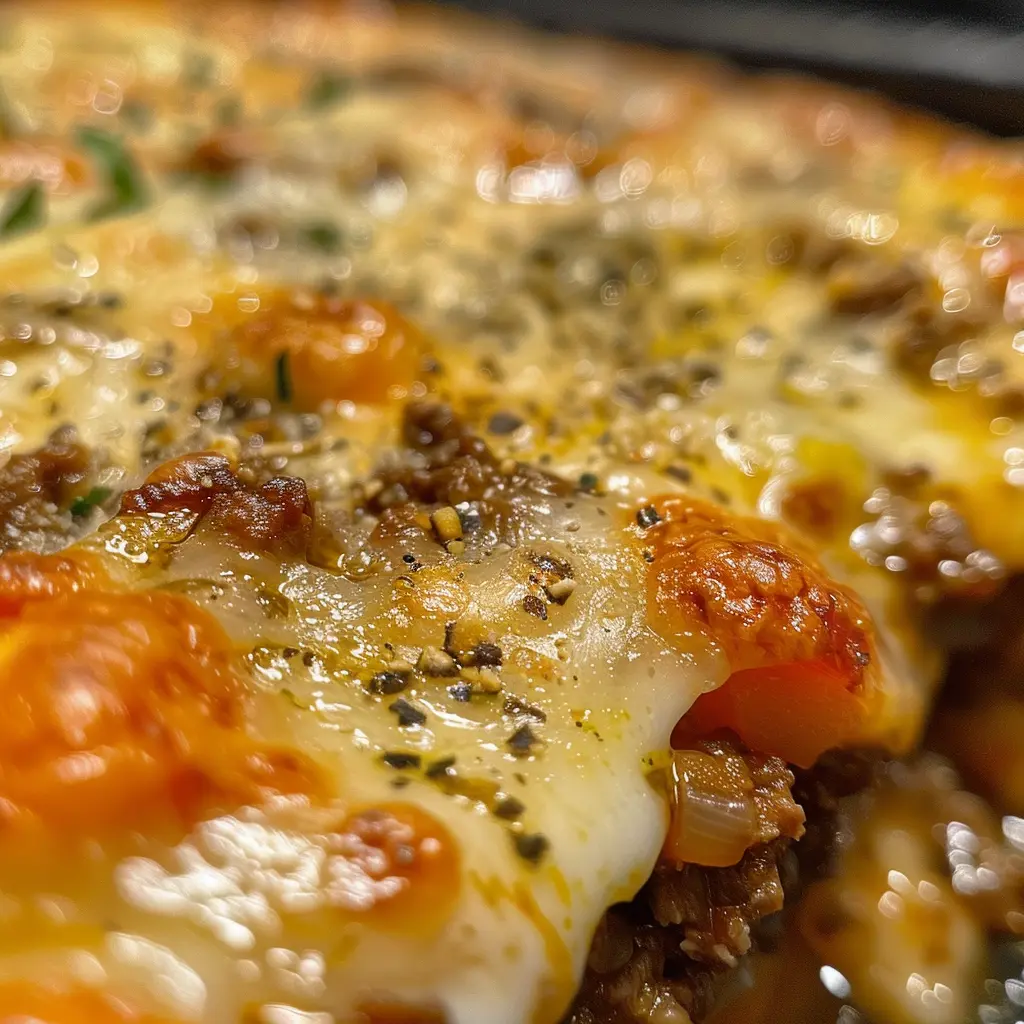
Cheesy ground beef casserole browns seasoned beef and onion with diced tomatoes on the stovetop, transfers everything to a baking dish, buries it under a generous layer of mozzarella and cheddar, and lets the oven do the rest. The result is a bubbling, golden-topped casserole that cuts into satisfying squares and tastes exactly like the kind of meal that makes a quiet evening at home feel like the right call.
| Detail | Info |
|---|---|
| Prep Time | 15 minutes |
| Cook Time | 30 minutes |
| Total Time | 45 minutes |
| Servings | 6 |
| Difficulty | Easy |
| Cuisine | American |
Why This Recipe Works
Browning the ground beef and onion together on the stovetop before the casserole goes into the oven is what builds the flavor foundation of the entire dish. The beef needs direct contact with the hot skillet to develop the Maillard reaction — the browning process that creates the deep, savory flavor compounds responsible for the difference between properly cooked ground beef and merely gray, steamed meat. The onion cooked alongside releases its natural sugars into the beef fat and contributes a sweet, aromatic base that infuses everything in the pan. By the time the beef mixture goes into the baking dish, it already tastes developed and intentional rather than flat and one-dimensional.
Simmering the diced tomatoes into the beef mixture for five minutes before the casserole is assembled is a brief but meaningful step. Those five minutes allow the tomato liquid to partially evaporate and concentrate, which intensifies the tomato flavor and thickens the mixture slightly so it doesn’t release a pool of watery liquid in the bottom of the baking dish during the oven time. Tomatoes added raw to a casserole release all their moisture during baking and can make the bottom layer wet and loose. A short simmer drives off that excess moisture before it becomes a problem.
The two-cheese combination — mozzarella and cheddar — produces a topping that’s superior to either cheese alone. Mozzarella melts into a smooth, bubbly, golden sheet with the characteristic stretch that makes a cheese pull satisfying. On its own, mozzarella’s mild flavor can feel one-dimensional on a savory beef casserole. Cheddar brings the sharpness and color that mozzarella lacks, and adds a bolder cheese flavor that stands up to the seasoned beef beneath it. Together they melt into a cohesive, golden-edged topping that looks as appealing as it tastes.
Baking uncovered at 375 degrees F produces a properly browned, slightly crisp-edged cheese topping rather than a steamed, pale one. A covered casserole traps moisture and produces soft, unbrowned cheese that never develops the golden color and slightly caramelized edges that make a baked cheese topping look and taste finished. The uncovered bake allows surface moisture to evaporate, the cheese to brown directly under the dry oven heat, and the edges to crisp slightly — all of which produce the visual and textural result this dish is known for.
Resting the casserole for 5 to 10 minutes before cutting is the step that determines whether it comes out in clean, cohesive squares or falls apart into a loose pile. During baking, the beef mixture is hot and the juices are liquid and mobile. The rest period allows those juices to be reabsorbed into the meat and for the cheese layer to firm slightly from its molten state into something that holds together when a spatula is pressed through it. Cut immediately and the squares collapse; rest properly and they hold their shape from dish to plate.
Ingredients
| Ingredient | Quantity | Notes |
|---|---|---|
| Ground beef | 2 pounds | 80/20 blend provides the best flavor; drain excess fat after browning |
| Small onion, diced | 1 | Yellow or white; cooked with the beef to build the flavor base |
| Salt | 1 teaspoon | Seasoned into the beef after browning |
| Black pepper | 1/2 teaspoon | Freshly cracked preferred |
| Garlic powder | 1 teaspoon | Distributed evenly through the beef mixture |
| Diced tomatoes | 1 can (14.5 oz) | With their juice; simmered into the beef before baking |
| Shredded mozzarella cheese | 1.5 cups | Low-moisture melts most evenly and browns best |
| Shredded cheddar cheese | 1 cup | Sharp cheddar for the boldest flavor against the beef |
| Dried parsley | 1 teaspoon | Sprinkled over the finished casserole before serving |
Step-by-Step Instructions
Phase 1: Brown the Beef
- Preheat the oven to 375 degrees F. Lightly grease a 9×13-inch baking dish with cooking spray or a thin coat of oil and set aside.
- In a large skillet over medium heat, cook the ground beef and diced onion together, breaking the beef into crumbles as it cooks. Cook for 8 to 10 minutes until the beef is fully browned with no pink remaining and the onion is softened. Drain the excess fat, leaving a thin coating in the pan.
- Season the browned beef with salt, black pepper, and garlic powder. Stir to distribute the seasoning evenly through the meat.
Phase 2: Add Tomatoes and Simmer
- Add the diced tomatoes with their juice to the seasoned beef. Stir to combine and bring to a gentle simmer over medium heat. Cook uncovered for 5 minutes, stirring occasionally, until the tomato liquid has partially reduced and the mixture has thickened slightly. Taste and adjust seasoning if needed.
Phase 3: Assemble and Bake
- Spread the beef and tomato mixture evenly into the prepared baking dish, pressing it into an even layer that covers the bottom completely.
- Sprinkle the shredded mozzarella evenly over the beef layer, then scatter the shredded cheddar over the top. Distribute the cheese as evenly as possible so every portion of the casserole has full cheese coverage.
- Bake uncovered for 25 to 30 minutes, until the cheese is fully melted, bubbling, and lightly golden on top with browned edges.
Phase 4: Rest and Serve
- Remove from the oven and sprinkle dried parsley evenly over the top for color and a fresh herbal note.
- Allow the casserole to rest for 5 to 10 minutes before cutting into squares. This rest is what allows it to hold its shape when served — don’t skip it.
Chef Tips for Perfect Results
Brown the beef properly before adding the tomatoes. Beef added to the pan and moved constantly or cooked over too-low heat doesn’t develop browning — it steams gray instead. Let it sit undisturbed for a minute at a time before breaking it apart, and keep the heat at medium to medium-high to ensure actual browning occurs.
Don’t skip the tomato simmer. Five minutes may seem like an inconsequential step, but it’s what prevents a watery pool forming in the bottom of the baking dish during the oven time. A wet casserole bottom produces soggy, loose squares that don’t hold their shape. The simmer concentrates and thickens the mixture before it goes into the dish.
Use freshly shredded cheese. Pre-shredded bagged cheese contains anti-caking agents that prevent it from melting as smoothly or browning as evenly as cheese shredded fresh from a block. A block of mozzarella and a block of cheddar grated at home produces a topping that melts more cohesively and browns more attractively.
Add a layer of depth with Worcestershire sauce. A tablespoon of Worcestershire sauce stirred into the beef with the seasonings adds a savory, slightly tangy umami note that makes the beef mixture taste noticeably more complex and restaurant-quality without changing the fundamental character of the dish.
Check the cheese at 25 minutes. Oven temperatures vary, and the difference between lightly golden and over-browned moves quickly in the last few minutes of a cheese-topped casserole. Check at the 25-minute mark — if the cheese is bubbling and golden, it’s done. If it still looks pale, give it another 3 to 5 minutes and watch closely.
Common Mistakes to Avoid
Not draining the fat. Two pounds of 80/20 beef renders a significant amount of fat during browning. Fat left in the pan carries into the baking dish and produces a greasy, pooled layer beneath the beef mixture. Drain it after browning and before seasoning — a dry, evenly seasoned beef base is what you want going into the dish.
Baking covered. A foil cover traps steam and prevents the cheese from browning. The golden, slightly caramelized cheese topping is the signature visual element of this casserole and it only develops under direct, dry oven heat. Always bake uncovered.
Cutting before resting. Casserole cut immediately from the oven falls apart because the juices haven’t had time to redistribute and the cheese is still liquid. Five to ten minutes of rest is what produces clean, satisfying squares rather than a collapsed pile.
Not seasoning assertively. Two pounds of beef and a generous amount of cheese can absorb a lot of seasoning. The recipe quantities are a starting point — taste the beef mixture after seasoning and before it goes into the baking dish, and add more salt or garlic powder if it tastes flat.
Spreading the cheese unevenly. Thick patches of cheese over some parts of the casserole and bare patches over others produce uneven browning and portions without proper cheese coverage. Take the time to distribute both cheeses evenly across the entire surface before baking.
Variations and Substitutions
Add bell pepper: A diced red or green bell pepper added with the onion softens during the beef browning stage and adds sweetness and color to the filling.
Add rice or pasta: Two cups of cooked white rice or small pasta shapes like orzo stirred into the beef and tomato mixture before transferring to the baking dish makes the casserole more substantial and stretches it to feed a larger group without any additional prep.
Spice it up: A teaspoon of chili powder and half a teaspoon of cumin added with the other seasonings give the casserole a Tex-Mex character that works particularly well if you substitute pepper jack for the mozzarella.
Add cream of mushroom soup: A can of cream of mushroom soup stirred into the beef and tomato mixture adds richness, creaminess, and an earthy depth that makes the filling taste more complex. This variation produces a saucier, more cohesive filling that holds together especially well when cut into squares.
Serving Suggestions
Serve in squares directly from the baking dish with a wide spatula. A simple green salad alongside provides a fresh, light contrast to the rich, cheesy casserole. Garlic bread is a natural accompaniment for scooping up any of the tomato-beef sauce. Steamed broccoli or green beans on the side adds a vegetable component that rounds out the meal into a complete dinner. This casserole holds well in the baking dish loosely covered with foil for up to an hour after baking without significant loss of quality.
Storage and Reheating
Refrigerator: Store covered for up to 4 days. The flavors deepen overnight and many people find day-two casserole tastes even better than the freshly baked version.
Reheating: Cover loosely with foil and reheat in a 350 degree F oven for 15 to 20 minutes until heated through. The microwave works for individual portions in 60-second intervals, though the cheese loses some of its texture versus oven reheating.
Freezer: Freeze in individual portions or as a whole in an airtight container for up to 3 months. Thaw overnight in the refrigerator before reheating. The texture of the cheese changes slightly after freezing but the flavor remains excellent.
Nutritional Information
| Nutrient | Per Serving (approx.) |
|---|---|
| Calories | ~410 |
| Protein | 38g |
| Carbohydrates | 6g |
| Fat | 26g |
| Saturated Fat | 12g |
| Fiber | 1g |
| Sodium | 640mg |
Nutritional values are estimates based on 80/20 ground beef and standard ingredient brands. Values will vary based on fat content of beef and specific cheese brands used.
FAQ
Can I use ground turkey instead of beef?
Yes. Ground turkey works well as a leaner substitute. Since turkey is milder than beef, season more generously — increase the garlic powder to 1.5 teaspoons and add a teaspoon of Worcestershire sauce to compensate for the flavor depth that beef naturally provides. The casserole will be lighter in color and slightly less rich but structurally identical.
Can I add vegetables to the beef mixture?
Yes, and it’s a natural extension of this recipe. Diced bell pepper, mushrooms, or zucchini cooked with the beef and onion add texture, nutrition, and additional flavor to the filling. More watery vegetables like zucchini benefit from a slightly longer simmer after the tomatoes are added to cook off their moisture before the casserole goes into the oven.
Can I make this ahead of time?
Yes. Prepare the beef and tomato mixture and spread it in the baking dish, then cover and refrigerate for up to 24 hours without adding the cheese. When ready to bake, bring the dish to room temperature for 20 minutes, add the cheese, and bake as directed, adding 5 minutes to the bake time to account for the cold start.
How do I know when the casserole is done?
The cheese should be fully melted, actively bubbling, and lightly golden on top with browned edges — these are the reliable visual cues. If the cheese is still pale and not bubbling, it needs more time. If it’s very dark brown, it’s slightly overdone but still delicious. The 25 to 30 minute range covers most ovens, but always go by appearance rather than time alone.
What size baking dish should I use?
A 9×13-inch baking dish is the right size for 2 pounds of beef — it produces an even layer of filling that’s deep enough to be satisfying but shallow enough to bake through in the specified time. A smaller dish produces a thicker casserole that takes longer to heat through; a larger dish produces a thinner layer that may dry out before the cheese is properly browned.
Conclusion
Cheesy ground beef casserole is a recipe that earns its place in the regular rotation not because it’s complicated but because it’s consistently, reliably good. The browned beef, the simmered tomatoes, the double-cheese topping that goes golden in the oven — it’s the kind of dinner that fills the house with a smell that announces something worth sitting down for, and delivers exactly on that promise every time.