
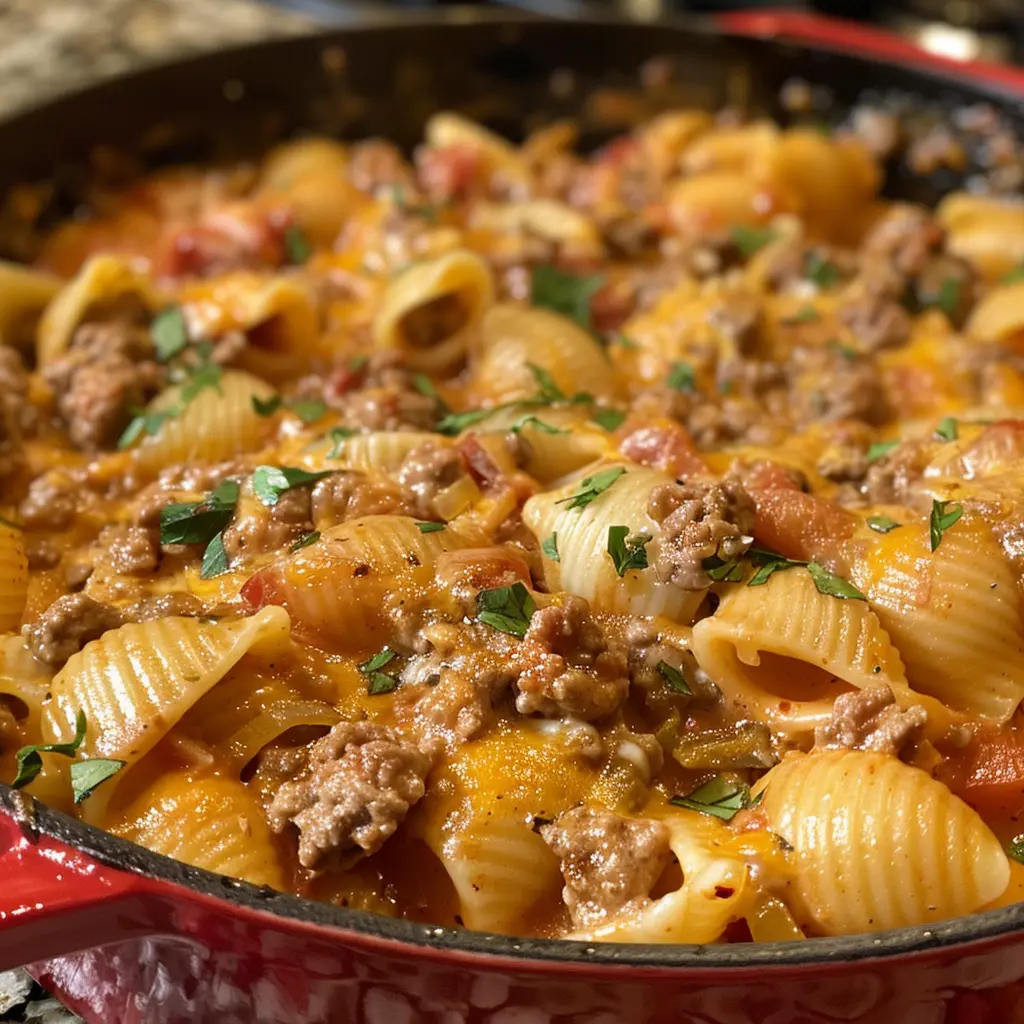
Creamy one-pot beef and shells browns ground beef with onion and garlic, then cooks uncooked pasta shells directly in a sauce built from beef broth, heavy cream, tomato paste, and sharp cheddar — all in the same pot, start to finish. The shells absorb the seasoned, creamy liquid as they cook and arrive at the table already coated in something rich and deeply flavored, with a single pot to wash when dinner is done.
| Detail | Info |
|---|---|
| Prep Time | 10 minutes |
| Cook Time | 30 minutes |
| Total Time | 40 minutes |
| Servings | 4 to 6 |
| Difficulty | Easy |
| Cuisine | American |
Why This Recipe Works
Cooking the pasta shells directly in the sauce rather than boiling them separately in salted water is the central technique that makes this dish both convenient and unusually flavorful. As the uncooked shells simmer in the beef broth and cream mixture, they absorb that liquid rather than plain water — which means the pasta itself carries the flavor of the broth, the cream, and the seasoning in every bite rather than being a neutral vehicle for sauce applied to the outside. Pasta cooked this way tastes like part of the dish rather than a backdrop for it, and the starch the shells release as they cook naturally thickens the sauce from within, producing a creamy, cohesive consistency without any flour, roux, or separate thickening step.
Adding the uncooked pasta on top of the browned beef without stirring is a technique detail with a practical purpose. Stirring the raw pasta into the browned beef at this stage would mix the two together before the liquid is added, causing the pasta on the bottom to cook faster than the pasta on top and producing uneven texture throughout. The layered approach — beef below, pasta on top — allows the liquid poured over everything to reach all levels of the pot evenly as it heats, producing more consistent cooking from edge to center.
Tomato paste in the sauce contributes more than flavor. Tomato paste has been cooked and concentrated to remove most of its moisture, which means it adds depth and color to the sauce without diluting it the way canned diced tomatoes or crushed tomatoes would. Three tablespoons of tomato paste provides enough tomato flavor to give the sauce a recognizable tomato character without turning it into a red sauce — the cream and cheddar remain the dominant flavors, with the tomato paste adding a subtle savory warmth and the distinctive orange-red color that makes the dish look as rich as it tastes.
Dividing the cheddar into two additions is a technique that produces a smoother, more cohesive finished sauce than adding all of it at once. The first cup, whisked into the cream and broth before cooking begins, melts gradually into the liquid as everything heats and becomes fully incorporated by the time the pasta is cooked. The remaining half cup, stirred in at the very end off the heat or over very low heat, melts into a sauce that’s already at the right temperature — no risk of overheating, no risk of the cheese breaking or turning grainy, just clean, smooth incorporation that tightens the sauce to the perfect creamy consistency.
Letting the dish rest for 3 to 5 minutes before serving is what allows the sauce to achieve its ideal texture on the plate. Fresh off the heat, one-pot pasta dishes have a slightly looser, more liquid sauce than they will have after a brief rest. During those few minutes, the pasta continues to absorb some of the remaining liquid and the sauce thickens from its still-hot, mobile state into something that clings to the shells and holds its consistency from pot to bowl without pooling at the bottom.
Ingredients
| Ingredient | Quantity | Notes |
|---|---|---|
| Olive oil | 1 tablespoon | For sauteing the onion and garlic |
| Yellow onion, finely diced | 1 medium | Cooked until softened before the beef is added |
| Garlic cloves, minced | 2 | Fresh garlic; added after the onion |
| Ground beef | 1.5 pounds | 80/20 for the best flavor; drain excess fat after browning |
| Salt | 1 teaspoon | Added with the beef; adjust to taste at the end |
| Black pepper | 1/2 teaspoon | Freshly cracked preferred |
| Medium pasta shells, uncooked | 12 oz | Medium shells trap sauce inside the cup; don’t pre-cook |
| Beef broth | 2 cups | Low-sodium gives better control over final seasoning |
| Heavy cream | 1.5 cups | Full-fat for the richest, most stable sauce |
| Tomato paste | 3 tablespoons | Adds concentrated flavor and color without excess liquid |
| Italian seasoning | 2 teaspoons | Whisked into the cream mixture before cooking |
| Sharp cheddar cheese, shredded | 1.5 cups, divided | 1 cup in the sauce before cooking; 1/2 cup stirred in at the end |
| Crushed red pepper flakes (optional) | 1/4 teaspoon | Adds mild background heat to the sauce |
| Parmesan cheese, grated (optional) | 2 tablespoons | For finishing; adds a salty, sharp note over the top |
| Fresh parsley, chopped (optional) | 2 tablespoons | Added just before serving for color and freshness |
Step-by-Step Instructions
Phase 1: Build the Beef Base
- Heat the olive oil in a large Dutch oven over medium heat. Add the finely diced onion and cook for 3 to 4 minutes, stirring occasionally, until softened and just beginning to turn translucent.
- Add the minced garlic and cook for 30 seconds, stirring constantly, until fragrant. Don’t let the garlic brown.
- Add the ground beef, salt, and black pepper. Cook for 5 to 7 minutes, breaking the beef into crumbles, until fully browned with no pink remaining. Drain the excess fat if needed, leaving a thin coating in the pot.
Phase 2: Add Pasta and Sauce
- Spread the uncooked pasta shells evenly over the browned beef in an even layer without stirring them into the meat.
- In a bowl or large measuring cup, whisk together the beef broth, heavy cream, tomato paste, Italian seasoning, and 1 cup of the shredded cheddar until well combined and the tomato paste is fully dissolved. Stir in the red pepper flakes if using.
- Pour the cream mixture evenly over the pasta and beef. Use a spoon to gently press any pasta shells that are sitting above the liquid line down into the sauce — all the shells should be submerged or at least in contact with the liquid to cook evenly.
Phase 3: Simmer and Finish
- Bring the pot to a gentle simmer over medium heat. Once simmering, reduce the heat to low, cover the pot, and cook for 15 to 18 minutes, stirring once or twice during cooking to prevent the pasta from sticking to the bottom and to ensure even cooking. The pasta is done when it’s tender and has absorbed most of the liquid, with a thick, creamy sauce remaining.
- Assess the sauce consistency. If it’s too thick, stir in a splash of broth or water until it loosens to your preferred texture. If it’s too thin, simmer uncovered for 2 to 3 minutes until the excess liquid reduces.
- Stir in the remaining half cup of shredded cheddar over low heat until fully melted and the sauce is smooth and creamy.
- Remove from heat and let the dish rest for 3 to 5 minutes before serving. Garnish with grated Parmesan and fresh parsley if desired.
Chef Tips for Perfect Results
Use a Dutch oven or large, heavy-bottomed pot. A thin-bottomed pot can develop hot spots during the covered simmer that cause the pasta and cream to scorch on the bottom before the shells on top are fully cooked. A Dutch oven’s heavy base distributes heat evenly and maintains a steady, gentle simmer throughout the covered cook time.
Press all the pasta into the liquid before covering. Any shell sitting fully above the liquid level at the start of the covered simmer will cook unevenly — tender on the bottom where it contacts the liquid and still firm on the top. A gentle press with the back of a spoon at the start costs 10 seconds and ensures every shell cooks evenly.
Don’t rush the final cheddar addition. The last half cup of cheddar should be stirred in over low heat or off the heat entirely. High heat at this stage can cause the cheese to break — the fat separates and the sauce turns oily and grainy rather than smooth. Low and slow incorporation at the end is the difference between a cohesive, glossy sauce and a broken one.
Use sharp cheddar, not mild. Mild cheddar has a less pronounced flavor that can get lost in the beef, cream, and broth. Sharp cheddar has the assertive, slightly tangy flavor that makes this dish taste genuinely cheesy rather than just cream-sauced. Extra sharp cheddar works even better for the most pronounced cheese flavor.
Stir the pot during cooking to prevent sticking. The combination of starchy pasta and cream sauce over heat has a tendency to build up on the bottom of the pot if left completely undisturbed. Stirring once or twice during the 15 to 18 minute covered simmer prevents this and helps ensure even cooking throughout.
Common Mistakes to Avoid
Cooking on too high a heat during the covered simmer. Too-high heat causes the cream to reduce too fast and the pasta to cook unevenly — tender on the outside before the inside is done, or overcooked in spots while still firm in others. Low heat once the dish comes to a simmer is non-negotiable for properly cooked pasta and a sauce that doesn’t break.
Adding all the cheese at once before cooking. The full 1.5 cups of cheese added to the sauce before the long simmer would break the dairy over the extended heat. The split technique — 1 cup in at the start, half cup at the very end — keeps the sauce stable and produces a smooth, cohesive result.
Not draining the fat after browning the beef. Excess rendered fat left in the pot from the beef makes the finished sauce greasy rather than creamy. Drain it off, leaving just a thin coating, before the pasta and liquid are added.
Skipping the rest period. One-pot pasta served immediately from the heat is looser and more liquid than the same dish after 3 to 5 minutes of rest. The brief rest is when the sauce thickens to its ideal consistency. Impatient serving produces a dish that’s thinner and less satisfying than a rested one.
Not adjusting consistency before serving. The pasta’s starch content and the rate at which the cream reduces can vary slightly between batches, producing a sauce that’s occasionally thicker or thinner than ideal. The recipe explicitly accounts for this with its splash-of-broth or uncovered-simmer adjustment steps — use them as needed rather than serving the dish too thick or too thin.
Variations and Substitutions
Add spinach: Stir two cups of fresh baby spinach into the dish immediately after the final cheddar addition. The residual heat wilts it in under a minute and adds color, nutrition, and a mild earthy note that complements the cream sauce.
Use ground turkey: Ground turkey works as a leaner alternative to the beef. Season more assertively since turkey is milder, and consider adding a teaspoon of Worcestershire sauce with the broth to provide some of the savory depth that beef contributes naturally.
Add diced tomatoes: A drained can of diced tomatoes stirred in with the broth and cream adds texture and a brighter tomato note alongside the tomato paste. Use fire-roasted diced tomatoes for extra depth.
Pepper jack instead of cheddar: Swapping pepper jack for all or part of the cheddar introduces a creamy, mild heat that builds progressively through the dish and pairs well with the red pepper flakes option.
Serving Suggestions
Serve directly from the Dutch oven into wide, shallow bowls. A sprinkle of fresh parsley and a crack of black pepper over each bowl adds visual appeal and a finishing note of freshness. Garlic bread on the side is ideal for the creamy sauce that collects at the bottom of the bowl. A simple green salad with lemon vinaigrette provides a bright, acidic contrast to the rich, cheesy pasta and completes the meal without requiring any additional cooking.
Storage and Reheating
Refrigerator: Store in an airtight container for up to 4 days. The pasta continues to absorb sauce as it sits and the dish will be thicker when cold.
Reheating: Add a generous splash of broth or cream when reheating to restore the original creamy consistency. Warm in a saucepan over medium-low heat, stirring frequently. The microwave works for individual portions in 60-second intervals with a splash of liquid added, stirring between each.
Freezer: Freezes well for up to 2 months, though the pasta texture softens somewhat after thawing. Thaw overnight in the refrigerator and reheat with a splash of broth or cream.
Nutritional Information
| Nutrient | Per Serving (approx.) |
|---|---|
| Calories | 640 |
| Protein | 38g |
| Carbohydrates | 44g |
| Fat | 34g |
| Saturated Fat | 18g |
| Fiber | 2g |
| Sodium | 720mg |
Nutritional values are estimates based on standard ingredients and 5 servings. Values will vary based on specific brands and fat content of beef used.
FAQ
Can I use a different pasta shape?
Yes, though medium shells are particularly well-suited to this dish because their cup shape traps cream sauce inside each piece, delivering sauce in every bite. Penne, rotini, or elbow macaroni all work well as substitutes. Avoid very thin pasta shapes like angel hair or spaghetti — they cook too quickly for the covered one-pot method and become overcooked before the sauce has properly reduced.
Why is my sauce grainy?
Grainy sauce is almost always caused by cheese added over too-high heat or pre-shredded cheese with anti-caking agents. Reduce the heat to the lowest setting before stirring in the final cheese addition and use freshly shredded cheddar from a block for the smoothest melt. If the sauce breaks despite these precautions, a splash of cream stirred in over very low heat can sometimes bring it back together.
Can I make this without heavy cream?
Half-and-half works as a lighter substitute, though the sauce will be thinner and less rich. Evaporated milk is another option that produces a creamier result than regular milk while being lower in fat than heavy cream. Avoid regular whole milk — the sauce won’t have enough fat to stay stable over the extended simmer and may curdle or separate.
What can I substitute for the tomato paste?
A quarter cup of marinara sauce stirred into the cream mixture approximates the tomato flavor though produces a slightly thinner sauce. Ketchup in the same quantity as the tomato paste is a surprisingly effective substitute in a pinch — it has a similar concentrated tomato character and the added sugar and vinegar round out the flavor in a way that works well in this dish.
How do I prevent the pasta from sticking to the bottom of the pot?
Two things prevent sticking: maintaining a gentle simmer rather than a vigorous boil once the pot is covered, and stirring once or twice during the cook time to release any pasta that has begun to adhere to the bottom. A heavy-bottomed Dutch oven distributes heat more evenly than a thin-bottomed pot and dramatically reduces the risk of hot spots that cause sticking and scorching.
Conclusion
Creamy one-pot beef and shells is the recipe that makes you wonder why you ever dirtied a second pot to boil pasta separately. The shells cook directly in the sauce and arrive at the table already infused with everything good in the pot — the beef, the cream, the cheddar, the tomato paste — in a single Dutch oven that goes from stove to table in 40 minutes. Make it once on a weeknight and it becomes the recipe you reach for every time you want something genuinely satisfying without the cleanup.