
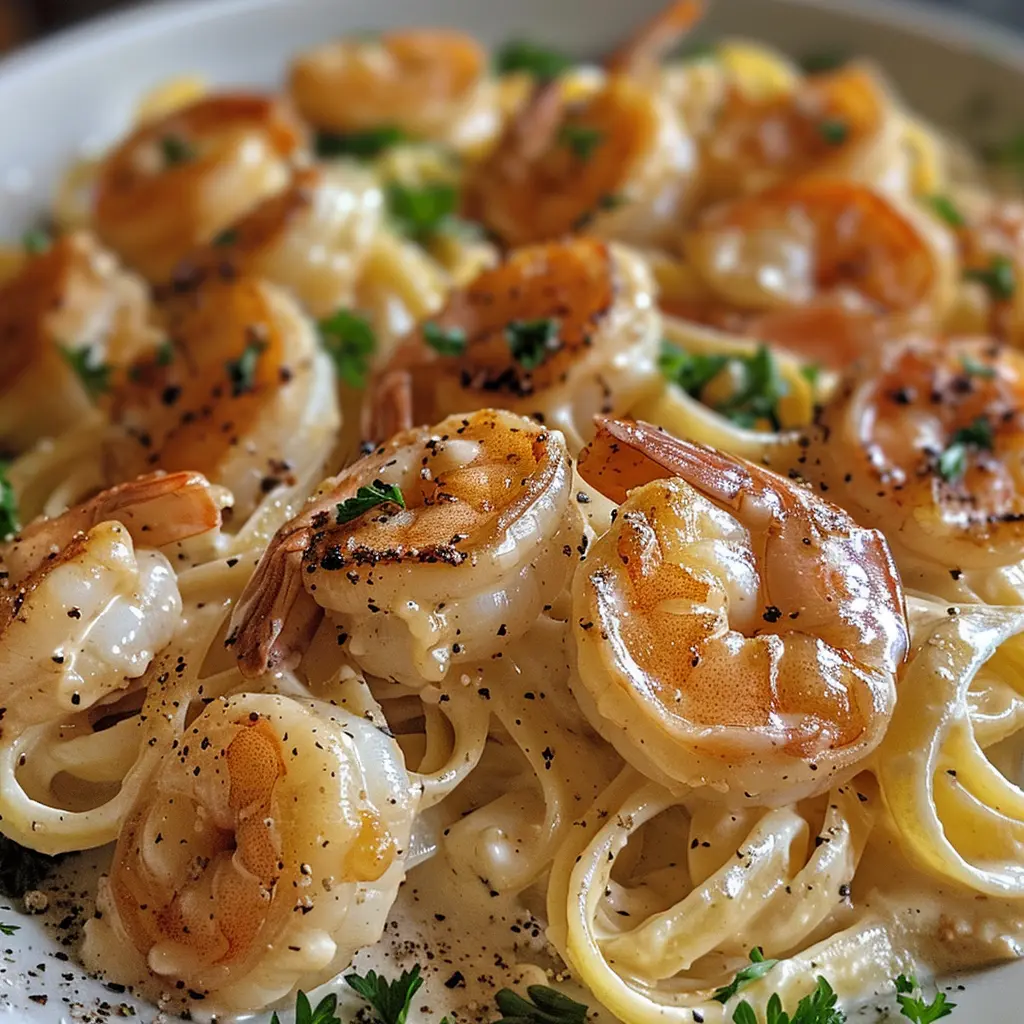
Creamy garlic Parmesan shrimp with fettuccine Alfredo sears spiced shrimp in garlic butter until they’re pink and caramelized at the edges, builds a two-cheese cream sauce directly in the same pan using the aromatic butter left behind, then combines it all with fettuccine and plates the shrimp over the top. It’s the kind of dish that looks like serious effort and tastes like a restaurant, and the whole thing is done in half an hour.
| Detail | Info |
|---|---|
| Prep Time | 10 minutes |
| Cook Time | 20 minutes |
| Total Time | 30 minutes |
| Servings | 4 |
| Difficulty | Medium |
| Cuisine | Italian-American |
Why This Recipe Works
Seasoning the shrimp with paprika, cayenne, and Italian seasoning before cooking creates a spiced crust on the exterior of each shrimp as it sears in the hot butter and oil. That crust does two things: it adds a layer of seasoned flavor to the shrimp itself that persists even when the shrimp is placed over a rich cream sauce, and it leaves seasoned, aromatic residue in the pan that the garlic and butter for the Alfredo sauce pick up and carry into the cream. The spiced shrimp and the cream sauce are not two separate components that happen to share a plate — the residue from the shrimp seasoning infuses the sauce and creates a connection between them that makes the finished dish taste cohesive rather than assembled.
Cooking the shrimp for only 1 to 2 minutes per side is the technique precision that separates properly cooked shrimp from the rubbery, overcooked version most people have encountered. Shrimp is one of the fastest-cooking proteins in the kitchen — it goes from perfectly cooked to overcooked in under a minute at high heat. The visual cue is the color: raw shrimp is gray and translucent; perfectly cooked shrimp is pink and opaque with slightly golden, caramelized edges; overcooked shrimp is white all the way through and visibly shrunken. At 1 to 2 minutes per side in a hot pan, the shrimp hits that perfect middle state and is immediately removed from the heat.
Building the Alfredo sauce in the same pan used for the shrimp is the technique that gives this version of Alfredo more depth than a sauce built in a clean pan. The residual garlic, butter, and spiced fat left in the pan from searing the shrimp dissolves into the fresh butter and garlic added for the sauce and distributes a faint, warm spice note and a concentrated garlic flavor through the cream base. A separately made Alfredo sauce is excellent; one built in the pan where the shrimp just cooked is noticeably richer and more connected in flavor to the shrimp it will eventually accompany.
The optional mozzarella alongside the Parmesan in the Alfredo sauce creates a sauce with a different character from a pure Parmesan version. Parmesan alone produces a sharp, salty, slightly grainy sauce — very flavorful but with a texture that doesn’t fully achieve the silky, velvety quality of a great Alfredo. Mozzarella melts into the cream smoothly and contributes a stretchy, mild, creamy quality that rounds out the Parmesan’s sharpness and produces a sauce that’s both more complex in flavor and more luxurious in texture. The two cheeses do what neither alone can — Parmesan provides the flavor, mozzarella provides the silk.
Plating the shrimp over the fettuccine rather than tossing everything together before serving is a presentation decision with a practical benefit. Shrimp tossed into a hot pasta and sauce continues to cook from the residual heat and will be overdone by the time the dish reaches the table. Shrimp placed over the already-sauced pasta is protected by the cooler pasta beneath it and sits in its ideal just-cooked state through serving. The presentation also shows the shrimp clearly on top rather than burying them in the pasta, which is both visually more appealing and ensures each portion gets its fair share of shrimp.
Ingredients
Shrimp
| Ingredient | Quantity | Notes |
|---|---|---|
| Large shrimp, peeled and deveined | 1.5 lbs (680g) | 16/20 or 21/25 count; patted dry before seasoning |
| Olive oil | 2 tablespoons | Combined with butter for the sear |
| Butter | 2 tablespoons | Adds richness and promotes browning |
| Garlic cloves, minced | 4 | Sauteed briefly before the shrimp are added |
| Paprika | 1 teaspoon | Adds color and mild warmth to the shrimp |
| Cayenne pepper (optional) | 1/2 teaspoon | Adjust to heat preference or omit for a mild version |
| Italian seasoning | 1 teaspoon | Adds herbal depth to the shrimp seasoning |
| Salt and black pepper | To taste | Season the shrimp generously before cooking |
Alfredo Sauce and Pasta
| Ingredient | Quantity | Notes |
|---|---|---|
| Fettuccine | 12 oz (340g) | Cook al dente; reserve pasta water before draining |
| Butter | 2 tablespoons | For the Alfredo sauce base |
| Garlic cloves, minced | 4 | Sauteed in butter before the cream goes in |
| Heavy cream | 2 cups | Full-fat for the richest, most stable sauce |
| Parmesan cheese, freshly grated | 1 cup | Freshly grated melts most smoothly; pre-shredded can turn grainy |
| Mozzarella cheese, shredded (optional) | 1 cup | Low-moisture; adds silkiness and stretch to the sauce |
| Italian seasoning | 1/2 teaspoon | Adds herbal depth to the sauce |
| Salt and black pepper | To taste | Season after the Parmesan; it also carries salt |
| Fresh parsley, chopped | For garnish | Adds color and a clean herbal note before serving |
Step-by-Step Instructions
Phase 1: Cook the Pasta
- Bring a large pot of generously salted water to a boil. Cook the fettuccine according to package directions until al dente. Reserve one cup of pasta cooking water before draining — this starchy water is useful for adjusting the sauce consistency later. Drain and set the pasta aside.
Phase 2: Cook the Shrimp
- Pat the shrimp completely dry with paper towels. Moisture on the shrimp surface prevents browning and produces steamed rather than seared shrimp. Season on both sides with paprika, cayenne (if using), Italian seasoning, salt, and black pepper.
- Heat the olive oil and butter in a large skillet over medium-high heat until the butter is melted and the pan is very hot. Add the minced garlic and saute for 30 seconds until fragrant.
- Add the seasoned shrimp in a single layer — don’t crowd them or they’ll steam rather than sear. Cook for 1 to 2 minutes per side until pink, opaque, and with slightly golden caramelized edges. The moment both sides are pink and the shrimp have curled into a loose C shape, they’re done. Remove immediately to a plate and set aside. Do not clean the pan.
Phase 3: Make the Alfredo Sauce
- In the same skillet over medium heat, add the butter for the sauce. Once melted, add the garlic and saute for 30 to 45 seconds, stirring constantly, until fragrant. Scrape up any browned bits left from the shrimp as the butter melts — this is flavor.
- Pour in the heavy cream and bring to a gentle simmer. Stir in the Italian seasoning and let the cream simmer for 2 to 3 minutes until it begins to reduce and thicken slightly.
- Add the Parmesan cheese in two additions, stirring fully between each until melted. If using mozzarella, add it now and stir until the sauce is smooth, creamy, and cohesive. Season with salt and black pepper. If the sauce seems too thick, add a splash of the reserved pasta water to loosen it.
Phase 4: Combine and Plate
- Add the cooked fettuccine to the skillet with the Alfredo sauce. Toss with tongs until every strand is evenly coated, adding pasta water a splash at a time if needed to reach the right consistency.
- Plate the fettuccine in warmed bowls or on plates. Arrange the seared garlic Parmesan shrimp on top of each portion of pasta. Garnish with freshly chopped parsley and serve immediately.
Chef Tips for Perfect Results
Pat the shrimp completely dry. This is the most commonly skipped step and the one most responsible for gray, steamed shrimp rather than pink, caramelized ones. Surface moisture becomes steam in the pan and prevents the Maillard reaction from producing the golden edges that make seared shrimp so appealing. Blot each shrimp on both sides before seasoning.
Don’t walk away during the shrimp cook. Shrimp overcooks in seconds. Set a timer for 90 seconds after adding to the pan, check the color, and flip or remove based on what you see. The transition from undercooked to perfect to overcooked happens faster with shrimp than with almost any other protein.
Use freshly grated Parmesan from a block. Pre-grated Parmesan contains anti-caking agents that prevent smooth melting into cream. Freshly grated Parmesan dissolves into the cream almost instantaneously and produces a visibly smoother sauce. Parmigiano-Reggiano is worth the extra cost for a dish where the cheese is a primary flavor.
Add cheese at a gentle simmer, never a boil. High heat causes dairy proteins to seize and fat to separate, producing a grainy, broken sauce. Reduce to a very gentle simmer before adding any cheese, and stir patiently between each addition.
Plate the shrimp on top, not tossed in. Tossed shrimp in a hot pasta and sauce will overcook from residual heat by the time the dish is served. Shrimp placed on top stays at its ideal cooked temperature through plating and eating.
Common Mistakes to Avoid
Crowding the shrimp in the pan. Shrimp that overlap produce steam and don’t sear. Work in two batches if needed to keep each shrimp in direct contact with the hot pan surface.
Overcooking the shrimp. Shrimp that have curled tightly into an O shape rather than a loose C are overcooked. They will be tough and rubbery on the plate. Remove at the loose C stage and let them rest — they continue to cook slightly from residual heat even off the stove.
Not reserving pasta water. The starchy pasta water is the best tool for adjusting Alfredo sauce that’s become too thick after the pasta is tossed in. Plain water dilutes the flavor; pasta water loosens the sauce while maintaining the starch that helps it cling.
Boiling the Alfredo sauce. A sauce at a full boil can break — the fat separates from the dairy and the sauce turns greasy and grainy. Maintain a gentle simmer throughout the sauce-making stage.
Skipping the same-pan technique. Making the Alfredo in a clean separate pan misses all the flavor left in the shrimp pan. Build the sauce in the same pan to capture every bit of that garlic-spiced butter and fold it into the cream.
Variations and Substitutions
Add sun-dried tomatoes: A quarter cup of oil-packed sun-dried tomatoes, drained and sliced, stirred into the sauce with the cream adds a concentrated, slightly tangy tomato note that cuts through the richness and adds color.
Add spinach: Two cups of fresh baby spinach stirred into the finished sauce just before tossing with the pasta wilts in under a minute and adds a mild earthy note and vibrant green color.
Spicy version: Double the cayenne on the shrimp and add a pinch of red pepper flakes to the sauce. The heat builds through each layer of the dish for a version with persistent warmth.
Scallop version: Replace the shrimp with large dry-packed sea scallops seared the same way — 2 to 3 minutes per side without moving — for a more elegant, meatier variation.
Serving Suggestions
Serve immediately in warmed, wide pasta bowls with extra grated Parmesan, a crack of fresh black pepper, and a sprinkle of chopped parsley over each portion. Garlic bread alongside is ideal for the sauce that collects at the bottom of the bowl. A simple green salad with lemon vinaigrette provides the bright, acidic counterpoint that cuts through the richness of the Alfredo. A chilled glass of Pinot Grigio or unoaked Chardonnay is the natural wine pairing.
Storage and Reheating
Refrigerator: Store shrimp and pasta separately if possible, in airtight containers, for up to 2 days. The shrimp becomes rubbery when reheated from cold; the pasta thickens as it absorbs the sauce.
Reheating: Add a splash of cream to the pasta when reheating in a skillet over low heat, stirring gently. Warm the shrimp separately in a skillet over very low heat for 1 minute per side — just enough to warm through without overcooking. The microwave works but can make both the shrimp tough and the sauce grainy.
Freezer: Not recommended. The cream sauce separates when frozen and the shrimp texture suffers considerably after freezing and thawing.
Nutritional Information
| Nutrient | Per Serving (approx.) |
|---|---|
| Calories | 780 |
| Protein | 52g |
| Carbohydrates | 48g |
| Fat | 42g |
| Saturated Fat | 23g |
| Fiber | 2g |
| Sodium | 820mg |
Nutritional values are estimates based on standard ingredient brands with mozzarella included. Values will vary based on shrimp size and specific cheese brands used.
FAQ
How do I know when the shrimp is perfectly cooked?
Look for the curl and color simultaneously. Raw shrimp is gray and straight. Perfectly cooked shrimp is fully pink and opaque, curled into a loose C shape, with slightly golden edges from the sear. Overcooked shrimp has curled tightly into a tight O shape and looks white rather than pink — the tight curl means the proteins have contracted too far. Remove from heat the moment the C shape appears and you’ll nail it every time.
Can I use frozen shrimp?
Yes. Thaw frozen shrimp in a bowl of cold water for 15 to 20 minutes, then drain and pat very thoroughly dry before seasoning. Frozen shrimp often releases additional water after thawing — even after patting dry, let them sit on paper towels for a minute or two to continue releasing moisture before they go in the pan.
Why did my Alfredo sauce turn grainy?
Grainy Alfredo is almost always caused by heat that was too high when the cheese was added, or by pre-shredded cheese with anti-caking agents. Add the cheese over the lowest possible heat, stir slowly and continuously, and always use freshly grated Parmesan from a block. If the sauce does break, a splash of cold cream whisked in over very low heat can sometimes bring it back.
Can I use a different pasta shape?
Yes, though fettuccine’s wide, flat surface makes it particularly well-suited to cream sauces — its surface area picks up and holds cream sauce in a way that thinner pasta shapes can’t. Linguine, pappardelle, or tagliatelle are the closest alternatives. Shorter shapes like penne or rigatoni also work and trap the sauce inside their tubes for a different but equally satisfying result.
Can I make this without mozzarella?
Yes. The mozzarella is listed as optional and the recipe works without it. A Parmesan-only Alfredo is sharper, slightly less silky, and more traditionally Florentine in character. Add an extra quarter cup of heavy cream if omitting the mozzarella to maintain the sauce’s volume and body.
Conclusion
Creamy garlic Parmesan shrimp with fettuccine Alfredo is the recipe that earns the “date night at home” reputation because it delivers on every front — impressive presentation, rich sauce, perfectly cooked seafood, and a genuinely restaurant-quality result in 30 minutes. The same-pan technique that connects the shrimp seasoning to the Alfredo sauce is the detail that elevates it from good to memorable. Make it once and it becomes the dinner you reach for whenever the occasion calls for something special.