
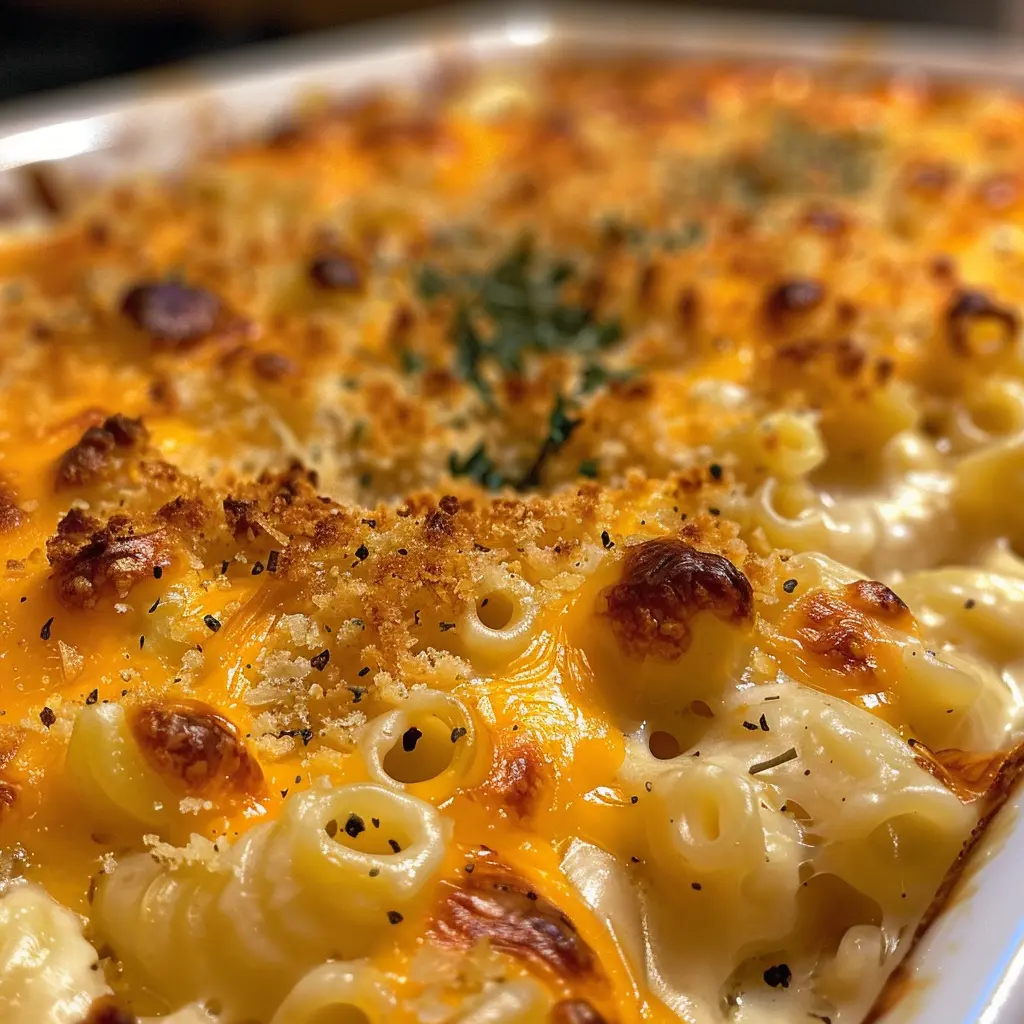
This baked mac and cheese builds a velvety roux-based cheese sauce with Velveeta, Gouda, mozzarella, and sharp cheddar, combines it with al dente elbow macaroni and a splash of hot sauce for depth, and bakes until golden and bubbling. The four-cheese combination produces a sauce with more complexity than any single-cheese version can achieve, and the result is the kind of mac and cheese that makes the baked-vs-stovetop debate irrelevant — it’s simply the best version of the dish.
| Detail | Info |
|---|---|
| Prep Time | 15 minutes |
| Bake Time | 30 minutes |
| Total Time | 45 minutes |
| Servings | 8 |
| Difficulty | Medium |
| Cuisine | American |
Why This Recipe Works
Starting the cheese sauce with a butter-and-flour roux before any liquid is added produces a sauce that’s stable, smooth, and properly thickened through the oven bake rather than one that breaks or becomes grainy. The roux — butter and flour cooked together for one to two minutes — creates a starch matrix that, when milk is gradually whisked in, traps the liquid and produces a thick, cohesive bechamel base. This base then carries the melted cheeses in stable suspension through the bake. A sauce made without a roux — cheese melted directly into milk or cream — lacks this structural foundation and can separate into a greasy, curdled layer during the 30-minute oven time.
Hot sauce is the ingredient that earns its place in this recipe not as a heat element but as a flavor amplifier. Two tablespoons of hot sauce — vinegar-based varieties like Frank’s or Tabasco — adds a bright, acidic note that cuts through the richness of four cheeses and a butter roux and keeps the finished dish tasting vibrant rather than heavy and one-dimensional. The heat dissipates during baking, leaving the vinegar’s brightness and a subtle background warmth that most people can’t identify specifically but notice as the quality that makes this mac and cheese taste more alive than versions without it. It’s the seasoning that separates a good mac and cheese from a great one.
The four-cheese combination is engineered so that each cheese contributes something the others don’t. Velveeta provides the sauce’s foundational smoothness and stability — its emulsifying salts prevent the sauce from breaking during the long bake in a way that natural cheese alone cannot guarantee. Gouda adds a nutty, slightly sweet, smoky depth that no other common melting cheese replicates. Mozzarella contributes the stretchy, gooey pull that makes baked mac and cheese so satisfying to scoop and serve. Sharp cheddar provides the bold, tangy flavor that most people recognize as the defining taste of classic mac and cheese. Together they produce a sauce that’s simultaneously smooth, complex, stretchy, and unmistakably cheesy.
Adding the shredded cheeses and an extra cup of milk directly to the macaroni in the baking dish rather than only using the cheese sauce produces a mac and cheese with more intense cheese flavor and a creamier interior consistency than sauce-only versions. The shredded cheese folded into the pasta melts into the spaces between the macaroni pieces and creates pockets of pure melted cheese throughout the dish. The extra cup of milk provides additional liquid that the pasta absorbs during baking, keeping the interior moist and creamy rather than dry and stiff. The sauce poured over the top then seals everything together and provides the rich, cohesive top layer.
Cooking the macaroni to al dente — specifically under-cooked — before it goes into the baking dish is the pasta technique that produces the right texture after 30 minutes in the oven. Fully cooked macaroni absorbs additional liquid during baking and becomes soft and mushy in the finished dish. Al dente macaroni finishes cooking in the oven while simultaneously absorbing the cheese sauce and extra milk, arriving at the ideal tender-but-not-soft consistency at the same time the top is golden and bubbly. The oven is the last 20 percent of the pasta’s cook — al dente going in means perfect coming out.
Ingredients
| Ingredient | Quantity | Notes |
|---|---|---|
| Elbow macaroni | 1 pound | Cooked al dente and drained before combining |
| Butter | 1/2 cup (1 stick) | The fat base for the roux |
| All-purpose flour | 1/4 cup | Cooked with the butter for 1 to 2 minutes before the milk goes in |
| Salt | 1 teaspoon | Added to the roux; taste and adjust after the cheese is in |
| Black pepper | 1 teaspoon | Freshly cracked preferred |
| Garlic powder | 1 teaspoon | Adds savory depth to the sauce base |
| Hot sauce | 2 tablespoons | Frank’s RedHot or similar vinegar-based hot sauce; the flavor amplifier |
| Whole milk | 2 cups | Whisked into the roux to build the bechamel base |
| Velveeta cheese, cubed | 16 oz | Melted into the sauce base; provides stability and smooth melt |
| Gouda cheese, shredded | 1 cup | Adds nutty, slightly smoky depth to the cheese profile |
| Mozzarella cheese, shredded | 1 cup | Low-moisture; contributes stretch and gooey pull |
| Sharp cheddar cheese, shredded | 1 cup | The bold, tangy flavor backbone of the dish |
| Whole milk (second addition) | 1 cup | Added directly to the macaroni in the baking dish for interior creaminess |
Step-by-Step Instructions
Phase 1: Cook the Pasta
- Preheat the oven to 350 degrees F. Lightly grease a 9×13-inch baking dish.
- Cook the elbow macaroni in a large pot of generously salted boiling water until al dente — about 2 minutes less than the package’s recommended cook time. The pasta will continue cooking in the oven. Drain and set aside.
Phase 2: Build the Cheese Sauce
- Melt the butter in a large saucepan over medium heat. Add the flour all at once and whisk constantly for 1 to 2 minutes until the roux is smooth, pale golden, and smells slightly nutty. This cooks out the raw flour taste.
- Stir in the salt, black pepper, garlic powder, and hot sauce.
- Gradually pour in the 2 cups of whole milk, whisking constantly. Add slowly at first — a few tablespoons at a time — whisking vigorously before adding more to prevent lumps. Once all the milk is incorporated, continue whisking over medium heat until the sauce thickens to a consistency that coats the back of a spoon, about 3 to 5 minutes.
- Add the cubed Velveeta to the thickened sauce and stir until completely melted and the sauce is smooth, glossy, and uniform. Remove from heat.
Phase 3: Assemble and Bake
- Place the drained al dente macaroni in the prepared baking dish. Add the shredded Gouda, mozzarella, and cheddar cheeses, and the additional 1 cup of whole milk directly to the macaroni. Toss to distribute the cheese and milk through the pasta.
- Pour the Velveeta cheese sauce over the macaroni mixture and stir until everything is evenly coated and combined. The dish will look very saucy — this is correct. The pasta will absorb much of the liquid during baking.
- Sprinkle a handful of extra shredded cheddar or a blend of the cheeses over the top if desired for a more pronounced cheese topping.
- Bake uncovered for 30 minutes until the top is lightly golden, the edges are bubbling, and the sauce has thickened to a creamy, scoopable consistency.
- Let rest for 5 to 10 minutes before serving. The sauce continues to thicken slightly during the rest and produces cleaner, creamier scoops than a mac and cheese served immediately from the oven.
Chef Tips for Perfect Results
Add the milk to the roux slowly. This is the technique that prevents lumpy bechamel. Add the first few tablespoons of milk, whisk until fully smooth, then add a little more. Once about a third of the milk is incorporated and the sauce is loose and lump-free, the rest can be added in a steadier stream. Rushing this step produces a lumpy sauce that no amount of later whisking fully corrects.
Shred the cheese yourself. Pre-shredded cheese contains anti-caking agents (usually cellulose or potato starch) that interfere with smooth melting and can produce a slightly grainy sauce. Freshly shredded Gouda, mozzarella, and cheddar from a block melt into the sauce and pasta more cleanly and produce a noticeably smoother finished dish. It takes five extra minutes and makes a visible difference.
Don’t skip the hot sauce. Two tablespoons sounds like a lot but the heat almost completely disappears in baking. What remains is the vinegar’s brightness and a background warmth that elevates every other flavor in the dish. Mac and cheese without it tastes correct; mac and cheese with it tastes exceptional. It’s the ingredient that makes people ask what’s different about this version.
Taste the sauce before it goes into the baking dish. The Velveeta carries significant salt and the cheeses add more. Taste the finished sauce before combining with the pasta and adjust seasoning from there rather than adding the full amount of salt specified without checking first.
Reserve extra cheese for the top. A generous handful of the shredded cheese blend scattered over the top before baking produces a more visually golden, cheesy surface than the sauce alone. It signals what’s inside before anyone takes a bite.
Common Mistakes to Avoid
Fully cooking the pasta before baking. Fully cooked pasta absorbs additional sauce and milk during the 30-minute bake and turns soft and mushy. Always cook to al dente — 2 minutes less than the package directions.
Adding all the milk to the roux at once. A sudden addition of cold milk to a hot roux produces lumps that are very difficult to whisk smooth after the fact. Always add gradually, whisking between additions.
Letting the sauce cool before combining with the pasta. A cooled cheese sauce thickens significantly and doesn’t distribute through the pasta as evenly as a hot sauce does. Combine immediately after the Velveeta is melted while the sauce is at its most fluid.
Baking covered. A covered bake prevents the top from developing its golden color and keeps the dish from losing any moisture, which can make the finished mac and cheese too loose. Always bake uncovered for the full 30 minutes.
Not resting before serving. Hot mac and cheese from the oven is very loose and fluid. Five to ten minutes of rest allows the sauce to tighten slightly and produces the thick, creamy, scoopable consistency that makes this dish so satisfying. Serve immediately and it pours more than it scoops.
Variations and Substitutions
Add a breadcrumb topping: Half a cup of panko breadcrumbs tossed with two tablespoons of melted butter and scattered over the cheese topping before baking creates a golden, crunchy crust that adds textural contrast to the creamy interior. Add in the last 10 minutes of baking to prevent burning.
Add bacon: Six strips of cooked, crumbled bacon folded into the macaroni before the sauce goes on, with additional crumbles over the top, adds a smoky, salty element that makes this already excellent mac and cheese into something even more indulgent.
Add jalapenos: Two tablespoons of diced pickled jalapenos folded into the macaroni alongside the shredded cheeses adds a tangy heat that pairs naturally with the hot sauce already in the recipe and produces a spicier version for anyone who wants more heat presence.
Smoked Gouda upgrade: Replacing the regular Gouda with smoked Gouda amplifies the smoky note and adds a depth that makes the four-cheese combination even more complex. Smoked Gouda is worth seeking out specifically for this recipe.
Serving Suggestions
Serve directly from the baking dish with a large spoon, ensuring each portion gets a generous scoop of the creamy interior along with some of the golden top. This mac and cheese stands on its own as a hearty side or, with the addition of protein, as a complete dinner. Alongside pulled pork, fried chicken, or BBQ ribs it is the side dish that competes with the main for attention. For a holiday table, it holds its heat well in the baking dish for 20 to 30 minutes after coming out of the oven.
Storage and Reheating
Refrigerator: Store covered for up to 4 days. The pasta absorbs additional sauce overnight and the mac and cheese will be noticeably thicker after refrigeration.
Reheating: Add a splash of milk before reheating and stir to redistribute the sauce. Reheat covered in a 325 degree F oven for 20 minutes, or individual portions in the microwave in 60-second intervals with a splash of milk stirred in.
Freezer: Freeze in portions for up to 2 months. The texture of the sauce changes slightly after thawing — it may appear grainy — but stirring over low heat with added milk restores most of the original creaminess. Thaw overnight in the refrigerator before reheating.
Nutritional Information
| Nutrient | Per Serving (approx.) |
|---|---|
| Calories | 720 |
| Protein | 32g |
| Carbohydrates | 62g |
| Fat | 38g |
| Saturated Fat | 22g |
| Fiber | 2g |
| Sodium | 1080mg |
Nutritional values are estimates based on standard ingredient brands. Sodium is significant due to the Velveeta and salt additions; values will vary based on specific cheese brands used.
FAQ
Can I make this without Velveeta?
Yes, but the sauce stability changes. Velveeta’s emulsifying salts are what keep the sauce smooth and prevent it from breaking during the long bake. Without it, increase the roux slightly — use 6 tablespoons of butter and 3 tablespoons of flour — and add 4 ounces of cream cheese to the sauce along with the shredded cheeses. The cream cheese mimics some of Velveeta’s stabilizing function. The result is good but slightly less foolproof than the Velveeta version.
Can I make this ahead and bake it later?
Yes. Assemble completely, cover tightly, and refrigerate for up to 24 hours before baking. Bake directly from the refrigerator, adding 10 to 15 minutes to the bake time to account for the cold start. The pasta will have absorbed some sauce overnight — add a splash of milk over the top before baking if it looks dry.
Can I use a different pasta shape?
Yes. Cavatappi (corkscrew) is the most popular upgrade from elbow macaroni — its ridged, hollow spiral shape holds cheese sauce even more effectively than elbows. Small shells, ditalini, or penne all work well. Avoid long pasta shapes that don’t distribute evenly through the dish.
Why is my mac and cheese dry after baking?
Dry mac and cheese after baking usually means the pasta was fully cooked before going in (absorbing too much sauce during baking), the dish was baked too long, or there wasn’t enough liquid in the assembled dish. The second cup of milk added directly to the macaroni is the insurance against dryness — make sure it’s included. If the dish looks dry before baking, add another quarter cup of milk over the top before it goes in the oven.
Can I add more hot sauce if I want more heat?
Yes. The two tablespoons specified produces a subtle background warmth that most people won’t identify as heat. For a version with a clear heat presence, increase to three to four tablespoons, or stir in a teaspoon of cayenne pepper alongside the garlic powder. Taste the sauce before it goes into the baking dish and adjust from there.
Conclusion
This baked mac and cheese earns its bold title through the accumulated effect of every decision: the roux that keeps the sauce stable, the hot sauce that makes every other flavor brighter, the four cheeses each doing something different, the extra milk and shredded cheese folded into the pasta before the sauce goes on, and the 30-minute bake that unifies it all into something golden, bubbling, and deeply satisfying. Make it once for a holiday table or a family dinner and understand immediately why it’s the only mac and cheese recipe anyone needs.