
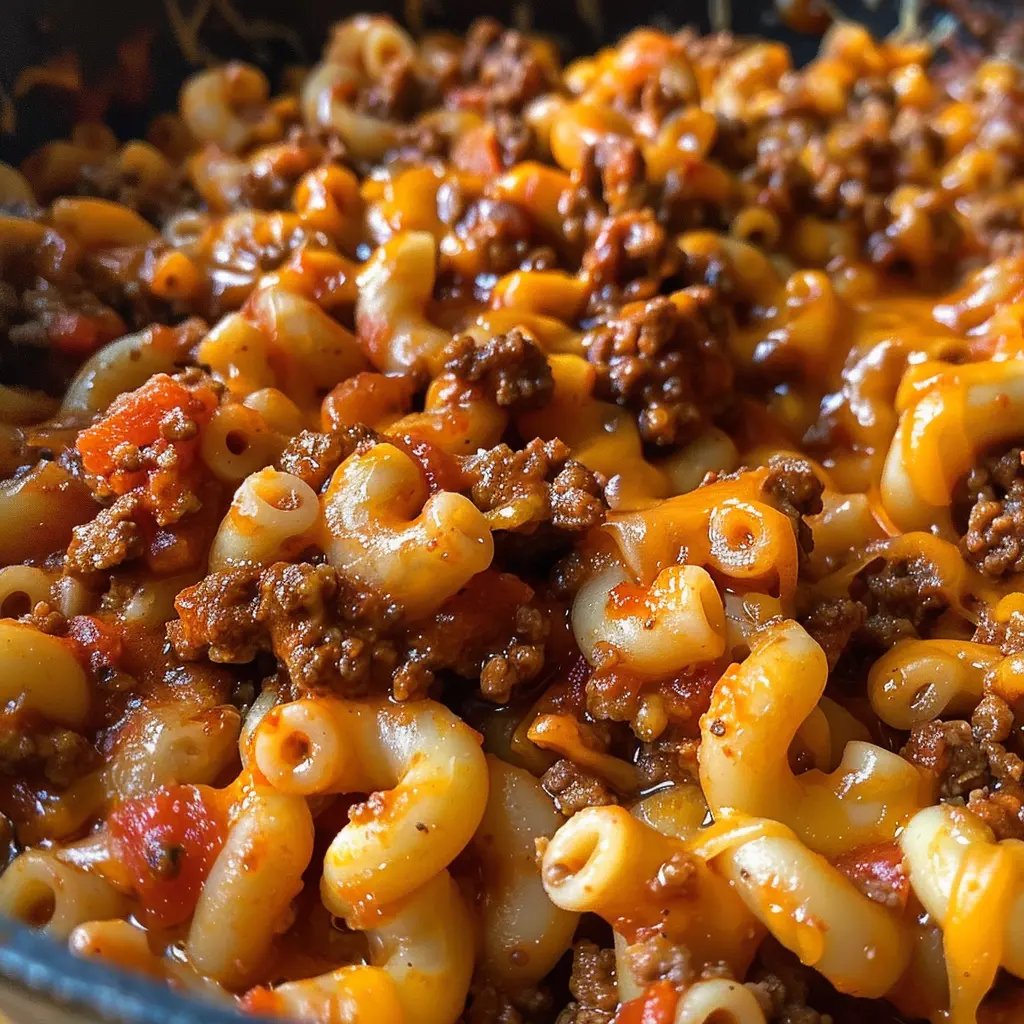
Southern old-fashioned goulash browns ground beef with onion and garlic, adds tomato sauce, diced tomatoes, Worcestershire, Italian seasoning, elbow macaroni, and water — all in the same pot — then covers and simmers until the pasta is tender and has absorbed the savory tomato sauce it cooked in. It’s done in 30 minutes, uses one pot, costs almost nothing, feeds a crowd, and tastes like the kind of dinner that doesn’t need improving because it’s already exactly what it should be.
| Detail | Info |
|---|---|
| Prep Time | 5 minutes |
| Cook Time | 25 minutes |
| Total Time | 30 minutes |
| Servings | 6 |
| Difficulty | Easy |
| Cuisine | American / Southern |
Why This Recipe Works
Cooking the elbow macaroni directly in the tomato sauce and water rather than boiling it separately and combining it at the end is the technique that gives American goulash its distinctive flavor and the quality that makes it genuinely different from pasta with meat sauce served alongside. Pasta cooked in plain salted water absorbs water and nothing else — it finishes as a neutral, starchy vehicle for whatever sauce is added afterward. Pasta cooked in the tomato-beef sauce absorbs the tomato, the beef fat, the Worcestershire, and the seasoning directly into the pasta structure from the first moment of cooking to the last. By the time the macaroni is tender, it has been absorbing seasoned liquid for 20 minutes and carries the dish’s full flavor profile inside every noodle, not just on the surface.
Using both tomato sauce and undrained diced tomatoes together produces a sauce with better texture and more complexity than either alone. Tomato sauce provides a smooth, cohesive base that coats the pasta and beef evenly. The undrained diced tomatoes contribute chunks of tomato that hold their shape through the simmer and provide textural variation — pockets of bright, slightly acidic tomato in a richer sauce base. The liquid from the diced tomato can also adds tomato flavor to the braising liquid. Together they produce a sauce that’s more interesting in texture and more layered in tomato flavor than a single tomato product would achieve.
Worcestershire sauce is the ingredient that distinguishes this goulash from plain pasta with tomato and beef. It provides the same fermented, umami-rich depth it provides in Salisbury steak and meatloaf — a flavor layer that makes the beef taste more savory and the tomato sauce taste richer without being identifiable as a separate ingredient. The tablespoon specified here is enough to be present throughout the finished dish without tasting like Worcestershire specifically. It’s the ingredient that makes people taste the goulash and feel like something is subtly but importantly right about it without knowing why.
Italian seasoning in an American Southern goulash recipe is a nod to the dish’s practical origins — a combination of dried herbs in a single jar that provides an herbal complexity with zero effort. The oregano, basil, and thyme in Italian seasoning each contribute to the tomato sauce’s flavor, softening and deepening during the 20-minute covered simmer in the way that dried herbs always need sustained heat and moisture to fully bloom. Added at the same time as the liquids, the seasoning has the full simmer to develop rather than being added at the end where it would taste raw and sharp.
The optional cheddar cheese stirred in at the end transforms the goulash from a tomato-based pasta dish into something considerably richer and more cohesive. Stirred into the hot goulash off the heat, the cheddar melts into the sauce and binds the pasta and beef together into a thicker, creamier consistency that makes each scoop more substantial. This is the detail that crosses the dish from weeknight pantry dinner into comfort food that people specifically crave. It’s listed as optional in the original recipe but anyone who has made both versions understands why the cheese version is the one people ask for again.
Ingredients
| Ingredient | Quantity | Notes |
|---|---|---|
| Ground beef | 1 pound | 80/20 for the best flavor; drain excess fat before adding the tomatoes |
| Large onion, chopped | 1 | Cooked with the beef until softened and sweet |
| Garlic cloves, minced | 2 | Added after the beef and onion; cooked until fragrant |
| Tomato sauce | 1 can (15 oz) | The smooth base of the sauce |
| Diced tomatoes, undrained | 1 can (14.5 oz) | Undrained; the liquid contributes to the cooking liquid for the pasta |
| Worcestershire sauce | 1 tablespoon | Adds umami depth; don’t skip it |
| Italian seasoning | 1 teaspoon | Added with the liquids so it blooms during the full simmer |
| Salt and black pepper | To taste | Season after tasting — the tomato products carry sodium |
| Elbow macaroni, uncooked | 2 cups | Added dry directly to the pot; cooks in the sauce |
| Water | 2 cups | Combined with the tomato products to provide enough liquid to cook the pasta |
| Shredded cheddar cheese | 1 cup | Optional but strongly recommended; stirred in at the end off the heat |
Step-by-Step Instructions
Phase 1: Build the Base
- In a large pot or deep skillet over medium heat, brown the ground beef, breaking it into crumbles, until fully cooked with no pink remaining. If using 80/20 beef, drain most of the excess fat but leave a thin coating — it carries flavor and helps saute the onion.
- Add the chopped onion to the pot with the beef and cook over medium heat, stirring occasionally, until the onion is soft and translucent, about 4 to 5 minutes. Add the minced garlic and cook for 1 minute, stirring constantly.
Phase 2: Add Everything and Simmer
- Add the tomato sauce, diced tomatoes with their liquid, Worcestershire sauce, Italian seasoning, salt, black pepper, uncooked elbow macaroni, and water to the pot. Stir everything together until combined.
- Bring to a simmer over medium heat, stirring to make sure the pasta isn’t clumping on the bottom. Once simmering, reduce the heat to medium-low, cover, and cook for about 20 minutes, stirring every 5 minutes to prevent the pasta from sticking to the bottom of the pot and to check the liquid level.
- After 20 minutes, check the pasta for doneness — it should be fully tender with no chalky center. If it’s still firm, cover and cook for another 3 to 5 minutes. If the liquid has been absorbed before the pasta is done, add a splash of water and stir.
Phase 3: Finish and Serve
- Remove from heat. If using cheddar cheese, sprinkle it over the goulash and stir until fully melted and incorporated into the sauce. Taste and adjust seasoning with salt and pepper before serving.
- Serve immediately, scooped into bowls or onto plates. The goulash thickens as it sits — if serving later, stir in a splash of water to loosen it back to serving consistency.
Chef Tips for Perfect Results
Stir every 5 minutes during the covered simmer. Elbow macaroni cooking in a thick tomato sauce is prone to sticking to the bottom of the pot and scorching, particularly as the liquid reduces. A stir every 5 minutes prevents sticking, checks the liquid level, and ensures even cooking throughout the pot rather than overcooked pasta at the bottom and undercooked pasta at the top.
Use a pot large enough to seem too big. The goulash expands significantly as the pasta cooks and absorbs liquid — what looks like a reasonable amount in a medium pot at the start can bubble and expand to near the rim. A large, deep pot or Dutch oven gives the goulash room to simmer without boiling over and makes stirring easier throughout.
Don’t drain the diced tomatoes. The liquid in the can is part of the braising liquid the pasta needs to cook through. Draining it reduces the available liquid and can result in undercooked pasta or a too-thick sauce before the macaroni is done. Always add the full undrained can.
Add the cheese off the heat. Cheddar stirred into actively simmering goulash can break and become grainy. Remove the pot from heat first, then stir in the cheese while the goulash is hot but not boiling. The residual heat melts it smoothly into the sauce.
Season at the end, not the beginning. The tomato sauce, diced tomatoes, and Worcestershire all carry sodium. The sauce concentrates during the 20-minute simmer, intensifying the salt level. Always taste and adjust seasoning after cooking rather than salting heavily at the start.
Common Mistakes to Avoid
Not stirring during the simmer. Unstirred goulash develops a scorched layer on the bottom of the pot that imparts a bitter flavor throughout the dish. Set a timer for every 5 minutes during the covered cook and stir each time.
Using too small a pot. A pot that seems the right size at the start will be overflowing by 10 minutes into the simmer. Always use a larger pot than seems necessary for goulash.
Draining the diced tomatoes. The liquid in the can is essential. Use the full undrained contents of the can.
Adding cheese while still on the heat. Cheese added to an actively simmering dish can separate and become grainy. Always remove from heat first.
Not adjusting liquid for the pasta. Different pasta brands and different pot sizes affect how quickly the liquid absorbs. If the pasta isn’t done but the liquid is gone, add water a quarter cup at a time and continue simmering. If there’s still significant liquid when the pasta is done, simmer uncovered for 2 to 3 minutes to reduce it.
Variations and Substitutions
Add bell pepper: One diced green or red bell pepper added with the onion is the most classic American goulash addition. It softens during the simmer and adds sweetness and color throughout the dish.
Add a bay leaf: One bay leaf added with the liquids and removed before serving adds a subtle herbal depth that rounds out the tomato flavor in a way that’s hard to pinpoint but noticeably present. A small detail with an outsized effect.
Use Italian sausage: Replace or combine the ground beef with mild Italian sausage removed from its casings. The sausage’s built-in fennel and herb seasoning adds complexity that reduces the need for additional seasoning and produces a richer, more deeply spiced goulash.
Add a tablespoon of tomato paste: Stirred in with the other tomato products, tomato paste adds a concentrated, slightly caramelized tomato depth that amplifies the sauce’s flavor beyond what sauce and diced tomatoes alone produce. A small addition with a meaningful impact.
Serving Suggestions
Serve in wide bowls with a sprinkle of extra cheddar and a crack of fresh black pepper over the top. Crusty bread alongside for scooping the sauce is the natural accompaniment. A simple green salad with vinaigrette provides a bright, acidic contrast to the rich tomato-beef sauce. This goulash also serves well alongside garlic bread, cornbread, or dinner rolls for a complete family dinner.
Storage and Reheating
Refrigerator: Store covered for up to 4 days. The pasta continues to absorb liquid in the refrigerator and the goulash will be significantly thicker after storage — this is expected and not a problem.
Reheating: Add a splash of water or beef broth before reheating and stir to loosen the thickened sauce. Reheat in a pot over medium-low heat, stirring frequently, or in the microwave in 60-second intervals with a splash of liquid added. The goulash returns to its original consistency with added liquid.
Freezer: Freeze in portions for up to 3 months. The pasta texture softens slightly after thawing but the flavor remains excellent. Thaw overnight in the refrigerator and reheat with a splash of water as above.
Nutritional Information
| Nutrient | Per Serving (approx.) |
|---|---|
| Calories | 390 |
| Protein | 24g |
| Carbohydrates | 42g |
| Fat | 13g |
| Saturated Fat | 5g |
| Fiber | 3g |
| Sodium | 680mg |
Nutritional values are estimates based on 85/15 ground beef without optional cheddar cheese. Values will vary based on specific tomato product brands used.
FAQ
What’s the difference between American goulash and Hungarian goulash?
They share a name and very little else. Hungarian goulash is a rich beef and vegetable stew seasoned primarily with paprika, cooked low and slow, and typically served with egg noodles or dumplings on the side. American goulash — also called American chop suey in parts of New England — is a quick stovetop dish of ground beef, tomato sauce, and elbow macaroni cooked together in one pot. The American version developed independently as a practical, budget-friendly weeknight meal and has been a staple of American home cooking since at least the mid-20th century.
Can I use a different pasta shape?
Yes, though elbow macaroni is ideal because its small, curved shape and ridged surface hold the tomato sauce and cook in approximately the same time the rest of the dish comes together. Small shells, ditalini, or small penne work well as alternatives. Avoid long pasta or large shapes, which don’t distribute through the dish as evenly and require different cooking times.
Why is my goulash watery?
Watery goulash means the pasta absorbed less liquid than expected, which can happen with pasta that was partially pre-cooked or with a pot that was only at a very low simmer rather than a proper simmer. Simmer uncovered for 3 to 5 minutes after the pasta is done, stirring frequently, to allow excess liquid to evaporate. The cheddar cheese, if using, also helps thicken the sauce when stirred in at the end.
Can I make this in an Instant Pot?
Yes. Use the Sauté function to brown the beef and cook the onion and garlic. Add all remaining ingredients, stir, and cook on High Pressure for 4 minutes, then quick release. Stir well — the pasta will have absorbed most of the liquid. Add the cheese if using, stir until melted, and serve. The Instant Pot version produces a slightly softer pasta texture than the stovetop version.
Can I add vegetables to make it more filling?
Yes. Diced bell pepper, sliced zucchini, frozen corn, or canned kidney beans all work well added with the tomato products and pasta. Frozen peas can be stirred in during the last 5 minutes of cooking. Any vegetable that you’d put in a tomato-based pasta dish works here — the goulash’s flexible sauce base accommodates additions readily.
Conclusion
Southern old-fashioned goulash is the dinner that proves the most satisfying meals don’t require complexity — just good ingredients handled simply and given enough time to become something greater than their individual parts. Brown the beef, add everything to the pot, simmer until the pasta is done and has absorbed the flavor of the sauce it cooked in, stir in the cheese, and serve. Thirty minutes, one pot, and a dinner that feeds six people who will want it again next week.