
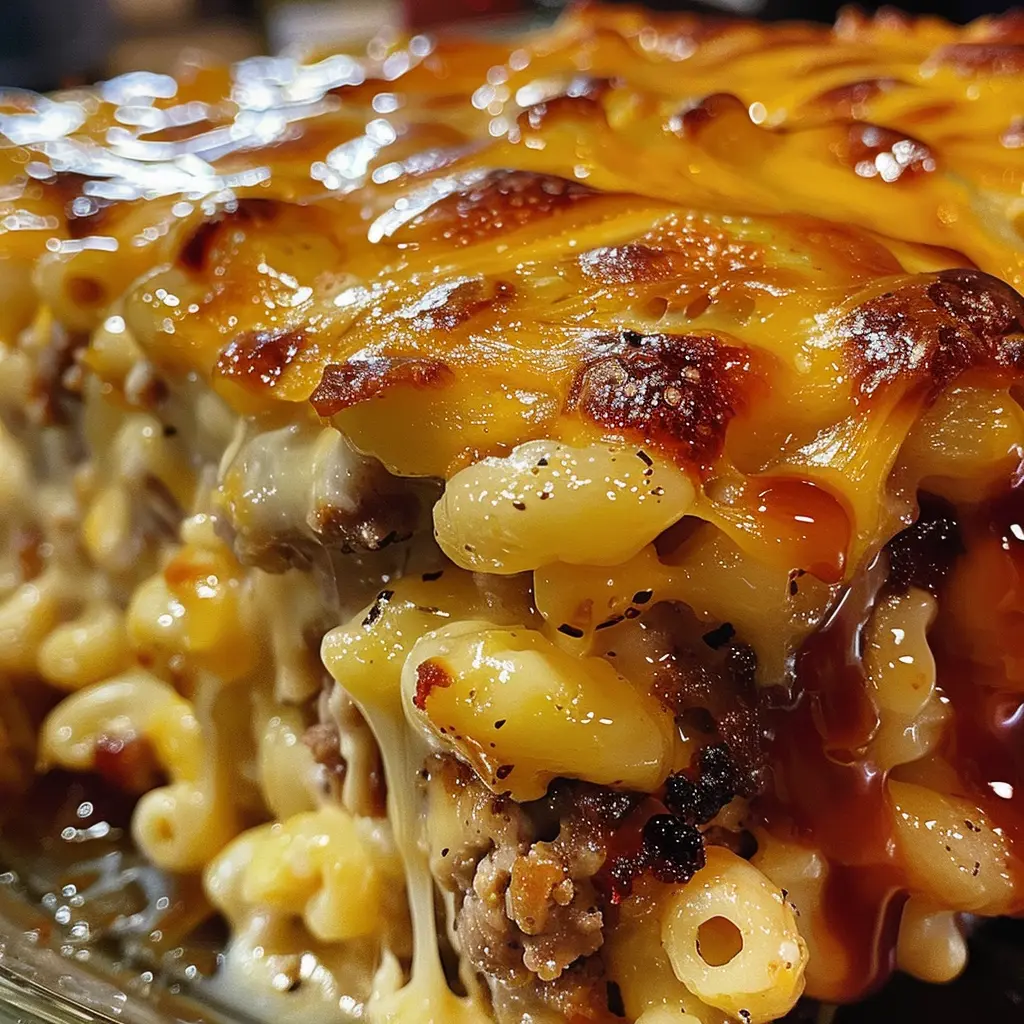
Mac and cheese meatloaf casserole presses a BBQ-seasoned ground beef base into a baking dish, partially bakes it, then covers it with a creamy mac and cheese enriched with cheddar cheese soup, tops everything with shredded mozzarella and a drizzle of BBQ sauce, and bakes until the cheese is bubbly and golden. It is exactly what it sounds like: meatloaf and mac and cheese unified into a single casserole, and somehow the combination is even more satisfying than either one alone.
| Detail | Info |
|---|---|
| Prep Time | 20 minutes |
| Bake Time | 50 to 55 minutes |
| Total Time | 1 hour 15 minutes |
| Servings | 6 to 8 |
| Difficulty | Easy |
| Cuisine | American |
Why This Recipe Works
Partially baking the meatloaf base for 30 minutes before adding the mac and cheese topping is the technique that allows both components to finish cooking simultaneously in the second bake. Raw meatloaf covered with mac and cheese from the start would need considerably longer to cook through, during which time the mac and cheese would overbake and dry out, and the mozzarella would burn before the beef reached a safe temperature. The 30-minute first bake brings the meatloaf to nearly done, shrinks it slightly as fat renders out, and produces a stable surface that the mac and cheese can be spread over without sinking into the meat. The second 20 to 25-minute bake finishes the meatloaf to 160 degrees F while simultaneously melting the mozzarella and setting the mac and cheese layer to serving consistency.
Crushed Ritz crackers as the binder rather than plain breadcrumbs contributes more than structural function to the meatloaf base. Ritz crackers contain butter, salt, and a slight sweetness from their ingredient profile that plain breadcrumbs lack. When mixed into the ground beef, they provide the same binding and moisture-retention function as breadcrumbs — absorbing the fat and liquid released during baking and holding it within the meat — but they also carry their buttery, slightly sweet flavor into every bite of the meatloaf. The crackers’ salt content also seasons the meat from within, producing a meatloaf that’s more evenly flavored throughout than one seasoned only on the exterior.
BBQ sauce appears twice in this recipe — half a cup mixed into the meatloaf base and the remainder drizzled over the mozzarella topping before the second bake — and it functions differently each time. In the meatloaf base, the BBQ sauce adds sweetness, smokiness, and moisture that keeps the beef mixture from becoming dense and dry during the initial bake. It also contributes a tangy, slightly caramelized flavor to the meat’s interior that plain seasoning can’t replicate. Drizzled over the top before the second bake, the BBQ sauce caramelizes slightly in the oven’s heat and creates visible, flavorful streaks across the melted mozzarella that signal the dish’s flavor profile before anyone takes a bite.
Enriching the prepared mac and cheese with cheddar cheese soup before spreading it over the meatloaf produces a mac and cheese layer that’s more stable, more intensely flavored, and better suited to the second bake than standard boxed mac and cheese would be on its own. Boxed mac and cheese made according to package directions is relatively thin and loose — it would spread over the meatloaf too thinly and could absorb into the meat surface rather than staying as a distinct layer. The cheddar cheese soup adds body, stabilizing starch, and an amplified cheddar flavor that keeps the layer thick enough to spread cleanly, bake without separating, and remain as a cohesive, creamy stratum between the meatloaf and the mozzarella through both baking and serving.
Mozzarella rather than cheddar for the final cheese topping is the choice that produces the visual appeal the dish needs when it comes out of the oven. Cheddar on top of mac and cheese would create a one-note cheese experience with no visual contrast. Low-moisture mozzarella melts into a distinctly different — whiter, stretchier, more visually dramatic — layer over the yellow mac and cheese beneath it, creating the color and textural contrast that makes the finished casserole look as impressive as it tastes. Mozzarella’s mild flavor also doesn’t compete with the cheddar below it; the two cheeses occupy different positions in the flavor profile and complement rather than duplicate each other.
Ingredients
| Ingredient | Quantity | Notes |
|---|---|---|
| Ground beef | 2 pounds | 80/20 for the juiciest meatloaf base; excess fat drains during the first bake |
| Ritz crackers, crushed | 30 crackers | About 1.5 cups of crumbs; crush in a zip bag for the easiest prep |
| Milk | 2 cups total, divided | 1/2 cup into the meatloaf; 1.5 cups into the mac and cheese |
| BBQ sauce | 1 cup total, divided | 1/2 cup into the meatloaf base; remainder drizzled over the top |
| Black pepper | 1 teaspoon | Seasons the meatloaf base |
| Cheddar cheese soup | 1 can (10.5 oz) | Stirred into the prepared mac and cheese for body and extra cheese flavor |
| Mozzarella cheese, shredded | 2 cups | Low-moisture; the final topping layer before the second bake |
| Prepared macaroni and cheese | 2 cups | Boxed mac and cheese prepared according to package directions before use |
Step-by-Step Instructions
Phase 1: Make and Bake the Meatloaf Base
- Preheat the oven to 350 degrees F. Grease a 9×13-inch baking dish.
- Crush the Ritz crackers into fine crumbs — a zip-top bag and a rolling pin takes about 30 seconds.
- In a large bowl, combine the ground beef, crushed Ritz crackers, half a cup of milk, half a cup of BBQ sauce, and black pepper. Mix gently with your hands until just combined. Do not overwork the meat mixture — overmixed ground beef develops a dense, tough texture. Mix only until the ingredients are evenly distributed.
- Press the meat mixture evenly across the bottom of the prepared baking dish in an even layer, reaching the corners and edges. The even thickness ensures uniform cooking throughout.
- Bake for 30 minutes. The meatloaf will shrink slightly and release fat — carefully drain the excess fat from the dish using a spoon or by tilting the dish and blotting with paper towels. This step prevents the mac and cheese layer from becoming greasy.
Phase 2: Prepare the Mac and Cheese Layer
- While the meatloaf bakes, prepare the macaroni and cheese according to package directions. Once prepared, stir in the undiluted cheddar cheese soup and the remaining 1.5 cups of milk until the mixture is smooth, creamy, and well combined. The addition of the soup and extra milk produces a looser, more spreadable mac and cheese that layers cleanly over the meatloaf.
Phase 3: Layer and Finish
- Remove the partially baked meatloaf from the oven. Spread the enriched mac and cheese evenly over the surface of the meatloaf, going to the edges of the dish.
- Sprinkle the shredded mozzarella evenly over the mac and cheese layer. Drizzle the remaining BBQ sauce over the mozzarella in a back-and-forth pattern.
- Return to the oven and bake uncovered for 20 to 25 minutes until the mozzarella is fully melted and beginning to develop golden spots, the BBQ sauce drizzle is caramelized, and the meatloaf reaches an internal temperature of 160 degrees F when checked with a thermometer inserted through the mac and cheese layer to the center of the meat.
- Let the casserole rest for 10 minutes before slicing. This rest allows the layers to firm slightly and the mac and cheese to set from loose to scoopable. Cut into squares with a sharp knife and serve with a wide spatula that supports each portion from beneath.
Chef Tips for Perfect Results
Drain the fat after the first bake. Two pounds of 80/20 ground beef releases a significant amount of rendered fat during the 30-minute initial bake. If not removed before the mac and cheese goes on, that fat rises up through the mac and cheese layer during the second bake and produces a greasy, oily surface rather than a clean cheese topping. Drain carefully before layering.
Don’t overwork the meatloaf mixture. Ground beef mixed too aggressively develops a tight, dense protein structure that produces a firm, chewy meatloaf base rather than the tender, moist one that makes this casserole so satisfying. Mix only until the crackers, milk, and BBQ sauce are evenly incorporated — the moment you can no longer see unmixed pockets, stop.
Use the thermometer for the meatloaf, not the clock. Pressing a 9×13 layer of ground beef to an even depth guarantees faster cooking than a traditional shaped meatloaf loaf, but the exact thickness affects the timing. An instant-read thermometer at 160 degrees F inserted through the mac and cheese layer into the center of the meat is the only reliable doneness confirmation.
Make the mac and cheese slightly looser than normal. The 1.5 cups of milk called for in the mac and cheese step is more than most boxed mac and cheese recipes specify. This extra milk, combined with the soup, produces a mac and cheese that’s spreadable and creamy rather than stiff — important for a layer that needs to cover the meatloaf evenly and bake to a good consistency in the second bake.
Rest the full 10 minutes before cutting. The layers are fluid directly from the oven and will slide apart if cut immediately. Ten minutes of rest sets the mac and cheese layer and firms the whole casserole enough to cut into clean, distinct-layered squares.
Common Mistakes to Avoid
Skipping the fat drain between bakes. This is the step most likely to be skipped and the one most likely to affect the finished dish negatively. Always drain before adding the mac and cheese.
Overworking the meat mixture. Dense meatloaf is almost always from overmixing. Mix gently and stop early.
Adding the mac and cheese layer to a raw meatloaf. The two-stage bake exists for a reason — adding the topping to raw meat produces a dish where either the mac and cheese is overcooked or the meatloaf is undercooked. Always complete the 30-minute first bake before layering.
Cutting before resting. Ten minutes is non-negotiable for clean, layered servings. Rushing this step collapses the layers.
Not pressing the meatloaf to an even thickness. Uneven thickness produces uneven cooking — thin edges that are overcooked and dry by the time the thicker center reaches temperature. Press to a consistent depth across the entire dish.
Variations and Substitutions
Add diced onion or green pepper to the meatloaf: Half a cup of finely diced yellow onion and a quarter cup of diced green pepper folded into the meatloaf mixture adds the classic meatloaf vegetable combination and more textural interest to the base.
Use homemade mac and cheese: A homemade stovetop mac and cheese — butter, flour, milk, and sharp cheddar — used in place of the boxed version produces a more complex, more intensely cheesy middle layer. Make it slightly looser than normal to account for the extra milk already called for in the enrichment step.
Swap the BBQ sauce for ketchup: Classic meatloaf topping is ketchup rather than BBQ sauce, and ketchup drizzled over the mozzarella in place of or alongside BBQ sauce produces a more traditionally meatloaf-flavored version of the dish. Many people find the ketchup version more familiar and equally satisfying.
Add bacon: Six strips of cooked, crumbled bacon scattered over the mac and cheese layer before the mozzarella goes on adds a smoky, salty element that pairs naturally with both the BBQ meatloaf base and the creamy cheese topping.
Serving Suggestions
Cut into squares with a sharp knife and lift each portion with a wide spatula that supports all three layers. Serve with a simple green salad, steamed green beans, or roasted broccoli alongside for a vegetable component that provides a fresh counterpoint to the richness of the casserole. Additional BBQ sauce on the side for dipping is an optional but popular addition. This casserole is complete and hearty on its own — the mac and cheese provides the starch, the meatloaf the protein, and the cheese topping the indulgence.
Storage and Reheating
Refrigerator: Store covered for up to 4 days. The layers hold together well after refrigeration and the casserole slices cleanly cold.
Reheating: Individual portions reheat well in the microwave in 60 to 90 second intervals. For larger portions, cover with foil and reheat in a 325 degree F oven for 20 minutes until heated through. The mac and cheese layer may need a splash of milk stirred in before reheating if it has dried out in the refrigerator.
Freezer: Freeze in portions for up to 2 months. The mac and cheese texture changes slightly after thawing — it becomes slightly grainier — but the flavor remains very good. Thaw overnight in the refrigerator before reheating.
Nutritional Information
| Nutrient | Per Serving (approx., based on 7 servings) |
|---|---|
| Calories | 620 |
| Protein | 38g |
| Carbohydrates | 42g |
| Fat | 32g |
| Saturated Fat | 14g |
| Fiber | 1g |
| Sodium | 960mg |
Nutritional values are estimates based on 80/20 ground beef and standard ingredient brands. Values will vary based on specific BBQ sauce and mac and cheese brands used.
FAQ
Can I use homemade mac and cheese instead of boxed?
Yes — and many people prefer it. A stovetop mac and cheese made with sharp cheddar, butter, flour, and milk produces a richer, more deeply flavored middle layer. Make it slightly looser than you normally would, since the recipe already calls for additional milk in the enrichment step. The extra liquid ensures the mac and cheese stays creamy through the second bake rather than drying out.
Can I make this ahead and refrigerate before baking?
Partially. Complete the first 30-minute meatloaf bake, drain the fat, and let the meatloaf cool to room temperature. Spread the mac and cheese and add the mozzarella and BBQ drizzle, then cover and refrigerate overnight. The next day, bake at 350 degrees F for 25 to 30 minutes until heated through and the cheese is melted. Add 5 to 10 minutes to the second bake time to account for the cold start.
What boxed mac and cheese works best?
Kraft Original is the most common choice and produces the most recognizable result. Velveeta Shells and Cheese, with its processed cheese sauce pouch, produces an even creamier middle layer that holds up particularly well through the second bake. Any boxed mac and cheese works — the cheddar cheese soup and extra milk added to it compensate for most differences between brands.
How do I know when the meatloaf is done in the second bake?
Insert an instant-read thermometer through the mac and cheese layer at an angle until the probe reaches the center of the meatloaf base. It should read 160 degrees F. The thermometer leaves only a small hole in the mac and cheese layer that closes as the casserole rests. If it hasn’t reached temperature, return for another 5 minutes and check again.
Can I use ground turkey instead of beef?
Yes. Ground turkey produces a leaner, lighter-colored meatloaf base. Season more assertively — add a teaspoon of Worcestershire sauce and a half teaspoon of garlic powder to the turkey mixture to compensate for its milder flavor compared to beef. Cook the turkey base to 165 degrees F rather than the 160 degrees F for beef.
Conclusion
Mac and cheese meatloaf casserole is the dinner that earns its place on the table by being genuinely more than the sum of its parts. The BBQ-seasoned meatloaf base, the enriched cheddar mac and cheese middle, and the mozzarella-and-BBQ-drizzle topping each bring something the others don’t, and the combination produces a comfort food casserole that’s bigger, bolder, and more satisfying than either meatloaf or mac and cheese could be on their own. Make it once and it becomes the answer to every “what’s for dinner” question that needs to satisfy a table full of people who are genuinely hungry.