
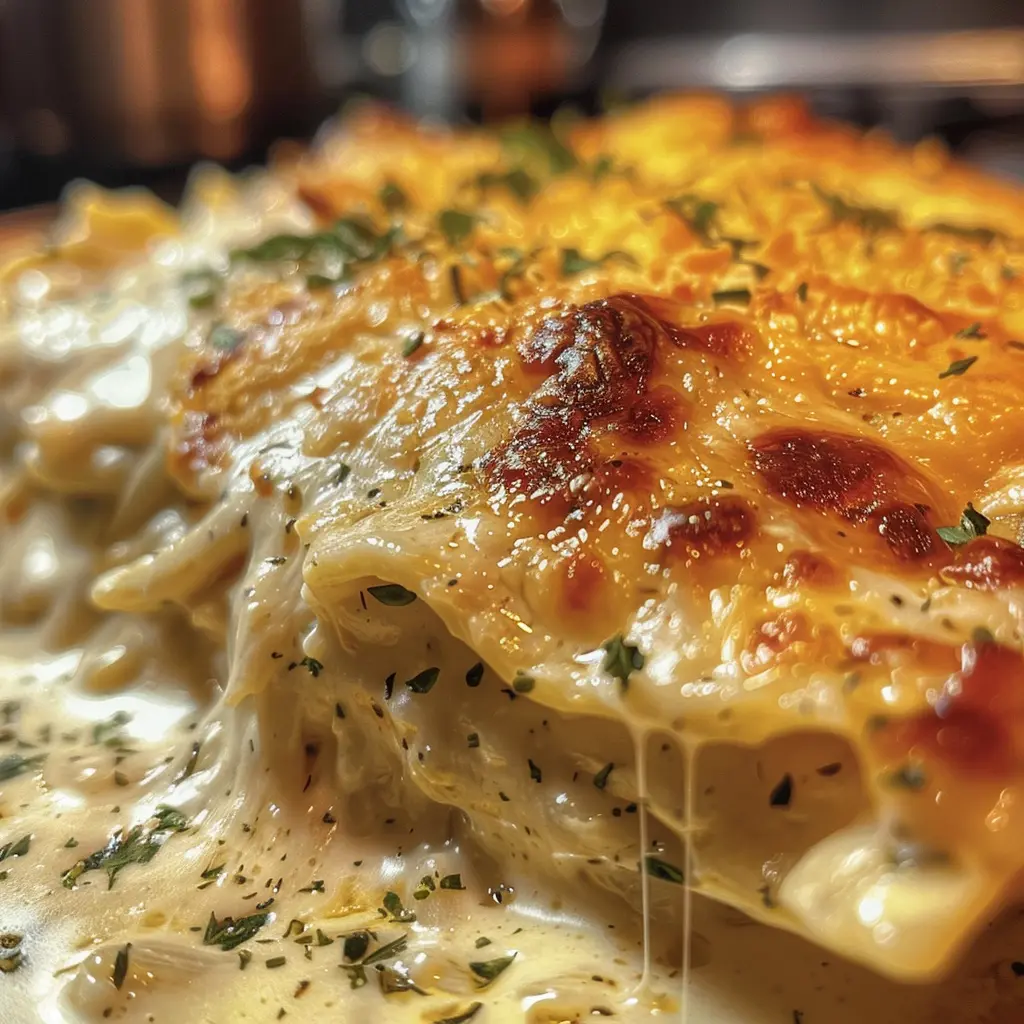
Chicken Alfredo lasagna sears seasoned chicken breasts until golden, builds a homemade Parmesan Alfredo sauce from a butter-flour roux and heavy cream, then layers both with lasagna noodles, mozzarella, and cheddar in a baking dish that goes into the oven for nearly an hour and comes out as something that’s simultaneously more elegant and more comforting than either chicken Alfredo or traditional lasagna alone. This is the casserole that earns its place at a holiday table or a special family dinner without requiring anything close to special-occasion effort.
| Detail | Info |
|---|---|
| Prep Time | 25 minutes |
| Bake Time | 45 to 50 minutes |
| Total Time | 1 hour 15 minutes |
| Servings | 8 |
| Difficulty | Medium |
| Cuisine | Italian-American |
Why This Recipe Works
Cooking the chicken in olive oil over medium-high heat until golden before it goes into the lasagna layers produces chicken that’s seasoned on the exterior from the Maillard browning and properly cooked through to its center. Chicken added raw to a lasagna layer would technically cook during the 45 to 50 minute bake, but without the initial sear it arrives in the finished dish pale, bland, and texturally inferior to chicken that was browned first. The golden sear on each breast also develops fond in the skillet — the browned bits that can be scraped into the Alfredo sauce if desired to add an additional layer of flavor to the white sauce.
Building the Alfredo sauce on a roux base — butter and flour cooked together before the cream is added — produces a more stable, more evenly thickened sauce than cream reduced alone. Cream-only Alfredo sauces are beautiful on stovetop pasta where they can be served immediately, but they can separate and become greasy during the sustained heat of a 45 to 50 minute oven bake. The flour in the roux absorbs fat and provides the starch matrix that keeps the cream and Parmesan in stable suspension through the full bake. The result is an Alfredo sauce that’s as creamy and cohesive on the plate as it was when it went into the oven.
Heavy cream rather than whole milk or half-and-half is the liquid choice that produces the signature richness of a genuine Alfredo sauce and the body the sauce needs to maintain its consistency as a lasagna component. Whole milk produces a thinner sauce that can become watery as moisture releases from the chicken and noodles during baking. Heavy cream’s fat content creates a sauce that can handle some dilution from the surrounding ingredients and still arrive at the table thick and luxurious. In a roux-based sauce, heavy cream also produces a more stable emulsion than lower-fat dairy.
The spice profile on the chicken — paprika, garlic powder, onion powder, Italian seasoning, and optional red pepper flakes — builds layers of seasoning that persist through the bake and throughout every layer of the finished lasagna. Paprika adds color and mild warmth to the chicken’s exterior that is visible as a golden hue on each piece in the finished dish. Garlic and onion powder season the meat internally during cooking. Italian seasoning ties the chicken’s flavor to the Alfredo sauce’s Italian-American identity. The optional red pepper flakes introduce a heat element that cuts through the richness of the cream sauce and makes each bite slightly more exciting. Together they produce chicken that tastes deliberately seasoned rather than incidentally present in the dish.
The three-cheese topping — mozzarella, cheddar, and Parmesan — produces a golden surface with more complexity than any single cheese. Mozzarella provides the stretch and the dramatic, bubbly melt. Cheddar adds a sharper, more orange-tinted note that contrasts visually and flavor-wise with the white Alfredo sauce below it. Parmesan develops a slightly more browned, nuttier quality in the final uncovered bake stage and adds the salty, concentrated cheese depth that mozzarella and cheddar alone don’t fully provide. The combination creates a topping that looks impressive and tastes more interesting than the mozzarella-only topping that most white lasagnas use.
Ingredients
| Ingredient | Quantity | Notes |
|---|---|---|
| Boneless, skinless chicken breasts | 2 pounds | Seasoned and cooked before layering; can be sliced or shredded |
| Lasagna noodles, cooked | 12 | Cooked al dente; laid flat to prevent sticking before assembly |
| Olive oil | 2 tablespoons | For searing the chicken |
| Butter | 2 tablespoons | The fat base for the Alfredo roux |
| All-purpose flour | 3 tablespoons | Cooked with the butter for 1 minute before cream is added |
| Heavy cream | 3 cups | The liquid base for the Alfredo sauce; full-fat for stability and richness |
| Garlic powder | 1 teaspoon | Used both on the chicken and in the Alfredo sauce |
| Onion powder | 1 teaspoon | Part of the chicken seasoning blend |
| Paprika | 1 teaspoon | Adds color and mild warmth to the chicken |
| Italian seasoning | 1 teaspoon | Seasons the chicken and connects it to the dish’s Italian-American identity |
| Red pepper flakes (optional) | 1/2 teaspoon | Stirred into the Alfredo sauce for background heat |
| Salt and black pepper | To taste | Season the chicken before cooking and the sauce after the Parmesan is added |
| Mozzarella cheese, shredded | 2 cups | Low-moisture; used between layers and on top |
| Mild or medium cheddar cheese, shredded | 2 cups | Adds color and sharpness to the cheese layers |
| Parmesan cheese, grated | 1 cup | Melted into the Alfredo sauce and used on the final topping |
Step-by-Step Instructions
Phase 1: Cook the Chicken and Noodles
- Preheat the oven to 375 degrees F. Grease a 9×13-inch baking dish.
- Season the chicken breasts on both sides with salt, black pepper, paprika, garlic powder, onion powder, and Italian seasoning.
- Heat the olive oil in a large skillet over medium-high heat until shimmering. Add the chicken and cook for 6 to 7 minutes per side until golden brown on the exterior and cooked through to 165 degrees F internally. Remove to a cutting board, let rest for 5 minutes, then slice into thin strips or shred into bite-sized pieces.
- Cook the lasagna noodles in a large pot of salted boiling water until al dente. Drain and lay flat on oiled parchment paper to prevent sticking.
Phase 2: Make the Alfredo Sauce
- Melt the butter in a medium saucepan over medium heat. Add the flour and whisk constantly for 1 minute until the roux is smooth and lightly golden.
- Gradually pour in the heavy cream, whisking constantly. Add slowly at first — a few tablespoons at a time — whisking until fully incorporated before adding more. Once all the cream is in, continue stirring over medium heat until the sauce thickens enough to coat the back of a spoon, about 4 to 6 minutes.
- Stir in the grated Parmesan until fully melted and smooth. Add the red pepper flakes if using. Season with salt and black pepper. Taste and adjust — the sauce should be rich, creamy, and well-seasoned before it goes into the lasagna.
Phase 3: Assemble the Lasagna
- Spread a thin layer of Alfredo sauce across the bottom of the prepared baking dish — about half a cup — to prevent the bottom noodles from sticking.
- Lay 3 to 4 lasagna noodles over the sauce in a single layer. Spread a layer of Alfredo sauce over the noodles, then distribute a portion of the chicken evenly over the sauce. Sprinkle a portion of the mozzarella and cheddar over the chicken.
- Repeat the layers — noodles, Alfredo sauce, chicken, mozzarella, cheddar — until all ingredients are used, ending with a final layer of noodles on top.
- Pour the remaining Alfredo sauce over the top noodle layer, covering them completely. Sprinkle the remaining mozzarella, cheddar, and Parmesan evenly over the surface.
Phase 4: Bake and Rest
- Cover tightly with aluminum foil and bake for 35 minutes.
- Remove the foil and bake uncovered for an additional 10 to 15 minutes until the cheese topping is golden, bubbly, and lightly browned in spots.
- Remove from the oven and let rest for 10 minutes before slicing. This rest is essential — it allows the Alfredo sauce layers to firm from their molten state into cohesive, sliceable layers that hold together when served.
Chef Tips for Perfect Results
Let the chicken rest before slicing. Chicken sliced immediately after cooking releases its juices onto the cutting board. Five minutes of rest allows those juices to redistribute through the meat, producing slices that stay moist through the bake rather than arriving in the finished lasagna dry and stringy.
Cover every inch of the top noodle layer with Alfredo sauce. Any exposed noodle on the top layer will dry out and become hard and chewy during the uncovered portion of the bake. The final Alfredo sauce layer should cover the top noodles completely, with the cheese going on top of the sauce rather than directly on the noodles.
Make the Alfredo sauce slightly thicker than seems necessary. The chicken and noodles both release some moisture during the long bake, which dilutes the sauce slightly. A sauce that’s on the thicker side going in arrives at exactly the right consistency coming out. If the sauce seems slightly too thick to spread easily, that’s the right consistency for this application.
Use a thermometer on the chicken. Visually checking doneness on chicken breasts is unreliable. An instant-read thermometer at 165 degrees F is the only certain confirmation that the chicken is safe and at its optimal juiciness before it goes into the lasagna.
Make it the day before for the best result. Like all lasagnas, this one benefits from an overnight rest in the refrigerator after assembly. The layers meld, the noodles absorb the Alfredo sauce, and the flavors deepen. Bake from cold the next day, adding 15 minutes to the covered bake time.
Common Mistakes to Avoid
Using cream-only Alfredo without a roux. Cream alone without the flour roux can separate during the long bake. The roux base is not optional in a baked lasagna application — it’s the stability the sauce needs to survive 45 to 50 minutes in the oven.
Not covering the top noodles with sauce. Exposed noodles on the top layer become hard and unpleasant during the uncovered bake stage. Always ensure the final sauce layer covers every noodle completely.
Skipping the rest period. Alfredo sauce is more fluid than tomato-based lasagna sauce and needs the full 10 minutes to firm into sliceable layers. Cut too early and every serving is a saucy, collapsing pile rather than a neat, layered portion.
Overcooking the noodles before assembly. Al dente noodles that spend 45 to 50 minutes in a cream sauce absorb the sauce and arrive at the right texture. Fully cooked noodles become mushy and lose their structural contribution to the dish.
Using pre-shredded cheese. Anti-caking agents in pre-shredded cheese can produce a slightly grainy melt, particularly noticeable in a white sauce lasagna where the cheese’s visual quality is prominent. Freshly shredded produces a cleaner, smoother result.
Variations and Substitutions
Use rotisserie chicken: Skip the chicken-cooking step entirely and use two cups of shredded rotisserie chicken. The rotisserie chicken is already seasoned and perfectly moist — toss it with the spice blend before layering to add the paprika and Italian seasoning flavors.
Add spinach: Two cups of fresh baby spinach wilted into the Alfredo sauce just before assembling adds color, nutrition, and a mild earthiness that pairs naturally with the cream sauce and chicken. Classic chicken florentine in lasagna form.
Add mushrooms: One cup of sliced cremini mushrooms sauteed in butter until golden and distributed through the chicken layers adds an earthy, meaty depth that complements the Alfredo sauce beautifully.
Add sun-dried tomatoes: A quarter cup of oil-packed sun-dried tomatoes, drained and roughly chopped, scattered through the chicken layers adds a concentrated, slightly tangy sweetness that cuts through the richness of the cream sauce and makes the dish more complex.
Serving Suggestions
Let rest the full 10 minutes, then cut into squares with a sharp knife and lift each portion with a wide spatula. A simple green salad with lemon vinaigrette alongside provides the bright, acidic contrast that a rich cream-based lasagna benefits from. Crusty garlic bread for the sauce is worth including. This lasagna holds its heat well and can sit at the table for 20 minutes without cooling significantly, making it practical for dinner parties where timing is rarely perfect.
Storage and Reheating
Refrigerator: Store covered for up to 4 days. The Alfredo sauce thickens considerably as it cools but loosens again when reheated.
Reheating: Cover with foil and reheat in a 325 degree F oven for 25 to 30 minutes. Individual portions reheat in the microwave in 90-second intervals. Add a tablespoon of cream or milk over individual portions before microwaving to help the sauce return to its original consistency.
Freezer: Freeze in portions for up to 3 months. The cream sauce texture changes slightly after thawing but remains very good. Thaw overnight in the refrigerator and reheat covered in the oven.
Nutritional Information
| Nutrient | Per Serving (approx.) |
|---|---|
| Calories | 720 |
| Protein | 48g |
| Carbohydrates | 38g |
| Fat | 42g |
| Saturated Fat | 24g |
| Fiber | 2g |
| Sodium | 680mg |
Nutritional values are estimates based on standard ingredient brands. Values will vary based on specific cheese brands and chicken breast size used.
FAQ
Can I use no-boil lasagna noodles?
Yes, with an adjustment. No-boil noodles absorb significantly more liquid than pre-cooked noodles, so add an extra half cup of heavy cream or milk to the Alfredo sauce to compensate. The noodles will absorb this extra liquid during baking and finish at the right texture. Without the extra liquid, no-boil noodles in a cream-based lasagna can produce a dry, stiff result.
Can I use half-and-half instead of heavy cream?
Yes, but the sauce will be thinner and less stable through the long bake. If using half-and-half, increase the flour to 4 tablespoons in the roux to compensate for the lower fat content. The finished sauce will be slightly lighter in richness but still very good. Whole milk requires the same adjustment — increase the flour to maintain sauce body.
How do I prevent the Alfredo sauce from breaking during baking?
The roux base is the primary prevention — never skip it for a baked Alfredo application. Additionally, add the Parmesan to the sauce only after the cream has thickened and the pan has been pulled back from high heat. Parmesan added to a very hot, actively simmering sauce can cause the proteins to seize and produce a grainy texture. Add over gentle heat, stir patiently, and the sauce will remain smooth through the full bake.
Can I add ricotta to this lasagna?
Yes. A ricotta layer — 15 oz ricotta mixed with one egg, salt, pepper, and Italian seasoning — spread over each noodle layer before the chicken and shredded cheese goes on adds the classic lasagna ricotta element to the white sauce version. It thickens the filling and adds a slightly tangy, creamy quality that many people associate specifically with lasagna. An excellent addition for anyone who loves the ricotta layer in traditional lasagna.
Why is my lasagna watery after baking?
Watery chicken Alfredo lasagna has three common causes: the Alfredo sauce was too thin going in (needed more thickening time before assembly), the chicken wasn’t fully rested before slicing and released juices into the layers, or the lasagna was cut immediately from the oven before the sauce had time to set. Address all three — cook the sauce to a proper coating consistency, rest the chicken before slicing, and always rest the lasagna the full 10 minutes before cutting.
Conclusion
Chicken Alfredo lasagna is the recipe that earns its place at the center of the table by combining the best qualities of two already-excellent dishes into something that surpasses both. The golden, seasoned chicken, the roux-based Alfredo sauce that survives the long bake without breaking, and the three-cheese topping that goes golden and bubbly in the final uncovered stage produce a lasagna that’s richer, more complex, and more satisfying than the sum of its very good parts. Make it for a family dinner, bring it to a gathering, or assemble it the night before and bake it when the oven is free — it rewards the effort every time.