
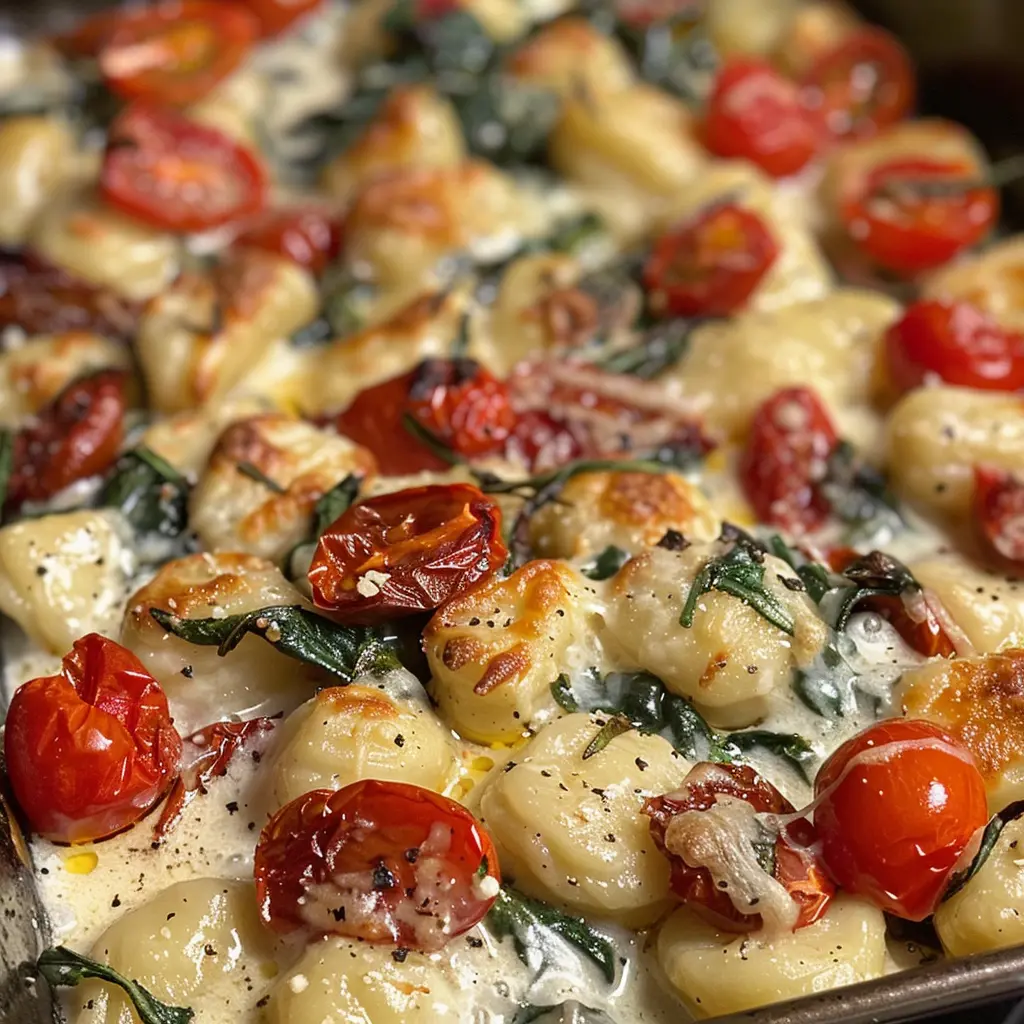
Creamy Tuscan sheet pan gnocchi tosses shelf-stable gnocchi, cherry tomatoes, sun-dried tomatoes, and garlic with olive oil and Italian seasoning directly on a sheet pan — no boiling, no draining, no extra pot — bakes at high heat until the gnocchi is crispy-edged and the tomatoes have blistered and burst, then immediately stirs in baby spinach, heavy cream, and Parmesan while everything is piping hot. The tomato juices and cream combine in the residual heat to create a sauce that coats every piece of gnocchi without a single additional step. It’s one of the most satisfying sheet pan dinners that exists.
| Detail | Info |
|---|---|
| Prep Time | 5 minutes |
| Bake Time | 20 to 25 minutes |
| Total Time | 30 minutes |
| Servings | 4 |
| Difficulty | Easy |
| Cuisine | Italian-American |
Why This Recipe Works
Shelf-stable gnocchi baked directly on the sheet pan without boiling first is the central insight that makes this recipe both faster and texturally superior to the traditional boil-then-sauté approach. Shelf-stable gnocchi (the vacuum-packed variety found at room temperature in grocery stores, not the refrigerated fresh kind) has a lower moisture content than fresh gnocchi, which means when it goes into a hot oven in direct contact with a sheet pan, its outer surface dehydrates rapidly and develops a crispy, golden crust while the interior cooks to tender softness from the oven’s ambient heat. Boiling first would hydrate the gnocchi before it hit the sheet pan and prevent that crust from forming. The no-boil method produces a gnocchi with two distinct textures — crispy shell, tender center — that boiling-then-sauté can approximate but not quite match.
Blistered cherry tomatoes are the ingredient that creates the sauce without any sauce being made. At 425 degrees F, cherry tomatoes heated past their boiling point don’t just soften — they burst, releasing their concentrated juice, natural sugars, and acids onto the sheet pan. Those released juices reduce slightly in the oven heat and concentrate on the pan surface. When the heavy cream is stirred in immediately after the pan comes out of the oven, the hot, concentrated tomato juice emulsifies with the cream to produce a sauce that already has tomato depth, acidity, and sweetness built in. The sauce isn’t made separately and added — it emerges from the tomatoes during baking and is finished with cream in under a minute.
Sun-dried tomatoes alongside fresh cherry tomatoes produce a tomato presence that’s layered in flavor across two very different preparations of the same ingredient. Fresh cherry tomatoes blister and burst, releasing bright, acidic juice that forms the sauce base. Sun-dried tomatoes, which have been slowly dried to remove most of their moisture and concentrate their flavor, contribute an intense, slightly sweet, savory tomato depth that no amount of fresh tomato can replicate at home in 20 minutes. The two together produce a Tuscan tomato profile that would normally require hours of slow cooking to achieve from fresh tomatoes alone.
Adding the spinach, cream, and Parmesan off the heat rather than returning the pan to the oven is the technique that produces perfectly wilted spinach, stable cream, and melted Parmesan without any risk of overcooking any of the three. Spinach wilts from the residual heat of the hot gnocchi and tomatoes in under a minute — it goes into the pan bright green and finishes wilted and tender without any additional heat. Cream stirred into a pan that’s hot but not on a burner doesn’t boil or reduce further — it simply combines with the tomato juices at a temperature that encourages emulsification without breaking. Parmesan stirred in off the heat melts smoothly rather than clumping as it can if added to a pan still on the burner.
Italian seasoning on the gnocchi and tomatoes before the bake distributes herbal flavor through the entire dish rather than only on the surface. At 425 degrees F, dried herbs bloom in the hot oil and infuse the surrounding ingredients with their aromatic compounds. Oregano, basil, and thyme in Italian seasoning each contribute to the Tuscan flavor profile that connects the sun-dried tomatoes, the spinach, the garlic, and the Parmesan into a coherent dish identity rather than a collection of separate ingredients that happen to be on the same pan.
Ingredients
| Ingredient | Quantity | Notes |
|---|---|---|
| Shelf-stable gnocchi | 16 oz | Vacuum-packed, room-temperature variety; do NOT use refrigerated fresh gnocchi or boil first |
| Cherry tomatoes | 1 pint (about 2 cups) | Left whole; blister and burst to form the sauce base |
| Sun-dried tomatoes, chopped | 1 cup | Oil-packed preferred; drained before using |
| Garlic cloves, minced or sliced | 2 | Tossed with the gnocchi before baking |
| Olive oil | 1 tablespoon | Coats everything for the sheet pan bake |
| Italian seasoning | 1 teaspoon | Blooms in the oven heat and infuses the dish |
| Heavy cream | 1/2 cup | Added immediately off the oven; combines with tomato juices to form the sauce |
| Baby spinach | 2 handfuls (about 2 cups) | Added off the heat; wilts from residual pan heat |
| Parmesan cheese, grated | 1/2 cup | Stirred in off the heat to melt smoothly |
| Salt and black pepper | To taste | Season before baking and adjust after the cream and Parmesan are added |
Step-by-Step Instructions
Phase 1: Toss and Bake
- Preheat the oven to 425 degrees F. Line a large rimmed sheet pan with parchment paper for easy cleanup — the tomato juices will caramelize on the pan surface and can be difficult to scrub without it.
- Add the shelf-stable gnocchi (straight from the package, not boiled), cherry tomatoes, chopped sun-dried tomatoes, and minced garlic to the sheet pan. Drizzle the olive oil over everything and sprinkle with Italian seasoning, salt, and black pepper.
- Toss everything together directly on the pan until evenly coated and spread into a single layer. The gnocchi should have space around each piece — crowding prevents the crispy exterior from forming.
- Bake for 20 to 25 minutes until the gnocchi is golden and crispy-edged, the cherry tomatoes have blistered and burst, and the pan has developed some caramelized tomato juice around the edges. Don’t stir during baking — undisturbed contact with the hot pan is what produces the crispy gnocchi exterior.
Phase 2: Finish Off the Heat
- Remove the sheet pan from the oven. Immediately add the baby spinach, pour the heavy cream over everything, and scatter the grated Parmesan over the top.
- Stir and toss vigorously for about 1 minute — the spinach will wilt in the heat, the cream will combine with the burst tomato juices on the pan to form a sauce, and the Parmesan will melt into the cream and coat the gnocchi. Any caramelized bits on the pan surface will lift and dissolve into the sauce as you stir.
- Taste and adjust seasoning. Serve immediately directly from the pan or transferred to a serving bowl.
Chef Tips for Perfect Results
Use shelf-stable gnocchi, not refrigerated fresh. This is the one non-negotiable ingredient specification in the recipe. Fresh refrigerated gnocchi has too much moisture to develop the crispy exterior that makes this dish work — it will steam rather than crisp and produce a soft, sticky result. The vacuum-packed shelf-stable variety is what the no-boil technique requires. It’s found in the pasta aisle, not the refrigerator section.
Don’t stir during the bake. The crispy exterior forms from sustained, direct contact between the gnocchi and the hot sheet pan. Stirring during baking interrupts that contact and produces steamed, pale gnocchi rather than golden, crispy ones. Leave them undisturbed for the full bake time.
Use the parchment paper. Caramelized tomato juice on an unlined sheet pan creates a cleanup situation that requires significant scrubbing. Parchment makes the cleanup a non-event and doesn’t affect the cooking in any way.
Work quickly when adding the off-heat components. The sauce forms from the residual heat of the hot pan and gnocchi — the cream emulsifies with the tomato juices, the spinach wilts, and the Parmesan melts all in the first minute after the pan comes out. Waiting too long before adding the cream and spinach means a cooler pan that doesn’t perform the sauce-making and wilting as effectively. Have the cream, spinach, and Parmesan measured and ready before the pan goes in the oven.
Add red pepper flakes for Tuscan depth. A quarter to half teaspoon of crushed red pepper flakes tossed with the gnocchi before baking adds a slow-building heat that runs through the entire dish and makes the Tuscan flavor profile more complete. Tuscan cooking characteristically uses chili heat as a background note rather than a dominant flavor.
Common Mistakes to Avoid
Boiling the gnocchi first. This eliminates the no-boil advantage entirely and produces gnocchi that’s too hydrated to crisp on the sheet pan. Use shelf-stable gnocchi directly from the package.
Using a pan that’s too small. Crowded gnocchi steam rather than roast. Use a large rimmed sheet pan and spread everything in a single layer with some space between pieces. Use two pans if necessary.
Stirring during baking. Undisturbed contact with the hot pan produces the crispy exterior. Every stir is a reset on the crust formation process.
Waiting too long after removing from the oven. The sauce forms from residual heat — a pan that’s been sitting for 5 minutes before the cream and spinach are added is significantly cooler and won’t perform as well. Add immediately from the oven.
Using refrigerated fresh gnocchi. Its higher moisture content produces entirely different results. The no-boil method only works with shelf-stable vacuum-packed gnocchi.
Variations and Substitutions
Add Italian sausage: Crumble and cook Italian sausage (removed from casing) in a skillet, drain, and add to the sheet pan with the gnocchi before baking. The sausage’s fat renders during the bake and adds to the sauce base when the cream is stirred in, producing a richer, meatier version that’s a complete one-pan meal.
Add white beans: A drained can of cannellini beans tossed with the gnocchi adds protein and a creamy, slightly earthy quality that makes the dish more filling while keeping it vegetarian. The beans roast alongside the gnocchi and develop lightly crispy exteriors of their own.
Use pesto instead of Italian seasoning: Replace the Italian seasoning with two tablespoons of basil pesto tossed with the gnocchi before baking. The pesto’s basil and pine nut oils infuse the gnocchi during baking and produce a version with a more herbal, nutty character that’s particularly excellent alongside the sun-dried tomatoes.
Add burrata at serving: Place a ball of burrata in the center of the finished dish immediately before serving. The cream from the burrata’s center flows into the sauce as it’s broken open at the table, producing a final flourish that takes the dish from very good to legitimately impressive.
Serving Suggestions
Serve immediately from the sheet pan or transferred to a wide serving bowl. The sauce loses its ideal consistency as it cools and the gnocchi begins to absorb it, so this is a dish that needs to go from the oven to the table in under 5 minutes. Extra grated Parmesan and a crack of fresh black pepper over each serving are the only additions it needs. For a complete dinner, a simple arugula salad with lemon and olive oil alongside provides a fresh, peppery counterpoint to the rich, creamy gnocchi.
Storage and Reheating
Refrigerator: Store covered for up to 3 days. The gnocchi loses its crispiness in the refrigerator as it absorbs the sauce, but the flavor remains excellent.
Reheating: Reheat in a skillet over medium heat with a splash of cream or milk stirred in to loosen the sauce. The microwave works for individual portions in 60-second intervals. The oven can partially restore some crispiness to the gnocchi if spread on a sheet pan at 375 degrees F for 8 to 10 minutes.
Freezer: Not recommended. The cream sauce and gnocchi texture both degrade significantly after freezing and thawing.
Nutritional Information
| Nutrient | Per Serving (approx.) |
|---|---|
| Calories | 480 |
| Protein | 14g |
| Carbohydrates | 62g |
| Fat | 22g |
| Saturated Fat | 10g |
| Fiber | 5g |
| Sodium | 680mg |
Nutritional values are estimates based on standard ingredient brands. Values will vary based on specific gnocchi and Parmesan brands used.
FAQ
Where do I find shelf-stable gnocchi?
Shelf-stable gnocchi is sold in vacuum-sealed packages in the pasta aisle of most grocery stores — it’s near the dried pasta, not in the refrigerator section. Common brands include DeLallo, Gia Russa, and store-brand versions. It typically comes in 16-ounce packages and has a shelf life of many months at room temperature. If you only find refrigerated gnocchi at your store, see the note below.
Can I use refrigerated fresh gnocchi?
It’s not recommended for the no-boil method. Fresh refrigerated gnocchi has much higher moisture content than shelf-stable and will steam rather than crisp on the sheet pan, producing a soft, sticky result without the golden exterior the recipe depends on. If only fresh gnocchi is available, boil it first according to package directions, drain well, pat dry, and then proceed with the sheet pan method — the result won’t have the same initial crispiness but will still be delicious.
Can I make this dairy-free?
Yes. Replace the heavy cream with full-fat coconut cream (the thick part from a chilled can) and use a dairy-free Parmesan alternative or nutritional yeast for the finish. The coconut cream version has a slightly different flavor profile but produces a similarly creamy sauce. Most shelf-stable gnocchi is dairy-free by default — check the label to confirm.
My gnocchi came out soft instead of crispy. What went wrong?
Soft gnocchi from a sheet pan bake has one of three causes: the gnocchi was fresh/refrigerated rather than shelf-stable, the pan was crowded and pieces steamed each other rather than roasting individually, or the oven temperature was too low. Ensure you’re using shelf-stable gnocchi, spread in a single layer with space between pieces, on a fully preheated 425 degrees F oven. All three conditions together produce the crispy exterior the recipe promises.
Can I add protein to make this a complete meal?
Yes. Cooked Italian sausage crumbles, sauteed shrimp, or rotisserie chicken added to the sheet pan in the last 5 minutes of baking (or stirred in off the heat alongside the spinach and cream) all work well. Italian sausage is the most natural pairing for the Tuscan flavor profile and produces the most cohesive result.
Conclusion
Creamy Tuscan sheet pan gnocchi earns its viral reputation by delivering on every claim — the no-boil technique produces genuinely crispy-edged gnocchi in 25 minutes, the burst cherry tomatoes and heavy cream combine into a real sauce without a separate sauce step, and the whole dish comes together with one pan and almost no active cooking time. It’s the recipe that makes people realize sheet pan dinners can be as satisfying and impressive as something that took twice as long and dirtied twice as many dishes.