
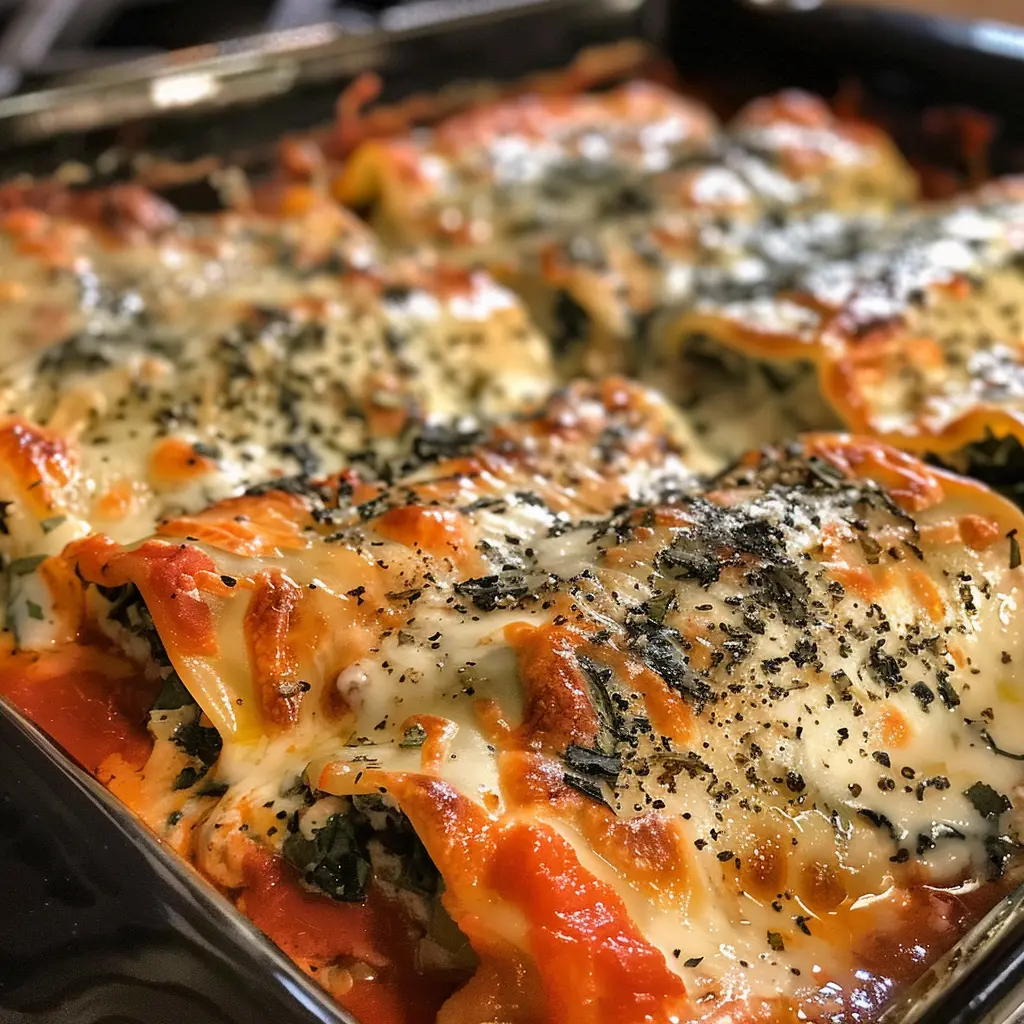
Spinach and artichoke lasagna roll-ups spread a creamy ricotta filling loaded with squeezed spinach, chopped artichoke hearts, garlic, mozzarella, and Parmesan across cooked lasagna noodles, roll them tightly, and bake them seam-side down over a layer of marinara until the cheese on top is golden and bubbly. The roll-up format turns a dish that could be a straightforward layered lasagna into individual, self-contained portions that look genuinely impressive at the table — and the spinach and artichoke filling makes this one of those vegetarian dinners that doesn’t feel like it’s missing anything.
| Detail | Info |
|---|---|
| Prep Time | 25 minutes |
| Bake Time | 25 to 30 minutes |
| Total Time | 55 minutes |
| Servings | 4 to 5 (3 rolls per person) |
| Difficulty | Medium |
| Cuisine | Italian-American |
Why This Recipe Works
Squeezing the spinach completely dry before adding it to the ricotta filling is the preparation step that determines whether the filling holds together inside the roll or turns watery and loose during baking. Fresh or thawed frozen spinach contains a significant amount of water that, if not removed, dilutes the ricotta and produces a filling that seeps out of the roll rather than staying in a cohesive, creamy layer. Spinach squeezed in a clean kitchen towel or pressed firmly in a fine mesh strainer removes most of that moisture, leaving behind concentrated spinach flavor and the right amount of bulk to add to the filling without compromising its consistency.
Artichoke hearts alongside the spinach produce a filling with more texture, depth, and substance than spinach alone. Chopped artichoke has a slightly meaty, slightly sweet quality with a firmer texture than the soft spinach — it provides chew and body that makes the filling feel genuinely satisfying rather than like seasoned ricotta with vegetables as a secondary thought. The artichoke’s mild earthiness also pairs specifically well with garlic in a way that amplifies both flavors, and the combination of spinach and artichoke in a ricotta and Parmesan filling is one of the most naturally coherent flavor combinations in Italian-American cooking.
Minced garlic mixed directly into the filling rather than cooked before adding produces a more pronounced, distinctly garlicky character in the finished dish. Raw garlic in the filling blooms during the 25 to 30 minute oven bake, releasing its aromatic oils and developing a deeper, slightly mellower garlic flavor than it would have had raw — but still more distinct and more present than pre-sauteed garlic that would mellow significantly before even entering the oven. Two cloves is the right amount to be clearly present without overwhelming the spinach and artichoke.
Placing the rolls seam-side down in the marinara base serves two critical functions. The marinara beneath the rolls provides the moisture environment that keeps the noodles from drying out during the bake and prevents them from sticking to the dish. The seam-side-down positioning uses the weight of the roll itself and the support of the surrounding rolls to keep each one closed through the full bake — a seam-up placement allows the filling’s internal expansion from heat to push the roll open. The marinara also begins to absorb into the exterior of each roll during the bake, infusing the noodle with tomato flavor rather than leaving it as a neutral wrapper around the filling.
The two-cheese topping — mozzarella and Parmesan — produces the visual result that makes these roll-ups look worthy of a dinner party. Mozzarella provides the golden, stretchy, bubbly surface that’s immediately visually appealing when the baking dish comes out of the oven. Parmesan on top of the mozzarella develops a more concentrated, slightly browned, nutty character during the final uncovered bake that adds flavor complexity to what would otherwise be a uniformly mild mozzarella topping. The combination also echoes the same cheese pairing in the filling, creating a continuity of flavor from the inside of each roll to the surface above it.
Ingredients
| Ingredient | Quantity | Notes |
|---|---|---|
| Lasagna noodles | 12 to 15 | Boiled al dente; laid flat on oiled parchment after draining |
| Ricotta cheese | 2 cups | Whole milk for the creamiest filling |
| Spinach, chopped | 1 cup (squeezed dry) | Fresh wilted or thawed frozen; must be thoroughly squeezed dry |
| Artichoke hearts, chopped | 1 cup | Canned or jarred, drained and roughly chopped |
| Garlic cloves, minced | 2 | Mixed raw into the filling; mellows during baking |
| Mozzarella cheese, shredded | 1.5 cups, divided | 1/2 cup into the filling; 1 cup for the topping |
| Parmesan cheese, grated | 1 cup, divided | 1/2 cup into the filling; 1/2 cup for the topping |
| Marinara sauce | 2 cups | Spread on the dish bottom and spooned over the rolls before baking |
| Salt and black pepper | To taste | Season the filling; the cheeses carry significant salt |
Step-by-Step Instructions
Phase 1: Prep the Noodles and Filling
- Preheat the oven to 375 degrees F. Grease a 9×13-inch baking dish.
- Cook the lasagna noodles in a large pot of generously salted boiling water until al dente — about 2 minutes less than the package directions. They will continue cooking in the oven. Drain and lay flat on lightly oiled parchment paper to prevent sticking while you prepare the filling.
- If using fresh spinach, wilt it in a dry skillet over medium heat until completely wilted, then transfer to a clean kitchen towel and squeeze out as much moisture as possible. If using frozen spinach, thaw completely and squeeze dry the same way. Chop roughly. The spinach should be as dry as you can get it.
- In a large bowl, combine the ricotta, squeezed spinach, chopped artichoke hearts, minced garlic, half a cup of the mozzarella, half a cup of the Parmesan, salt, and black pepper. Mix until fully combined. Taste and adjust seasoning — the filling should be well-seasoned since it’s the primary flavor component.
Phase 2: Roll and Assemble
- Spread about half a cup of marinara sauce in an even layer across the bottom of the prepared baking dish.
- Lay one lasagna noodle flat. Spread two to three tablespoons of filling evenly across the noodle, going close to the edges. Roll tightly from one short end to the other. Place seam-side down in the baking dish. Repeat with remaining noodles and filling, packing the rolls snugly in the dish.
- Spoon the remaining marinara sauce over the tops of the rolls. Sprinkle the remaining cup of mozzarella and half cup of Parmesan evenly over the surface.
Phase 3: Bake and Serve
- Cover tightly with aluminum foil and bake for 20 minutes. Remove the foil and bake uncovered for an additional 5 to 10 minutes until the cheese is golden and bubbly and the rolls are heated through.
- Let rest for 5 minutes before serving. Lift each roll with a wide spatula, getting underneath to support the full roll, and plate 2 to 3 per person with extra marinara spooned over from the dish.
Chef Tips for Perfect Results
Squeeze the spinach drier than seems necessary. The most common problem with spinach and ricotta fillings is excess moisture that makes the filling watery. After squeezing in the kitchen towel, squeeze again. The spinach should feel almost crumbly and leave minimal moisture on your hands. Over-dried spinach is not possible; under-dried spinach is a common problem.
Drain the artichoke hearts thoroughly. Canned artichoke hearts packed in water or brine carry significant liquid. Drain well and pat dry with paper towels before chopping and adding to the filling. The same moisture logic applies as with the spinach — excess liquid in the filling compromises its consistency.
Spread the filling all the way to the noodle edges. A filling that doesn’t reach the ends of the noodle produces rolls with plain noodle at the ends that taste underseasoned. Take an extra 20 seconds to spread from edge to edge and every bite of every roll will have filling.
Add a layer of filling between the rolls and the marinara on top. For an extra-rich version, spoon a thin layer of the ricotta filling over the rolls before the marinara and cheese go on — it produces a layer of creamy, cheesy filling visible when the baking dish is served and makes the dish look more luxurious.
Make it ahead and bake the next day. These roll-ups are ideal for make-ahead cooking. Assemble completely, cover tightly, and refrigerate overnight. Bake the next day adding 10 minutes to the covered bake time to account for the cold start. They’re genuinely better after a rest, as the filling firms and the noodles absorb a little of the marinara.
Common Mistakes to Avoid
Not squeezing the spinach dry. This is the most impactful mistake in the recipe. Wet spinach = watery filling = soggy rolls. Squeeze thoroughly every time.
Overcooking the noodles before rolling. Fully cooked noodles become soft and can tear when rolled tightly around a filling. Al dente noodles roll cleanly and finish perfectly in the oven.
Placing rolls seam-side up. Seam-side up rolls expand from the filling’s heat and can open during baking, spilling filling into the dish. Always seam-side down.
Not covering for the first stage of baking. Uncovered from the start can dry out the rolls before they’re heated through and cause the exposed noodle to become hard and chewy. The covered stage allows everything to heat through before the uncovered stage browns the cheese.
Skipping the rest period. The filling is very hot from the oven and the rolls need 5 minutes to firm enough to lift cleanly. A roll lifted immediately can fall apart or spill its filling.
Variations and Substitutions
Add sun-dried tomatoes: A quarter cup of oil-packed sun-dried tomatoes, drained and roughly chopped, folded into the ricotta filling adds a concentrated tomato sweetness and depth that pairs beautifully with the artichoke and spinach.
Add lemon zest: The zest of one lemon folded into the filling adds brightness and a clean citrus note that cuts through the richness of the ricotta and Parmesan and makes the filling taste more vivid. Particularly effective alongside the artichoke’s mild earthiness.
Use pesto instead of marinara: Spread basil pesto on the bottom of the baking dish and spoon it over the rolls before the cheese topping instead of marinara. The pesto version has a herbal, nutty, less acidic character that many people find even more compatible with the spinach and artichoke filling.
Add white beans: Half a cup of rinsed white beans (cannellini work well) mashed roughly and folded into the filling adds protein and a creamy, slightly earthy body that makes this a genuinely protein-rich vegetarian main.
Serving Suggestions
Serve 2 to 3 rolls per person with the marinara from the baking dish spooned generously over the top. A simple green salad with lemon vinaigrette provides a bright, acidic counterpoint to the rich, cheesy rolls. Crusty garlic bread alongside for the extra marinara is traditional and welcome. For a dinner party, the baking dish presented at the table and rolls served directly from it looks naturally impressive without any additional plating effort.
Storage and Reheating
Refrigerator: Store covered for up to 4 days. The rolls hold their shape well after refrigeration.
Reheating: Cover with foil and reheat in a 325 degree F oven for 20 minutes until heated through. Individual rolls reheat well in the microwave in 60 to 90 second intervals. Add a spoonful of marinara over the top before microwaving to keep them moist.
Freezer: Freeze assembled, unbaked rolls in the dish (without the cheese topping) for up to 2 months. Cover tightly with plastic wrap and foil. Bake from frozen, adding the cheese topping before baking, at 375 degrees F covered for 45 minutes then uncovered for 15 minutes. Alternatively freeze baked individual rolls and reheat in the oven from frozen.
Nutritional Information
| Nutrient | Per Serving (approx., 3 rolls, based on 5 servings) |
|---|---|
| Calories | 520 |
| Protein | 28g |
| Carbohydrates | 48g |
| Fat | 22g |
| Saturated Fat | 12g |
| Fiber | 4g |
| Sodium | 740mg |
Nutritional values are estimates based on whole milk ricotta and standard ingredient brands. Values will vary based on specific marinara and cheese brands used.
FAQ
Can I use frozen spinach instead of fresh?
Yes — frozen spinach is actually preferable for this recipe because it’s already softened and requires only thawing and squeezing rather than wilting first. Thaw completely, then squeeze out every bit of moisture possible before chopping and adding to the filling. One 10-ounce package of frozen spinach, thawed and squeezed, produces approximately the one cup of squeezed spinach the recipe calls for.
Can I use no-boil lasagna noodles for roll-ups?
Not recommended. No-boil noodles are brittle and crack when rolled around a filling. They’re designed to soften by absorbing liquid from surrounding sauce during baking, not to be rolled. Standard lasagna noodles boiled to al dente are pliable and flexible enough to roll without tearing.
How do I prevent the rolls from drying out during baking?
The covered bake for the first 20 minutes is the moisture retention stage — it traps steam that keeps the noodles and filling moist while everything heats through. Enough marinara under and over the rolls provides additional moisture. The rolls should not dry out if the foil is sealed tightly for the covered stage.
Can I make this with a bechamel instead of marinara?
Yes — and the bechamel version is exceptionally good. A simple white sauce made from butter, flour, and milk spread on the bottom of the dish and spooned over the rolls before the cheese produces a richer, creamier result without the tomato acidity. The spinach and artichoke filling paired with bechamel and Parmesan is a classic French-Italian combination (called florentine) that’s arguably more sophisticated than the marinara version.
What’s the easiest way to spread the filling onto the noodles?
An offset spatula or the back of a regular spoon both work well. Lay the noodle flat on a clean cutting board, add a few tablespoons of filling near one end, and use the spatula to spread toward the other end in one or two smooth passes. The filling should cover the noodle in a thin, even layer — not so thick that it can’t be rolled tightly, not so thin that the roll will be mostly noodle. Two tablespoons per noodle for 15 noodles, or three tablespoons for 12, is the right amount.
Conclusion
Spinach and artichoke lasagna roll-ups earn the “chef-y” descriptor they set out to claim through the combination of a genuinely excellent filling and a format that transforms a simple recipe into something that looks like it required real skill. Squeeze the spinach, mix the filling, roll the noodles, bake until golden — and arrive at the table with individual, self-contained portions of one of the best vegetable and cheese combinations in Italian-American cooking. Make it ahead, serve it with a salad, and take credit for something that was easier than it appeared.