
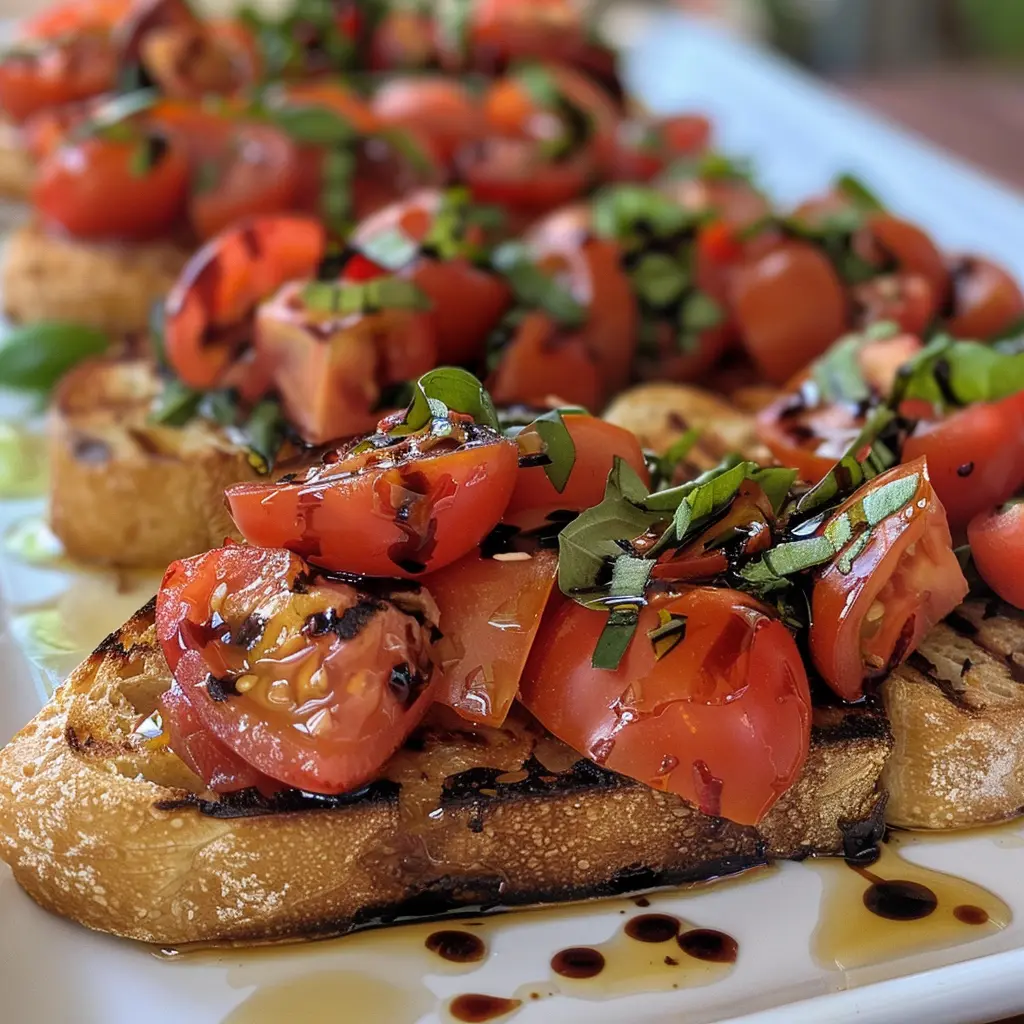
Burrata bruschetta takes golden oven-toasted baguette slices, piles them with a balsamic-dressed cherry tomato mixture that’s had time to meld into something genuinely cohesive, then tears fresh burrata over the top and finishes with basil. The contrast between the crisp bread, the jammy-edged tomatoes, and that soft, cream-filled burrata makes it one of the most effortlessly impressive appetizers you can put on a table in under 30 minutes.
| Detail | Info |
|---|---|
| Prep Time | 15 minutes |
| Cook Time | 10 minutes |
| Total Time | 25 minutes |
| Servings | 6 to 8 |
| Difficulty | Easy |
| Cuisine | Italian |
Why This Recipe Works
Letting the tomato mixture sit for 10 minutes before assembling is the single most impactful technique in this recipe, and the one most tempting to skip when you’re in a hurry. During those 10 minutes, salt draws moisture from the diced tomatoes and that released liquid blends with the olive oil, balsamic glaze, and garlic into a unified dressing that coats every tomato piece from all sides simultaneously. The garlic softens in the acidity of the balsamic. The oregano begins to rehydrate slightly in the tomato liquid. What started as separate ingredients becomes something that tastes like it was deliberately made rather than assembled. Skip the rest and the bruschetta tastes like its components; give it the 10 minutes and it tastes like a finished dish.
Balsamic glaze rather than balsamic vinegar does something specific here. Balsamic vinegar is thin, acidic, and can make the tomato mixture watery and sharp. Balsamic glaze has been reduced to a syrupy consistency that clings to the tomatoes rather than pooling at the bottom of the bowl, and its reduction has concentrated and mellowed the sharp acidity into something sweeter and more complex. A tablespoon of glaze provides the same balsamic flavor as several tablespoons of vinegar with none of the excess liquid that would make the bread soggy the moment the topping goes on.
Toasting the baguette in the oven at 375 degrees F rather than grilling it or using a toaster produces a more uniform, even crispness across the entire surface of each slice. The oven’s ambient heat crisps the bread gradually and evenly from all sides, producing a slice that’s golden throughout rather than having charred spots or pale centers. Brushing both sides with olive oil ensures the bread crisps properly on both surfaces and adds the rich, slightly fruity flavor that makes toasted bread a pleasure to eat on its own.
Burrata is the ingredient that elevates this from a standard bruschetta to something people talk about. Unlike fresh mozzarella, which has a firm, uniform texture, burrata has an outer shell of mozzarella that encloses a center of soft curd and cream called stracciatella. When torn, that creamy interior spills onto the tomatoes and bread, mingling with the balsamic dressing and creating a rich, slightly milky sauce that makes the whole assembly taste more luxurious than any single ingredient justifies on its own. The cool, fresh, creamy burrata against the warm tomatoes and crisp bread is a textural contrast that genuinely earns this appetizer its reputation.
Fresh basil added at the very end, after the burrata is placed, is a deliberate sequencing choice. Basil wilts and darkens quickly when it comes into contact with warm food or acidic dressings. Adding it as the final step before serving preserves its bright green color and fresh, slightly peppery aroma, which is what makes it visually striking and provides the herbal freshness the dish needs to balance the richness of the burrata and the sweetness of the balsamic.
Ingredients
| Ingredient | Quantity | Notes |
|---|---|---|
| Baguette, sliced | 1 | Cut into half-inch diagonal slices for the best surface area |
| Olive oil | 2 tablespoons | For brushing both sides of the baguette before toasting |
| Cherry tomatoes, diced | 2 cups | Ripe and fragrant; the quality of the tomatoes defines the quality of the dish |
| Garlic cloves, minced | 2 | Fresh garlic; softens in the balsamic during the rest period |
| Balsamic glaze | 1 tablespoon | Reduced and syrupy; clings to tomatoes without making them watery |
| Dried oregano | 1 teaspoon | Rehydrates slightly in the tomato mixture during the rest |
| Salt and black pepper | To taste | Salt draws moisture from the tomatoes and deepens the dressing |
| Burrata cheese | 1 ball | Torn into pieces just before serving; must be at room temperature |
| Fresh basil, chopped | To taste | Added at the very last moment to preserve color and freshness |
Step-by-Step Instructions
Phase 1: Toast the Bread
- Preheat the oven to 375 degrees F. Arrange the baguette slices in a single layer on a baking sheet. Brush both sides of each slice with olive oil, using a pastry brush or a paper towel dipped in oil to coat them evenly.
- Bake for 8 to 10 minutes, flipping once halfway through, until the slices are lightly golden and crisp on both sides. Watch them in the final 2 minutes — the line between golden and over-toasted moves quickly. Remove from the oven and set aside to cool slightly while you prepare the tomato mixture.
Phase 2: Make the Tomato Topping
- In a medium bowl, combine the diced cherry tomatoes, minced garlic, balsamic glaze, dried oregano, salt, and black pepper. Stir gently to coat the tomatoes evenly in the dressing.
- Let the mixture sit at room temperature for 10 minutes. This rest period is when the flavors integrate — don’t skip it. By the end of 10 minutes the tomato mixture will have released some liquid, the garlic will have mellowed, and everything will taste noticeably more cohesive than it did immediately after mixing.
Phase 3: Assemble and Serve
- Arrange the toasted baguette slices on a serving platter. Spoon a generous amount of the tomato mixture over each slice. Don’t be shy with the topping — a well-loaded bruschetta is far more satisfying than a sparse one.
- Remove the burrata from its packaging and let it drain briefly on a paper towel if it’s sitting in excess liquid. Tear it into pieces with your hands and distribute it over the tomatoes on each slice. The creamy interior will spill slightly as you tear — this is exactly what you want.
- Scatter the freshly chopped basil over everything. Add a final crack of black pepper and a light extra drizzle of olive oil or balsamic glaze if desired. Serve immediately.
Chef Tips for Perfect Results
Use the ripest tomatoes available. Bruschetta lives and dies by the quality of its tomatoes. A ripe cherry tomato — heavy for its size, deeply colored, fragrant at the stem — produces a topping that tastes vibrant and naturally sweet. An underripe tomato produces one that tastes flat and faintly vegetal regardless of how much balsamic or garlic surrounds it. If cherry tomatoes aren’t at their best, seek out vine-ripened or heirloom varieties that have more flavor.
Bring the burrata to room temperature before serving. Cold burrata straight from the refrigerator is firmer and less creamy than burrata that’s had 20 to 30 minutes to warm slightly at room temperature. Room temperature burrata tears more easily, releases its creamy interior more readily, and has a noticeably softer, more luxurious texture on the palate. Take it out of the refrigerator when you start preheating the oven.
Assemble immediately before serving. Once the tomato mixture is spooned onto the toasted bread, the bread begins absorbing the tomato liquid and softening. Burrata bruschetta assembled 15 minutes before serving will have noticeably softer, less crisp bread than one assembled and served immediately. Have everything ready and assemble just before guests eat.
Don’t skimp on the balsamic glaze. The glaze is what gives this dish its sweet-acid backbone and the visual glossiness that makes the tomato topping look as good as it tastes. A quality store-bought balsamic glaze works perfectly well — you don’t need to make your own. Look for one with a thick, syrupy consistency rather than a thin, watery one.
Use good olive oil for brushing the bread. The bread is the canvas for everything else in this dish, and the olive oil is the only seasoning it receives. A good quality extra-virgin olive oil with genuine fruitiness and flavor makes a perceptible difference in the finished taste of the toast compared to a neutral, flavorless cooking oil.
Common Mistakes to Avoid
Skipping the 10-minute rest on the tomato mixture. The rest period is not optional — it’s the step that transforms the tomato mixture from assembled ingredients into a cohesive, integrated topping. Impatient assembly produces bruschetta that tastes like bread with raw garlic and cold tomatoes. The rested version tastes like something deliberately and skillfully made.
Using cold burrata. Cold burrata doesn’t tear as cleanly, doesn’t release its creamy interior as readily, and doesn’t have the soft, yielding texture that makes it so appealing. Always bring it to room temperature before serving.
Assembling too far ahead. The bread goes from perfectly crisp to noticeably soft within 5 to 10 minutes of being topped with the tomato mixture. Time the assembly so the bruschetta reaches guests within a few minutes of being plated.
Using balsamic vinegar instead of balsamic glaze. Thin balsamic vinegar makes the tomato mixture watery and too acidic. The glaze’s reduced, syrupy consistency is specifically what gives the topping its clingy, sweet-tangy character without excess liquid that would saturate the bread immediately.
Adding the basil too early. Fresh basil added to the tomato mixture before the rest period or placed on the bruschetta more than a minute or two before serving will wilt, darken, and lose its visual and aromatic appeal. Add it at the absolute last moment.
Variations and Substitutions
Add prosciutto: Drape a thin slice of prosciutto over each toasted baguette slice before adding the tomato topping. The salty, slightly sweet prosciutto against the creamy burrata and acidic tomatoes is a combination that moves the dish from appetizer to something closer to a composed first course.
Roasted tomatoes: Halve the cherry tomatoes and roast at 400 degrees F for 20 minutes until collapsed and slightly caramelized. Roasted tomatoes have a more concentrated, jammy flavor than fresh and produce a different but equally excellent bruschetta that works particularly well when fresh tomatoes are out of season.
Add a drizzle of honey: A thin drizzle of good honey over the burrata before the basil goes on adds a floral sweetness that contrasts beautifully with the savory tomatoes and the milky burrata. Truffle honey in particular is an elegant variation for a more sophisticated occasion.
Use different bread: Sourdough sliced and toasted produces a more tangy, complex flavor than baguette. Ciabatta has a more open crumb that absorbs the tomato juices slightly, creating a different texture experience. Both are excellent alternatives.
Serving Suggestions
Arrange the finished bruschetta on a large wooden board or marble platter for the most visually striking presentation. Serve as a starter before a pasta dinner, as part of an antipasto spread alongside olives, cured meats, and marinated vegetables, or as a standalone appetizer at a gathering. A chilled glass of crisp white wine — Pinot Grigio, Vermentino, or a dry Rosé — is the natural accompaniment.
Storage
Tomato mixture: Store undressed for up to 24 hours in the refrigerator, or dressed (without the garlic, which sharpens overnight) for up to a day. Add fresh garlic and basil at serving time.
Toasted bread: Store at room temperature in an airtight container for up to 2 days. Re-crisp in a 350 degree F oven for 3 to 4 minutes if it has softened.
Assembled bruschetta: Does not store. Assemble immediately before serving.
Nutritional Information
| Nutrient | Per Serving (approx., 2 slices) |
|---|---|
| Calories | 210 |
| Protein | 8g |
| Carbohydrates | 22g |
| Fat | 10g |
| Saturated Fat | 4g |
| Fiber | 1g |
| Sodium | 310mg |
Nutritional values are estimates based on a standard baguette and one ball of burrata divided across 8 servings. Values will vary based on baguette size and specific brands used.
FAQ
What exactly is burrata and how is it different from mozzarella?
Burrata is a fresh Italian cheese made from mozzarella and cream. The outer shell is firm fresh mozzarella, but the inside is filled with stracciatella — a mixture of soft, shredded curd and fresh cream that pours out when the cheese is torn or cut. The contrast between the firm outer layer and the rich, liquid center is what makes burrata so distinctive and so prized. Fresh mozzarella has a uniform, firm texture throughout — excellent in its own right but without the dramatic creamy interior that makes burrata so well suited to bruschetta.
Where do I find burrata?
Burrata has become widely available in most well-stocked grocery stores, typically in the specialty cheese section or the deli department alongside fresh mozzarella. Italian delis, Whole Foods, Trader Joe’s, and most grocery chains with a dedicated cheese counter carry it regularly. It comes packaged in water to keep it fresh and has a short shelf life once opened — use it the same day you buy it for the best quality.
Can I make the balsamic glaze at home?
Yes. Pour half a cup of balsamic vinegar into a small saucepan, bring it to a gentle simmer over medium heat, and cook for 10 to 15 minutes until it has reduced by roughly half and coats the back of a spoon with a syrupy consistency. Let it cool before using — it thickens further as it cools. Homemade glaze stored in a sealed jar keeps in the refrigerator for months.
Can I use sun-dried tomatoes instead of fresh?
Oil-packed sun-dried tomatoes, drained and roughly chopped, produce a completely different but equally valid version of this bruschetta. The concentrated, slightly chewy, intensely flavored sun-dried tomatoes pair beautifully with burrata and balsamic. The dish will have a more robust, less fresh character than the cherry tomato version — ideal for times when fresh tomatoes aren’t at their best.
How do I prevent the bread from getting soggy?
Three things keep the bread crisp: toast it until genuinely golden and crisp rather than just barely colored, use balsamic glaze rather than balsamic vinegar in the tomato mixture to minimize excess liquid, and assemble immediately before serving. Even with all three in place, assembled bruschetta softens within 10 minutes — this is the nature of the dish and why it should always be served the moment it’s plated.
Conclusion
Burrata bruschetta is the appetizer that looks like a restaurant dish and takes less than 30 minutes to make at home. The quality of the ingredients — ripe tomatoes, good balsamic glaze, fresh burrata at room temperature — does most of the work, and the 10-minute rest on the tomato mixture does the rest. Make it once for guests and it becomes the appetizer they request every time after that.