
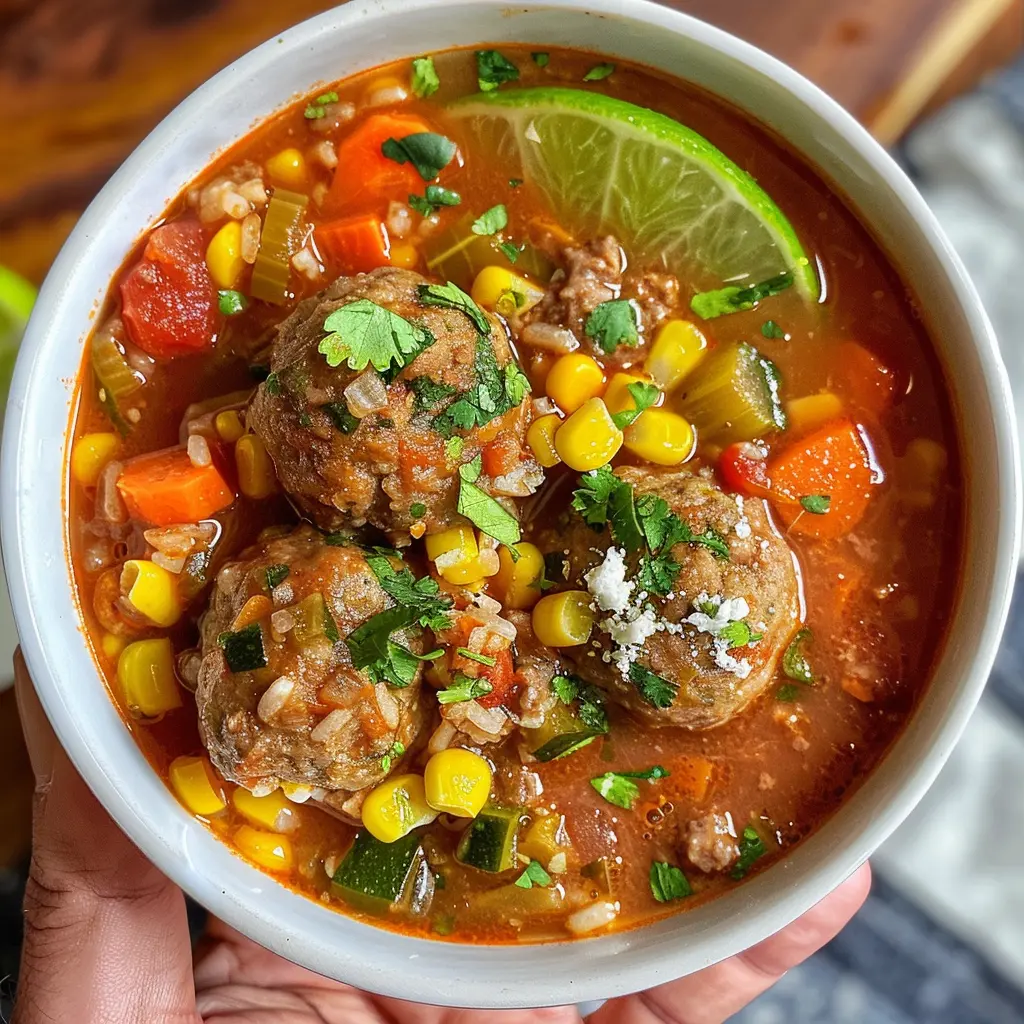
Caldo de albóndigas is a Mexican meatball soup built on a blended tomato-chipotle broth with chicken and tomato bouillon, loaded with homemade ground beef and rice meatballs, and simmered with corn, carrots, potatoes, and zucchini until every component is tender and the broth has absorbed the flavor of everything that cooked in it. It is one of the great soups of the Mexican home kitchen — hearty, deeply flavored, and more comforting than almost anything else on a cold evening or a day when the table needs something that feels like care.
| Detail | Info |
|---|---|
| Prep Time | 25 minutes |
| Cook Time | 60 to 65 minutes |
| Total Time | About 1 hour 30 minutes |
| Servings | 6 to 8 |
| Difficulty | Medium |
| Cuisine | Mexican |
Why This Recipe Works
Uncooked white rice mixed directly into the meatball mixture rather than cooked rice is the technique that makes these albóndigas distinctively different from Italian-style meatballs and central to the dish’s authentic texture. The raw rice grains are suspended throughout the raw beef mixture and cook in place as the meatballs simmer in the broth, absorbing broth as they expand and becoming tender inside the meatball. As they cook, the expanding rice grains create a slightly irregular, textured surface on the exterior of each meatball where individual grains protrude through the beef — the characteristic look of a properly made albóndiga. The rice also lightens the texture of the meatball, preventing the dense, compact texture of an all-meat meatball and producing a tender, slightly fluffy interior that holds together while eating but isn’t chewy or heavy.
Blending the tomatoes, onion, garlic, chipotle peppers, and both bouillons with water before adding to the pot produces a completely smooth, fully integrated broth base that distributes the chipotle heat, tomato acidity, and aromatics evenly through every cup of soup. Raw vegetables added to the pot would take significantly longer to soften and wouldn’t release their full flavor into the broth in the same way. The blender creates a concentrated flavor base that, when simmered and diluted to the right volume, produces a broth with depth and cohesion from the first ladle. The chipotle peppers specifically dissolve completely in the blend and distribute their smoky heat through the entire pot rather than appearing as identifiable pieces in any individual serving.
Chipotle peppers in adobo are the ingredient choice that distinguishes this caldo from a plain tomato-based meatball soup. Chipotles are smoked, dried jalapeños rehydrated and packed in a spicy, slightly sweet adobo sauce — their flavor profile is simultaneously smoky, earthy, mildly hot, and slightly sweet in a way that no fresh chile or dried spice can replicate. Three chipotles blended into seven to ten cups of broth produce a background smokiness and warmth that makes the broth taste complex and layered without being identifiably spicy for people with a moderate heat tolerance. The adobo sauce they’re packed in adds an additional layer of tomato and vinegar notes that enrich the broth further.
The staged vegetable addition — corn first, then carrots and potatoes, then zucchini last — is the technique that produces every vegetable at the right texture simultaneously when the soup is ready to serve. Corn on the cob rounds need 20 minutes to become fully tender and sweet; carrots and potatoes need 15 minutes; zucchini needs only 10 to 15 minutes before it becomes perfectly soft without dissolving into the broth. Adding everything at the start would produce overcooked, mushy zucchini and squash by the time the carrots and potatoes are done. Staged additions allow each vegetable the exact time it needs, and the finished soup has vegetables that are all tender but distinctly themselves rather than uniformly soft.
Chicken bouillon and tomato bouillon together create a broth base with more rounded, complex flavor than either alone. Chicken bouillon provides the savory, umami-rich depth that forms the backbone of the broth and makes it taste like something that cooked for hours. Tomato bouillon adds a concentrated tomato color and flavor that amplifies the fresh Roma tomatoes blended into the broth and gives the finished soup its characteristic deep orange-red color. Both bouillons dissolve completely into the blended base and become fully integrated into the broth’s flavor profile rather than tasting like seasoning added to plain water.
Ingredients
Meatballs (Albóndigas)
| Ingredient | Quantity | Notes |
|---|---|---|
| Ground beef (85/15) | 2 pounds | 85/15 blend for the best balance of flavor and structure |
| Uncooked white rice | 1 cup | Added raw; cooks inside the meatball during simmering |
| Large eggs | 2 | Bind the meatball mixture |
| Fresh cilantro, chopped | 1 bunch | Or fresh mint as a regional alternative; seasons the meatball interior |
| Salt, black pepper, garlic powder | To taste | Season the meatball mixture generously — it’s the primary protein |
Broth and Vegetables
| Ingredient | Quantity | Notes |
|---|---|---|
| Roma tomatoes | 4 | Blended into the broth base |
| White onion | 1/2 | Blended into the broth base |
| Garlic cloves | 3 to 4 | Blended into the broth base |
| Chipotle peppers in adobo | 3 | Blended into the broth base; adjust quantity for heat preference |
| Chicken bouillon | 1 heaping tablespoon | Dissolves into the blended broth base |
| Tomato bouillon | 1 heaping teaspoon | Adds color and concentrated tomato flavor |
| Water | 7 to 10 cups | Start with 7 cups; add up to 3 more during cooking for preferred consistency |
| Corn on the cob, cut into rounds | 6 pieces | Added first; needs 20 minutes to become fully tender |
| Carrots, peeled and chopped | 4 large | Added second; needs 15 minutes |
| White potatoes, peeled and chopped | 3 to 4 | Added with carrots; needs 15 minutes |
| Zucchini or calabaza squash, chopped | 2 to 3 | Added last; needs only 10 to 15 minutes |
| Fresh lime wedges | For serving | Squeezed over individual bowls at the table |
Step-by-Step Instructions
Phase 1: Make the Meatballs
- In a large bowl, combine the ground beef, uncooked white rice, eggs, chopped cilantro, salt, black pepper, and garlic powder. Mix gently with clean hands until all ingredients are evenly incorporated — do not overwork the mixture, which toughens the meatballs.
- Using a quarter-cup measure or large cookie scoop, portion the mixture into evenly sized meatballs. Roll each one between your palms to form a smooth sphere. Place on a plate or tray and refrigerate while preparing the broth — chilled meatballs hold their shape better when lowered into the simmering broth.
Phase 2: Build the Broth
- In a blender, combine the Roma tomatoes, white onion, garlic cloves, chipotle peppers in adobo, chicken bouillon, tomato bouillon, and 1 cup of the water. Blend on high until completely smooth — no visible tomato or onion pieces remaining.
- Pour the blended mixture into a large, heavy-bottomed soup pot. Add the remaining 6 cups of water and stir to combine. Bring to a gentle simmer over medium heat, stirring occasionally.
Phase 3: Cook in Stages
- Once the broth is simmering, carefully lower the chilled meatballs into the pot one at a time using a spoon. Do not stir for the first few minutes — let the meatballs set from the outside before any agitation can break them apart. Cover the pot and cook for 15 minutes.
- Add the corn on the cob rounds. Cover and simmer for 20 minutes.
- Add the chopped carrots and potatoes. Cover and simmer for 15 minutes. Taste the broth and adjust salt. If the broth has reduced more than desired, add an additional cup or two of water.
- Add the chopped zucchini or calabaza squash. Cook uncovered for 10 to 15 minutes until the squash is tender and all vegetables are fully cooked through. A fork should slide through every vegetable without resistance.
Phase 4: Serve
- Ladle into deep bowls, making sure each serving gets at least two meatballs, a piece of corn, and a variety of the vegetables. Serve with lime wedges for squeezing over the bowl and warm flour or corn tortillas on the side.
Chef Tips for Perfect Results
Refrigerate the meatballs before adding to the broth. Cold meatballs hold their shape significantly better when they hit the hot broth than room temperature ones, which are more prone to falling apart as the exterior cooks. Even 15 minutes in the refrigerator makes a noticeable difference in how intact the meatballs remain through the full simmer.
Don’t stir immediately after adding the meatballs. The exterior of each meatball needs 2 to 3 minutes of undisturbed simmering to set and firm before any stirring can happen without risking the meatball breaking apart. Lower them gently, put the lid on, and resist the urge to stir for the first few minutes.
Adjust chipotle quantity for your heat preference. Three chipotles in a 7 to 10 cup broth produces a moderately warm soup with a clear but not overwhelming smoky heat. For a milder version, use one to two chipotles. For a spicier version, use four to five. The chipotles can always be increased next time once you know where your household’s preference lands.
Squeeze lime over the bowl at the table. The lime squeeze at serving is not a garnish — it’s a flavor component. Fresh lime juice brightens the broth, amplifies the chipotle’s smokiness, and ties all the elements together in a way the soup without lime doesn’t fully achieve. Encourage every person at the table to squeeze at least half a lime over their bowl before eating.
Use fresh cilantro generously in the meatballs. The cilantro inside the meatball is one of the defining flavors of authentic albóndigas — its herbal brightness infuses the beef from the inside out during the long simmer and is detectable in every bite of the meatball. Don’t reduce the quantity; the whole bunch is not too much for two pounds of beef.
Common Mistakes to Avoid
Overworking the meatball mixture. Ground beef mixed too aggressively develops a dense, tough protein structure. Mix gently and stop as soon as the rice, eggs, and cilantro are evenly distributed.
Boiling the broth aggressively. A hard boil rather than a gentle simmer agitates the meatballs and can break them apart before they’ve had time to set. Maintain a gentle simmer — small, steady bubbles rather than a rolling boil — throughout the entire cook time.
Adding all vegetables at once. Everything added together produces overcooked zucchini and undercooked carrots. Always follow the staged addition sequence.
Under-seasoning the meatball mixture. The meatballs are the primary protein and flavor anchor of the soup. Season the raw mixture assertively — it should taste well-seasoned before it goes into the broth, because the broth dilutes the seasoning slightly as the meatballs cook.
Not tasting and adjusting the broth mid-cook. The bouillons carry significant salt and the broth reduces slightly during the long simmer. Taste after the carrots and potatoes are added and adjust with additional salt or water before the final vegetable stage.
Variations and Substitutions
Use fresh mint instead of cilantro: Certain regional Mexican traditions use fresh mint in the albóndiga mixture rather than cilantro — the mint version has a distinctly different, slightly sweeter, more floral character that many people find equally or more appealing. Use the same quantity of fresh mint leaves as cilantro.
Add green beans: A handful of trimmed green beans added with the zucchini in the final stage adds a slightly firmer vegetable texture and a mild green flavor that works naturally alongside the other vegetables.
Add chayote: Peeled and cubed chayote squash is a traditional alternative to or addition alongside the zucchini and calabaza. Its mild, slightly crisp texture holds up well through the 10 to 15 minute final simmer and adds another layer of vegetable variety.
Turkey or pork meatballs: Ground turkey produces leaner, slightly lighter meatballs. Ground pork produces richer, fattier ones with a slightly different flavor that many people prefer. Both work with the same technique and timing.
Serving Suggestions
Serve in deep, wide bowls with extra broth ladled generously over everything. Fresh lime wedges, extra cilantro leaves, and sliced serrano or jalapeño chiles on the table allow each person to customize their bowl. Warm corn or flour tortillas alongside for dipping into the broth are traditional and essential. A bowl of caldo de albóndigas is a complete meal — the meatballs provide protein, the rice and potatoes provide starch, and the vegetables provide everything else. Nothing additional is needed, though more tortillas are always welcome.
Storage and Reheating
Refrigerator: Store covered for up to 4 days. The soup often tastes better the next day as the broth continues to develop. The meatballs firm slightly and the vegetables soften further overnight.
Reheating: Reheat gently in a pot over medium-low heat, stirring carefully to avoid breaking the meatballs. The broth may have reduced overnight — add a splash of water and taste for seasoning before serving. Avoid the microwave for large portions; the meatballs reheat unevenly.
Freezer: Freeze in portions for up to 3 months. The meatballs and broth freeze well; the potato texture softens somewhat after thawing. Thaw overnight in the refrigerator and reheat gently.
Nutritional Information
| Nutrient | Per Serving (approx., based on 7 servings) |
|---|---|
| Calories | 420 |
| Protein | 30g |
| Carbohydrates | 42g |
| Fat | 14g |
| Saturated Fat | 5g |
| Fiber | 5g |
| Sodium | 680mg |
Nutritional values are estimates based on standard ingredient brands. Values will vary based on specific bouillon brands and the amount of water used.
FAQ
Why does my recipe use uncooked rice in the meatballs?
Uncooked rice in albóndigas is traditional and functional. The raw grains cook inside the meatball during simmering, absorbing broth and expanding as they soften. This produces the characteristic texture of a true albóndiga — slightly fluffy and light inside rather than dense and compact — and creates the distinctive look of individual rice grains visible on the meatball surface. Cooked rice in a meatball produces a different, stickier texture that doesn’t absorb surrounding flavor the same way. Always use raw rice for this recipe.
How do I keep the meatballs from falling apart?
Four things keep albóndigas intact: chilling them before adding to the broth (firmer going in = less prone to breaking), maintaining a gentle simmer rather than a boil (agitation breaks meatballs), not stirring for the first 2 to 3 minutes after adding (let the exterior set first), and not overworking the raw mixture (overmixed beef develops a structure that breaks under heat). Address all four and the meatballs will hold their shape through the full cook.
Can I make the meatballs ahead of time?
Yes. Form the meatballs and refrigerate on a covered plate for up to 24 hours before cooking. They can also be frozen raw on a parchment-lined tray until solid, then transferred to a zip bag for up to 2 months. Add frozen meatballs directly to the simmering broth and increase the initial cook time to 25 minutes before adding the first vegetables.
Is this soup very spicy?
At three chipotle peppers in 7 to 10 cups of broth, the heat is moderate — noticeable warmth with a distinct smokiness but not overwhelming for most adults. Children and heat-sensitive diners may find it mildly spicy. For a milder version, use one chipotle and remove the seeds before blending. For a significantly spicier version, use four to five chipotles with their full adobo sauce. The lime squeeze at serving also brightens the heat perception and makes it more lively without increasing spice level.
What’s the difference between caldo de albóndigas and other meatball soups?
The rice inside the meatball is the most distinctive feature — it’s not found in Italian meatball soups or most other traditions. The chipotle-tomato broth with both chicken and tomato bouillon produces a flavor that’s specific to Mexican home cooking. The vegetable combination — corn on the cob rounds, calabaza, chayote — reflects the agricultural traditions of central and northern Mexico. The lime at serving is the final touch that ties the dish to its regional identity.
Conclusion
Caldo de albóndigas is the soup that earns its reputation as one of the great Mexican comfort foods through every detail: the tender meatballs with rice inside, the smoky chipotle-tomato broth built from blended fresh ingredients, the staged vegetable additions that produce every component at its ideal texture, and the lime squeeze at the table that brings the whole bowl into focus. Make it on a cold evening, serve it with warm tortillas, and understand immediately why this soup has been feeding Mexican families for generations.