
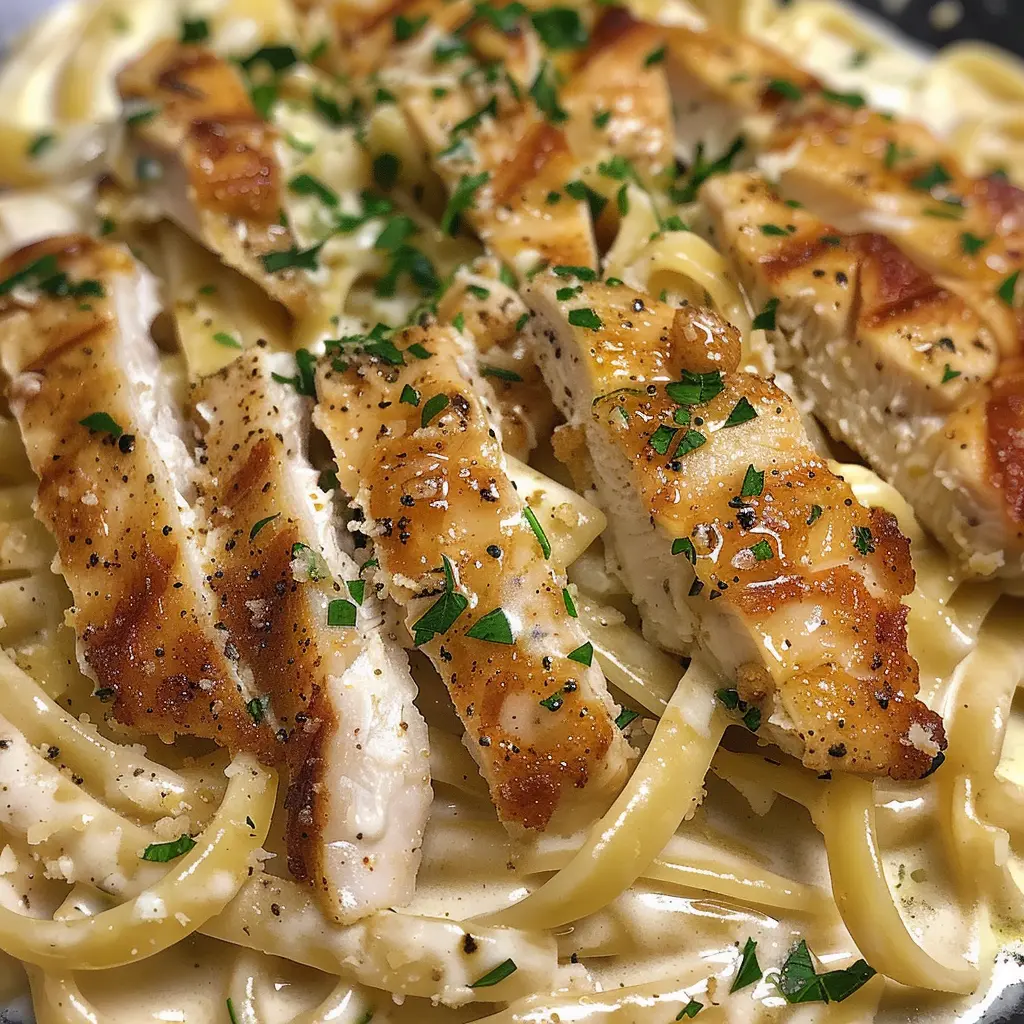
Garlic Parmesan chicken Alfredo with fettuccine builds a triple-cheese cream sauce — heavy cream, cream cheese, Parmesan, and mozzarella — directly in the pan where golden-seared Italian-seasoned chicken strips were just cooked, so the sauce picks up every bit of that savory fond before the pasta ever arrives. The result is a fettuccine Alfredo that’s richer, more layered, and more satisfying than any version made in a separate saucepan.
| Detail | Info |
|---|---|
| Prep Time | 15 minutes |
| Cook Time | 30 minutes |
| Total Time | 45 minutes |
| Servings | 4 |
| Difficulty | Medium |
| Cuisine | Italian-American |
Why This Recipe Works
The chicken in this recipe is not simply cooked and set aside — it’s a flavor-building component for the entire dish. Searing Italian-seasoned chicken strips in a combination of olive oil and butter over medium-high heat develops a deeply browned crust through the Maillard reaction. The browned bits and rendered butter left in the pan after the chicken is removed become the foundation of the Alfredo sauce. When the sauce butter and garlic hit that pan, they immediately dissolve the fond and carry concentrated chicken flavor into every cup of cream and every handful of cheese that follows. This is why one-pan cooking, done correctly, produces a more cohesive and flavorful result than building each component in a separate vessel.
Finishing the chicken with minced garlic and a sprinkle of Parmesan in the pan before removing it does something clever: the garlic blooms in the residual heat and fat, adding a layer of aromatic depth to the chicken itself rather than only to the sauce, and the Parmesan creates a slightly savory, nutty crust on the exterior of each strip. This makes the chicken interesting to eat on its own and not just as a vehicle to get sauce into your mouth.
Cream cheese in an Alfredo sauce is an ingredient that earns its place far beyond the obvious richness it adds. As cream cheese melts into the heavy cream, it releases additional fat and protein that thicken the sauce more substantially than heavy cream alone can achieve without a lengthy reduction. It also contributes a slight tanginess that prevents the sauce from tasting flat and one-dimensional, which is the most common flaw in heavy cream pasta sauces that rely only on the cream and cheese for flavor. A 4-ounce addition is subtle enough that the finished sauce doesn’t taste like cream cheese — it just tastes richer and more developed than it would without it.
The combination of Parmesan and mozzarella in the sauce creates a better result than either cheese alone. Parmesan provides the sharp, salty, umami-forward flavor that defines Alfredo sauce. Mozzarella contributes a stretchy, mild, creamy quality and helps the sauce achieve a silkier consistency when tossed with the pasta. Parmesan-only Alfredo can taste sharp and slightly grainy; mozzarella-only is too mild and too stringy. Together they balance flavor and texture in a way that makes the sauce genuinely hard to stop eating.
Tossing the fettuccine directly in the sauce in the skillet rather than plating it separately and spooning sauce on top is the step that transforms this from good pasta to great pasta. Fettuccine’s wide, flat surface area is designed specifically to hold and absorb cream sauces, and it does this best when given a minute or two of active tossing in a hot skillet where the pasta can absorb the sauce from all sides simultaneously. Pasta plated with sauce on top remains coated only on the surface; pasta tossed in sauce is infused with it.
Ingredients
| Ingredient | Quantity | Notes |
|---|---|---|
| Chicken | ||
| Boneless, skinless chicken breasts, sliced into strips | 1.5 lbs | Slice against the grain into even-width strips for consistent cooking |
| Italian seasoning | 1.5 teaspoons | Applied before cooking; creates an herbal crust on the chicken |
| Garlic powder | 1 teaspoon | Seasons the chicken in addition to the fresh garlic in the sauce |
| Onion powder | 1/2 teaspoon | Adds savory depth to the chicken seasoning |
| Salt | 3/4 teaspoon | Season the chicken before cooking |
| Black pepper | 1/2 teaspoon | Freshly cracked preferred |
| Olive oil | 2 tablespoons | For searing; higher smoke point than butter alone |
| Butter | 2 tablespoons | Combined with olive oil for the sear; adds flavor and browning |
| Garlic, minced | 3 cloves | Added to the chicken pan at the end of cooking |
| Parmesan cheese, grated | 1/2 cup | Sprinkled over the chicken before removing from pan |
| Pasta | ||
| Fettuccine | 12 oz | Cook al dente; finishes in the sauce |
| Garlic Parmesan Sauce | ||
| Butter | 3 tablespoons | Base of the sauce, built in the same pan as the chicken |
| Garlic, minced | 4 cloves | Sauteed briefly before the cream goes in |
| Heavy cream | 1.5 cups | Full-fat for the richest sauce |
| Cream cheese, cubed | 4 oz | Softened to room temperature for smooth melting |
| Parmesan cheese, freshly grated | 1 cup | Freshly grated melts far more smoothly than pre-shredded |
| Mozzarella cheese, shredded | 1/2 cup | Low-moisture for a cleaner melt |
| Black pepper | 1/2 teaspoon | Seasons the sauce |
| Garnish | ||
| Fresh parsley, chopped | To taste | Added just before serving for color and brightness |
| Extra Parmesan, grated | To taste | For the table |
Step-by-Step Instructions
Phase 1: Cook the Pasta
- Bring a large pot of generously salted water to a boil. Cook the fettuccine until al dente — about 1 minute less than the package suggests. Reserve half a cup of pasta water before draining. Set the pasta aside, tossed with a small drizzle of olive oil if it needs to sit for more than a few minutes.
Phase 2: Cook the Chicken
- Season the chicken strips evenly on all sides with Italian seasoning, garlic powder, onion powder, salt, and black pepper.
- Heat the olive oil and butter in a large skillet over medium-high heat until the butter is melted and the pan is hot. Add the chicken strips in a single layer — work in two batches if needed to avoid crowding. Cook for 5 to 6 minutes per side until deeply golden brown and cooked through to 165 degrees F.
- Add the 3 cloves of minced garlic to the pan with the chicken and cook for 30 seconds, stirring, until fragrant. Sprinkle the half cup of Parmesan over the chicken and let it melt slightly into the surface, about 30 seconds more. Transfer the chicken to a plate and keep warm. Do not wipe the pan.
Phase 3: Build the Alfredo Sauce
- In the same skillet over medium heat, melt the 3 tablespoons of butter. Add the 4 cloves of minced garlic and saute for about 30 to 45 seconds, stirring constantly, until fragrant and just beginning to turn golden. Scrape up any browned bits from the bottom of the pan as the butter melts.
- Pour in the heavy cream and bring to a gentle simmer, stirring frequently. Cook for 2 to 3 minutes until the cream begins to reduce slightly.
- Add the cubed cream cheese and stir continuously until completely melted and smooth — no lumps should remain. This takes 1 to 2 minutes of patient stirring.
- Add the Parmesan and mozzarella in two or three additions, stirring well after each until fully melted before adding more. Season the sauce with the black pepper. The sauce should be thick, silky, and coat the back of a spoon.
Phase 4: Combine and Serve
- Add the cooked fettuccine to the skillet and toss with tongs until every strand is evenly coated in the sauce. If the sauce is too thick to coat the pasta freely, add reserved pasta water a tablespoon at a time, tossing between additions, until the consistency is right.
- Plate the fettuccine in warmed bowls. Arrange the sliced chicken strips over the pasta and spoon extra sauce over the top.
- Garnish with fresh chopped parsley and additional grated Parmesan. Serve immediately.
Chef Tips for Perfect Results
Don’t wipe the pan between the chicken and the sauce. The entire flavor advantage of this one-pan method comes from building the sauce in the same pan where the chicken cooked. Wiping the pan clean between steps removes the most valuable flavor component in the entire recipe.
Soften the cream cheese before adding it. Cold cream cheese cubes take significantly longer to melt smoothly into the hot cream and can leave lumps in the sauce even with vigorous stirring. Letting the cream cheese sit at room temperature for 20 to 30 minutes before you start cooking means it melts in under a minute once it hits the warm sauce.
Add the cheese gradually. Adding the Parmesan and mozzarella in stages and stirring between each addition prevents them from clumping together or seizing in the hot cream. Each small addition melts into the sauce fully before the next goes in, producing a progressively thicker and smoother result.
Reserve and use pasta water. The starchy cooking water is the best consistency-adjusting tool for cream pasta sauces — it loosens the sauce without diluting the flavor the way plain water does. Always save a generous amount before draining and add it gradually if the sauce tightens too much when the pasta is tossed in.
Slice chicken strips against the grain. Cutting the chicken breast against the direction of the muscle fibers shortens them and produces a noticeably more tender bite. Cutting with the grain produces strips that are tougher and more prone to a stringy texture.
Common Mistakes to Avoid
Overcrowding the pan when searing chicken. Strips that touch each other in the pan steam rather than sear, resulting in pale, soft chicken without the golden crust that adds flavor. Sear in a single layer with space around each piece, working in batches if needed.
Boiling the cream sauce. A rolling boil can cause the cream to reduce too quickly, break the emulsion, or cause the cheese to seize. Keep the heat at a gentle simmer throughout the sauce-making phase.
Using pre-grated Parmesan. The cellulose and anti-caking agents in packaged pre-grated Parmesan prevent smooth melting and can leave the sauce grainy. Freshly grated Parmesan from a block melts seamlessly into the cream.
Adding pasta to the sauce too early. If the pasta goes into the sauce before it has thickened properly, the result is a thin, watery coating that never fully clings. Allow the sauce to reach a spoon-coating consistency before the fettuccine is added.
Serving immediately without tasting. The Parmesan carries significant salt, and the chicken was seasoned before cooking. Taste the finished dish before adding more salt and season based on what’s actually in the bowl.
Variations and Substitutions
Add mushrooms: Saute sliced cremini mushrooms in the butter before adding the garlic for the sauce. They add an earthy depth and a meaty texture that complements the cream and chicken beautifully.
Add broccoli: Steamed or blanched broccoli florets tossed in with the pasta add color, nutrition, and a slightly bitter note that cuts through the richness of the Alfredo sauce.
Lighter version: Replace the heavy cream with half-and-half and reduce or omit the cream cheese. The sauce will be thinner and less rich but still flavorful, and the calorie count drops meaningfully.
Spicy Alfredo: Add half a teaspoon of red pepper flakes to the butter and garlic at the sauce stage. The heat blooms into the cream and adds a subtle warmth that makes each bite more interesting without overpowering the garlic and cheese.
Different pasta: Linguine, pappardelle, or tagliatelle all work well as substitutes for fettuccine. Penne or rigatoni for a shorter pasta version traps the sauce inside the tubes for a different but equally satisfying eating experience.
Serving Suggestions
Serve immediately in warmed, wide pasta bowls with extra grated Parmesan and a crack of fresh black pepper over each portion. A crisp Caesar salad or a simple arugula salad dressed with lemon juice and olive oil alongside cuts through the richness of the cream sauce. Garlic bread is the natural bread accompaniment, and it’s particularly useful for the sauce that collects at the bottom of the bowl.
Storage and Reheating
Refrigerator: Store in an airtight container for up to 3 days. The sauce thickens considerably when cold — add a generous splash of cream or milk when reheating to restore the right consistency.
Reheating: Warm gently in a skillet over low heat with a splash of cream, stirring frequently to prevent the sauce from breaking. The microwave works for individual portions in 60-second intervals, stirring between each, though the sauce may separate slightly and benefit from a good stir before eating.
Freezing: Not recommended. Cream-based sauces with multiple dairy components tend to separate and become grainy when frozen and thawed.
Nutritional Information
| Nutrient | Per Serving (approx.) |
|---|---|
| Calories | ~610 |
| Protein | 52g |
| Carbohydrates | 42g |
| Fat | 28g |
| Saturated Fat | 15g |
| Fiber | 2g |
| Sodium | 820mg |
Nutritional values are estimates based on standard ingredients and will vary depending on specific brands used.
FAQ
Can I use chicken thighs instead of breasts?
Yes, and many cooks prefer thighs for their higher fat content and more forgiving nature in the pan. Boneless, skinless thighs can be sliced into strips the same way as breasts and seared in the same amount of time. They stay juicier even if cooked a few degrees past the minimum, which makes timing less critical.
Why did my sauce turn lumpy?
Lumpy Alfredo sauce typically comes from cold cream cheese added to hot cream, cheese added over too-high heat, or pre-shredded cheese with anti-caking agents. Soften the cream cheese to room temperature before using, keep the heat at a gentle simmer when adding any cheese, and always use freshly grated Parmesan for the smoothest possible sauce.
Can I make this ahead of time?
This dish is best made fresh and served immediately. If you need to prep ahead, cook and slice the chicken up to a day in advance and store it refrigerated. Make the sauce and cook the pasta fresh at serving time and combine everything just before eating for the best texture and consistency in the sauce.
How do I prevent the fettuccine from sticking together after draining?
Toss the drained pasta with a small drizzle of olive oil if it needs to sit for more than a few minutes before being added to the sauce. Avoid rinsing pasta with cold water — this removes the starch coating that helps the sauce cling to each strand.
What can I substitute for cream cheese?
Mascarpone cheese is the most similar substitute and produces a slightly richer, slightly sweeter sauce. A tablespoon of cream cheese can also be replaced by an equal amount of additional butter plus a splash of lemon juice for the tang. The sauce will be thinner without the cream cheese’s thickening contribution, so reduce it a little longer before adding the pasta.
Conclusion
Garlic Parmesan chicken Alfredo with fettuccine is the one-pan pasta dinner that proves convenience and quality are not mutually exclusive. The same skillet that sears the chicken builds the sauce, and the same sauce coats every strand of fettuccine before the chicken is arranged on top. Forty-five minutes, one pan, and the result is something that justifies every minute of effort with each richly sauced, deeply savory forkful.